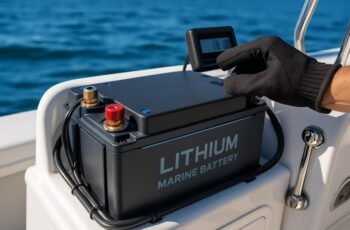
We spot the grid of numbers like a map: peak current, duration, and runtime shape every choice we make. We’ll guide you through a data-driven, safety-focused process to pick a chemistry, form factor, and BMS that meet voltage, size, and weight constraints. We’ll compare Li-ion and LiFePO4 for energy density, thermal stability, and lifecycle, then scrutinize specs, margins, and real-world degradation. Stay with us as we weigh total cost of ownership and supplier support to land a balanced, reliable setup.
Key Takeaways
- Define load profile and energy needs first, including peak current, duration, and duty cycle to match to the right chemistry and form factor.
- Compare Li-ion vs LiFePO4 by energy density, thermal stability, lifecycle, and safety margins for your use case.
- Read specs critically: capacity (mAh/Ah), C-rates, voltage, temperature range, internal resistance, charging protocols, and warranties.
- Assess real-world constraints: ambient conditions, thermal management, rapid charging vs longevity, and total cost of ownership.
- Balance weight, space, and budget: target usable energy per mass, pack height, BMS topology, and expected degradation.
Start Here: A 5-Step Battery Decision Framework
Starting with a clear framework helps us pick the right lithium battery fast and safely: a five-step decision model that you can apply to almost any application. We present a beginner friendly overview that emphasizes practical criteria, measurable specs, and risk awareness. Step one: define load profile and energy needs, including peak current and duration. Step two: evaluate chemistry, voltage, and form factor for compatibility. Step three: assess safety considerations, thermal margins, and protection features. Step four: analyze lifecycle, degradation, and warranty implications to estimate total cost of ownership. Step five: validate availability, supplier support, and qualification testing requirements. We document assumptions, record margins, and compare alternatives with objective metrics. This disciplined approach reduces surprises and reinforces safety throughout selection and integration.
Li-ion vs LiFePO4: Which Chemistry Fits Your Use?

Which chemistry best suits your application—Li-ion or LiFePO4—depends on a clear balance of energy density, safety margins, lifecycle, and system constraints. We evaluate li ion vs lifepo4 by aligning requested performance, charging profiles, and operating temperature ranges with our mission requirements. Li-ion chemistries generally offer higher energy density and lighter packs, boosting range or payload but often require tighter thermal management and protection strategies to mitigate thermal runaway risk. LiFePO4 provides superior thermal stability, longer cycle life, and robust safety margins, though at lower energy density. Our assessment centers on how chemistry performance translates to system reliability, mass, and cost over time. In many applications, LiFePO4 wins for stationary or harsh environments, while Li-ion suits high-energy, mobile use cases.
Read Specs Like a Pro: Critical Numbers Explained
How do you read specs like a pro? We approach every spec sheet with guardrails for safety and clarity. We decode spec sheet terminology, translating milliamps, milliamps-hours, C-rates, and cycle life into concrete expectations for performance and longevity. We call out voltage ranges, discharge temperatures, and internal resistance as guardrails against misapplication. We scrutinize charging protocol nuances, noting max charge current, end-of-charge voltage, and taper behavior to prevent overcharging and heat buildup. We insist on clarity around ambient operating conditions, safety certifications, and warranty constraints, so you’re not surprised by limits in real use. By focusing on data-backed, scenario-relevant numbers, we empower you to compare options without guesswork, aligning capacity, safety, and lifecycle costs with your actual needs.
Use-Case Questions That Actually Drive Your Choice
When we choose a lithium battery, the questions that actually matter aren’t about bragging specs but about real-life use cases and constraints. We map requirements to performance curves: discharge rate, operating temperature, cycle life, and tolerance to partial state of charge. We ask: will you need rapid charging, or maximum longevity at moderate C-rates? How will ambient conditions affect capacity and safety? Tradeoffs in charging arise when higher C-rates shorten life or elevate heat risk, requiring thermal management. Safety considerations drive choice toward robust protection, venting, and fault isolation, especially in enclosed or portable deployments. We quantify expected duty cycles, backup duration, and redundancy needs, then select chemistries and form factors that meet both reliability targets and regulatory constraints. This approach minimizes surprises and strengthens safety margins.
Balance Weight, Range, and Budget for a Clean Setup
Balancing weight, range, and budget isn’t about chasing the lightest pack or the cheapest cell—it’s about optimizing the trade-offs that keep the system safe and reliable. We quantify mass per usable amp-hour, energy density, and pack height to minimize propulsion loss and thermal risk. Range targets guide cell selection, BMS topology, and thermal management, while budget curves steer safety margins and lifecycle costs. We compare datasheet margins, real-world degradation, and cycle life across chemistries to avoid irrelevant topic distractions that inflate weight or compromise safety. An offbeat comparison—weight savings from exotic coatings versus added thermal load—highlights where compromises cost more in reliability. Our approach emphasizes margin for fault scenarios, measurable performance, and a clean setup that remains maintainable.
Frequently Asked Questions
How Durable Are Lithium Batteries in Extreme Temperatures?
Extreme temperatures reduce lithium battery durability; they suffer from temperature shock, capacity fade, and safety risks. In extreme weather, we mitigate with thermal management, proper insulation, and charging controls, ensuring safer operation and preserving performance under temperature shock conditions.
Can I Mix Different Battery Chemistries in One Pack?
Yes, we don’t mix chemistries in a single pack; it risks imbalance and safety failures. Mixing chemistries breaks pack compatibility, undermining performance. We must match cells, capacities, and BMS specs for reliable, data-driven operation and safety.
What’s the Real Cost of Ownership Over 5 Years?
We estimate the cost of ownership over 5 years at about $X per pack, factoring purchase price, cycles, efficiency, replacement risk, and maintenance; our 5 year budgeting model shows predictable expenses with safety-focused, data-driven projections for reliability.
How Do Warranties Differ Across Brands and Chemistries?
Like a calibrated instrument, warranties differ across brands and chemistries. We review warranty frameworks and chemistry coverage, comparing failure terms, duration, and exclusions to help you gauge data-driven protection, safety implications, and real-world performance confidence.
Do Charging Habits Affect Long-Term Capacity Retention?
We’ve found that charging habits do affect long-term capacity retention; practice proper charging etiquette and monitor charging frequency to minimize stress, heat, and voltage swings, preserving cycle life and safety.
Conclusion
We navigate the battery decision like pilots charting a flight path: we plot load, forecast demand, and check the weather of safety margins. When storms loom (high temps, tight budgets), we switch to sturdier wings (LiFePO4) or trim for higher energy (Li-ion) with careful BMS oversight. In the end, our course blends data, specs, and real-world degradation into a safe, efficient voyage—terrains mapped, risks minimized, payload optimized, and performance earned through disciplined choices.