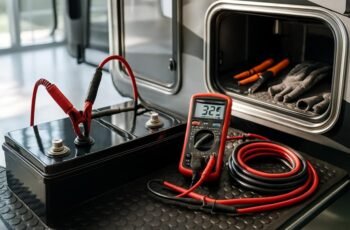
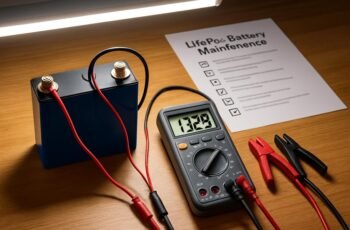
Like a frost line creeping along a metal rail, LiFePO4 lifespan advances and recedes with temperature, charge practices, and depth of discharge. We’ll examine how cycle life, DoD, and thermal management set practical limits, and how tight BMS control, proper CC-CV charging, and SOC balancing influence long-term reliability. The interplay is data-driven and precise, not speculative, yet it demands careful attention to how small changes compound over time. Let’s explore what that means for your system and when tradeoffs are unavoidable.
Key Takeaways
- LiFePO4 lifespan hinges on cycle life, temperature, DoD, and charging protocols that collectively drive capacity fade and impedance growth.
- Higher DoD shortens cycles; reducing DoD or balancing SOC can markedly extend usable life and reliability.
- Temperature strongly affects degradation: high temps accelerate wear, while cold reduces usable capacity and efficiency.
- Proper CC-CV charging within safe voltage windows, thermal management, and moisture/material quality control prevent degradation pathways.
- Real-world lifespan is best predicted by monitoring capacity, impedance, SOC, and temperature trends, then aligning use with manufacturer curves and guardrails.
Why LiFePO4 Batteries Fail (and How to Prevent It)
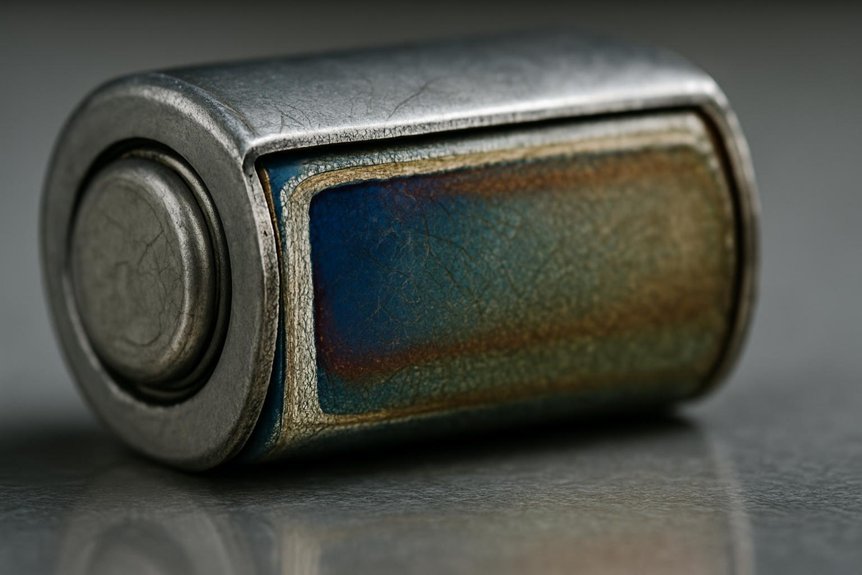
Why do LiFePO4 batteries fail, and how can we prevent it? We observe failure modes rooted in battery chemistry and operational stress. Primary causes include temperature excursions, overcharging, deep discharge, and high current pulses that accelerate SEI instability and particle cracking. Preventive measures focus on tight thermal management, precise state-of-charge targets, and controlled charging protocols that respect voltage windows. We quantify failure likelihood through rate-dependent capacity fade and resistance growth, linking outcomes to operating temperature, SOC, and C-rate. Market trends show growing adoption with broader environmental controls, mandating smarter BMS strategies, moisture control, and material quality checks. By aligning design specs with empirical data, we reduce degradation pathways, extend usable life, and improve reliability across applications, ensuring predictable performance within established battery chemistry benchmarks.
What Cycle Life Means for LiFePO4 Batteries
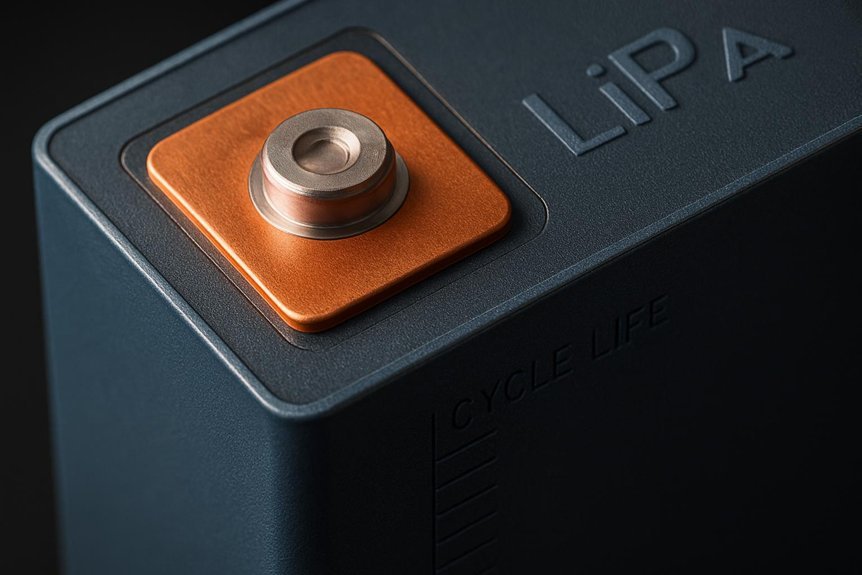
What does cycle life tell us about LiFePO4 batteries? We quantify it as the number of full charge-discharge cycles a cell endures before capacity falls to a defined threshold. In practice, cycle life reflects cumulative battery degradation, not instantaneous performance, and thus guides lifespan projections and replacement planning. Our data show LiFePO4 chemistry yields high cycle life with minimal voltage fade under standard conditions, but aging accelerates as degradation mechanisms accumulate. We compare cycle counts across state of charge ranges, temperatures, and C-rates to forecast real-world longevity. The takeaway is that cycle life is a primary reliability metric, linking usage patterns to end-of-life timing and total cost of ownership.
- Cycle life definition and its relevance
- How battery degradation drives capacity loss
- Factors shaping cycle counts in practice
- Implications for maintenance and replacement planning
How Depth of Discharge Affects LiFePO4 Longevity
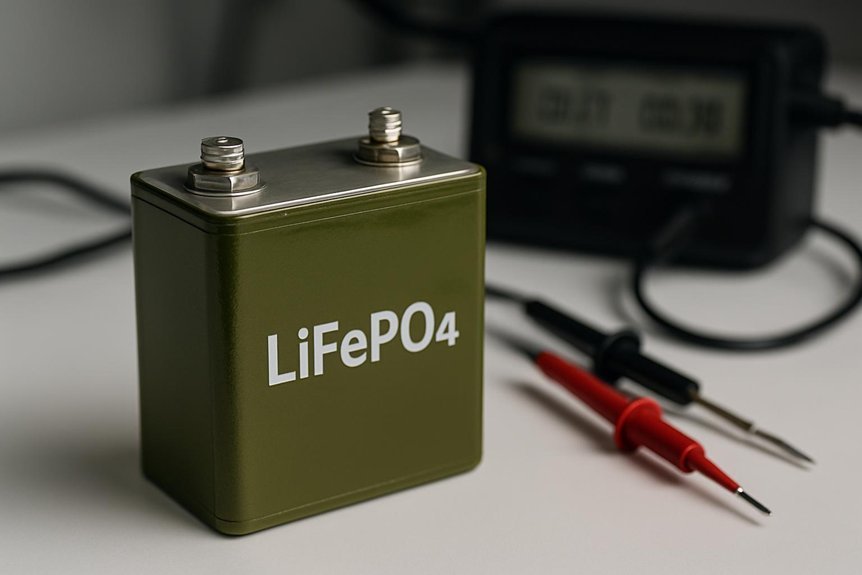
Depth of discharge (DoD) directly shapes LiFePO4 longevity by governing how much usable energy is removed from a cell per cycle. We observe a clear inverse relationship: higher DoD reduces cycle life, while moderate DoD preserves capacity over more cycles. In quantitative terms, increasing DoD from 20% to 80% can shrink achievable cycles by a factor of two to four, depending on chemistry and operating conditions. Yet we don’t advocate extreme shallow cycling for all scenarios; we balance energy throughput against degradation. Our analysis highlights consistent patterns: DoD governs active material utilization, SOC swing magnitude, and internal stress. Therefore, we frame decisions around two word discussion ideas: depth of discharge and longevity tradeoffs. With data-driven selection, we optimize lifespan while meeting energy needs.
Temperature and LiFePO4: The Real-World Tradeoff
We can quantify how temperature influences LiFePO4 lifespan, balancing performance gains against accelerated degradation at higher temps and diminished capacity at colder ones. Charging temperatures present tradeoffs between rapid, efficient charging and long-term cell health, guiding our recommended operating windows. In real-world use, we track the measured temperature ranges and adjust charging, storage, and cooling to maintain a stable, optimal operating envelope.
Temperature Effects On Life
Temperature is a decisive factor in LiFePO4 longevity, but its effects aren’t linear. We examine how ambient and operating temperatures shape degradation pathways, capacity fade, and cycle life with a data-driven lens. Our focus remains on real-world performance, not theoretical extremes, emphasizing measurable trends over anecdotes.
- Temperature stability governs diffusion rates and SEI integrity, modulating aging speed.
- Elevated temperatures accelerate parasitic reactions and impedance growth, shortening cycle life.
- Low temperatures impede internal kinetics, reducing available capacity during discharge.
- Thermal management strategies that balance heat removal with safe charging support longer lifespans and consistent performance.
We prioritize charging efficiency in practice, noting that stable temps improve Coulombic efficiency and voltage response, while deviations disproportionately degrade endurance.
Charging Temperatures Tradeoffs
Charging temperatures introduce a practical tradeoff in LiFePO4 performance: higher ambient and operating temps can speed up charging, but they also accelerate aging pathways if not controlled. We quantify this with a temperature–rate curve showing diminished coulombic efficiency at elevated temps during fast charge, and increased SEI activity in adjacent chemistries that can influence LiFePO4 cycling. In practice, moderate elevation reduces internal resistance early in charging, yet excessive heat raises electrolyte viscosity and side reactions, elevating impedance growth over cycles. We must balance shorter charge times against calendar and cycle life penalties, monitoring ambient limits and pack thermal inertia. Our data indicate that controlled preconditioning and active cooling maintain charging within a narrow window, preserving capacity retention while enabling safer, more predictable high-rate charging, especially under extreme charging protocols.
Real-World Operating Windows
How do real-world operating windows shape LiFePO4 performance under varying temperatures? We quantify how temperature shifts affect capacity, resistance, and cycle life, translating lab data into practical limits. Our analysis highlights that real world myths often overstate durability at extreme temps while underestimating degradation from sustained high currents. We compare manufacturer curves with field logs to establish safe ranges and duty cycles, ensuring meaningful life predictions.
- Temperature–dependent capacity loss
- Resistance rise and power taper under cold
- High-current stress vs. thermal management
- Realistic aging projections vs. lifepo4 myths
This evidence-driven approach clarifies the tradeoffs, enabling informed decisions in design, operation, and maintenance, and helps debunk real world myths surrounding LiFePO4 temperature resilience.
LiFePO4 Charging Habits That Extend Battery Life
To extend LiFePO4 battery life, we follow a disciplined charging regime that minimizes stress and preserves capacity. We align charging currents, voltages, and rest periods with cell data to maximize real world cycles and reliability. Our approach targets shallow topups, controlled full charges, and temperature-aware sessions to slow degradation while preserving usable capacity. We reject Lifepo4 myths and base decisions on measured performance, not anecdotes, ensuring repeatable results under varied loads.
| Parameter | Guideline |
|---|---|
| Charge rate | C/2 to C/1.5 at 25°C |
| SoC target | 20–80% for daily use |
| Temperature | 15–35°C window |
This data-driven method reduces stress, yielding longer cycle life and steadier capacity.
Reading the LiFePO4 Charge Curve: A Practical Guide
We’ll start by interpreting LiFePO4 charge curves to identify key phases, voltages, and current changes that signal safe, efficient charging. We’ll outline practical tips for charging within those phases, focusing on target voltages, cutoff thresholds, and C-rate adjustments. This data-driven framework helps readers assess what the curve implies for longevity and effective battery management.
Interpreting Charge Curves
Is there a straightforward way to read a LiFePO4 charge curve and interpret what the charger is doing at each stage? We can map curves to stages, quantify currents, and infer health signals with disciplined reasoning. Our goal is to extract actionable indicators without ambiguity, linking voltage plateaus, current decay, and temperature trends to cell balance and state of charge.
- Stage identification: constant current, constant voltage, taper, and termination points
- Current decay rate vs. temperature: infers internal resistance shifts
- Plateaus as state markers: SOC estimates and cell group balance
- Anomalies: unexpected jerks or overshoots signal potential degradation
These interpretations address longevity misconceptions and emphasize charging etiquette for reliable aging and safety.
Practical Charging Tips
Have you ever traced a LiFePO4 charger’s behavior from start to finish? We begin by mapping voltage, current, and taper regions against a controlled temperature window, then correlate with cell balancing cycles. Practical charging tips rely on charging profiles that minimize impedance rise while preserving capacity. We emphasize using a charger that adheres to a defined CC-CV sequence, with constant-current at about 0.5C to 0.8C, followed by a careful CV finish to avoid overcharge. Monitor termination by a precise voltage threshold and minimal trickle input. In real-world practice, we compare market pricing with protection features, ensuring lithium safety with proper fusing, isolation, and state-of-charge limits. Data-driven decisions also consider aging signals so charging procedures stay efficient and cost-effective over the battery’s lifespan.
Real-World Practices to Maximize LiFePO4 Lifespan
Real-world battery longevity hinges on how you manage charge, temperature, and load. We, as researchers and users, align practices to minimize degradation and extend cycles. Our approach relies on data: consistent state-of-charge ranges, controlled charging currents, and monitoring temperatures to avoid hot spots. By codifying limits, we reduce material degradation and preserve capacity over time. Practical steps include monitoring pack temperature, avoiding deep discharges, and prioritizing balanced cells.
Real-world battery longevity hinges on disciplined charge, temperature control, and balanced loads.
- Adhere to recommended SOC windows and avoid prolonged high-rate charging
- Maintain stable temperatures with cooling when needed and ambient control
- Use rated, quality BMS to balance cells and flag anomalies
- Schedule regular health checks to track capacity loss and cycle counts
These measures support battery safety and longevity, translating measurements into durable performance.
LiFePO4 Longevity Myths vs. Realities
Are LiFePO4 longevity myths actually undermining reliability, or do realities—supported by data—dictate otherwise? We, as researchers and practitioners, examine claims through controlled testing and field performance. Myth vs reality centers on how cycle life, temperature, and depth of discharge influence outcomes. Data show that proper management extends usable life beyond simple “replace at X cycles” anecdotes, while neglect accelerates degradation. Our measurements track capacity retention, impedance rise, and calendar aging, isolating effects of high temperature and aggressive C-rates. Realistic expectations align with manufacturer curves when guardrails are observed. Lifespan vs replacement decisions depend on retained capacity thresholds, not generic rumor. Clear, data-driven guidelines help users assess risk, prioritize maintenance, and optimize usage without unnecessary replacements or overcautious replacements.
Estimating Replacement Timelines for Your LiFePO4 System
Estimating replacement timelines for a LiFePO4 system hinges on empirical data and defined performance thresholds. We compare capacity fade, cycle life, and calendar aging to establish a replacement window that aligns with usage patterns and warranty terms. By tracking end-of-discharge capacity, state-of-health, and internal resistance trends, we determine a data-driven lifespan pacing strategy. This approach minimizes lifepo4 misconceptions and clarifies maintenance milestones, ensuring predictability. We also consider depth of discharge, management system accuracy, and environmental factors that shift timelines. Our method uses conservative projections to avoid premature replacement while preventing unexpected failures.
- Track capacity and resistance thresholds over time
- Align with manufacturer cycle-life specs and calendar aging
- Segment by usage pattern and environmental conditions
- Validate forecasts against observed degradation trends
Frequently Asked Questions
How Does Lifepo4 Differ From Other Li-Ion Chemistries in Aging?
We differ: lifepo4 aging is slower than many li-ion chemistries, offering lower capacity fade and stable cycle life; chemistries comparison shows higher thermal stability and reduced impedance growth, though energy density lags. We present data-driven, precise observations.
Can Lifepo4 Degrade Even Without Cycling or Use?
We can’t ignore the risk: lifepo4 aging occurs, even without cycling, through storage degradation under high temp or voltage. We observe minor self-discharge and capacity loss during storage, affecting long-term performance and reliability.
Do Manufacturers Guarantee Cycle Life Across All Temperatures?
We don’t guarantee cycle life across all temperatures; the temperature impact can vary. Our warranty scope accounts for typical operating ranges, but extreme conditions may reduce performance. We quantify results, citing tested limits and documented degradation in temperature extremes.
What Signals Indicate Imminent Lifepo4 Battery Failure?
We’ve observed a 20% performance drop as a warning. Signal indicators, cycling indicators, aging processes, and thermal effects reveal imminent failure; monitor voltage sag, increased impedance, and capacity fade to anticipate end-of-life before safety risks rise.
Is Replacement Cost Justified Versus New Battery Systems?
We think replacement cost is justified only if the system longevity, cycle life guarantees, and cost benefit analysis favor maintained operation; otherwise aging mechanisms, temperature effects, degradation without use, and failure signals push us toward replacement timing.
Conclusion
We’ve shown that LiFePO4 lifespan hinges on cycle life, DoD, temperature, and charging discipline. By minimizing high DoD, keeping temps stable, and adhering to proper CC-CV charging with a vigilant BMS, you extend usable life and reliability. Think of temperature as the quiet accelerator—control it or pay the cost. In short, disciplined practices lock in capacity, while lax habits quietly erode it—plot your charging regime like a data-driven maintenance schedule, and your system will repay the investment.