We set out to discuss a Lifepo4 maintenance checklist, and it’s a fortunate coincidence that careful routine aligns with longer life. We’ll frame a precise, methodical approach you can apply from day one: verify initial voltage and SOC, log temperatures with timestamps, re-test any suspicious cells, and maintain a disciplined daily record of voltage, temperature, connections, and cycle counts. This isn’t just theory—our next steps reveal what to tighten first, and why small inconsistencies today can define endurance tomorrow.
Key Takeaways
- Monitor and log voltage, temperature, and ambient conditions before each use to detect drift and outliers.
- Follow safe charging: constant-current to constant-voltage with proper absorption cutoff and temperature-guarded thresholds.
- Regularly inspect terminals, tighten connections, and use approved lubricants and protectants to prevent corrosion.
- Perform balance checks and capacity estimation via discharge tests or coulomb counting; track cycle life vs. DoD.
- Use seasonal storage practices: moderate SOC (30–50%), cool, dry environment, and periodic reconditioning checks.
Why LiFePO4 Maintenance Matters for Long Life
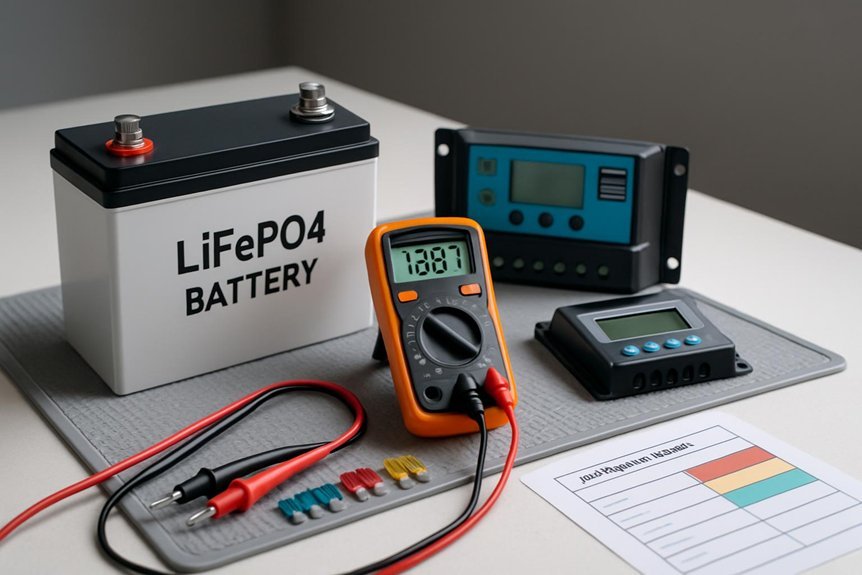
Maintaining LiFePO4 batteries is essential because proper care directly influences capacity retention, cycle life, and overall safety. We approach maintenance as a repeatable protocol, detailing why diligent practices matter. Our aim is to minimize degradation mechanisms by enforcing consistent storage, charging, and environmental controls. We emphasize monitoring state of health metrics, voltage windows, and temperature during every routine. We cover maintenance quirks that affect performance, such as seasonal charging habits and connector cleanliness, to prevent stray currents and corrosion. Packaging considerations factor into longevity when batteries are shipped or stored; we verify enclosure ventilation, cushioning, and stacking limits to avoid mechanical stress. By adhering to these disciplined steps, we extend usable life, preserve safety margins, and ensure reliable energy delivery for demanding applications.
LiFePO4 Basics: Understanding Operating Ranges
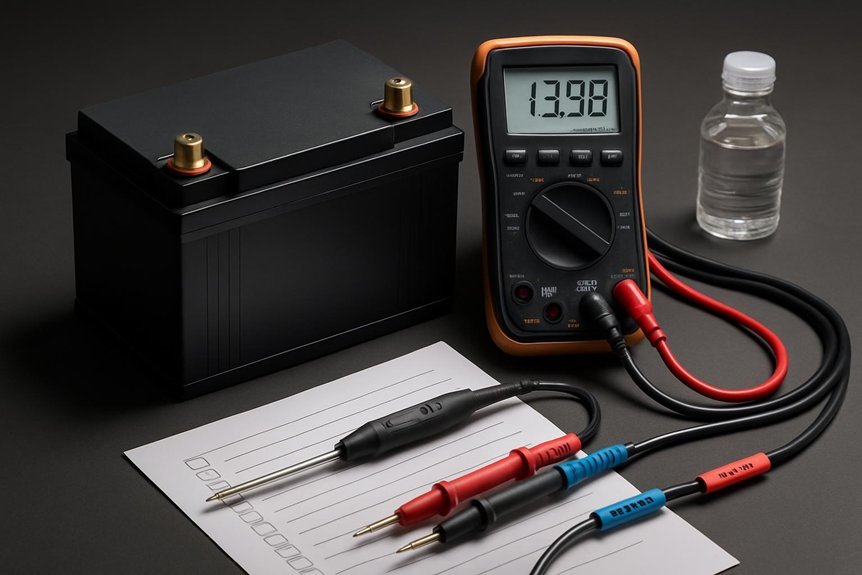
What operating ranges define LiFePO4 performance, and why do they matter? We define our LiFePO4 operating envelope by voltage, temperature, and current limits that preserve lithium chemistry and overall cell integrity. Nominal voltage sits around 3.2–3.3 V per cell; charging typically upper-bounds near 3.6–3.65 V and discharging near 2.5–2.8 V, with practical margins to avoid overvoltage and deep discharge. Temperature governs electrochemical kinetics: low temps reduce reaction rates and raise internal resistance, while high temps accelerate degradation if sustained. C-rate limits ensure predictable capacity retention and minimize cycle fatigue, balancing charge/discharge stress. We treat cycle life as a function of depth of discharge and operating conditions, not merely total capacity. By respecting these ranges, we maintain lithium chemistry stability and reliable performance over time.
Step-By-Step Daily Care to Maximize Cycles
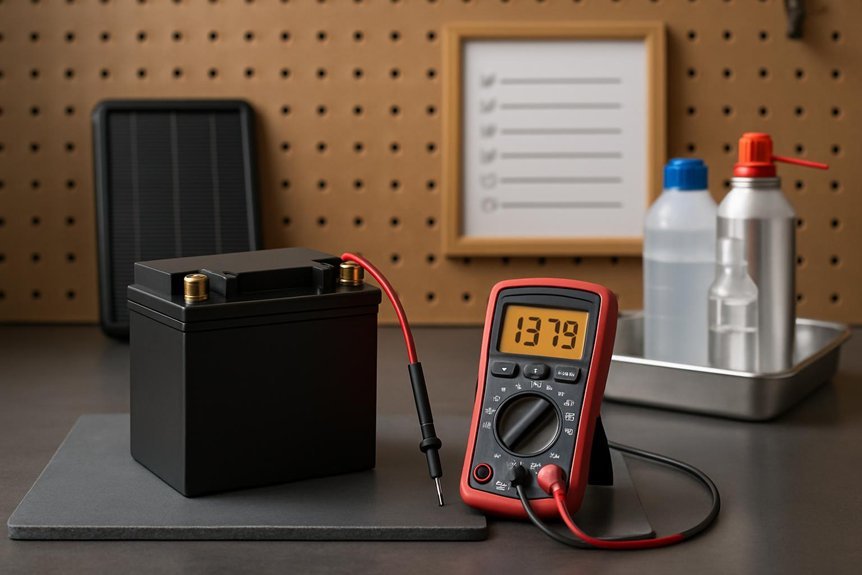
How can we routinely extend LiFePO4 cycle life with simple daily checks? We approach daily care with discipline: monitor voltage, log temperature, and verify connections before each use. Our care scheduling highlights consistent routines that minimize stress and track aging indicators. We practice brief cycle counting to detect capacity loss trends, enabling timely maintenance. We keep a precise checklist, adjusting usage patterns to preserve pack balance and prevent deep discharges. Regularly inspect terminals for corrosion and ensure insulation remains intact. We document results, refine thresholds, and align charging windows with manufacturer guidance. This disciplined approach maximizes cycles through predictable, repeatable actions.
| Daily step | Purpose |
|---|---|
| Log voltage/temperature | Detect anomalies |
| Check connections | Prevent losses |
Safe Charging for LiFePO4 Longevity
We follow Safe Charging Guidelines to protect LiFePO4 longevity, emphasizing correct current limits, voltage ceilings, and charge termination. Our Battery Longevity Practices pair careful charge scheduling with routine temperature checks to prevent stress and degradation. We’ll address Proper Charging Temperatures by outlining acceptable ranges, thermal management, and how to respond to abnormal readings.
Safe Charging Guidelines
Safe charging for LiFePO4 batteries requires keeping voltages and currents within manufacturer specifications to maximize longevity. We implement guidelines that specify charge voltage, termination current, and charging stages, then enforce adherence through monitoring. Begin with a controlled constant-current phase until the recommended voltage is reached, followed by a constant-voltage phase with a tapering current to the specified cutoff. Use certified chargers and load profiles aligned to the cell chemistry, avoiding overshoot and rapid current spikes. Temperature compensation is essential; if cell temperature deviates from the optimum window, pause charging and reevaluate. Regularly verify charger calibration and connector integrity to prevent resistance heating. Document each cycle, noting any deviations, and assess trends for signs of safe charging, battery aging indicators, and overall pack health. Maintain consistent procedures to preserve capability and reliability.
Battery Longevity Practices
Are LiFePO4 batteries truly optimized for longevity when charging is conducted with discipline and precision? We approach charging discipline as a systems practice, not a single action. We calibrate charge currents to match capacity and state of charge targets, minimizing partial-state operation that accelerates wear. We prioritize balanced cell voltages, monitor termination probes, and insist on consistent SOC windows to reduce sulfation and electrolyte stress. We document voltage, current, and temperature trends to detect drift before it harms longevity. We address lithium safety through robust protection schemes, fail-safes, and proper enclosure ventilation to prevent thermal spikes. We debunk storage myths by defining exact storage SOC and periodic refresh cycles. Our methodology emphasizes repeatable, data-driven routines that sustain capacity retention over time.
Proper Charging Temperatures
How do charging temperatures influence LiFePO4 longevity in practical terms? We examine how ambient and pack temperatures affect cell chemistry during charging. We define a safe charging window, typically around 0–45°C, and document deviations that raise internal resistance or cause voltage lag. Our method uses temperature sensors placed at the pack’s core and near cells with highest resistance to detect overheating early. We advise throttling or pausing charging if readings exceed specified thresholds, preventing thermal runaway or electrolyte stress. Proper charging requires consistent monitoring, calibration, and compensation for cold and hot conditions. We emphasize reporting trends, not single spikes, and maintaining balance between cells to minimize differential heat. By enforcing these controls, durability and predictable capacity retention improve.
Temperature Management and Storage Fundamentals
Temperature management and storage fundamentals are essential for prolonging LiFePO4 battery life and ensuring safe operation; maintaining appropriate temperatures minimizes degradation and reduces the risk of thermal events.
We, as stewards of your pack, outline concrete practices that emphasize repeatable conditions, data logging, and controlled environments.
- Monitor ambient and pack temperatures continuously
- Use storage insulation to reduce rapid temperature shifts
- Avoid exposure to direct heat sources or freezing conditions
- Schedule charging and discharging within specified ranges
- Implement thermal management strategies with validated components
These steps promote consistent performance, minimize temperature fluctuations, and preserve capacity over time. By adhering to disciplined storage and handling, you safeguard reliability and extend service life.
LiFePO4 Health Checks: Voltage, Balance, Capacity
We monitor LiFePO4 health by verifying cell voltages, balancing activity, and capacity benchmarks to establish a reliable baseline. We’ll outline practical voltage monitoring tips, perform balanced charging checks, and assess capacity to confirm remaining energy and tolerance limits. Our approach is precise and repeatable, ensuring early detection of imbalances or degradation that could affect performance and safety.
Voltage Monitoring Tips
Voltage monitoring is a foundational LiFePO4 health check: we start by measuring each cell or pack group to confirm it matches expected open-circuit voltages and recorded state of charge. We then compare data across strings to detect outliers, drift, or insulation issues that signal degraded battery health. We document any voltage gaps and flag cells that require retesting or replacement. We perform these checks at rest, after a known rest period, to ensure accuracy, and we log ambient temperature to contextualize readings. Finally, we review charger voltage profiles to ensure proper absorption cutoffs and prevent overvoltage damage.
- Measure cell voltages against SOC targets
- Record temperatures and time stamps
- Look for outliers and drift
- Re-test suspicious cells
- Update health logs regularly
Balance and Capacity Checks
Balancing and capacity checks build on the voltage baseline by confirming cell group balance and verifying usable energy. We perform balance monitoring by measuring individual cell voltages during rest and ensuring all groups stay within manufacturer tolerances. Capacity estimation follows, using discharge tests or coulomb counting to determine remaining energy and usable amp-hours.
| Cell Group | Voltage (V) | State of Charge (SOC) |
|---|---|---|
| Group 1 | 3.40–3.45 | 95–100% |
| Group 2 | 3.40–3.45 | 95–100% |
| Group 3 | 3.40–3.45 | 94–99% |
| Group 4 | 3.40–3.45 | 94–99% |
| Group 5 | 3.40–3.45 | 93–98% |
Intervals: perform tests after resting, document deviations, and adjust balance as needed to maintain balance monitoring and accurate capacity estimation.
How to Prevent Terminal Corrosion and Keep Connections Tight
To prevent terminal corrosion and keep connections tight, start with a clean, dry contact surface and inspect for any signs of wear or looseness before charging. We address the procedure with strict attention to electrical integrity, using controlled torque and proper seating to ensure reliable, low-resistance paths.
- Inspect terminals for oxidation and reseat with approved lubricant only if specified
- Clean corrosion with non-abrasive methods and dry thoroughly before reassembly
- Tighten connections to manufacturer-specified torque, avoiding over-tightening
- Apply compatible terminal protectant to reduce future oxidation
- Verify both polarity and contact firmness after initial connection
Seasonal Storage and Long-Term Prep for LiFePO4 Batteries
Have you ever considered how LiFePO4 cells behave after long-term storage, and what steps keep them healthy for the next use? We approach seasonal storage with controlled parameters, prioritizing voltage, temperature, and charge state. Begin by stabilizing cells at a moderate state of charge—typically 30–50%—to minimize degradation mechanisms. Store in a dry, cool environment, ideally 0–25°C, away from direct sunlight and moisture. Inspect connectors and casings, ensuring no corrosion or physical damage exists before sealing the pack. Periodically verify voltage and restate the charge if it drifts beyond recommended margins. For long term prep, document storage conditions, schedule reconditioning cycles, and perform a controlled wake-up procedure prior to return to service. This disciplined routine preserves capacity, extends life, and supports reliable performance after seasonal storage.
Frequently Asked Questions
How Often Should I Replace Lifepo4 Cells in a Pack?
We replace LiFePO4 cells when capacity falls below ~80% of original, typically after 2000–5000 cycles, depending on use; monitor lifecycle degradation and follow proper charging etiquette to minimize stress and extend pack longevity.
Can I Mix Lifepo4 Brands in One System?
We don’t recommend mixing brands in one system due to incompatible branding and mixed chemistry compatibility issues; we advise selecting a single LiFePO4 brand, matched cells, and uniform BMS settings for safe, reliable performance.
Do Lifepo4 Batteries Require a Special Charger?
Yes, our systems need a special charger for LiFePO4 to ensure charging compatibility and safety. We’ll verify voltage, current, and balance, then monitor temperature and state-of-charge, ensuring reliable, precise charging without mismatches or risks for our setup.
What Is the Impact of Vibration on Lifepo4 Life?
Vibration can shorten LiFePO4 life via microcracks and connector loosening, so we must monitor vibration effects and guarantee proper mechanical mounting. We recommend dampening, rigid mounting, and regular inspections to mitigate long-term degradation and maintain performance.
Are Lifepo4 Batteries Green or Recyclable?
We’re green and recyclable: LiFePO4 batteries are not inherently “green” but components can be recovered. We follow green disposal protocols and channel materials into established recycling streams to maximize recovery and minimize environmental impact.
Conclusion
We’ve walked through every checkpoint and kept the routine tight, but the truth hides in the quiet hours between tests. As temperatures shift and cycles accumulate, a single overlooked variance can cascade into losses you’ll notice only later. So we stay diligent: verify, document, re-test, and tighten connections. If a reading looks off, pause, diagnose, and adjust before proceeding. The method isn’t glamorous, but it preserves capacity, safety, and peace of mind for the long haul.