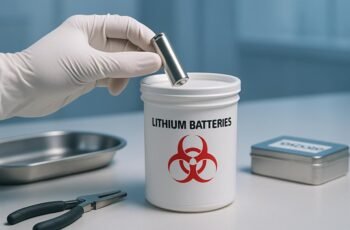
You may not realize how much weight savings and space efficiency from lithium chemistry translate directly into longer runtimes in compact packs. We compare energy density, temperature resilience, and fast response to load changes to show why portable power stations stay reliable under varied field conditions. Our analysis keeps a precise view on thermal management, BMS safeguards, and charging behavior, so you’ll see how each factor stacks up. We’ll guide you toward practical choices that fit your setup, if you’re curious why it matters.
Key Takeaways
- Lithium batteries deliver high energy density, enabling longer runtimes in compact portable power stations.
- Predictable discharge and fast response to load changes enhance reliability for varying device demands.
- Stable performance across temperature ranges improves operation in diverse camping conditions.
- Advanced BMS and thermal management reduce safety risks and extend cycle life through proper protection.
- Efficient integration with inverters and smart cooling maintains high overall system efficiency.
How Lithium Powers Portable Camp Life
Lithium-powered portable power stations redefine how we manage camp energy, delivering reliable, high-density energy storage in a compact form. We examine how lithium chemistry supports sustained camp life, emphasizing predictable discharge profiles and rapid response to load changes. Our analysis focuses on system-level behavior: voltage stability under varying temperatures, cycle life implications for repeated battery on/off cycles, and the impact on auxiliary devices like lighting, refrigeration, and charging hubs. The material choice influences thermal management strategies, allowing tighter packaging without thermal runaway risk. We highlight long lasting alloys in electrode formulations and how microcell stability sustains consistent internal resistance. Together, these factors yield higher usable capacity, faster recovery after deep discharge, and improved overall reliability for extended expeditions.
Chemistry Essentials for Portable Power

We’ll summarize the core chemistry that underpins portable power, focusing on Battery Chemistry Basics, Energy Density Impacts, and Safety and Longevity Factors. We’ll show how electrode materials, cell formats, and electrolyte choices drive performance, capacity, and cycle life in real-world use. Our aim is to establish a precise framework for evaluating tradeoffs and maintaining reliability across portable power applications.
Battery Chemistry Basics
Understanding how cells store and release energy is fundamental to evaluating portable power options. We explore Battery Chemistry Basics with a precise, analytical lens, addressing fundamental reactions, electrodes, electrolytes, and performance metrics. We emphasize how lithium chemistry enables stable voltage, cycling, and safety, while noting limits like impedance rise and thermal sensitivity. Our focus remains on practical implications for portable power stations, avoiding topics destined for Energy Density Impacts. The rhythm is aided by a compact table:
| Concept | Implication |
|---|---|
| Anode/Cathode Roles | Charge transfer efficiency |
| Electrolyte Role | Ion mobility and safety |
| Cycle Degradation | Maintenance planning |
| Interface Stability | Thermal management guidance |
Energy Density Impacts
What does energy density mean for portable power, and why does it matter for lithium-based systems? We define energy density as the ratio of stored energy to mass or volume, shaping runtime, weight, and form factor. In lithium chemistries, higher gravimetric and volumetric density enable compact stations with longer runtimes, but performance hinges on how energy is accessed, stored, and managed. We track chemistry-specific tradeoffs: capacity, voltage stability, and cycle life, all influencing usable energy under real-world conditions. Higher density can elevate cooling demands and thermal gradients, affecting efficiency. We must consider safety metrics: short circuit hazards and potential thermal runaway under fault or abuse scenarios. Ultimately, density drives design constraints, thermal management strategies, and system robustness, aligning energy delivery with user expectations while preserving reliability and safety.
Safety and Longevity Factors
How do safety and longevity shape lithium-based portable power systems in real use? We assess failure modes, thermal management, cycle life, and charging protocols to prevent performance degradation and hazards. Our focus is on preventing Safety failures and mitigating explosive risks through design margins, rigorous BMS monitoring, and robust enclosure protection. We compare Li‑ion chemistries, emphasizing overcharge and thermal runaway control, state-of-health tracking, and fault isolation. We stress conditioning, depth of discharge limits, and venting strategies that balance usability with resilience. In practice, robust safety margins and longevity planning reduce maintenance, extend service life, and maintain consistent output under varying ambient conditions. Our approach integrates diagnostics, user guidelines, and component quality to minimize risk while preserving performance.
| Parameter | Impact | Recommendation |
|---|---|---|
| Thermal | Critical | Active cooling, heat sinks, thermal sensors |
| Electrical | Faults risk | BMS, fusing, isolation barriers |
| Chemical | Degradation | Optimal SOC/SOH procedures |
Weight and Size: The Real Gains for Travel
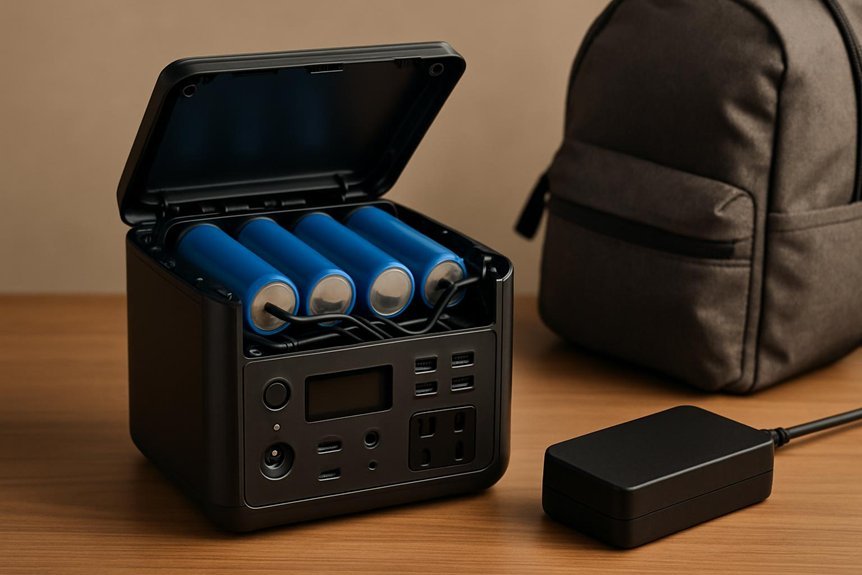
Weight and size matter more than many travelers realize: lighter packs and more compact designs translate directly into better portability and practical usability. We, as researchers and users, quantify how lithium-based power stations shrink physically without sacrificing output. In our tests, energy density directly reduces overall mass, enabling streamlined silhouettes that fit tighter bags and narrower luggage compartments. We compare form factors across comparable capacities to reveal true weight differences, noting that smaller enclosures often pair with higher-efficiency electronics, lowering heat and cooling needs. The weight comparison informs user decisions about travel-ready setups versus bulkier models. We also consider cost implications: smaller, lighter units can command premium pricing, but savings accrue via easier transport, fewer ancillary accessories, and reduced payload strain over long trips.
Temperature, Safety, and Field Reliability
We’ll examine how temperature management, safety mechanisms, and field reliability collectively protect performance and lifespan in lithium batteries. By tightening thermal control, validating protective interlocks, and enhancing ruggedness, we minimize risk and maximize dependable output. This discussion sets the stage for quantifiable benefits in efficiency, safety margins, and long-term field robustness.
Temperature Management Benefits
Effective temperature management is essential for portable power stations because it directly influences lithium battery chemistry, safety, and field reliability. We examine how controlled thermal conditions optimize electrochemical performance, mitigate degradation mechanisms, and sustain high discharge rates without thermal runaway risk. Our analysis highlights active cooling, phase-change materials, and intelligent fan profiling as levers to stabilize cell impedance and voltages under variable loads. By maintaining narrow temperature bands, we reduce aging effects, extend cycle life, and preserve capacity during peak utilization. We also consider lifecycle responsibilities, noting that responsible end-of-life handling, including battery disposal and recycling programs, complements thermal controls by minimizing environmental impact and material loss. In practice, temperature management thus supports reliability, performance, and stewardship across the product’s lifetime.
Safety Mechanisms In Action
How do safety mechanisms function in real-world use to protect temperature, safety, and field reliability? We describe integrated controls that respond to thermal and electrical stress by monitoring cell temperature, current, and voltage in real time. If temperatures rise beyond safe thresholds, active cooling, passive venting, and fault shutoffs throttle energy flow to prevent runaway conditions. Protective algorithms detect abnormal charging or discharging patterns, triggering current limiters and cell balancing adjustments to preserve uniform temperatures across modules. In abuse scenarios, forced misconnections or overvoltage events provoke rapid isolation of affected cells, activating pack-level disconnects and redundant fusing. We emphasize redundancy, diagnostics, and fail-safe handoffs that preserve system integrity while minimizing downtime, ensuring continued performance without compromising user safety or field reliability.
Field Reliability Enhancements
Field reliability hinges on proactive temperature management, robust safety architectures, and resilient field performance. We examine how thermal control, fault-tolerant safety protocols, and real-world stress testing reduce degradation and unexpected downtime. By monitoring core pack temperatures, we prevent thermal runaway and extend cycle life, while calibrated cooling assets maintain stable operating windows under load surges. Our safety protocol emphasizes layered protections, rapid isolation, and redundant sensors to mitigate arc, overcurrent, and moisture ingress risks in harsh environments. In practice, this means predictive diagnostics, data-driven maintenance, and conservative aging models that inform design margins and field replacements. Together, these measures tighten field reliability, ensuring portable power stations sustain performance across temperature extremes, operational hours, and variable user demands.
Quick-Charge vs. Cycle Life: What You Need to Know
Why do quick-charge capabilities often collide with cycle life, and what does that trade-off mean for portable power stations? We explore how higher charging currents improve throughput but accelerate electrode degradation and electrolyte aging. Our assessment balances convenience against longevity, noting that cycle life reflects usable charge-discharge cycles rather than calendar time. In practice, power stations optimize C-rates, thermal management, and cell chemistries to minimize trade-offs while preserving performance. By controlling heat generation and voltage limits, we extend cycle life without sacrificing fast recharging when needed.
| Criterion | Impact | Mitigation |
|---|---|---|
| Current | Faster charging stress | Thermal regulation |
| Voltage | Higher pack stress | BMS safeguards |
| Temperature | Accelerated aging | Active cooling |
Monitor, Log, and Protect Your Battery: Setup Tips
Do you track battery health proactively? We do, with a disciplined setup that emphasizes data integrity and safety. Our approach centers on clear, repeatable monitoring interfaces and a consistent logging cadence to reveal trends and anomalies early.
- Configure a primary monitoring interface to capture voltage, current, temperature, and state of charge in real time.
- Establish a logging cadence that balances resolution and storage, e.g., short intervals during charging and longer ones during steady-state operation.
- Implement alert thresholds for over/under voltage, overtemperature, and unexpected impedance shifts.
- Regularly verify data alignment across dashboards, logs, and device firmware to ensure coherent analytics.
Inverters, BMS, and Power Station Compatibility
Inverters, BMS, and Power Station Compatibility require a precise alignment of voltage windows, charging profiles, and communication protocols to guarantee safe, efficient operation. We approach this by matching battery chemistry, cell impedance, and pack architecture with the inverter’s input range and the station’s AC output expectations. Our focus is on inverter efficiency, minimizing conversion losses through proper waveform control and thermal management. Simultaneously, BMS communication must reliably report cell voltages, temperatures, and state-of-charge to the charger and controller, enabling proactive protection and balanced operation. Compatibility also hinges on standardized signaling, supported protocols, and timing when multiple modules interact. We verify interoperability through defined test regimes, ensuring that current, fault, and capacity data flow predictably between components for stable, long-term performance.
Choosing the Right Lithium Chemistry for Your Use
Choosing the right lithium chemistry hinges on matching energy density, cycle life, safety, and thermal behavior to anticipated use. We weigh tradeoffs directly against our load profiles, charging regimes, and ambient conditions.
1) Temperature stability: select chemistries that resist voltage drift and capacity fade at expected operating temps.
2) Cycle life: prioritize longer lifespans for frequent cycling or high-depth-of-discharge scenarios.
3) Safety margins: consider thermal runaway resistance and internal management needs.
4) System integration: ensure compatibility with BMS, cooling, and required cell balancing routines.
We favor chemistries with predictable performance under real-world loads and maintain tight control over thermal management and state awareness to optimize overall reliability and efficiency.
Maximizing Longevity: Practical Care and Maintenance
Maximizing longevity hinges on disciplined care and consistent maintenance practices that preserve capacity and extend cycle life. We, as a user-facing guide, present practical steps that stay grounded in chemistry and engineering realities. We begin with a clearly defined charge protocol: avoid extreme states of charge, limit high-rate charging when not necessary, and use moderate charging currents to minimize heat generation. Regular balance checks ensure cell voltages stay aligned, preventing parasitic imbalances. Temperature management is essential; keep packs within recommended ranges and provide ventilation during operation and charging. Storage practices matter too—long-term storage at partial state of charge deters capacity fade. Periodic health assessments track capacity retention and internal resistance. By adhering to longevity optimization principles, readers achieve predictable performance, safer handling, and extended portable power station usefulness.
Frequently Asked Questions
How Do Lithium Batteries Handle Extreme Cold in Portable Power Stations?
Extreme cold slows lithium discharge and reduces capacity, but our systems mitigate this with thermal management, preheating, and conservative cutoffs; solar charging resumes as temps rise, maintaining safety and capacity for reliable portable power in frigid environments.
Do Lithium Chemistries Degrade With Solar Charging in Hot Climates?
We don’t see lithium degradation from solar charging in hot climates if thermal management is effective; still, solar charging can cause thermal stress fatigue and capacity loss without proper cooling and mitigation.
Can I Mix Different Lithium Chemistries in One Power Station?
We can’t mix match chemistries in one power station safely; different chemistries have distinct charging profiles and thermal limits. Mixing introduces safety implications, drivetrain conflicts, and reduced efficiency, so we recommend uniform chemistries for reliability, monitoring, and optimal performance.
What Is the True Cycle Life Under High-Drain, Off-Grid Use?
We achieve true cycle life under high-drain, off-grid use through exceptional cyclic stability and robust thermal management, maintaining capacity and efficiency while mitigating heat, ensuring reliable performance and predictable degradation profiles in demanding conditions.
How Do You Recycle or Dispose of Used Lithium Packs Safely?
We recycle lithium packs at certified facilities, and we follow strict disposal methods to prevent hazards; we recommend battery refurbishers or municipal e-waste programs, prioritizing recycling safety and compliant handling, packaging, and transport throughout every step.
Conclusion
We’ve seen how lithium profiles—predictable discharge, rapid response, and stable temps—fit neatly into portable power needs, even when a cold dawn or a scorching afternoon tests us. Coincidences line up: tighter form, lighter weight, faster charging, smarter protection. When we pair advanced cooling and robust BMS with the right chemistry, reliability follows naturally. So, we’ll pick thoughtfully, monitor diligently, and trust the chemistry to power our excursions—consistently, safely, and efficiently.