Many assume that handling lithium starter batteries is straightforward, but in reality, the risks involved are often underestimated. Proper safety procedures are essential to prevent serious accidents, yet gaps in understanding can lead to hazards like fires or chemical leaks. Ensuring safe operation requires adhering to specific protocols, from connection order to protective gear. To fully grasp how to protect yourself and your vehicle, it’s vital to explore the key safety practices that minimize these dangers.
Key Takeaways
- Always connect the positive terminal first, then the negative, to prevent sparks or short circuits.
- Wear protective gloves and goggles when handling or installing the battery.
- Use a compatible charger with correct voltage and current settings for safe charging.
- Store the battery in a cool, dry place away from direct sunlight and heat sources.
- In case of damage, smoke, or fire, evacuate immediately and contact certified disposal facilities.
What Are the Main Safety Risks When Using Lithium Starter Batteries?
While lithium starter batteries offer significant advantages, they also pose specific safety risks that must be carefully managed. These batteries are susceptible to thermal runaway if damaged or improperly handled, increasing the risk of fire or explosion. Over time, degradation of the lithium battery lifespan can lead to internal short circuits, which heighten safety concerns. Proper battery recycling is essential to mitigate environmental hazards and prevent the reuse of compromised cells that could pose safety threats. Additionally, improper disposal of lithium batteries may result in chemical leaks or fires. To guarantee safety, regular inspection and adherence to manufacturer guidelines are critical, especially as the battery nears the end of its lifespan. Managing these risks effectively safeguards both users and the environment.
How to Properly Handle and Connect Your Lithium Car Battery
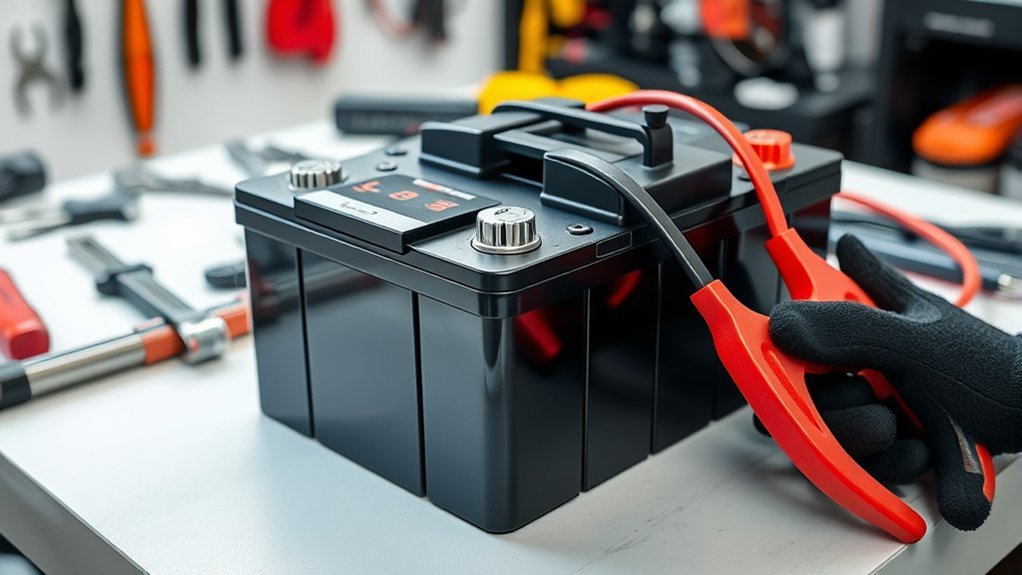
Handling and connecting your lithium car battery correctly is essential for ensuring safety and peak performance. Improper procedures can lead to short circuits, damage, or safety hazards. To do this properly:
- Always connect the positive terminal first, then the negative, avoiding contact with metal tools to prevent short circuits.
- During installation, verify that the battery is securely fastened and that connections are tight and corrosion-free.
- When not in use, follow storage precautions by keeping the battery in a cool, dry environment away from direct sunlight, and dispose of it properly through designated battery disposal facilities once it reaches the end of its lifespan. Proper handling minimizes risks associated with lithium batteries and promotes responsible battery disposal, preventing environmental harm.
Essential Protective Gear and Safety Equipment to Use

To assure safety during the installation and maintenance of lithium car batteries, wearing appropriate protective gear and using the right safety equipment is non-negotiable. Protective gloves are essential to prevent direct contact with high-voltage components and potential corrosive leaks. They provide a barrier against electrical shocks and chemical exposure, reducing injury risk. Safety goggles are equally critical, safeguarding your eyes from sparks, splashes, or accidental debris that could occur during handling. Proper eye protection ensures that no hazardous particles reach your eyes during battery disconnection or reconnection. Both protective gloves and safety goggles must meet industry standards for electrical and chemical safety. Using this gear consistently minimizes injury risk and promotes a safe working environment when dealing with lithium starter batteries.
Best Practices for Charging and Maintaining Lithium Starter Batteries
Proper charging and maintenance of lithium starter batteries are essential to guarantee peak performance and longevity. To optimize battery health, follow these best practices:
- Use a compatible charger with proper voltage and current settings to prevent overcharging or undercharging, which can degrade the battery. Consistently monitor charge levels and avoid deep discharges.
- Implement storage precautions by storing batteries in a cool, dry environment, and periodically check their charge status, especially during long periods of inactivity.
- Engage in responsible battery recycling at end-of-life to prevent environmental hazards and adhere to safety regulations. Proper disposal minimizes risks and supports sustainable practices.
What to Do in Case of a Battery Emergency or Accident?
In the event of a lithium starter battery emergency or accident, immediate and informed action is essential to minimize risks and prevent further damage. First, verify personal safety by wearing protective gear and evacuating the area if there is smoke, fire, or unusual odors. Initiate the emergency response by disconnecting the battery if safe to do so, and avoid contact with leaking or damaged cells. If the battery has been compromised, follow proper procedures for battery disposal to prevent environmental contamination. Never attempt to repair or reuse a damaged lithium battery; instead, contact certified disposal facilities. Proper battery disposal is critical to avoid hazardous chemical exposure. Prompt and appropriate emergency response preserves safety, reduces environmental impact, and ensures compliance with safety regulations.
Frequently Asked Questions
How Long Do Lithium Starter Batteries Typically Last?
Lithium starter batteries typically last 5-8 years, depending on usage and maintenance. To maximize battery lifespan, follow maintenance tips like regular inspections, keeping terminals clean, and avoiding deep discharges, which help guarantee reliable performance and longevity.
Are Lithium Batteries Environmentally Friendly?
We believe lithium batteries are relatively environmentally friendly due to their lower environmental impact and efficient recycling processes, which help recover valuable materials and reduce waste. Proper disposal and recycling are essential to minimize ecological effects.
Can Lithium Batteries Be Recycled Easily?
Lithium batteries can be recycled, but the process requires specialized battery recycling facilities. Proper lithium disposal is essential to prevent environmental harm, and we advise following established protocols for effective battery recycling and minimizing ecological impact.
What Are Signs of a Failing Lithium Starter Battery?
A warning sign is “a canary in the coal mine”: if your lithium starter battery shows overheating or corrosion symptoms, it’s failing. These indicators suggest diminished performance and potential safety risks, requiring prompt inspection and replacement.
How Do Temperature Changes Affect Lithium Battery Safety?
Temperature changes cause thermal expansion in lithium batteries, which can compromise safety and reduce battery performance. We recommend monitoring ambient temperatures closely and avoiding extreme conditions to prevent potential risks and maintain ideal battery functionality.
Conclusion
In summary, cautious conduct and consistent care are essential when handling lithium starter batteries. By adhering to safety standards, safeguarding against sparks, spills, and shocks, and staying vigilant during maintenance, we can prevent potential hazards. Proper procedures and protective gear empower us to protect both people and vehicles. Prioritizing preparedness and prudence ensures prolonged performance and peace of mind, fostering a safer, smarter, and more secure automotive environment for everyone involved.