As we rely more on electric vehicles, understanding lithium battery safety becomes essential. These batteries require careful handling, regular inspections, and adherence to safety standards to prevent hazards. Without proper knowledge, risks like fires or battery failure increase, potentially endangering lives and property. Ensuring safety isn’t just about compliance; it’s about protecting ourselves and others in everyday use. Let’s explore the critical aspects that can help us manage these powerful energy sources responsibly.
Key Takeaways
- Handle batteries carefully, avoid physical damage, and monitor for signs of swelling, corrosion, or capacity loss.
- Use certified chargers and follow proper charging protocols to prevent thermal stress and safety hazards.
- Know emergency procedures: move to safety, avoid water on fires, and call emergency services if needed.
- Store and transport batteries properly in cool, dry environments, and secure them to prevent damage or crushing.
- Follow proper disposal and recycling procedures to minimize environmental impact and recover valuable materials.
Understanding the Basics of Lithium Batteries in EVs
Lithium batteries are the core energy storage component in electric vehicles (EVs), providing high energy density and efficient power delivery. Their performance depends heavily on battery chemistry, which influences safety, longevity, and thermal stability. Different chemistries, such as lithium-ion variants, exhibit distinct characteristics that impact how batteries respond to stress and potential failures. Understanding these nuances helps us evaluate safety risks effectively. Additionally, the charging infrastructure plays a critical role in maintaining battery health, as proper charging protocols minimize thermal stress and degradation. While advancements have improved both chemistry and infrastructure, cautious handling remains essential. Recognizing how battery chemistry interacts with charging practices allows us to better grasp safety considerations, ensuring responsible use and informed decision-making in EV ownership.
How to Identify Safe and Reliable EV Lithium Battery Brands

When evaluating EV lithium battery brands, we must consider their reputation and certification to guarantee adherence to safety standards. Quality assurance and rigorous testing are critical indicators of a brand’s reliability and long-term performance. By scrutinizing these points, consumers can make more informed, cautious choices.
Brand Reputation and Certification
Selecting a trustworthy EV lithium battery brand requires careful scrutiny of its reputation and certification credentials. A strong brand reputation indicates consistent quality and reliability, built over years of proven performance. Certification standards are equally crucial—they ensure the battery meets rigorous safety and performance benchmarks set by recognized authorities. Brands that adhere to these standards demonstrate a commitment to safety and quality assurance, reducing risks associated with defects or failures. We advise verifying whether the manufacturer’s certifications align with industry-leading safety protocols, such as UL, IEC, or UN standards. While a reputable brand doesn’t guarantee perfection, it considerably lowers the likelihood of encountering substandard products. Careful evaluation of both reputation and certification credentials is essential for making an informed, safety-conscious choice.
Quality Assurance and Testing
To guarantee a battery’s safety and reliability, we must scrutinize how manufacturers conduct quality assurance and testing. This involves examining their approach to battery chemistry, ensuring it aligns with proven safety protocols. Reliable brands adhere to strict manufacturing standards, which include thorough testing phases that assess performance, thermal stability, and safety features. We should verify if manufacturers perform rigorous cell-level testing, such as abuse and cycle tests, to identify potential safety risks. Transparency about testing procedures and certifications is also critical. By focusing on these factors, we can differentiate brands that prioritize safety through meticulous quality assurance. Ultimately, understanding a manufacturer’s commitment to manufacturing standards and their testing rigor helps us identify EV lithium batteries that are both safe and dependable.
Proper Handling and Maintenance of EV Lithium Batteries
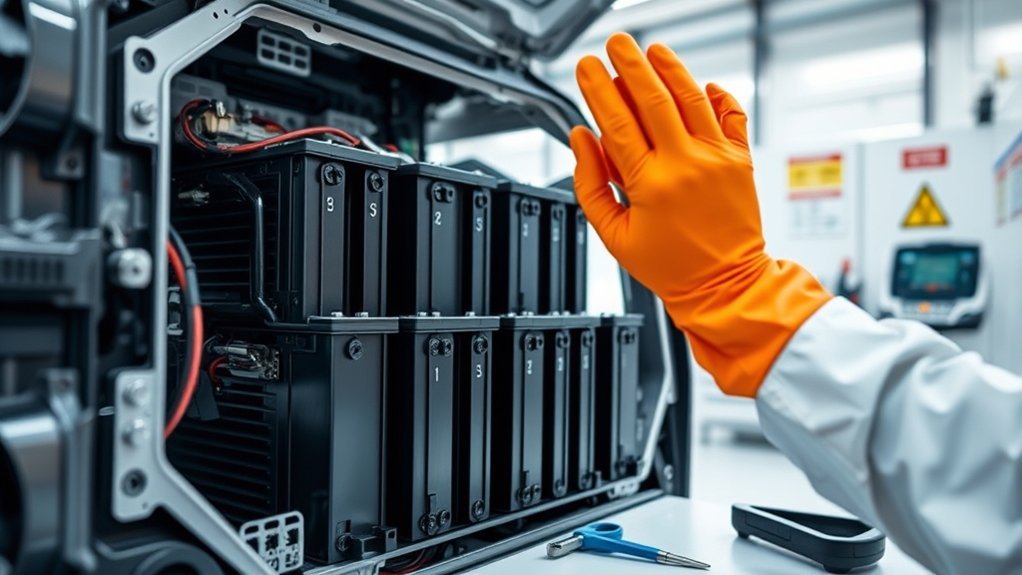
Proper handling and maintenance of EV lithium batteries are essential for safety and longevity. We must follow safe charging practices and conduct regular inspections to identify potential issues early. Adhering to these protocols minimizes risks and guarantees reliable battery performance.
Safe Charging Practices
Have you ever considered the critical importance of correct charging practices for EV lithium batteries? Proper handling during charging minimizes risks of thermal runaway, degradation, and safety hazards. When using wireless charging, guarantee alignment and compatibility to prevent uneven charging and potential damage. Fast charging offers convenience but can increase stress on the battery; therefore, it should be used judiciously and only with approved chargers.
| Charging Method | Precaution |
|---|---|
| Wireless charging | Maintain proper alignment and verify compatibility |
| Fast charging | Limit frequency to reduce thermal stress |
| Standard charging | Follow manufacturer guidelines for maximum lifespan |
Regular Battery Inspections
Regular inspections of EV lithium batteries are vital for guaranteeing safety and peak performance. Consistent evaluation helps identify potential issues early, reducing risks such as thermal runaway or fires. During inspections, we focus on:
- Checking for physical damage, corrosion, or swelling that could indicate internal failures or the need for battery recycling.
- Monitoring battery management system (BMS) diagnostics to ensure accurate voltage and temperature readings.
- Verifying proper function at charging stations to prevent overcharging or undercharging, which can degrade the battery. Regular maintenance should include cleaning contact points and inspecting for signs of wear. Proactive inspections promote safe handling practices and support responsible recycling. Avoid neglecting these steps; a failure to do so can compromise safety and lead to costly repairs or environmental hazards.
Recognizing Signs of Battery Degradation or Damage
Detecting early signs of battery degradation or damage is essential for maintaining the safety and performance of your electric vehicle. A noticeable reduction in battery capacity, such as decreased driving range, indicates potential degradation. Charging anomalies—such as prolonged charging times, frequent failure to reach full charge, or irregular charging cycles—also serve as critical warning signs. These issues suggest internal damage or deterioration of battery cells, which can compromise safety if left unaddressed. It’s important to monitor these indicators carefully and avoid ignoring subtle changes. Regular inspections and awareness of your vehicle’s charging behavior help identify problems early, reducing the risk of thermal events or failure. Vigilance is key to ensuring both safety and most favorable battery longevity.
Safe Charging Practices for Electric Vehicle Batteries
Proper charging practices directly impact the longevity and safety of your electric vehicle’s battery. To guarantee ideal performance, follow these guidelines:
- Always use chargers compatible with your vehicle’s specifications to prevent overvoltage or undervoltage issues, which can cause damage or safety hazards.
- Avoid frequent fast charging unless necessary, as it accelerates battery wear; instead, opt for regular, moderate charging cycles.
- When the battery reaches end-of-life, prioritize responsible battery recycling to minimize environmental impact and recover valuable materials.
Additionally, verifying charger compatibility reduces risks related to improper connections, while considering battery recycling options ensures environmental safety. Adhering to these practices promotes safer, more sustainable use of your EV’s lithium battery.
What to Do in Case of a Battery Fire or Overheating?
What immediate steps should we take if a lithium battery in an electric vehicle catches fire or begins to overheat? Our priority is a prompt, controlled emergency response. First, confirm personal safety by moving to a safe distance, avoiding inhalation of toxic fumes. Call emergency services immediately, specifying a vehicle battery fire. Do not attempt to extinguish the fire with water, as this can worsen the situation; instead, use a Class D fire extinguisher designed for combustible metals if trained and available. For overheating incidents without fire, turn off the vehicle and ventilate the area. Providing first aid involves protecting yourself and others from burns or smoke inhalation, and seeking medical attention if anyone exhibits symptoms of exposure. Caution and swift action are essential in managing these hazardous situations effectively.
Best Practices for Battery Storage and Transportation
To guarantee safety and compliance, we must adhere to strict protocols when storing and transporting lithium batteries for electric vehicles. Proper procedures mitigate risks associated with fire, leakage, or damage. First, confirm batteries are stored in a cool, dry environment, avoiding exposure to direct sunlight or extreme temperatures. Second, secure batteries during transit, using appropriate packaging, and avoid stacking or crushing, especially during battery swapping or wireless charging setups. Third, implement rigorous labeling and documentation to track battery status and prevent mishandling. When handling batteries for wireless charging or swapping, use certified equipment and follow manufacturer guidelines. These practices minimize hazards and ensure safe transportation, reducing the potential for accidents or environmental contamination.
Manufacturer Safety Standards and Certifications to Look For
Ensuring lithium batteries meet safety standards starts with verifying that manufacturers adhere to recognized certifications and standards. These certifications often specify requirements related to battery chemistry, ensuring materials are stable and safe under various conditions. They also address the quality of charging infrastructure compatibility, minimizing risks during charging cycles. Reputable standards, such as UL 2580 or IEC 62133, confirm that batteries undergo rigorous testing for thermal stability, electrical safety, and mechanical integrity. It’s essential to examine whether manufacturers follow established protocols to prevent potential hazards like thermal runaway or fires. By prioritizing certified manufacturers, consumers can better safeguard against substandard battery chemistry and unreliable charging infrastructure, reducing the risk of safety incidents and ensuring a more dependable EV experience.
Tips for Extending Your EV Battery’s Lifespan Safely
While it may be tempting to prioritize quick charging, doing so frequently can accelerate battery degradation due to stress on battery chemistry. To extend your EV battery’s lifespan safely, consider these measures:
- Use Level 2 charging stations whenever possible, as they provide steady, moderate power that minimizes stress on the battery.
- Avoid consistently charging to 100%; instead, keep the state of charge between 20-80% to reduce strain on battery chemistry.
- Limit high-speed charging sessions, especially in extreme temperatures, as rapid charging can cause thermal stress, impacting long-term health.
How to Dispose of or Recycle EV Lithium Batteries Responsibly
Proper disposal and recycling of EV lithium batteries are essential to minimizing environmental impact and recovering valuable materials. Battery recycling ensures that hazardous components are handled safely, preventing soil and water contamination. It also allows for the extraction of critical materials like lithium, cobalt, and nickel, reducing the need for new resource extraction. We must approach disposal with caution, following strict regulations and working with certified facilities that specialize in battery recycling. Improper disposal poses significant environmental risks, including fire hazards and toxic leaks. By prioritizing responsible recycling practices, we protect ecosystems, conserve resources, and promote sustainable use of lithium batteries. Ultimately, careful management of end-of-life EV batteries benefits both the environment and the broader effort toward cleaner transportation.
Frequently Asked Questions
How Do Temperature Fluctuations Affect EV Lithium Battery Safety?
Temperature fluctuations can cause thermal expansion in EV lithium batteries, risking structural damage. We rely on precise temperature sensors to monitor these changes carefully, ensuring safety by preventing overheating or excessive contraction that could compromise battery integrity.
Are There Specific Safety Features to Look for in EV Batteries?
Think of safety features as guardians protecting the battery’s integrity. We look for certifications, robust thermal management, and sensors to prevent degradation, ensuring the vehicle’s safety and longevity through cautious, certified design choices.
Can External Impacts Cause Hidden Damage to Batteries?
External impacts can cause hidden damage to batteries, making impact assessment essential. We recommend thorough damage detection after any collision, even if no visible damage appears, to guarantee safety and prevent potential failures later on.
What Are the Risks of Using Non-Standard Charging Equipment?
Using non-standard charging equipment risks compromising charging compatibility, which can subtly accelerate battery degradation over time. We advise sticking to manufacturer-approved chargers to guarantee safety, preserve battery health, and avoid unforeseen performance issues.
How Do EV Batteries Behave in Extreme Weather Conditions?
In extreme weather, EV batteries risk degradation due to temperature fluctuations, but thermal management systems help mitigate this. We advise caution, as prolonged exposure to heat or cold can impair battery performance and lifespan considerably.
Conclusion
Together, we navigate the intricate landscape of EV lithium battery safety, like guiding a delicate vessel through turbulent waters. By adhering to strict handling, maintenance, and disposal protocols, we safeguard lives and preserve the environment. Our vigilance acts as a sturdy compass, steering us clear of hazards and ensuring longevity. In this ever-evolving field, cautious awareness and disciplined practices remain our most reliable safeguards against unseen risks.