It’s almost unbelievable how strict airline regulations on portable lithium batteries have become, and missing a detail could lead to serious safety issues or delays. We need to understand these rules thoroughly to guarantee compliance and safety during travel. From size limits to packing protocols, each detail matters considerably. If you’ve ever wondered what the airline expects from your power banks, knowing the specifics can prevent complications and keep your journey smooth.
Key Takeaways
- Power banks under 100 Wh are generally allowed in carry-on baggage without airline approval.
- Batteries over 100 Wh typically require airline approval and are usually prohibited in checked luggage.
- Pack power banks in carry-on luggage, turned off, protected from damage, and with terminals covered.
- Limit quantities to one or two backup power banks per passenger, depending on capacity ratings.
- Damaged or recalled batteries should be avoided and disposed of properly to ensure safety and compliance.
What Are the Basic Airline Rules for Carrying Power Banks?
When it comes to carrying power banks on airplanes, understanding airline regulations is vital to guarantee compliance and safety. Airlines typically restrict power banks based on their watt-hour (Wh) ratings, with devices under 100 Wh generally permitted in carry-on luggage without airline approval. Power bank branding is essential, as it often indicates the capacity and compliance with safety standards. Passengers should verify proper battery recycling practices, avoiding damaged or recalled units, which pose safety risks onboard. Airlines also restrict the quantity of power banks allowed, emphasizing the importance of carrying only necessary devices. Proper labeling, including capacity information, helps verify compliance. Adhering to these rules minimizes the risk of confiscation or delays, ensuring a safe travel experience for all onboard.
How Do Size and Capacity Limits Affect Your Travel Gear?
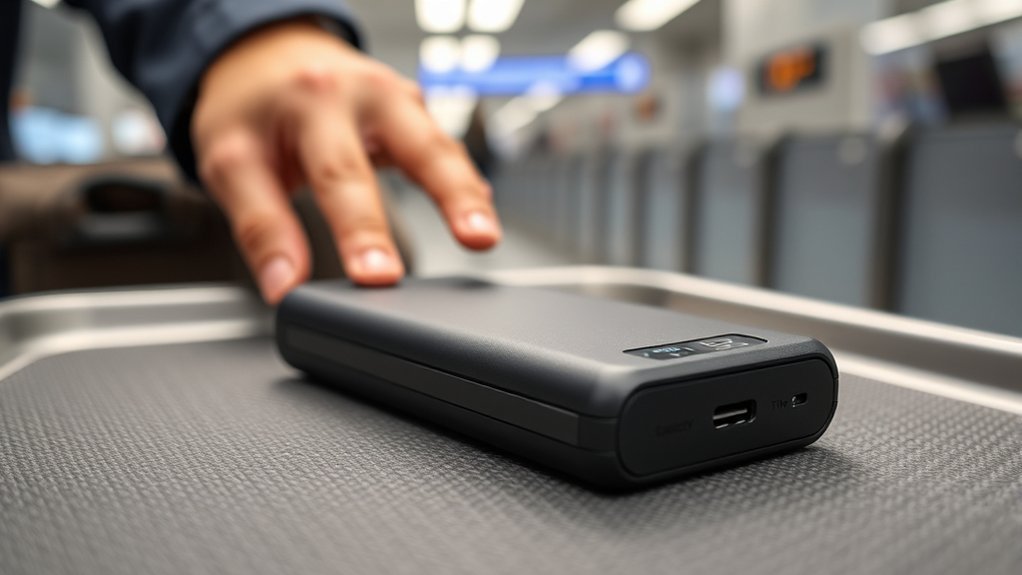
Size and capacity limits directly influence how you pack and select portable lithium batteries for travel. Battery capacity, measured in watt-hours (Wh), determines whether a power bank complies with airline travel restrictions. Devices exceeding 100 Wh typically require airline approval, while those under 100 Wh are generally permitted in carry-on luggage. These restrictions impact your gear choices, as larger capacity batteries often offer longer usage but may be prohibited or require special handling. Understanding these limits guarantees compliance and prevents delays at security checkpoints. Airlines enforce these travel restrictions to mitigate safety risks associated with lithium batteries. Consequently, selecting batteries within specified size and capacity parameters is vital to maintaining a streamlined, compliant travel setup, reducing the risk of confiscation or additional scrutiny during security checks.
Are There Restrictions on How Many Power Banks You Can Bring?
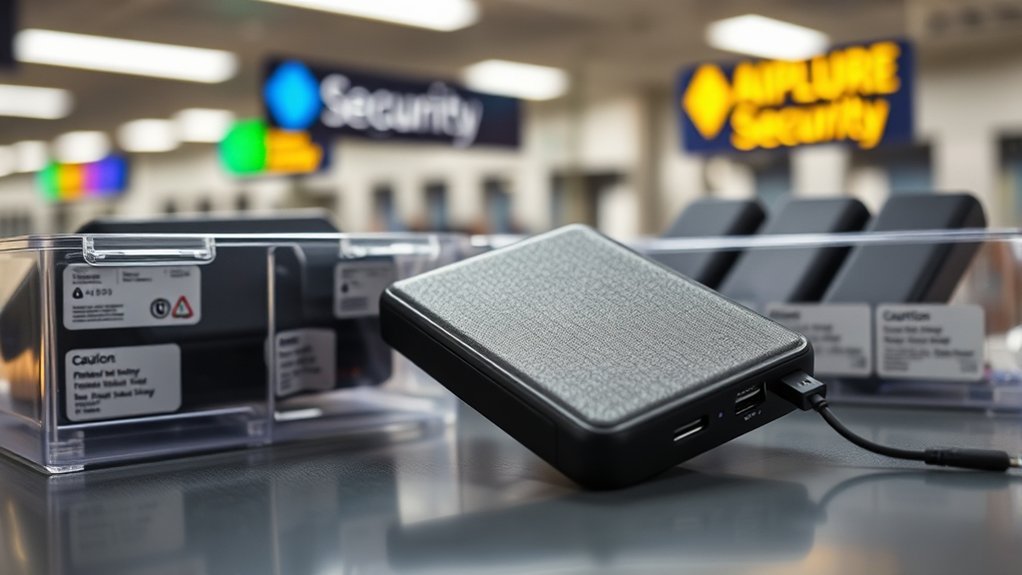
Airlines impose specific limits on the number of power banks each passenger can carry, based on total capacity and safety regulations. These restrictions vary depending on size and watt-hour ratings, with multiple units often subject to additional rules. Understanding these guidelines guarantees compliance and smooth travel with your portable power sources.
Airline Limits Per Passenger
Airline regulations typically limit the number of portable lithium batteries passengers can carry to guarantee safety during flights. These limits are designed to prevent thermal runaway risks and ensure compliance with international safety standards. Generally, airlines permit one or two backup power banks per passenger, with restrictions based on capacity rather than quantity. It’s important to take into account that in-flight entertainment often relies on portable power sources, so passengers should manage their batteries accordingly. Additionally, the cumulative baggage weight must remain within airline limits, affecting how many power banks and other devices can be packed. While capacity restrictions are covered separately, understanding these per-passenger limits helps travelers plan appropriately, avoiding confiscation or delays. Ultimately, adherence to airline limits ensures a safer, smoother travel experience.
Size and Capacity Restrictions
While capacity restrictions are often discussed regarding individual batteries, there are also specific limits on how many power banks travelers can carry, depending on their size and capacity. Airlines and regulatory agencies impose these limits to mitigate safety risks associated with lithium-ion batteries. Typically, power banks with capacities under 100Wh are permitted in carry-on luggage without restrictions, but quantities may be limited based on airline policies. Larger capacity power banks (100Wh to 160Wh) often require airline approval, and some airlines restrict the total number permitted onboard. Proper battery recycling procedures are essential when disposing of or replacing power banks, and branding can influence compliance, as certain power bank brands adhere more strictly to safety standards. Always verify airline-specific restrictions before travel to guarantee adherence to size and capacity regulations.
Multiple Power Banks Rules
When traveling with multiple power banks, restrictions are based not only on each individual device’s capacity but also on the total number permitted onboard. Airlines typically limit the number of power banks to guarantee safety, often allowing two to three devices with capacity under 100Wh. Larger capacity power banks exceeding 100Wh require airline approval. It’s essential to adhere to regulations regarding battery recycling, as improper disposal or damage can pose safety risks. Reputable power bank brands follow strict safety standards, reducing the risk of incidents during travel. Travelers should verify their power banks’ capacities and stay informed about airline policies before packing. Multiple power bank rules are designed to prevent overloading aircraft systems and ensure safe battery handling throughout the journey.
What Are the Safety Precautions Airlines Require for Lithium Batteries?
To guarantee safety during air travel, strict precautions are enforced regarding lithium batteries. Airlines require that lithium safety protocols be followed, including limiting battery capacity and ensuring devices are turned off and protected from accidental activation. Batteries must be transported in carry-on luggage, with terminals protected to prevent short circuits. Explosive risks from thermal runaway are mitigated through proper packaging and handling. Additionally, travelers are encouraged to participate in battery recycling programs, reducing potential hazards from damaged or expired batteries. Airlines may also restrict the carriage of damaged or recalled batteries entirely. Adhering to these safety precautions minimizes fire risks and aligns with international standards, ensuring safe transportation for all passengers.
How Should You Pack and Declare Your Power Banks During Travel?
Proper packing and declaring of power banks are vital steps in guaranteeing compliance with airline regulations and maintaining safety during travel. We recommend following battery storage best practices by keeping power banks in carry-on luggage, not checked baggage, to minimize fire risk. When packing, ensure devices are turned off and follow charging etiquette—avoid charging or using power banks during transit. Declaring your power banks at security checkpoints is essential; clearly identify them as lithium batteries to facilitate inspection and verification. Use protective cases to prevent accidental activation or damage. Accurate declaration ensures airline personnel are aware of battery capacity and quantity, reducing potential safety hazards and compliance issues. Adhering to these protocols promotes safe, efficient travel while respecting airline rules and safety standards.
What Common Mistakes Should You Avoid When Traveling With Lithium Batteries?
Avoid packing batteries improperly, as damaged or poorly secured units can pose safety hazards and lead to regulatory violations. Ignoring airline regulations on lithium battery restrictions can result in delays or confiscation, jeopardizing your travel plans. Additionally, carrying damaged batteries increases the risk of thermal runaway and should be strictly avoided to guarantee safety.
Improper Battery Packing
What are the most common pitfalls travelers encounter when packing lithium batteries improperly? First, failing to insulate terminals can lead to short circuits, risking fire hazards. Second, neglecting to pack batteries in protective cases or original packaging exposes them to damage and accidental activation. Third, improperly stored batteries might overheat if not kept in a cool, dry environment—compromising safety and battery longevity. Fourth, discarding damaged or expired batteries into regular waste rather than proper battery recycling endangers the environment and violates regulations. Correct battery storage is vital to prevent accidents, while responsible battery recycling helps mitigate risks. Proper packing not only ensures safety during travel but also promotes sustainable practices, protecting both passengers and the planet.
Ignoring Airline Regulations
Failing to familiarize ourselves with airline regulations can lead to serious issues when traveling with lithium batteries. Airline policies are specific about how batteries must be carried, especially regarding capacity limits and proper packaging. Ignoring these rules may result in confiscation or delays, and can compromise safety protocols. Additionally, improper battery disposal can pose fire hazards, which airlines strictly regulate. It’s vital to review each airline’s policies beforehand to avoid non-compliance. Many carriers prohibit batteries exceeding certain watt-hour ratings in checked luggage, emphasizing the importance of carrying high-capacity batteries onboard in carry-on baggage only. Adhering to airline policies, understanding battery disposal procedures, and ensuring compliance minimizes risks and ensures a smooth travel experience. Neglecting these details can lead to penalties and safety hazards.
Carrying Damaged Batteries
When traveling with lithium batteries, ensuring they are in good condition is paramount to maintaining safety and compliance with airline regulations. Carrying damaged batteries poses serious risks, including fire hazards and regulatory violations. Common mistakes to avoid include:
- Ignoring visible damage such as dents, corrosion, or swelling.
- Attempting to repair or modify damaged batteries yourself.
- Storing damaged batteries with intact ones, increasing risk.
- Failing to follow proper battery disposal procedures for irreparably damaged units.
Damaged batteries must be handled with caution; improper management can lead to dangerous failures. Always consult airline guidelines and local regulations for battery disposal. Ensuring damaged batteries are safely contained or properly disposed of prevents accidents and maintains compliance during air travel.
Frequently Asked Questions
Can I Use My Power Bank During a Flight?
Yes, you can use your power bank during a flight if its battery capacity complies with airline and international charging restrictions, typically under 100Wh. Always check airline policies and make certain your device remains on, not charging, during the flight.
Are There Specific Airline Policies for Different Countries?
International regulations and battery safety standards guide airline policies across countries, so we adhere strictly to these rules. Different airlines may implement specific procedures, but overall, conformity with international standards guarantees safe transportation of lithium battery packs.
What Happens if My Power Bank Exceeds Size Limits?
Exceeding size limits for your power bank is like trying to fit a storm into a teacup—dangerous and against safety regulations. Airlines confiscate non-compliant batteries, emphasizing the importance of adhering to battery capacity and safety standards for safe travel.
Are There Penalties for Not Declaring Lithium Batteries?
Yes, penalties exist if you don’t declare lithium batteries; it compromises battery safety and violates declaration procedures, potentially leading to fines, confiscation, or delays. Always follow airline regulations to guarantee safe, compliant travel with lithium batteries.
How Do I Check if My Power Bank Is Airline-Compliant?
We check if our power bank complies by reviewing its capacity, ensuring it meets battery safety and charging regulations, and verifying it’s labeled with airline-approved markings, so we travel confidently knowing it adheres to airline safety standards.
Conclusion
By strictly following airline guidelines for lithium battery packs, we safeguard not only our journey but everyone’s safety on board. Proper labeling, cautious packing, and adhering to capacity limits are non-negotiable in preventing catastrophic incidents. Ignoring these rules could lead to severe delays, confiscation, or even disaster. Let’s prioritize safety above all—because in air travel, the smallest oversight can have the most colossal consequences. Stay compliant, stay safe, and fly with confidence.