Lithium battery overheating remains a significant safety concern, especially as reliance on portable electronics increases. Its effects can compromise device safety and reduce battery lifespan, making preventive measures critical. Understanding the underlying causes and implementing effective strategies can help mitigate risks. We’ll explore practical approaches, from proper charging protocols to thermal management techniques, that are essential for maintaining safety and extending battery performance—but knowing when issues escalate is equally important.
Key Takeaways
- Use chargers with built-in safety features and match voltage/current specifications to prevent overcharging.
- Store batteries in cool, ventilated areas away from direct sunlight to reduce thermal stress.
- Monitor battery temperature during charging and operation with thermal sensors to detect overheating early.
- Avoid deep discharges and operate devices within recommended temperature ranges to minimize thermal risks.
- Regularly inspect batteries for signs of swelling, deformation, or damage, and seek professional assistance if needed.
How Overheating Affects Lithium Battery Safety
When lithium batteries overheat, their structural integrity and chemical stability are compromised, substantially increasing safety risks. This occurs because elevated temperatures disrupt the delicate balance of battery chemistry, accelerating degradation and risk of thermal runaway. The battery’s thermal conductivity—the ability to transfer heat—is critical here; poor thermal management hampers heat dissipation, leading to localized hotspots. These hotspots intensify chemical reactions, increasing pressure and risking internal damage. As heat builds, the electrolyte may decompose, releasing flammable gases, and potentially causing fires or explosions. Understanding how overheating impacts these fundamental factors underscores the importance of controlling temperature and improving thermal conductivity to maintain the safety and longevity of lithium batteries. Proper thermal regulation is essential to prevent catastrophic failures.
Recognizing Early Signs of Battery Overheating
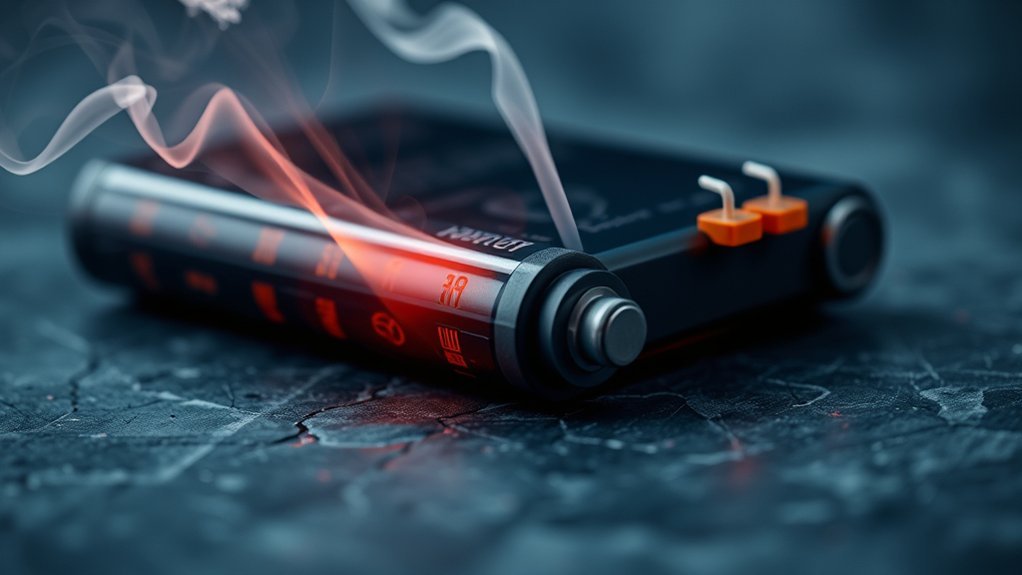
Recognizing early signs of battery overheating is critical for safety, and we focus on specific indicators such as unusual heat emissions, swelling, or bulging. These physical changes often precede more severe failures and signal that immediate action is necessary. Monitoring for these signs allows us to prevent potential hazards and extend battery lifespan.
Unusual Heat Emissions
Have you noticed any unusual heat emissions from your lithium battery during operation? Such heat anomalies can indicate early signs of overheating, often linked to compromised electrical insulation which causes internal resistance and heat buildup. When heat is concentrated or excessive, it may suggest inadequate ventilation methods are failing to dissipate thermal energy effectively. Monitoring temperature sensors can help detect these emissions before they escalate. Improved ventilation techniques, like increased airflow or the use of cooling systems, are essential for managing heat. Ensuring proper electrical insulation prevents undesired heat transfer between internal components. Recognizing these early signs allows for prompt intervention, reducing the risk of thermal runaway. Continuous observation of heat emissions, coupled with effective ventilation and insulation, is vital for maintaining battery safety and longevity.
Swelling or Bulging
Swelling or bulging of a lithium battery often signals the onset of internal heat buildup and chemical reactions that compromise its structural integrity. This phenomenon, known as battery swelling, results from gas generation within the cell due to overcharging, thermal runaway, or internal short circuits. Recognizing early signs of swelling is vital for bulging prevention, as continued use risks catastrophic failure, fire, or explosion. Visual inspection for irregularities such as a rounded or deformed casing helps identify potential hazards. Addressing swelling promptly by disconnecting power and replacing the affected battery is necessary to guarantee safety. Preventative measures include avoiding overcharging, maintaining proper storage conditions, and using high-quality chargers, all of which contribute to effective bulging prevention and overall battery longevity.
Unusual Battery Behavior
Unusual battery behavior often serves as an early warning sign of overheating, signaling underlying issues that could lead to failure or safety hazards. Such behaviors include rapid voltage drops, inconsistent energy density, or unexpected heat generation. These signs can compromise battery lifespan and reduce overall performance. Monitoring these indicators helps prevent thermal runaway and potential safety risks.
| Behavior | Possible Cause | Implication |
|---|---|---|
| Rapid voltage fluctuation | Internal cell imbalance | Reduced lifespan |
| Excessive heat during use | High internal resistance | Safety threat |
| Sudden power loss | Degradation of energy density | Performance decline |
| Swelling or bulging | Gas buildup from overheating | Structural failure |
Recognizing these signs enables timely intervention, preserving battery health and safety.
Best Practices for Charging Lithium Batteries Safely
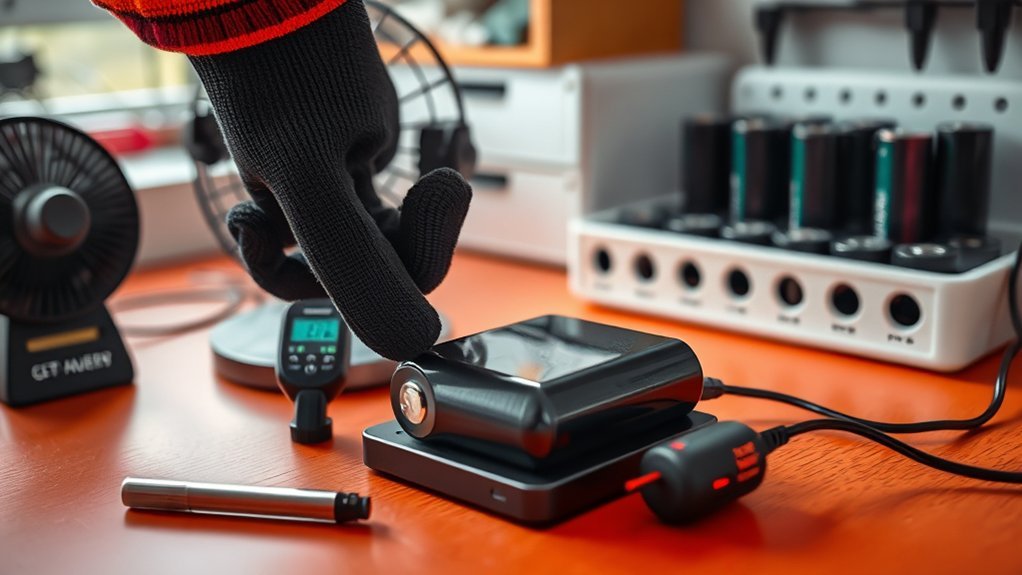
To charge lithium batteries safely, we must confirm the charger matches the battery’s specifications to prevent voltage mismatches that can cause overheating. Avoiding overcharging is critical, as it can lead to thermal runaway; implementing proper charging cycles mitigates this risk. Additionally, charging in cool environments helps maintain ideal temperature levels, reducing the likelihood of heat buildup during the process.
Use Proper Charger Specifications
Ensuring the charger meets the specific requirements of your lithium battery is essential for safe and efficient charging. Using incompatible chargers can lead to overheating, capacity loss, and increased safety risks. Proper chargers should match the battery’s voltage and current specifications, preventing overcurrent conditions. Additionally, selecting chargers with built-in safety features, such as temperature regulation and overvoltage protection, minimizes overheating risks. This approach also supports sustainable practices; by preventing damage, it extends battery lifespan and reduces the need for frequent replacements, aiding battery recycling efforts and mitigating environmental impact.
- Match voltage and current specifications
- Use chargers with temperature regulation
- Opt for chargers with overvoltage protection
- Follow manufacturer’s guidelines
- Prioritize safety certifications
Avoid Overcharging Batteries
Overcharging lithium batteries can considerably increase the risk of thermal runaway and capacity degradation, so it’s essential to follow best practices during charging. Overcharging causes excessive heat buildup, which accelerates electrode degradation and can compromise battery safety. To mitigate this, we recommend using chargers with built-in overcharge protection and monitoring charging cycles carefully. Proper management extends battery lifespan and reduces the frequency of battery recycling, which is vital given the environmental impact of improper disposal. Overcharged batteries pose a higher risk of leaks and fires, highlighting the importance of preventing overvoltage conditions. By avoiding overcharging, we not only enhance safety and longevity but also contribute to more sustainable practices, reducing the environmental footprint associated with manufacturing, disposal, and recycling of lithium batteries.
Charge in Cool Environments
Charging lithium batteries in cool environments is essential for maintaining ideal thermal conditions and preventing overheating. Cooler ambient temperatures help regulate internal cell temperature, reducing thermal stress and prolonging battery lifespan. Consistently charging in high-temperature settings accelerates degradation, complicating battery recycling efforts and increasing environmental impact. To optimize safety and efficiency, consider:
- Using temperature-controlled charging stations
- Avoiding direct sunlight during charging
- Ensuring proper ventilation around devices
- Monitoring ambient temperature with sensors
- Selecting battery storage locations with stable, cool conditions
Adhering to these practices minimizes overheating risk and supports sustainable battery recycling, ultimately reducing environmental impact. Proper environmental management of lithium batteries depends on controlled charging conditions, emphasizing the importance of cool environments for safe operation and disposal.
Choosing the Right Storage Conditions to Prevent Overheating
Choosing the ideal storage conditions for lithium batteries is essential to minimize the risk of overheating and guarantee longevity. Proper storage involves regulating both storage humidity and temperature to prevent thermal stress and degradation. Excessive humidity can lead to corrosion and internal short circuits, increasing overheating potential, so maintaining low, stable humidity levels is critical. Temperature control is equally important; storing batteries at moderate, consistent temperatures—typically between 20°C and 25°C—reduces thermal fluctuations that accelerate aging and thermal runaway risks. Avoiding temperature extremes prevents internal material breakdown and capacity loss. By managing these factors, we assure batteries remain stable over time, minimizing overheating incidents and extending their effective lifespan. Precise control of storage environment is fundamental to battery safety and performance.
How to Use Thermal Management Tools Effectively
Effective thermal management begins with understanding how to utilize specialized tools designed to monitor and regulate battery temperatures. These tools enable precise control of heat dissipation through methods like thermal insulation and airflow optimization. Proper use involves analyzing temperature data to identify hotspots and adjusting cooling systems accordingly. Additionally, integrating thermal sensors with real-time monitoring ensures rapid response to abnormal temperature fluctuations.
Key strategies include:
- Applying thermal insulation to reduce external heat transfer
- Enhancing airflow pathways for consistent cooling
- Utilizing temperature sensors for real-time data
- Calibrating cooling systems based on thermal load
- Regularly inspecting thermal management components for efficiency
Protecting Devices With Proper Battery Usage Habits
To prevent overheating and extend the lifespan of lithium batteries, adopting proper device usage habits is essential. Consistently avoiding overcharging and deep discharges minimizes thermal stress and chemical degradation. Using devices within recommended temperature ranges prevents thermal runaway risks. Additionally, responsible disposal practices, such as battery recycling and eco-friendly disposal, reduce environmental impact and prevent potential hazards associated with damaged or degraded batteries. Proper recycling ensures that harmful materials are managed safely, reducing the risk of leakage or fire. Regularly monitoring device performance and replacing aging batteries prevents thermal buildup caused by internal resistance. Maintaining these habits not only preserves battery health but also promotes safety, environmental responsibility, and compliance with disposal regulations—ultimately guaranteeing safer device operation and longevity.
The Importance of Using Quality Chargers and Accessories
Using substandard chargers and accessories can considerably increase the risk of lithium battery overheating and damage, leading to potential safety hazards and reduced device lifespan. Low-quality chargers often deliver inconsistent voltage, causing thermal stress and accelerating battery degradation. Additionally, inferior accessories may lack proper insulation, increasing the risk of short circuits. This not only impacts device performance but also contributes to environmental concerns through increased battery recycling due to premature failures. To mitigate these risks, choose certified chargers designed for specific battery chemistries. Proper accessories guarantee stable power delivery, minimizing thermal buildup. Prioritizing quality reduces overheating incidents, extends battery life, and supports sustainable practices by decreasing waste. Assuring compatibility and authenticity in chargers and accessories is essential for device safety, environmental preservation, and responsible battery recycling.
Troubleshooting Overheating Issues in Lithium Batteries
When lithium batteries overheat, it signals underlying issues that require prompt identification and resolution. Overheating can result from internal cell degradation, poor manufacturing quality, or external factors like overcharging. To troubleshoot, we analyze charging patterns and check for physical damage or swelling, which indicate thermal runaway risks. Ensuring proper overheating prevention involves avoiding prolonged high current loads and using compatible chargers. Additionally, improper battery recycling can lead to compromised cell integrity, increasing overheating risks. When troubleshooting, always consider the battery’s age and history, as older cells are more prone to overheating. Addressing these issues promptly not only extends battery lifespan but also mitigates safety hazards. Proper handling and disposal through responsible battery recycling are essential for preventing future overheating challenges.
When to Seek Professional Help for Overheating Concerns
Recognizing the signs that indicate the need for professional intervention is vital when dealing with lithium battery overheating. Persistent or severe heat, swelling, leakage, or odd odors suggest critical safety risks and potential environmental impact. If these symptoms occur, it’s essential to consult qualified technicians to prevent battery failure or fire. Additionally, overheating incidents should prompt proper battery recycling procedures to mitigate environmental impact.
Seek professional help if:
- The battery shows persistent swelling or deformation
- Overheating occurs during normal operation
- There is visible leakage or corrosion
- The device emits strange odors or smoke
- The battery fails to hold charge or exhibits erratic behavior
Prompt expert intervention ensures safety, proper disposal, and minimizes environmental consequences associated with battery failure.
Frequently Asked Questions
How Does Ambient Temperature Impact Lithium Battery Overheating Risks?
Ambient temperature considerably impacts lithium battery overheating risks; proper ambient cooling and temperature regulation are essential. Elevated temperatures accelerate thermal runaway, while cooler environments help maintain ideal battery performance and safety, reducing overheating incidents and prolonging battery lifespan.
Are There Specific Signs Indicating Imminent Battery Failure Due to Overheating?
We notice signs like swelling, excessive heat, or a strange smell indicating imminent battery failure from overheating. Effective thermal management and proper battery insulation help prevent these issues by maintaining ideal temperatures and reducing thermal stress.
Can Overheating Affect Lithium Battery Lifespan and Performance?
Overheating markedly reduces lithium battery lifespan and performance by accelerating chemical degradation. Effective thermal management and battery cooling are essential to maintain ideal operating temperatures, ensuring longevity and consistent power output over the battery’s lifespan.
What Are the Long-Term Consequences of Repeated Overheating Incidents?
Repeated overheating causes lithium batteries to degrade like a melting ice sculpture, risking reduced capacity and safety hazards. We recognize that persistent overheating jeopardizes long-term performance and battery safety, emphasizing the need for vigilant thermal management.
How Do Different Battery Chemistries Respond to High Temperatures?
Different battery chemistries exhibit varied thermal resilience; lithium-ion, for instance, risks thermal runaway at high temperatures, while solid-state batteries demonstrate enhanced heat tolerance. We analyze these responses to optimize safety and performance across diverse applications.
Conclusion
In summary, preventing lithium battery overheating is vital for safety and longevity, much like maintaining the health of a delicate ecosystem. By adhering to proper charging, storage, and thermal management practices, we can mitigate risks effectively. Regular monitoring and using quality accessories act as safeguards, ensuring peak performance. When issues arise, seeking professional assistance is essential. Our proactive approach helps preserve battery integrity, much like a well-tuned machine, ensuring reliability and safety in every use.