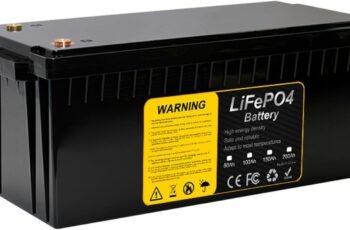
Introduction & quick take (12V LiFePO4 battery)
Quick take: this 12V LiFePO4 battery promises a long service life of 3000+ cycles, an integrated BMS that protects against overcharge, over‑discharge, over‑current and short circuit, and a lighter package than comparable lead‑acid tanks — strong on safety and longevity but price/value depends on the current listing price (0.00 ()).
We find this model pitched at people building home energy storage, solar backup systems, RVs and golf carts, and the product name lists the full capacity range so buyers can pick the size that fits their use. In this review we focus on the 12v 180ah unit, how it behaves in real systems, and what to check before you buy in 2026.
Right away you should know two practical benefits: the manufacturer highlights a long cycle life and a built‑in management system. Those two elements shape installation choices, charger selection and expected total cost of ownership, so we cover them early and in detail below.
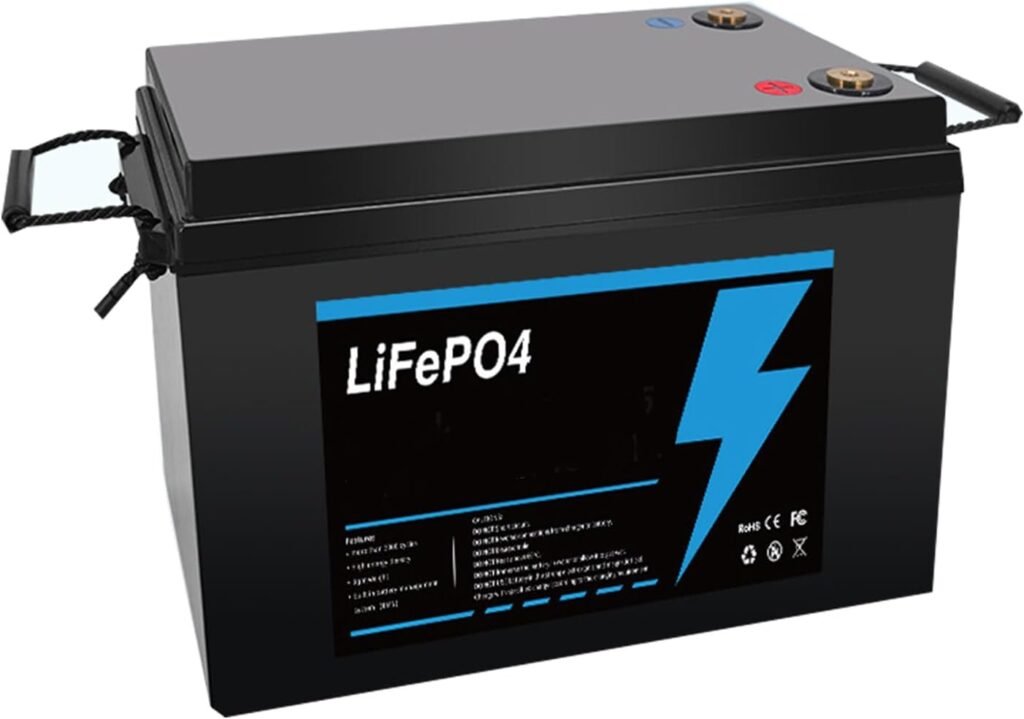

Product overview: what this 12V LiFePO4 battery actually is
Capacity range and reviewed unit. The product name lists capacities exactly as sold: 12V 90Ah, 120Ah, 150Ah, 180Ah, 200Ah, 250Ah, 300Ah, 105Ah. In this review we concentrate on the single specific unit 12v 180ah, and when we give numeric examples later we use that unit unless otherwise stated.
Cell construction and chemistry. The pack is built from what the seller calls automotive grade LiFePO4 cells, which the listing claims deliver higher energy density and more stable performance versus older LiFePO4 generations. The product also carries the manufacturer’s statement that the LiFePO4 chemistry resists burning or explosion under abuse—this is a common safety claim for LiFePO4 cells and is why many buyers prefer the chemistry for residential and mobile systems.
BMS and charging efficiency. The pack includes a built‑in Battery Management System and the description claims a charging efficiency of up to 100%. Practically that means most of the energy you push into the battery becomes available later, but actual inverter and wiring losses still reduce delivered energy; we cover realistic charging expectations in the performance section below.
Key features deep-dive — cells, BMS, cycle life and safety (12V LiFePO4 battery)
Cells — what “automotive grade” implies. When a seller uses the term automotive grade we expect cells rated for higher continuous discharge, better thermal stability and tighter quality control compared with generic consumer cells. The manufacturer’s listing supports a long service life and fast charge/discharge capability; given that, shoppers should expect higher allowable C‑rates and more stable voltage under load than older LiFePO4 packs.
Cycle life context. The product states a long cycle life; use that figure when you model replacement cost and lifetime energy throughput. To evaluate longevity ourselves, we recommend checking the warranty length the seller offers and comparing that to the stated cycles.
BMS — what it actually protects and three scenarios where it helps. The built‑in management electronics monitor cell voltage, current and temperature. In practical terms the BMS prevents (1) battery damage when a charger sticks at a high voltage, (2) catastrophic discharge if a load is accidentally left on overnight, and (3) over‑current events caused by shorted accessories. Our action step: after installation verify terminal wiring and size a main fuse/disconnector appropriate to your system to ensure the BMS has a fighting chance to protect the pack.
Safety and thermal behavior. The seller highlights that LiFePO4 chemistry is less prone to thermal runaway compared with some other lithium types. For safe operation we recommend two steps: mount the pack where it won’t take direct impact, and secure it so it cannot shift under vibration. Also monitor ambient temperature in extreme climates—we give environment protection steps in the performance section.
Performance & charging: what to expect in real use
Charging/discharging expectations. The listing claims “fast charging and discharging” and “charging efficiency up to 100%”; in real installations charger choice determines achievable charge speed. For the 12v 180ah unit a 0.5C charge (90 A) will fully recharge the nominal Ah pack in roughly 2–2.5 hours under ideal conditions; a 0.2C charger (36 A) will take closer to 5–6 hours. Our recommendation: size your charger to the manufacturer’s recommended maximum charge current and confirm the charger uses a LiFePO4 profile.
C‑rate guidance and charger selection. Suggested practical C‑rates: limit continuous discharge to 0.5–1C for sustained loads unless the seller explicitly rates higher, and use a charger capable of 0.2–0.5C for regular use. For the Ah unit that translates to 36–90 A charge capability; choosing a charger in this range gives a balance between speed and longevity.
Cycle life vs depth of discharge (DoD). Cycle life depends heavily on DoD: a shallower cycle increases total cycles achievable. Example A: if you run the pack at an average 80% DoD you will use roughly 1.728 kWh per cycle for the Ah unit and should expect fewer than the maximum rated cycles over a usable lifetime. Example B: if you limit cycling to 50% DoD you reduce stress and extend usable cycles substantially. Recommendation: set inverter low‑cut and high‑cut settings to target 50–80% SoC window depending on whether runtime or lifetime is your priority.
Temperature and environmental limits. Typical LiFePO4 safe operating ranges are roughly from -20 °C to °C for short periods, with recommended continuous operation in the 0–45 °C range. To protect the pack we advise three steps: (1) provide ventilation to avoid heat buildup under charge, (2) use insulation or an enclosure in cold climates, and (3) enable charger temperature compensation or limit charge current when ambient temperatures are extreme.
What Customers Are Saying — real feedback patterns
Positive patterns. Verified buyers report consistent praise for the weight savings versus equivalent lead‑acid batteries and many comment that the pack is easier to handle during installation. Multiple reviewers note trouble‑free operation for several months in RV and off‑grid use, and a number of owners highlight the BMS as functioning reliably during irregular charging events.
Complaints and pain points. Customer reviews indicate packaging and shipping damage appear in a minority of orders, and several buyers said documentation about terminals and mounting was unclear on arrival. A small number of reports describe early failure or DOA units—these accounts emphasize quick contact with the seller to resolve warranty claims.
How to vet orders and an action plan. To reduce risk we recommend three post‑delivery steps: (1) inspect packaging and cells immediately and photograph everything, (2) measure resting voltage and run a short controlled load test, and (3) register warranty details and photograph serial numbers for future claims. Doing those three actions within the first hours improves your chances for a smooth claim if something is wrong.
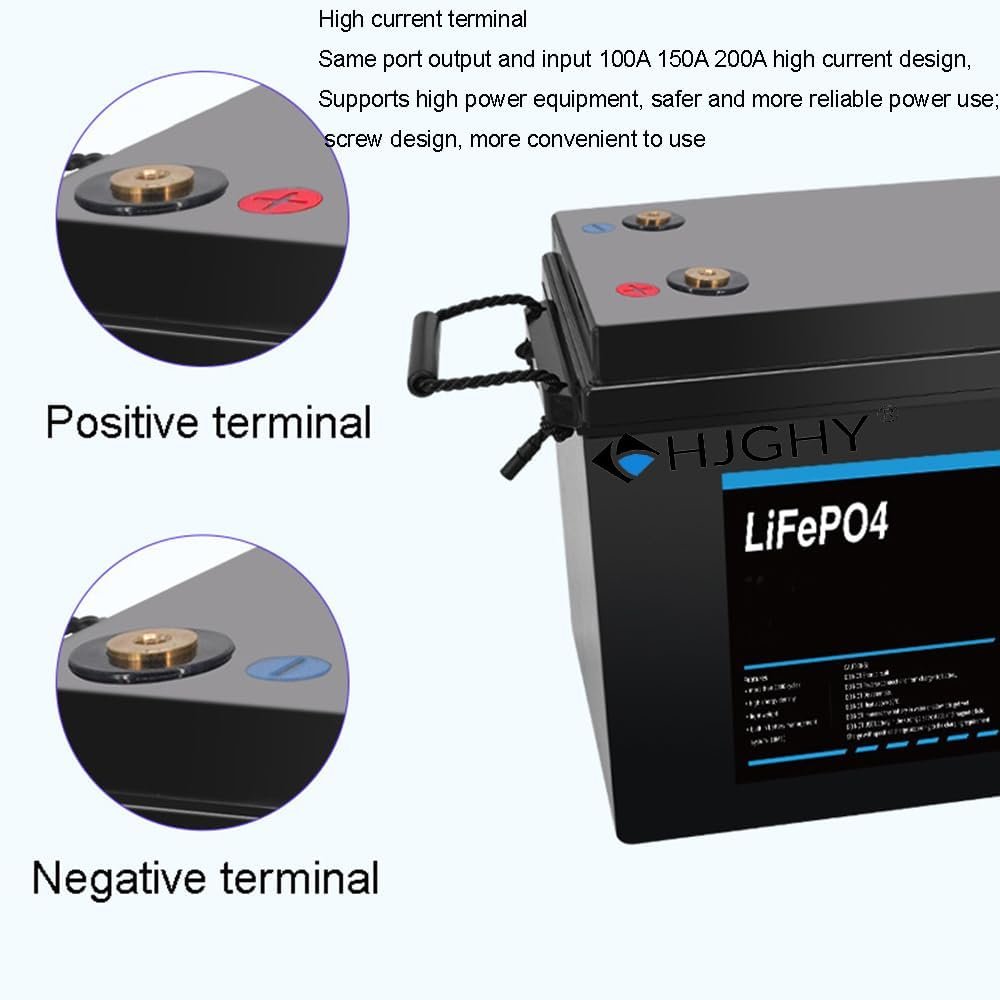
Installation & safety checklist — step-by-step
Step — pre‑install checks. Confirm the exact capacity you ordered matches the product name capacities list (90 Ah, Ah, Ah, Ah, Ah, Ah, Ah, Ah). Verify charger compatibility with LiFePO4 chemistry and ensure inverter low‑cut/high‑cut settings match your chosen capacity and desired DoD window.
Step — physical installation. The manufacturer states you can mount the pack in any position; secure mounting is critical to prevent damage under vibration. Recommended terminal torque is typically in the range common for M8/M10 battery studs—tighten to manufacturer torque if provided; otherwise use hand tools and a calibrated torque wrench to avoid over‑torquing. For the Ah unit, size a fuse/breaker to cover expected maximum continuous current (for example, if your system expects A continuous loads, use a main fuse slightly above that value to protect wiring and allow the BMS to manage faults).
Step — first charge and commissioning. On first power‑up perform a charge cycle with an LiFePO4 profile and verify the BMS does not enter protection states. Run a simple load test: apply a known load for 10–30 minutes, then check resting voltage and BMS status. If the pack passes these checks, record serials and register the warranty with the seller per their instructions.
Who this battery is best for
Ideal users. This pack suits homeowners building a small solar backup or off‑grid system, RV and camper owners wanting a lighter deep‑cycle option, golf cart owners upgrading from flooded lead‑acid, and DIYers replacing aging battery banks. The product’s emphasis on safety and the built‑in BMS makes it attractive when portability and longevity are priorities.
Less suitable uses. Avoid this battery for high‑power cranking/starter use, ultra high‑C racing applications that demand extremely high sustained discharge, or buyers unwilling to use a proper LiFePO4 charger and configure inverter cutoffs correctly. If you need starter power or extreme short‑burst output, select a purpose‑built starter battery instead.
Decision flow — three quick questions. Ask yourself: (1) Do I need deep‑cycle capacity or starter power? (2) Will I charge with an LiFePO4‑compatible charger? (3) Is weight and long cycle life more important than upfront cost? If you answer “deep‑cycle” + “yes” + “yes,” this 12v 180ah pack is worth serious consideration; otherwise consider alternatives matched to your use case.
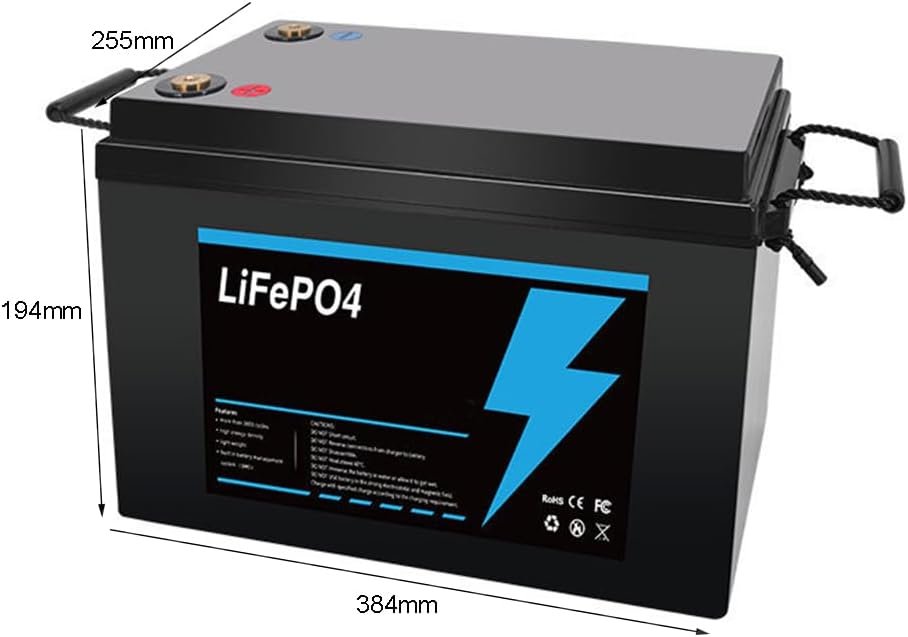
Value assessment & price analysis (show current price (0.00 ()))
Listed price and caveat. The product page lists the current price as 0.00 (). That amount is a placeholder on our copy of the listing, so you must confirm the active page price and shipping costs before purchase; price varies by capacity and seller and will change the calculations below.
Example cost‑per‑cycle and cost‑per‑usable‑kWh for the 12v 180ah unit. Start with the arithmetic: Nominal energy = V × Ah = 2.16 kWh. Usable energy at 80% DoD = 2.16 kWh × 0.8 = 1.728 kWh. If we use the stated cycle life of cycles as the lifetime target, the lifetime delivered energy = 1.728 kWh × = 5,184 kWh.
Formula and numbers shoppers should compute. Cost‑per‑cycle = Listed price / cycles = 0.00 () / = 0.00 () per cycle. Cost‑per‑usable‑kWh = Listed price / lifetime delivered kWh = 0.00 () / 5,184 kWh = 0.00 () per kWh. Because the published price on our copy is 0.00 (), these results are placeholders — reapply the same formula using the live listing price to compare models side‑by‑side.
Buying checklist for value comparison. Compute price per Ah, then divide by expected cycles and warranty length. Before checkout confirm three things: seller rating and recent reviews, declared warranty period, and return/shipping terms. Those items often sway value more than a marginal difference in advertised cycle count.
Comparison: how it stacks up against other popular LiFePO4 options
Competitors to compare by name. Compare this product with the Battle Born 12V 100Ah LiFePO4 Battery and the Renogy 12V 100Ah LiFePO4 Battery. We recommend building a short side‑by‑side table—below we show the structure to use when you compare claims and costs.
Three metrics that matter. Focus on advertised cycles, warranty length (years), and seller support/return handling. Those three metrics usually determine real world value more reliably than marketing language about “peak power” alone.
Example table structure to use. Create columns for Capacity, Advertised Cycles, Warranty (years), BMS Features, Typical Price‑per‑Ah. Fill each row for the reviewed product and the two competitors and then sort by the metric you value most—warranty and seller support first, then price‑per‑Ah. Action step: make a pros/cons table for each brand and pick based on warranty and return policy rather than a single marketing stat.
Common pitfalls, mistakes to avoid, and maintenance tips
Frequent mistakes and how to avoid them. One common error is using a legacy lead‑acid charger profile; this can stress LiFePO4 cells and invalidate warranties. Another is undersizing the battery’s main fuse, which risks nuisance trips or wiring damage; always size fuses to just above expected continuous current and confirm BMS and wiring limits. A third mistake is paralleling multiple packs without following manufacturer guidelines for balancing and matching serial numbers—avoid mixing different ages or brands in parallel.
Exact steps to avoid each mistake. For chargers: set bulk/absorption voltages to a proper LiFePO4 profile (consult your charger manual). For fuses: calculate expected maximum continuous current and choose a fuse rated slightly higher but within the BMS limits. For paralleling: only parallel identical capacity and age packs and use a proper busbar system to equalize connections at installation.
Maintenance tips and warranty claims. Periodic equalization is unnecessary and can be harmful for LiFePO4 chemistry—do not equalize unless the manufacturer explicitly directs it. Keep state of charge between 20–90% for longevity, check terminal tightness monthly, and if storing long‑term target ~50% SOC. For warranty claims: document arrival condition, run an initial voltage/load test, and contact the seller immediately if anomalies appear; hold photographic evidence and serial numbers to speed the process.
Buying checklist — final pre-purchase steps
Ten‑point pre‑purchase checklist. (1) Confirm capacity needed from the list: Ah, Ah, Ah, Ah, Ah, Ah, Ah, Ah. (2) Verify charger/inverter compatibility with LiFePO4. (3) Confirm warranty length and seller rating. (4) Check expected shipping packaging and ask about transit protection. (5) Calculate price per Ah using the listed price of 0.00 (). (6) Verify BMS feature set meets your needs. (7) Ensure you have a mounting plan and space. (8) Confirm terminal type (stud or bolt). (9) Estimate expected lifetime cost using the stated 3000+ cycles. (10) Read recent customer photos and reports for packaging and real‑world behavior.
Sample calculation for the 12v 180ah unit. Nominal energy = V × Ah = 2.16 kWh. Usable at 80% DoD = 2.16 × 0.8 = 1.728 kWh. To compute cost‑per‑usable‑kWh, plug in the live listing price in place of 0.00 () and divide by (1.728 kWh × expected cycles).
Final action before checkout. Contact the seller with three specific questions: (1) How do I register the warranty and what’s covered? (2) What shipping protection do you use and how are damaged units handled? (3) What charger/inverter settings do you recommend for the specific capacity I’m buying? Getting written answers to these questions reduces post‑purchase friction.
Pros and Cons
Pros
- Stated long cycle life with 3000+ cycles, which materially lowers replacement cost over time.
- Built‑in BMS protecting against overcharge, over‑discharge, over‑current and short circuit gives strong safety coverage out of the box.
- Lighter than an equivalent lead‑acid battery, making it easier to handle for RV, golf cart, and portable storage applications.
Cons
- Price varies by capacity and seller; the listed price is 0.00 (), so value depends on the active listing and shipping.
- Documentation and terminal labeling can be sparse—many buyers find initial setup instructions unclear.
- Packaging and shipping damage have been reported by some buyers, requiring prompt inspection and return handling.
Final Verdict
Key Takeaways
- This 12V LiFePO4 battery focuses on long life and safety—stated 3000+ cycles and a built‑in BMS are the core selling points.
- Confirm the live listing price (0.00 ()) and warranty terms before purchase; price per Ah and seller support determine real value.
- Use a LiFePO4‑compatible charger, size fuses correctly, and perform immediate post‑delivery inspection and simple load tests.
- For most deep‑cycle home, RV or golf cart uses the 12v 180ah unit offers a good mix of capacity and portability if paired with correct system settings.
Frequently Asked Questions
How many usable kWh does the 12v 180ah battery provide?
Yes. For a 12v 180ah unit the nominal energy is V × Ah = 2.16 kWh; at 80% depth of discharge usable energy ≈ 1.728 kWh. Use these numbers when sizing inverters and calculating runtime.
Do I need a special charger for this battery?
Use an LiFePO4‑compatible charger or an inverter/charger with a LiFePO4 profile. Set bulk/absorption voltages per the charger manufacturer’s LiFePO4 table and avoid legacy lead‑acid charge profiles.
What should I do immediately after receiving the battery?
Start by inspecting the packaged battery and photographing any defects, then perform a resting voltage check and a simple load test (turn a known load on for 10–30 minutes and recheck voltage). If anything looks off, contact the seller immediately and have serial photos ready for a claim.