As responsible motorcycle owners, we recognize the importance of safety when it comes to lithium batteries. These power sources offer many benefits but also pose significant risks if not handled properly. From proper maintenance to emergency response, every step we take impacts safety and reliability. We must adhere to strict guidelines to prevent hazards and guarantee longevity. Let’s explore the essential practices that can help us manage these batteries safely and avoid avoidable dangers.
Key Takeaways
- Regularly inspect batteries for damage, corrosion, swelling, and leaks to prevent safety hazards.
- Use manufacturer-approved chargers and avoid overcharging to prevent thermal runaway.
- Store batteries in cool, dry areas at around 50% charge during long-term storage.
- Recognize signs of malfunction, such as swelling or smoke, and disconnect immediately if detected.
- Wear protective gear and work in well-ventilated areas when handling or maintaining batteries.
Understanding Lithium Battery Safety Risks in Motorcycles
While lithium batteries offer significant advantages for motorcycle use, they also pose inherent safety risks that we must understand thoroughly. Central to these risks is the issue of chemical stability; lithium-ion cells can become unstable under certain conditions, such as physical damage, manufacturing defects, or overheating. When chemical stability is compromised, the risk of thermal runaway increases, creating dangerous fire hazards. These fires can ignite rapidly, releasing toxic fumes and causing severe damage. It’s essential to recognize that improper handling, overcharging, or exposure to extreme temperatures can destabilize the battery’s chemistry. Understanding these safety risks emphasizes the importance of using high-quality batteries, proper installation, and caution during operation. Being aware of fire hazards helps us implement necessary precautions to guarantee safe motorcycle riding with lithium batteries.
How to Properly Maintain and Inspect Your Lithium Motorcycle Battery
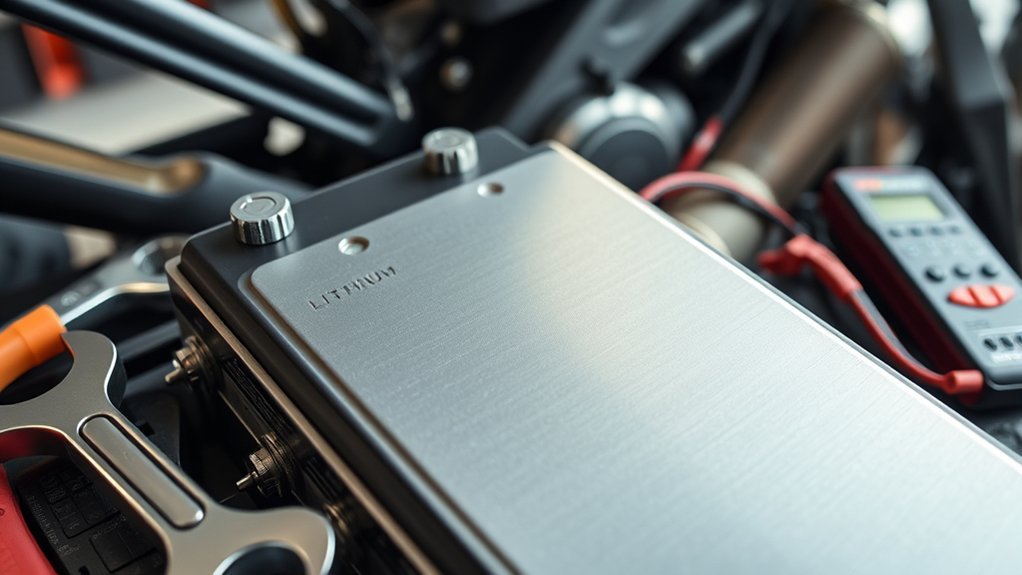
Maintaining and inspecting your lithium motorcycle battery regularly is vital to guarantee safety and peak performance. A consistent maintenance schedule helps extend the battery’s lifespan and prevents potential hazards. We recommend visually inspecting the battery for any signs of corrosion, swelling, or leaks every month. Check the terminals for secure connections and clean them with a non-abrasive brush if necessary. Measure voltage levels periodically to confirm the battery remains within safe operating ranges. Avoid neglecting these steps, as small issues can escalate quickly. Proper maintenance not only maximizes the battery’s longevity but also reduces the risk of failures or safety hazards. Always follow manufacturer guidelines for specific inspection procedures and keep detailed records to monitor your battery’s health over time.
Best Practices for Charging and Storage of Lithium Batteries
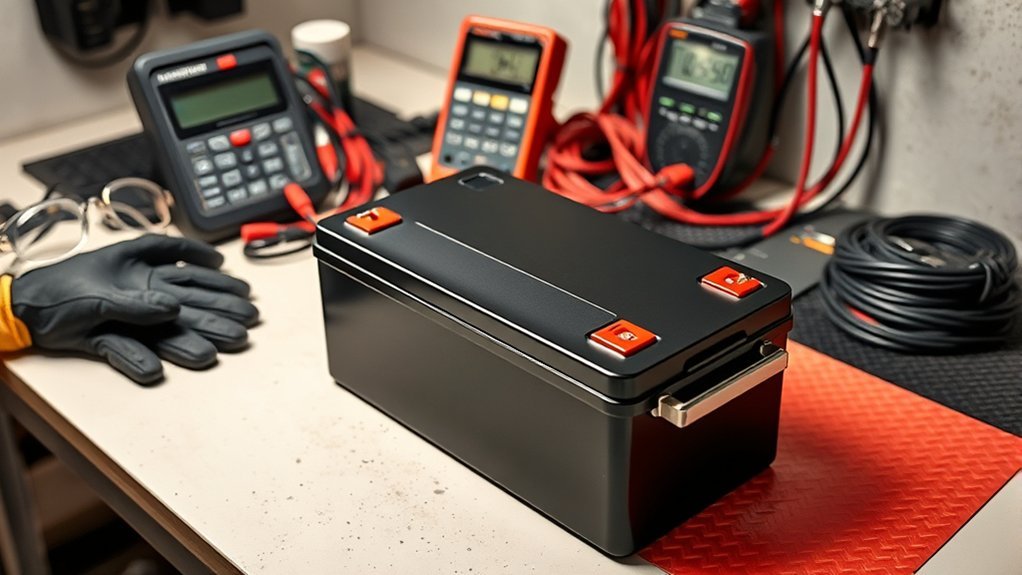
Proper charging and storage practices are essential to guarantee the safety, longevity, and peak performance of lithium motorcycle batteries. Always use the manufacturer-recommended charger and avoid overcharging, which can cause thermal runaway or damage. Store batteries in a cool, dry place away from direct sunlight and flammable materials, ideally at a partial charge level (around 50%) for long-term storage. Regularly inspect batteries for signs of swelling or corrosion, and dispose of damaged units responsibly through battery recycling programs to minimize environmental impact. Proper storage reduces the risk of leaks or fires and supports sustainable disposal, helping lessen environmental impact. Adhering to these best practices ensures safety, extends battery life, and promotes responsible environmental stewardship.
Recognizing and Responding to Lithium Battery Malfunctions or Fires
Recognizing and responding promptly to lithium battery malfunctions or fires is critical for safety. Signs of trouble include swelling, excessive heat, smoke, or a strange odor. If a malfunction occurs, immediately disconnect the battery from the motorcycle if possible, and move to a safe, well-ventilated area. Do not attempt to extinguish a lithium battery fire with water, as it can intensify; instead, use a Class D fire extinguisher or fire suppression materials suitable for lithium fires. Once the fire is out or stabilized, dispose of the damaged battery responsibly through proper battery recycling programs to prevent environmental harm. Always stay informed about local regulations for battery disposal and never ignore signs of malfunction—early action can prevent dangerous escalation.
Essential Safety Gear and Precautions for Handling Your Motorcycle Battery
Handling your motorcycle lithium battery safely requires that we equip ourselves with the right safety gear and follow strict precautions. Proper protection minimizes risks during installation, maintenance, or disposal, reducing potential hazards like fires or chemical leaks. Always wear insulated gloves and safety goggles to guard against accidental short circuits and corrosive leaks. Use non-conductive tools and work in a well-ventilated area away from flammable materials. When disposing of batteries, prioritize recycling to lessen environmental impact and prevent hazardous waste. Remember, incorrect handling can lead to environmental contamination or fire hazards, so strict safety protocols are essential. Incorporate battery recycling practices to promote eco-friendly disposal, safeguarding both your safety and the environment.
Frequently Asked Questions
How Long Does a Lithium Motorcycle Battery Typically Last?
Typically, a lithium motorcycle battery lasts around 3 to 5 years with proper maintenance. Regularly check terminals, keep it charged, avoid over-discharge, and follow maintenance tips to maximize battery lifespan and guarantee safe, reliable performance.
Are Lithium Batteries Environmentally Friendly and Recyclable?
Like a double-edged sword, lithium batteries offer efficiency but pose environmental concerns. They’re recyclable through specialized processes, yet their environmental impact depends on proper recycling and disposal, urging us to handle them responsibly for a sustainable future.
Can I Use a Standard Charger for My Lithium Motorcycle Battery?
You shouldn’t use a standard charger for your lithium motorcycle battery, as it risks unsafe charging safety and potential damage. Always check battery compatibility and use a charger specifically designed for lithium batteries to guarantee safe, peak performance.
What Are the Signs of a Failing Lithium Motorcycle Battery?
Certainly, detecting a failing lithium motorcycle battery is vital; signs include slow cranking, reduced runtime, or swelling. Prioritize battery maintenance and charging precautions, and remember, ignoring these indicators risks sudden failure and costly repairs. Stay vigilant.
How Do Temperature Changes Affect Lithium Battery Safety?
Temperature changes can compromise lithium battery safety by disrupting temperature stability and thermal management, increasing risks of overheating, swelling, or short circuits. We recommend monitoring ambient conditions carefully to maintain ideal battery performance and prevent hazardous failures.
Conclusion
By following these safety guidelines, we markedly reduce the risks associated with lithium motorcycle batteries. While some believe the danger is overstated, data shows that improper handling and maintenance can lead to fires or environmental harm. We must stay vigilant, use proper gear, and adhere to recommended practices. Prioritizing safety isn’t just cautious—it’s essential for protecting ourselves, others, and the environment from potential lithium battery hazards.