Approximately 80% of RV owners now prefer lithium batteries for their energy needs, citing their high energy density and reliability. However, despite these advantages, safety remains paramount due to the potential risks associated with improper handling or installation. Ensuring safe operation requires understanding the technical nuances and adhering to strict safety protocols. As we explore best practices and safety standards, you’ll learn how to minimize hazards and protect your investment while enjoying the benefits of lithium technology.
Key Takeaways
- Follow manufacturer guidelines for proper installation, wiring, and circuit protection to ensure safe operation.
- Regularly inspect batteries for swelling, corrosion, or damage, and monitor temperature during use.
- Store batteries in cool, dry, ventilated areas away from heat sources and handle with insulated tools.
- Use appropriate fire extinguishers (Class D or CO2) and evacuate immediately in case of lithium battery fires.
- Ensure proper recycling and disposal protocols to prevent environmental hazards and comply with safety standards.
What Are Lithium Batteries and Why Are They Popular for RVs?
Lithium batteries are advanced energy storage systems that use lithium-ion chemistry to deliver high energy density and long cycle life. This battery chemistry enables a compact design with a superior power capacity compared to traditional lead-acid batteries. Their high energy density allows for more stored power within a smaller footprint, making them ideal for RV applications where space is limited. The enhanced power capacity ensures rapid charge and discharge cycles, supporting onboard appliances and systems efficiently. Additionally, lithium batteries maintain consistent voltage throughout their cycle life, maximizing usability and performance. These features make lithium batteries a popular choice among RV owners seeking reliable, lightweight, and long-lasting energy solutions for extended trips and off-grid adventures.
How to Properly Install Lithium Batteries in Your RV
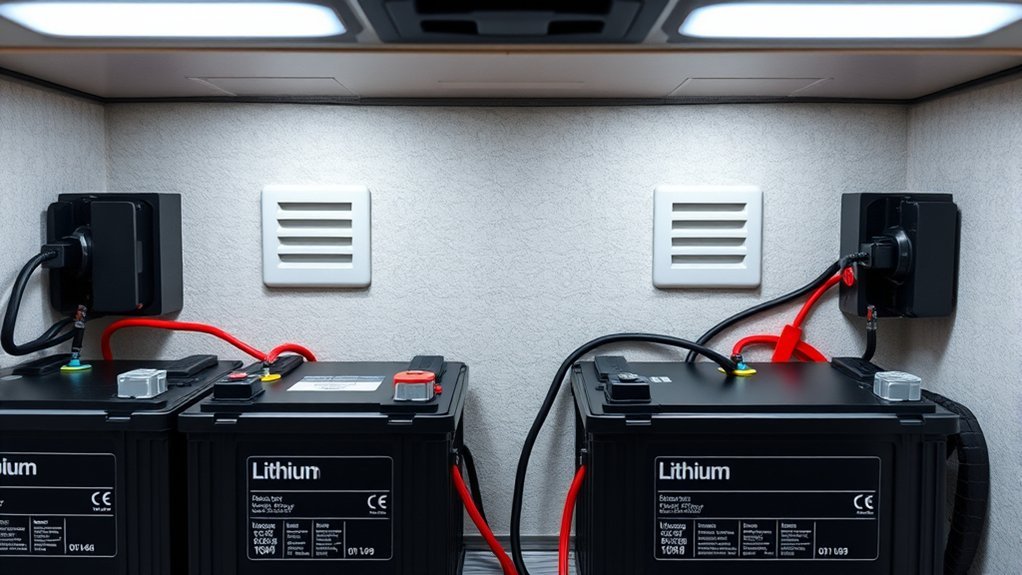
Proper installation of lithium batteries in your RV requires careful adherence to manufacturer guidelines and electrical standards to guarantee safety and peak performance. Proper wiring, secure mounting, and correct circuit protection are essential to prevent short circuits and thermal issues. Use appropriately rated fuses and disconnect switches to mitigate risks. Additionally, consider the environmental impact by planning for responsible battery recycling at the end of lifespan, reducing hazardous waste. Ensuring correct installation minimizes the risk of damage and environmental contamination. Properly installed lithium batteries also optimize energy efficiency, extending lifespan and reducing replacement frequency. Following these precise procedures aligns with safety standards and promotes sustainable practices, making sure your RV’s power system is both reliable and environmentally conscious.
Essential Safety Precautions When Handling Lithium Batteries
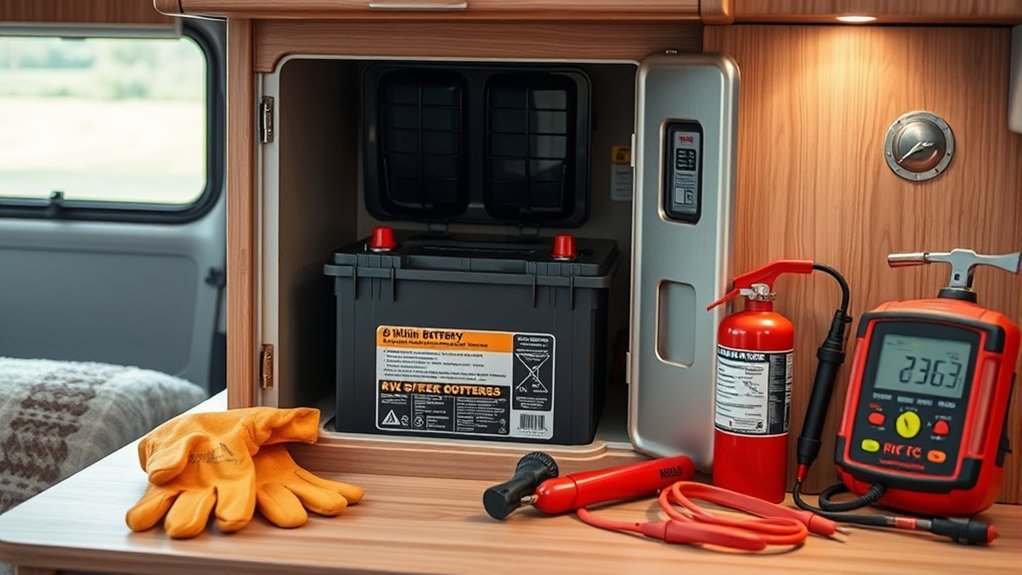
When handling lithium batteries, strict adherence to proper procedures minimizes the risk of damage or injury. Safe storage practices prevent accidental short circuits and thermal events. By following these precautions, we guarantee the safety and longevity of the batteries in our RVs.
Proper Handling Procedures
Handling lithium batteries safely requires strict adherence to specific procedures to prevent accidents. Understanding battery chemistry is essential to avoid damage during handling, as improper contact can lead to thermal runaway. Always follow established charging protocols to guarantee safe operation; this includes using compatible chargers that regulate voltage and current according to manufacturer specifications. Avoid puncturing, crushing, or exposing batteries to extreme temperatures, as these actions can compromise cell integrity. When connecting or disconnecting, handle terminals with insulated tools and wear protective gear to prevent shorts or sparks. Regularly inspect for signs of swelling, corrosion, or damage. By respecting the chemistry and adhering to proper charging protocols, we minimize risks and maintain the safety and longevity of lithium batteries in our RVs.
Safe Storage Practices
Have you considered the importance of secure storage to prevent lithium battery accidents? Proper storage minimizes risks such as thermal runaway and potential fires. We recommend storing batteries in a cool, dry, well-ventilated area away from flammable materials. Use fire-resistant containers and avoid stacking batteries to prevent damage. Regularly inspect for damage or swelling. When batteries reach end-of-life, responsible battery recycling reduces environmental impact and prevents hazardous leakage. Proper disposal ensures that toxic materials do not contaminate soil or water sources. Adhering to these safety measures not only protects your RV and occupants but also supports sustainable practices. By managing storage carefully, we contribute to environmental preservation and uphold safety standards critical for lithium battery use.
Recognizing and Preventing Lithium Battery Overheating
Lithium battery overheating can pose significant safety risks if not promptly recognized and addressed. Elevated temperatures often manifest through swelling, a distinct odor, or discoloration of the battery casing. Monitoring voltage and current levels during operation helps detect anomalies that could lead to overheating. Preventative measures include ensuring proper ventilation and avoiding overcharging or deep discharging, which stress the battery cells. Overheating may accelerate battery degradation, increasing the need for battery recycling and raising environmental impact concerns. Promptly addressing overheating not only preserves battery lifespan but also mitigates fire hazards. Proper thermal management and regular inspection are vital in maintaining safety. Recognizing early signs and implementing preventative protocols are essential steps for responsible RV battery use and environmental stewardship.
How to Conduct Regular Maintenance Checks on Your Lithium Battery System
Regular maintenance checks are essential to guarantee the safe and efficient operation of your lithium battery system. We recommend inspecting battery terminals for corrosion and ensuring connections are tight to prevent voltage drops that can affect overall performance. Monitor voltage levels regularly to assess battery health, especially after multiple charging cycles, as excessive cycling can reduce battery lifespan. Check the state of the battery’s internal components, including the electrolyte levels and temperature sensors, to detect early signs of degradation. Record charge and discharge cycles to identify patterns that may indicate impending capacity loss. Proper maintenance extends battery lifespan by preventing issues like capacity fade and thermal stress. Consistent, precise checks help optimize the system’s reliability, safety, and longevity, ensuring your RV’s power system remains dependable.
What to Do in Case of a Lithium Battery Fire or Emergency?
In the event of a lithium battery fire or emergency, rapid response is critical to minimize damage and guarantee safety. We must immediately suppress the fire using an appropriate fire extinguisher, typically Class D or CO2, and then evacuate the area while ventilating to disperse hazardous fumes. Proper training and preparedness are essential to execute these steps effectively and protect all occupants.
Immediate Fire Response
When a lithium battery fire occurs, prompt and decisive action is essential to minimize damage and guarantee safety. First, isolate the battery to prevent further thermal escalation, ensuring proper ventilation to disperse potentially toxic gases. Avoid using water directly, as it can react violently with lithium compounds; instead, utilize a Class D fire extinguisher if available. After the fire is controlled, consider proper disposal to support battery recycling efforts, reducing environmental impact. Maintaining chemical stability during emergency response is critical, as unstable batteries can reignite or escalate risks. Once extinguished, monitor for re-ignition and handle components with care, following safety protocols for hazardous materials. Immediate, informed actions preserve safety and facilitate responsible disposal or recycling of damaged batteries.
Use Proper Fire Extinguisher
Using the correct fire extinguisher is essential for effectively controlling a lithium battery fire. Lithium battery fires require specific fire extinguisher types, such as Class D extinguishers designed for combustible metals, to prevent escalation. Employing the wrong extinguisher, like water or CO2, can worsen the situation or cause dangerous reactions. After extinguishing the fire, proper battery disposal is critical to prevent environmental hazards or future fires. Always verify that your extinguisher is rated for lithium or metal fires before use. Regularly inspect and maintain your fire safety equipment to ensure functionality. Remember, prompt action with the appropriate extinguisher can mitigate damage, but battery disposal protocols must follow local regulations to ensure safety and compliance.
Evacuate and Ventilate
If a lithium battery fire occurs, immediate evacuation and ventilation are crucial steps to protect both individuals and property. Effective emergency preparedness involves quickly removing all personnel from the vicinity and ensuring proper ventilation to disperse toxic fumes and heat. Implement ventilation strategies such as opening windows, activating exhaust fans, or using portable ventilation equipment to reduce hazardous concentrations. Use the following table to guide actions:
| Step | Action | Purpose |
|---|---|---|
| Evacuate | Move to a safe distance immediately | Minimize exposure to toxic gases |
| Ventilate | Increase airflow with open windows/fans | Dilute and remove hazardous fumes |
| Assess & Respond | Contact emergency services if needed | Ensure safety and proper handling |
Preparedness and proper ventilation are essential in mitigating lithium battery fire risks.
Choosing the Right Lithium Battery Charger and Management System
Selecting the appropriate lithium battery charger and management system is vital to guarantee safety, longevity, and peak performance of your RV’s power setup. Compatibility between charger and battery is essential to prevent overcharging, ensure efficient energy transfer, and facilitate battery recycling. An incompatible charger can cause thermal runaway or damage, compromising your system’s integrity. A well-designed management system monitors voltage, current, and temperature, optimizing charge cycles and enabling safe disconnection during faults. Proper systems incorporate features for balancing cells and preventing over-discharge.
- Verify charger compatibility with your specific lithium battery model
- Confirm the management system supports battery recycling protocols
- Choose systems with advanced diagnostics and fault detection
- Prioritize safety certifications and industry standards
Tips for Safe Transportation and Storage of Lithium Batteries
Proper transportation and storage of lithium batteries are critical to prevent thermal incidents and guarantee safety. Confirm batteries are stored in a cool, dry environment, away from combustible materials, and transported in approved, non-conductive containers. Avoid physical damage, which can compromise internal components and increase fire risk. Proper handling not only reduces safety hazards but also supports effective battery recycling, minimizing environmental impact. To visualize, consider the following storage scenarios:
| Safe Storage Environment | Risky Storage Scenario |
|---|---|
| Cool, ventilated space | Warm, enclosed container |
| Non-conductive shelving | Metal surfaces contact |
| Regular temperature control | Exposure to extreme heat |
| Secure, upright placement | Loose, unstable positioning |
| Proper labeling | Unmarked, unidentified |
Adhering to these practices ensures safety, prolongs battery lifespan, and promotes responsible disposal.
Common Lithium Battery Safety Myths Debunked
Many believe lithium batteries are inherently explosive, but proper engineering and safety features mitigate this risk effectively. Regular maintenance and correct handling considerably reduce fire hazards, contradicting common misconceptions. Additionally, modern safety systems are designed to be highly reliable, ensuring safe operation under typical conditions.
Lithium Batteries Are Not Explosive
Although lithium batteries are often feared as explosive hazards, this perception is largely a misconception. Modern lithium batteries are designed with multiple safety features, such as thermal management and internal safety mechanisms, to prevent thermal runaway. When properly manufactured and used within specified parameters, the risk of explosion is minimal. Additionally, the environmental impact of lithium batteries is mitigated through responsible practices like battery recycling, which reduces waste and conserves resources. It’s important to distinguish between isolated incidents and the typical safety profile of these batteries. Proper handling, quality assurance, and adherence to guidelines ensure safe operation. Understanding that lithium batteries are not inherently explosive helps dispel myths and promotes safer usage in RV applications.
Proper Maintenance Prevents Fires
While modern lithium batteries are engineered with multiple safety features to minimize risk, neglecting regular maintenance can still lead to dangerous situations, including fires. Proper maintenance guarantees the integrity of the battery chemistry, preventing issues such as thermal runaway. Adhering to correct charging protocols is crucial; overcharging or using incompatible chargers can disrupt the delicate balance of lithium-ion chemistry, increasing fire risk. Regular inspection of terminals, connections, and cooling systems helps identify potential faults before they escalate. Maintaining proper venting and avoiding physical damage preserve the battery’s structural integrity. Consistent monitoring of voltage and temperature levels ensures the battery remains within safe operating parameters. Ultimately, diligent maintenance practices are essential to prevent fires and prolong the lifespan of your lithium batteries.
Safety Features Are Reliable
Modern lithium batteries incorporate advanced safety features designed to prevent failures and mitigate risks, making them highly reliable when properly used. These features include thermal management systems, built-in BMS (Battery Management Systems), and pressure relief valves, all ensuring safe operation across various battery capacities and charging cycles. These safety measures effectively minimize risks like thermal runaway, overcharge, or short circuits. It’s important to recognize that the reliability of these features depends on proper maintenance and usage, especially respecting the battery’s capacity limits and avoiding excessive charge cycles. Properly monitored, lithium batteries offer consistent performance with minimal safety concerns, debunking common myths about their safety. When understood and maintained, these safety features provide RV owners peace of mind during long trips and daily use.
How to Stay Informed and Updated on Lithium Battery Safety Standards
Staying informed and up-to-date on lithium battery safety standards is essential for RV owners to guarantee safe and reliable use. Regularly reviewing industry guidelines, manufacturer recommendations, and safety certifications guarantees adherence to current best practices. Awareness of proper charging etiquette minimizes risks linked to overcharging or thermal runaway, while understanding battery recycling protocols promotes responsible disposal and environmental safety. Subscribing to updates from organizations like the UL or SAE helps owners stay current on evolving standards and safety innovations. Additionally, participating in online forums and training sessions provides practical insights. Maintaining vigilance in these areas reduces hazards, enhances battery longevity, and supports safe RV operation. Staying proactive about safety standards ultimately safeguards both occupants and equipment.
Frequently Asked Questions
Can Lithium Batteries Be Safely Used in All Weather Conditions?
Lithium batteries can be safely used in various weather conditions with proper temperature management and battery insulation; these measures prevent thermal stress, mitigate risk of overheating or freezing, and guarantee ideal performance across diverse environmental scenarios.
What Are the Signs of a Failing Lithium Battery?
We notice subtle indications like reduced battery capacity and inconsistent charging indicators, which suggest a lithium battery might be declining. Monitoring these signs closely helps us prevent potential issues, ensuring the best performance and safety during our RV adventures.
Are There Age Limits for Safely Using Lithium Batteries in RVS?
Yes, there are age limits; lithium batteries generally maintain peak performance within their Battery lifespan, typically 5-10 years. We emphasize Charging safety protocols and regular inspections to guarantee safe operation as batteries age, preventing potential hazards.
How Do I Dispose of or Recycle Old Lithium Batteries Properly?
We carefully dispose of old lithium batteries through certified battery recycling centers, ensuring disposal safety and environmental protection. Proper battery recycling prevents hazards and complies with regulations, safeguarding both people and the planet from potential dangers.
Is Professional Installation Necessary for Lithium Battery Systems?
We believe professional installation is vital for lithium battery systems to guarantee proper setup, adherence to safety standards, and peak performance, considering critical installation considerations and battery maintenance protocols that novice installations might overlook, risking safety and efficiency.
Conclusion
By understanding and implementing these safety practices, we safeguard our journey’s energy source, much like tending a delicate flame that must be kept steady. Regular inspections and adherence to standards guarantee our lithium batteries remain reliable companions on the road, providing power through winding highways and quiet campsites. With vigilance and knowledge, we create a secure environment, allowing us to explore confidently, knowing our energy foundation is as resilient as the open road ahead.