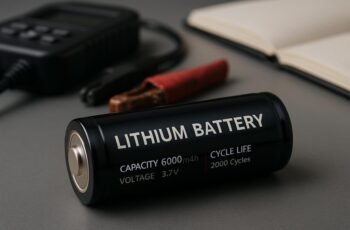
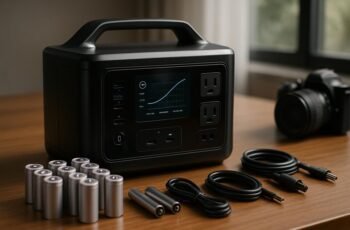
Think of storage as a quiet harbor for our cells, a place where the storm of usage is slowed and steadied. We approach with a clear plan: cool, stable temperatures, a 40–60% charge, and careful separation of chemistries, all guarded by dry, vented containers and labeled dates. We’ll stay methodical about voltages, temps, and humidity, and we’ll document every step. If we get this right, the next question will be how to keep it that way as conditions change.
Key Takeaways
- Store at a stable, cool temperature (ideally around 50°F/10°C) and avoid heat, moisture, and direct sunlight to slow aging.
- Maintain a target SOC of about 40–60% (or per manufacturer): charge before storage and prevent deep discharges.
- Use insulated, dry containers with proper venting; separate different chemistries and label storage date and conditions.
- Regularly monitor voltage, temperature, and humidity with calibrated tools; pause use if readings drift beyond safe ranges.
- Inspect for swelling, leaks, and corrosion; store packs intact, guard terminals, and follow recycling/warranty guidance for disposal.
Why Lithium Batteries Age and How Storage Slows It
Lithium batteries age through two main processes: capacitor-like electrolyte degradation and electrode surface changes that reduce capacity and increase resistance. We see this in everyday use, and our goal is to slow it without compromising safety. Battery chemistry drives voltage stability, ion mobility, and SEI layer evolution, so understanding it helps us act with purpose. Storage compatibility matters: keeping cells at balanced states, avoiding extreme temperatures, and minimizing deep discharges protect long-term performance. We prioritize consistent temperatures, clean contacts, and proper ventilation during handling. By controlling state of charge within recommended ranges and avoiding rapid charge–discharge cycles, we limit irreversible changes. Our approach is methodical: monitor, document, and apply proven storage practices that preserve capacity and safety for the next use.
Target State of Charge for Long-Term Lithium Storage
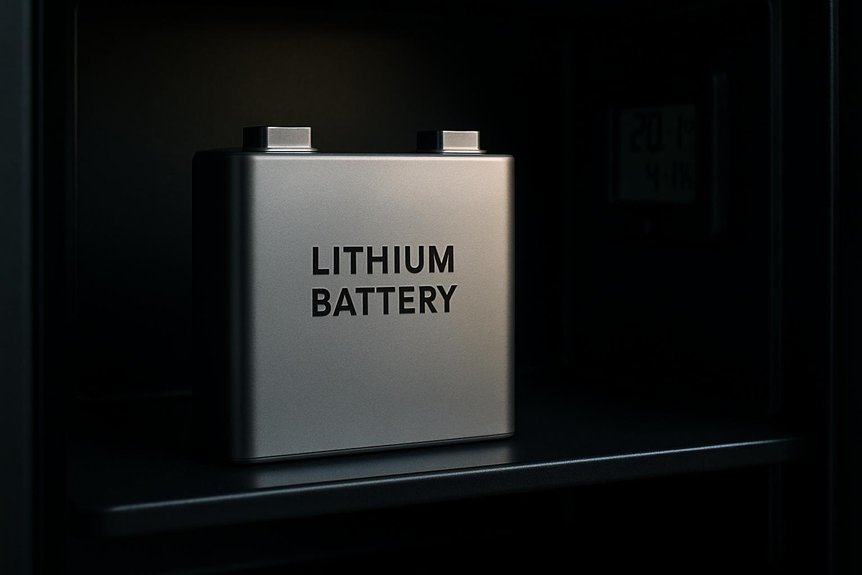
We’ll start by identifying the target state of charge for long-term storage and why it matters for safety and capacity. For most lithium chemistries, we recommend a mid-range SOC, typically around 30–50%, to minimize degradation and thermal risk during storage. We’ll outline practical steps to achieve and maintain that range and how to verify it before putting cells away.
Target State of Charge
What is the best target state of charge for long-term lithium storage, and why does it matter? We, as stewards of safety and performance, aim for a precise target around 40–60% of nominal capacity. This range minimizes degradation mechanisms and reduces risk of over-discharge or overcharge during extended storage. We recommend checking manufacturer guidance and using a verified storage voltage that corresponds to this SOC window. Maintain consistent conditions by avoiding temperature extremes and fluctuating currents. When preparing packs, separate cells in proper storage containers with intact seals and appropriate venting. Establish a regular charging cadence to prevent drifting SOC, and document settings for each unit. This disciplined approach supports longevity, reliability, and safer, predictable performance over time.
Long-Term Storage Range
Is there a precise long-term target SOC that minimizes degradation and risk during storage? We can answer with a cautious, evidence-based range. For most lithium chemistries, a state of charge around 30% to 50% offers a balance between minimal SEI growth, reduced calendar aging, and practical readiness for use. We avoid extremes, as high SOC accelerates degradation and low SOC can cause irreversible capacity loss upon charge. During extended storage, keep batteries in a cool, stable environment and monitor for voltage drift. Perform a risk assessment to identify contributions from temperature fluctuations, humidity, and shelf life. Regularly verify protection circuits and ensure no physical stress. In practice, target the mid-SOC window and adjust based on storage weather and manufacturer guidance.
Ideal Storage Temperatures for Li-Ion and Li-Polymer Cells

We recommend keeping Li-Ion and Li-Polymer cells within an ideal storage temperature range that minimizes chemical stress and preserves capacity. We’ll also outline the guidance on charge state to pair with temperature, so you can maintain balance between safety and longevity. Let’s start with the safe, precise targets and then connect them to practical storage habits.
Ideal Temperature Range
Optimal storage temperature for Li-ion and Li-polymer cells is typically between 40–60°F (4–15°C) with a target around 50°F (10°C) for long-term health. We establish an ideal temperature range to minimize degradation and preserve capacity. Maintain stable conditions through temperature control practices and appropriate storage containers. Avoid excursions beyond the specified band, and monitor ambient fluctuations regularly. The table below summarizes practical targets and actions:
| Target Range | Action |
|---|---|
| 40–60°F (4–15°C) | Use insulated, dry storage containers; place away from heat sources. |
| Around 50°F (10°C) | Log daily readings; keep humidity under control. |
| Short deviations | Return promptly to range; inspect for condensation. |
| Long-term stability | Schedule seasonal checks; rotate stock. |
| Safety first | Do not store near metal objects or flammable materials. |
Charge State Guidance
To minimize capacity loss, store Li-ion and Li-polymer cells at a charge state that avoids both full charge and deep discharge. We recommend a storage charge around 40–60% for most cells, confirming manufacturers’ guidance when available. Keep cells out of hot or freezing environments, and verify that the pack is not exposed to prolonged voltages beyond the storage target. Periodic checks are essential: reseal in a cool place if a long-term shelf life is planned, and remeasure the state of charge after several weeks. This practice supports battery safety by reducing internal stress and impedance growth. Debunk charging myths with data-backed steps, and respect limits from the cell chemistry. Follow disciplined handling to preserve performance and lifespan.
Safe Handling and Safety Precautions During Downtime
During downtime, handle all lithium batteries with calm, deliberate care to minimize risk and preserve longevity. We, together with you, prioritize safe handling and identify downtime hazards to prevent incidents. Always power down devices, disconnect chargers, and store away from flammable materials. Inspect for swelling, leaks, or corrosion; if seen, isolate immediately. Use non-conductive tools, avoid metal jewelry, and wear eye protection when handling exposed terminals. Maintain a clean workspace, ventilated but away from heat sources. Follow manufacturer guidance for storage temperature, and keep batteries upright in a fire-resistant container. Table highlights key steps, risks, and actions:
| Step | Risk | Action |
|---|---|---|
| Power down | Short circuit | Disconnect and power off |
| Inspect | Damage | Replace or isolate |
| Storage | Heat/fire | Use proper container |
Prep Steps for Storage: Discharge Targets, Protection, Labeling
How should we set discharge targets, protect, and label lithium batteries for storage to minimize risk and maximize longevity? We begin with clear discharge targets: aim for a safe state of charge around 30–50% for most lithium chemistries, avoiding full charges or deep discharges. We monitor voltage and temperature during preparation, discarding any cells showing anomalies. Protective measures include moisture control, airtight storage containers, and a stable, cool environment away from heat sources. Use isolation to prevent short circuits, and remove all connectors or packs that could contact conductive surfaces. Labeling practices matter: mark each battery with date, target charge, and storage conditions. Maintain a simple log for reevaluation, and ensure lids are secured to prevent accidents. Consistency and discipline protect longevity.
Storage Guidelines by Device Type: Consumer and Industrial
We’ll apply our discharge, protection, and labeling practices to each device type, recognizing that consumer devices and industrial systems have different scales, access, and risk profiles. For consumer devices, we target a moderate state of charge and monitor storage aging indicators, keeping batteries in a cool, dry location and away from metals. Reserve long-term storage for devices with minimal ongoing use, and rotate stock to avoid age-related drift. For industrial systems, manage state of charge with scheduled mitigations, maintain rigorous temperature controls, and implement batch-level tracking to assess storage aging across fleets. Always verify protection devices, seal containers, and document dates. By tailoring practices to device class, we reduce degradation and extend usable life without compromising safety.
Battery Packs vs. Individual Cells: Storage Considerations
Are packs or individual cells storage more forgiving, or do their differences demand distinct handling? We approach storage with a clear division: battery packs require preserving the whole assembly, while individual cells need careful isolation and uniform conditioning. For battery packs, ensure the pack is stored at manufacturer-recommended voltage and temperature, monitor connection integrity, and prevent cross-shorting by guarding exposed terminals. If a pack includes cells in series or parallel, confirm balanced state during storage and avoid partial charges that stress internal chemistries. For individual cells, store at stable, moderate temperatures and use protective housing to prevent physical damage and short circuits. Label storage date, verify insulation, and separate different chemistries. In both cases, prevent leaks, corrosion, and moisture ingress to maintain long-term safety and performance.
Monitoring and Maintenance During Downtime
We monitor storage conditions during downtime to ensure temperature, humidity, and voltage stay within safe ranges. We schedule regular checks to verify that shelves, enclosures, and battery packs remain undamaged and properly labeled. If any parameter deviates, we correct it promptly and document the change for ongoing safety and longevity.
Monitor Storage Conditions
During downtime, we must regularly verify that storage conditions remain within safe ranges, because even small deviations can accelerate degradation. We monitor temperature, humidity, and voltage exposure with calibrated tools, recording readings at established intervals. Keep storage in a dedicated, clean area away from direct sunlight, heat sources, and metal flex, as these factors introduce shelf stress and uneven warming. We assess temperature drift against the recommended band, noting any excursions and their duration. We also check seals on enclosures to prevent moisture ingress, which can contribute to storage shrinkage of lithium cells. Documentation is essential: log conditions, maintenance actions, and corrective thresholds. If readings approach limits, pause use, isolate affected batteries, and recheck after adjustments. Consistency protects capacity and safety during downtime.
Schedule Downtime Checks
Downtime checks are conducted regularly to ensure safe, consistent storage conditions and to catch drift before it harms battery life. We implement a structured cadence that respects downtime budgeting, prioritizing key metrics like voltage, temperature, and humidity. We record findings, compare against baselines, and adjust storage weather expectations accordingly. If readings drift, we pause usage and address causes before resuming, documenting actions for accountability. Our approach is proactive, not reactive, and focused on minimizing risk and preserving capacity over time.
| Factor | Action |
|---|---|
| Temperature/Humidity | Verify within target range; adjust climate controls as needed |
| State of Charge | Confirm SOC is stable; top up or discharge per guidelines |
Packaged Storage vs. Grounded Storage: Choosing the Right Method
Packaged storage and grounded storage each serve different safety and performance goals for lithium batteries. We prefer packaged storage for shipments, temporary containment, and controlled environments where monitoring is centralized. Grounded storage suits long-term, stable sites with reliable electrical grounding and continuous environmental control. Inconsistent storage, where conditions fluctuate or connections aren’t secured, increases leakage risk and accelerates capacity loss—so avoid it, regardless of method. When choosing, assess access frequency, audit trails, and fire suppression capabilities; packaged arrangements reduce handling exposure but require robust seals and documentation. Grounded setups demand consistent grounding, stable temperature, and dedicated equipment to prevent stray charge paths. Warranty implications hinge on adherence to recommended storage parameters; deviations may void coverage and complicate claims. We recommend a documented protocol that aligns with your facility’s risk tolerance and operational rhythms.
Troubleshooting Storage Problems Before Reuse
How can we quickly identify and address storage issues before reuse? We approach each cell with a disciplined check to prevent hazards. Begin with a visual inspection for swelling, corrosion, or leakage, and confirm connector integrity. If a pack shows abnormal warmth after resting, segregate it immediately and document the symptom. Use calibrated tools to verify voltage levels against manufacturer specs; avoid partial discharges by handling only with insulated gloves and nonconductive tools. For storage disposal concerns, never mix compromised cells with good ones, and follow local regulations for recycling. If behavior seems suspect, isolate the pack and consult the warranty implications and return guidance before attempting reuse. Maintain clear records, and replace damaged units to preserve safety and performance.
Frequently Asked Questions
How Often Should Storage SOC Be Rechecked During Downtime?
We recheck storage SOC every 1–3 months, depending on ambient conditions, to prevent reduced parasitic draw and maintain long term storage voltage. We verify readings, adjust if drifted, and reseal safety measures for safe handling.
Do Different Brands Require Different Safe Storage Voltages?
We’d say yes: Brand specific storage voltage varies, and brand variance implications matter for safety. A 3.6V–3.9V range isn’t universal. We’ll follow manufacturer specs, verify each brand’s recommended voltage, and monitor during downtime to prevent hazards.
Can Partial Charging Extend Shelf Life for Li-Ion Packs?
We believe partial charging can extend shelf life for Li-ion packs by maintaining ideal voltage range during storage, reducing degradation. We recommend storing at 40–60% charge, in cool, dry temps, and inspect periodically for swelling or damage.
Does Leaf-Laden Humidity Affect Stored Battery Longevity?
A watched pot won’t boil, and leafy humidity does affect stored battery longevity. We’ll monitor leafy humidity and humidity effects closely, maintaining dry, stable conditions, avoiding condensation, and regularly inspecting seals to safeguard safety and performance.
Is It Safe to Mix Aged and New Cells in One Pack Storage?
We say: mixing aged and new cells isn’t safe because aging mismatch increases overcapacity risk; we shouldn’t do it. Instead, store uniform packs, monitor balance, and isolate older cells to prevent safety hazards and performance degradation.
Conclusion
We’ve walked through careful steps to safeguard lithium batteries during downtime. By keeping a cool, stable environment, preserving a 40–60% charge, and separating chemistries, we minimize aging while avoiding surprises. We’ll monitor voltage, temperature, and humidity with calibrated tools, document actions, and label storage dates. If anything feels off, we pause, reassess, and adjust. With disciplined maintenance and prudent euphemism—“a little extra caution”—we protect performance, reliability, and safety for the long haul.