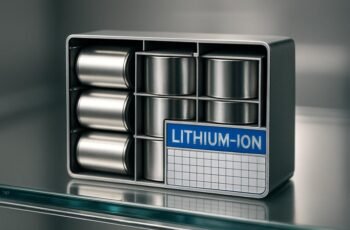
When evaluating off-grid energy storage options, understanding the fundamental differences between lithium and lead-acid batteries is essential. Both types have distinct performance characteristics, cost implications, and safety considerations that can substantially influence system longevity and reliability. As we analyze these factors systematically, it becomes clear that selecting the best battery system requires careful assessment of technical specifications, operational demands, and long-term sustainability—details that merit close examination before making a decision.
Key Takeaways
- Lithium batteries offer higher efficiency, longer lifespan, and deeper discharge capabilities compared to lead-acid batteries.
- Lead-acid batteries are more affordable upfront but require more maintenance and have a shorter operational life.
- Lithium systems are lighter, more compact, and easier to install with plug-and-play features.
- Lead-acid batteries pose higher environmental and safety risks due to toxic materials and gas emissions.
- Hybrid systems combining both chemistries can optimize performance, resilience, and cost-effectiveness for off-grid applications.
What Are the Main Differences Between Lithium and Lead-Acid Batteries?
While both lithium and lead-acid batteries serve as reliable energy storage solutions, their fundamental differences markedly impact performance, lifespan, and suitability for off-grid applications. Lithium batteries feature higher energy density, faster charging, and deeper discharge capabilities, resulting in longer lifecycle and reduced maintenance. Lead-acid batteries, however, have a lower initial cost and are more established in traditional applications. Environmental impact considerations include battery recycling; lithium batteries require specialized processes due to their chemical composition, while lead-acid batteries are more easily recyclable but pose significant lead pollution risks. These distinctions influence not only operational efficiency but also environmental responsibility, making lithium batteries more sustainable in the long term despite higher upfront costs, whereas lead-acid batteries demand careful disposal to mitigate environmental hazards.
How Do Lithium and Lead-Acid Batteries Perform in Off-Grid Systems?
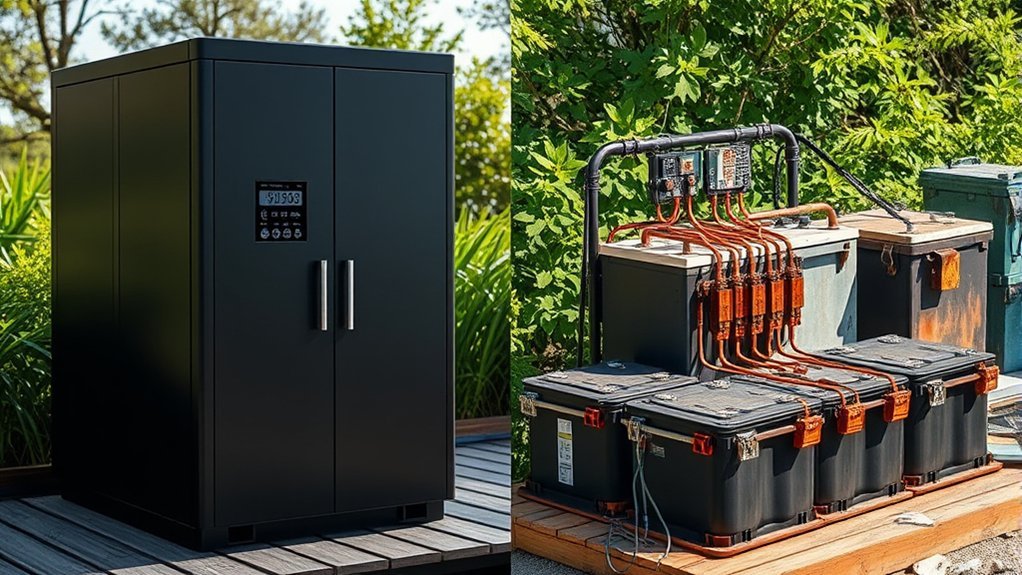
In off-grid systems, the performance of lithium and lead-acid batteries hinges on several key operational factors. Lithium batteries excel with higher energy density, faster charging, and better cycle life, making them suitable for demanding applications. Lead-acid batteries, while more affordable upfront, require regular maintenance and have lower cycle durability. Key considerations include:
- Depth of discharge capabilities
- Charge/discharge efficiency
- Temperature resilience
- Battery recycling processes
- Environmental impact of materials
Lithium batteries offer a reduced environmental footprint through advanced recycling methods, whereas lead-acid batteries pose challenges due to toxic lead and acid disposal concerns. Overall, lithium batteries tend to perform more efficiently in off-grid setups, but environmental impact remains a critical factor in system sustainability.
Which Battery Type Offers Better Longevity and Durability?
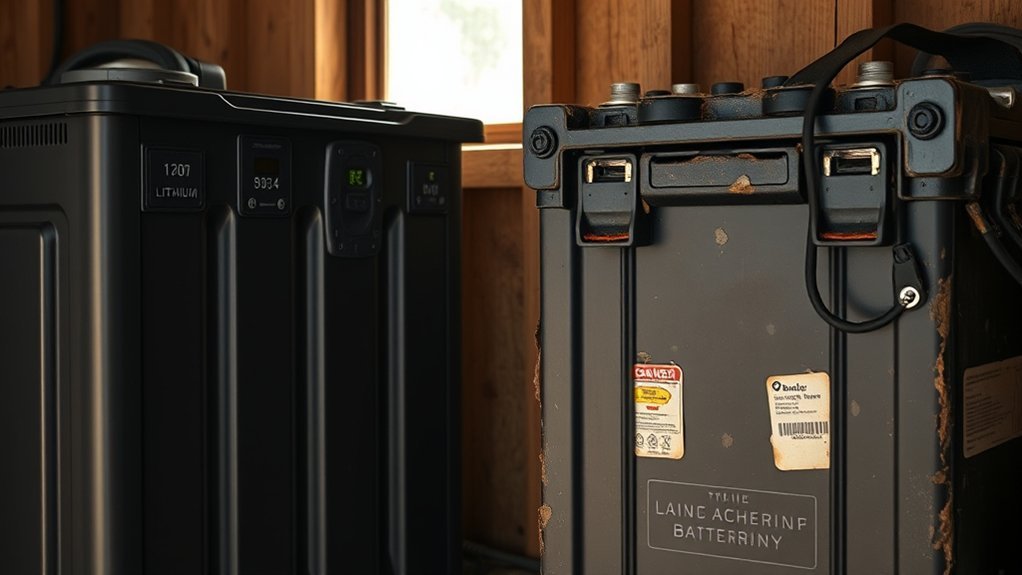
Lithium batteries generally offer superior longevity and durability compared to lead-acid counterparts, primarily due to their advanced chemistries and design features. Lithium-ion cells support higher cycle life—often exceeding 5,000 cycles—versus lead-acid’s typical 500 to 1,000 cycles, which enhances long-term reliability. Their stable chemistry reduces capacity fade over time, even under deep-discharge conditions. Additionally, lithium batteries exhibit better thermal stability and resistance to sulfation, minimizing maintenance needs. From an environmental impact perspective, lithium batteries are increasingly emphasizing sustainable practices like battery recycling, which mitigates ecological concerns associated with material extraction and disposal. Lead-acid batteries, while recyclable, pose greater environmental risks due to hazardous lead content and shorter lifespan, impacting overall durability and sustainability.
How Do Costs Compare Over the Lifetime of the Batteries?
Although lithium batteries typically have higher upfront costs, their superior lifespan and performance characteristics often result in lower total ownership expenses over time. Over the lifespan, lithium batteries generally require fewer replacements, reducing replacement costs and maintenance efforts. Additionally, their higher efficiency minimizes energy losses, leading to savings on operational costs. When considering environmental impact, lithium batteries are more conducive to sustainable practices due to more efficient battery recycling processes, which mitigate waste and resource depletion. Conversely, lead-acid batteries often incur higher long-term costs due to shorter cycle lives and frequent replacements. Key cost considerations include:
- Higher initial investment for lithium systems
- Reduced replacement frequency
- Lower maintenance costs
- Improved energy efficiency
- Enhanced recyclability and environmental benefits
What Are the Safety Considerations for Lithium and Lead-Acid Batteries?
Both lithium and lead-acid batteries pose fire and explosion risks if mishandled or damaged, requiring strict safety protocols to prevent thermal runaway or electrolyte leaks. Proper handling procedures, including correct installation, ventilation, and protective equipment, are essential to mitigate these hazards. Analyzing these safety considerations helps guarantee reliable operation and safeguards for users and property.
Fire and Explosion Risks
While lithium and lead-acid batteries are both widely used for off-grid energy storage, their safety profiles differ markedly regarding fire and explosion risks. Lithium batteries pose a higher risk of thermal runaway, potentially leading to rapid fires or explosions if damaged, overcharged, or improperly managed. Lead-acid batteries, while less prone to catastrophic failure, can release flammable hydrogen gas during charging, increasing explosion risk in confined spaces. Safety considerations include strict monitoring of voltage and temperature, proper ventilation, and secure enclosure. Additionally, lithium batteries demand careful handling to prevent thermal events that complicate battery recycling and environmental impact. Conversely, lead-acid batteries contain toxic lead and acid, necessitating robust recycling protocols to mitigate environmental hazards. Both systems require meticulous safety measures to minimize fire and explosion hazards.
Proper Handling Procedures
Proper handling procedures are critical to ensuring safety when working with lithium and lead-acid batteries, as improper practices can lead to hazardous incidents. Handling should prioritize avoiding physical damage, which can compromise storage capacity and cause leaks or fires. Use appropriate personal protective equipment and guarantee proper ventilation during maintenance. Safe storage involves keeping batteries in a cool, dry environment, away from flammable materials, and preventing short circuits. When batteries reach the end of their lifecycle, proper battery recycling is essential to prevent environmental contamination and recover valuable materials. Both lithium and lead-acid batteries require careful handling to mitigate risks associated with acid spills or thermal runaway. Adhering to these procedures not only guarantees safety but also maintains ideal performance and longevity of the system.
Which Battery System Is Easier to Install and Maintain?
Lithium battery systems generally offer a more straightforward installation process due to their compact design, integrated management systems, and standardized configurations. This results in enhanced installation simplicity and reduced setup time. Their modular nature allows for easier scalability and troubleshooting, which benefits ongoing maintenance ease.
Lithium batteries simplify installation with compact, modular design and integrated management, reducing setup time and easing maintenance.
Key advantages include:
- Pre-wired modules that simplify electrical connections
- Built-in battery management systems (BMS) for real-time diagnostics
- Lightweight components reducing physical handling complexity
- Plug-and-play design minimizing installation errors
- Fewer peripheral components requiring calibration or adjustment
Compared to lead-acid systems, lithium setups demand less maintenance effort, thanks to sealed, maintenance-free cells and integrated safety features. Overall, lithium systems streamline both installation and ongoing maintenance, making them more user-friendly for off-grid applications.
How Do Charging and Maintenance Requirements Differ?
Lithium batteries typically charge faster and with higher efficiency compared to lead-acid systems, reducing downtime and energy loss. They also require less frequent maintenance, mainly monitoring voltage and ensuring proper thermal management, whereas lead-acid batteries need regular equalization and water topping. Over the long term, lithium batteries tend to have a longer lifespan, which impacts overall maintenance schedules and replacement costs.
Charging Speed and Efficiency
How do the charging speeds and maintenance requirements of off-grid lithium battery systems compare to those of lead-acid batteries? Lithium systems typically offer faster charging due to higher charge acceptance rates and lower internal resistance, improving overall efficiency. They also maintain higher usable capacity over multiple cycles, reducing the total charge time needed. Conversely, lead-acid batteries require longer recharge periods and are more sensitive to deep discharges, impacting efficiency. Regarding maintenance, lithium batteries demand minimal upkeep, lacking the need for water additions or equalization charges. This reduces downtime and operational costs. Additionally, lithium batteries contribute positively to environmental impact and battery recycling efforts by containing fewer toxic materials.
- Faster charge acceptance
- Reduced cycle degradation
- Lower maintenance frequency
- Less environmental impact
- Easier recycling processes
Maintenance Frequency and Ease
While charging efficiency varies considerably between off-grid lithium and lead-acid batteries, maintenance requirements also differ markedly, influencing long-term operational practicality. Lead-acid batteries demand frequent topping off with distilled water, regular equalization charges, and periodic capacity checks, increasing maintenance frequency. In contrast, lithium batteries require minimal maintenance, primarily monitoring voltage levels and ensuring proper temperature control. From an environmental perspective, lithium batteries offer advantages due to their longer lifespan, which reduces the frequency of battery recycling and associated environmental impact. Lead-acid batteries, with their shorter cycle life and hazardous acid content, impose higher burdens on recycling processes. Consequently, lithium batteries’ ease of maintenance, combined with their lower environmental footprint over time, makes them a more sustainable choice for off-grid applications.
Battery Life and Longevity
Battery life and longevity are considerably influenced by their respective charging and maintenance protocols, with each technology exhibiting distinct characteristics. Lithium batteries typically offer longer cycle life and better resilience to deep discharges, provided they are charged properly to avoid capacity loss. Lead acid batteries require regular topping-up and careful voltage regulation to prevent sulfation, which shortens lifespan. Proper maintenance minimizes degradation, but impacts recycling and environmental footprint. Lithium batteries often have a higher initial environmental impact during manufacturing but facilitate more efficient battery recycling, reducing long-term waste. Conversely, lead acid batteries are easier to recycle but pose greater environmental risks if improperly disposed of. These differences directly influence overall longevity and sustainability, making understanding these protocols essential for optimizing system performance and environmental responsibility.
- Lithium batteries: longer cycle life, faster charging, lower maintenance
- Lead acid batteries: frequent watering, slower charging, higher sulfation risk
- Proper charging reduces capacity fade in both systems
- Maintenance practices influence recycling outcomes and environmental impact
- Longevity depends heavily on adherence to recommended protocols
What Factors Should Influence Your Choice Between Lithium and Lead-Acid?
Choosing between lithium and lead-acid batteries for an off-grid system hinges on several critical factors that directly impact performance, cost-efficiency, and long-term viability. Environmental impact plays a significant role, as lithium batteries generally have a lower ecological footprint during operation but pose challenges in battery recycling due to complex materials. Lead-acid batteries, while easier and cheaper to recycle, contain hazardous substances that increase environmental risks if improperly disposed of. Cost considerations also influence choice: lithium batteries typically require higher upfront investment but offer superior cycle life and efficiency, reducing long-term costs. Additionally, system design must account for depth of discharge, maintenance needs, and compatibility with renewable sources. Ultimately, understanding these factors helps optimize reliability, sustainability, and economic return.
Is a Hybrid Battery System a Viable Off-Grid Solution?
Hybrid battery systems combine different types of energy storage to address the limitations inherent in single-technology setups, making them a compelling option for off-grid applications. These configurations leverage the strengths of various chemistries, such as lithium and lead-acid, to optimize performance, longevity, and cost-efficiency. For off-grid scenarios, hybrid configurations enhance renewable integration by managing variable inputs more effectively and providing balanced power output. They also enable:
- Improved energy density and cycle life
- Reduced depth-of-discharge stress
- Better handling of peak loads
- Increased system resilience
- Flexibility in scaling storage capacity
While more complex, hybrid systems can mitigate the weaknesses of individual batteries, offering a viable, adaptable off-grid solution that maximizes renewable energy use and system reliability.
Frequently Asked Questions
How Do Temperature Variations Affect Battery Performance Off-Grid?
Temperature variations can considerably impact battery efficiency and temperature stability; cold reduces performance, while heat accelerates degradation. We analyze these effects carefully to optimize off-grid systems, ensuring reliable power delivery despite environmental fluctuations.
Can Lithium Batteries Be Recycled Easily?
Lithium batteries can be recycled, but recycling challenges include complex processes and economic factors affecting battery life. We recognize that efficient recycling is critical for sustainability, yet technical hurdles remain in safely extracting valuable materials.
What Is the Environmental Impact of Each Battery Type?
We find lithium batteries have a longer lifespan and fewer recycling challenges, leading to reduced environmental impact. Lead acid batteries pose greater recycling difficulties and contain hazardous materials, making their disposal more environmentally taxing over their shorter lifespan.
Are There Warranty Differences Between Lithium and Lead-Acid Batteries?
We find that lithium batteries typically offer longer warranties, reflecting their extended battery lifespan, while lead-acid warranties are shorter; although lithium’s higher initial cost balances with better durability, making the cost comparison favorable over time.
How Does Storage Capacity Impact Off-Grid System Scalability?
They say, “You can’t build a house without a solid foundation,” and similarly, larger storage capacity enhances off-grid system scalability by maximizing battery lifespan and ensuring cost efficiency, allowing us to expand energy reserves as demands grow.
Conclusion
In conclusion, choosing between lithium and lead-acid batteries hinges on long-term performance, safety, and total lifecycle costs. Lithium systems, with over 5,000 cycles, outperform lead-acid in durability and efficiency, despite higher initial investments. Considering the environmental impact—lithium batteries produce considerably fewer toxic emissions—we see a clear sustainability advantage. Ultimately, a detailed analysis of your specific energy needs and budget will guide you toward the most suitable, reliable off-grid energy storage solution.