While traditional lead-acid batteries have long dominated RV power systems, lithium batteries now offer a compelling combination of higher capacity, faster charging, and longer lifespan. This technical advantage prompts us to analyze how these features translate into real-world performance, safety, and cost-effectiveness over time. As we compare top models, it becomes essential to understand which factors truly matter for long-term reliability and efficiency, making the choice more complex than it initially appears.
Key Takeaways
- Compare cycle life and durability to assess long-term performance and investment value.
- Evaluate charging speed, efficiency, and BMS features for optimal recharge and safety.
- Review environmental practices and recyclability for eco-friendly disposal and sustainability.
- Consider cost, space requirements, and energy density for fitting and performance needs.
- Analyze user feedback and safety features to determine reliability and overall user satisfaction.
How to Choose the Best 100AH RV Lithium Battery for Your Needs
Selecting the most suitable 100AH RV lithium battery requires a clear understanding of your power needs and operating conditions. We must consider technical factors like capacity, charging cycles, and compatibility with existing systems. Battery safety is paramount; look for units with built-in safeguards against overcharging, thermal runaway, and short circuits. Additionally, understanding the environmental impact is essential—opt for batteries with minimal toxic materials and responsible manufacturing practices to reduce ecological footprint. Analyzing these aspects guarantees reliability and longevity while minimizing risks. By focusing on safety protocols and environmental considerations, we can select a battery that not only meets performance demands but also aligns with sustainable practices, providing peace of mind during extended RV use.
Top Features to Look for in a 100AH RV Lithium Battery
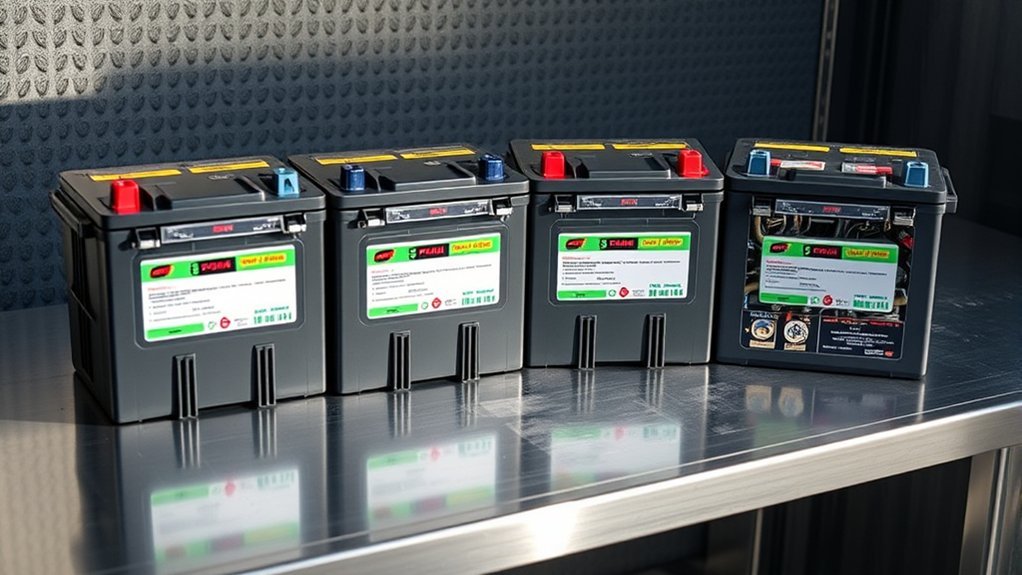
When evaluating a 100AH RV lithium battery, we focus on capacity and runtime to guarantee it meets your power demands. Charging speed and efficiency are critical for minimizing downtime, while durability and longevity determine long-term value. Prioritizing these features helps optimize performance and investment in your RV power system.
Battery Capacity and Runtime
Understanding the battery capacity and runtime is essential when evaluating a 100AH RV lithium battery, as these factors directly determine how long your power needs will be met without recharging. Capacity depends on the battery chemistry, influencing efficiency and longevity, while runtime reflects actual usage under load. Key considerations include:
- Consistent capacity ratings across brands for comparable performance.
- How capacity impacts runtime under typical RV loads.
- The influence of advanced battery chemistry on cycle life and durability.
- Environmental impact considerations, as higher efficiency reduces waste and resource use.
Charging Speed and Efficiency
Ever wondered how quickly and efficiently a 100AH RV lithium battery can recharge to meet your power demands? Charging speed hinges on the battery’s C-rate and integrated BMS, which optimize current flow and prevent overheating. Higher charge rates enable faster recharging, but may impact long-term efficiency if not managed properly. Efficiency also depends on the battery’s ability to minimize energy losses during charge cycles, reducing overall power waste. From an environmental perspective, fast charging reduces downtime but raises concerns about battery recycling and disposal, emphasizing the importance of selecting batteries with sustainable design and recyclable components. Prioritizing both high charging efficiency and environmentally conscious manufacturing guarantees your RV power system remains reliable while minimizing ecological impact.
Durability and Longevity
Durability and longevity are critical factors in selecting a 100AH RV lithium battery, as they directly influence the overall cost-effectiveness and reliability of your power system. Long-lasting batteries reduce replacement frequency, supporting sustainable practices like battery recycling and minimizing environmental impact. Key considerations include:
- Cycle Life: Higher cycle counts indicate better durability, ensuring sustained performance over years.
- Battery Management System (BMS): A robust BMS safeguards against overcharging, thermal issues, and voltage fluctuations.
- Build Quality: Top-tier materials and construction improve resistance to vibrations and temperature variations.
- Environmental Impact: Batteries with longer lifespans decrease waste, contributing to eco-friendly recycling processes and reduced ecological footprint.
Prioritizing these features ensures a reliable, environmentally responsible power source.
Comparing the Top 5 100AH RV Lithium Batteries on the Market
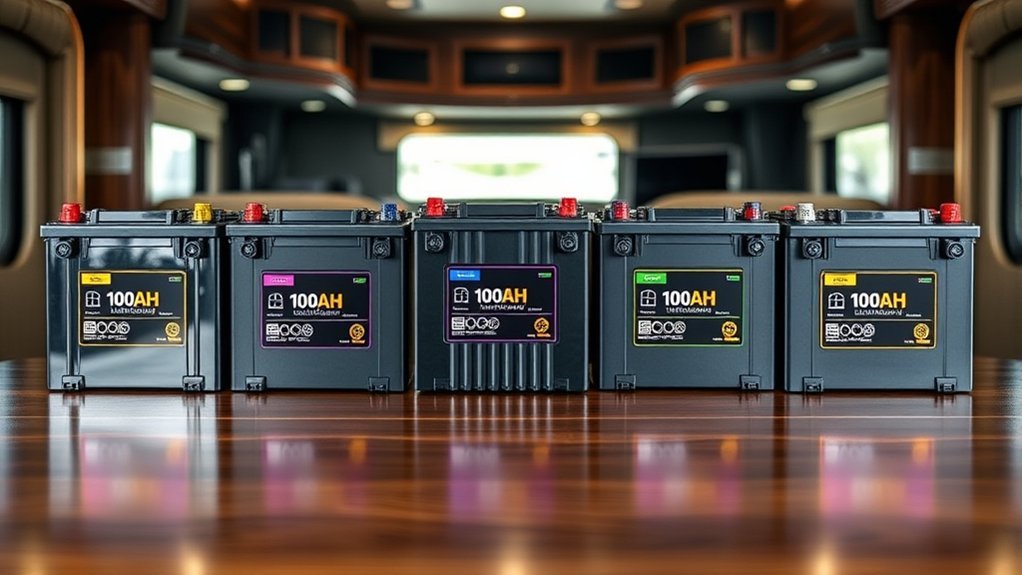
When comparing the top 5 100AH RV lithium batteries, we focus on key factors like longevity and durability, which directly impact lifecycle costs, along with performance metrics such as efficiency and power output. Cost and value analysis help determine which options offer the best return on investment over time, considering initial price and maintenance needs. By analyzing these points objectively, we can identify batteries that optimize both performance and long-term reliability for RV applications.
Battery Longevity and Durability
While all five top 100AH RV lithium batteries are designed to deliver reliable performance, their longevity and durability vary considerably based on cell chemistry, build quality, and thermal management systems. Factors influencing lifespan include the battery’s cycle life, resistance to thermal stress, and overall construction integrity. Additionally, robust thermal management reduces degradation, extending service life. Regarding environmental impact, higher durability lessens the frequency of replacement, supporting better battery recycling practices and reducing waste. Key aspects include:
- Cell chemistry stability and resistance to capacity fade over cycles
- Quality of internal components and manufacturing consistency
- Effectiveness of thermal regulation systems
- How design choices influence long-term environmental sustainability and recyclability
These elements collectively determine the batteries’ resilience and eco-friendliness, critical for long-term RV use.
Cost and Value Analysis
Evaluating the cost and value of the top five 100AH RV lithium batteries requires a detailed comparison of their purchase price, long-term operational costs, and feature sets. We analyze initial investment against factors like energy density, which influences overall efficiency and space requirements. Higher energy density batteries typically command a premium but offer greater capacity in a compact form, potentially reducing installation costs. Battery recycling practices also impact long-term value, as environmentally responsible disposal can mitigate future expenses. When comparing these batteries, we consider not only upfront costs but also lifespan, maintenance, and the potential for recycling at end-of-life. This thorough approach ensures we identify the most cost-effective options that maximize performance and sustainability over the battery’s lifecycle.
Performance and Efficiency
Evaluating the performance and efficiency of the top five 100AH RV lithium batteries reveals significant differences that impact overall usability and energy management. Key factors include battery storage capacity, charge/discharge rates, and internal BMS (Battery Management System) effectiveness. These elements directly influence power management and longevity.
- Charge Efficiency: Higher charge efficiency ensures minimal energy loss during storage.
- Discharge Rate: A rapid, stable discharge rate supports peak power demands.
- BMS Quality: Advanced BMS enhances safety, optimizes battery health, and improves overall performance.
- Cycle Life: Greater cycle life indicates sustained battery performance over time, reducing replacement costs.
These metrics show how each battery’s design impacts real-world energy management and overall system effectiveness.
Pros and Cons of Using Lithium Batteries in Your RV
Lithium batteries offer several notable advantages for RV owners, primarily due to their high energy density, long lifespan, and rapid charging capabilities. These benefits translate into more efficient power management and reduced downtime. However, there are drawbacks to evaluate. The environmental impact of lithium mining and battery recycling raises sustainability concerns, as improper disposal can lead to soil and water contamination. Additionally, initial costs are higher compared to traditional lead-acid batteries, potentially impacting budget considerations. While lithium batteries have a longer operational life, their performance can be affected by extreme temperatures. Overall, their technical advantages are significant, but users must weigh these against environmental and economic factors to determine suitability for their RV needs.
How to Properly Install and Maintain Your 100AH Lithium Battery
Proper installation and maintenance are essential to maximize the performance and lifespan of your 100AH lithium battery. Correct setup ensures safe operation, ideal charging, and prevents damage that could reduce battery efficiency. To achieve this, consider these steps:
- Use appropriate wiring and secure connections to prevent voltage drops and overheating.
- Implement a compatible Battery Management System (BMS) to monitor voltage, current, and temperature.
- Regularly inspect and clean terminals to avoid corrosion, which affects performance.
- Follow proper disposal and battery recycling protocols to minimize environmental impact, promoting sustainable lifecycle management.
Consistent maintenance not only prolongs battery life but also underscores responsible practices, reducing environmental impact associated with improper disposal. Properly cared-for batteries support eco-conscious choices and ensure reliable RV operation.
Real-World Performance: What RV Owners Say About These Batteries
Many RV owners report that 100AH lithium batteries deliver significant improvements in energy capacity and reliability compared to traditional lead-acid options. This results in enhanced camping comfort through consistent power supply and quicker recharge times. Users emphasize battery safety, noting advanced built-in protections against overcharge and thermal issues. Performance varies based on brand and quality, impacting longevity and efficiency. Below is a comparative overview:
| Feature | Lithium Battery A | Lithium Battery B | Lithium Battery C |
|---|---|---|---|
| Camping Comfort | Enhanced due to steady power | Slight fluctuations | Consistent power output |
| Battery Safety | Overcharge and thermal protections | Basic safety features | Advanced safety protocols |
| Reliability & Longevity | 8+ years, high cycle life | 6+ years, moderate cycle life | 9+ years, excellent durability |
This data helps us understand real-world performance, emphasizing the importance of safety and consistent power for ideal RV experiences.
Making Your Decision: Which 100AH Lithium Battery Is Right for Your RV?
Choosing the right 100AH lithium battery for your RV involves evaluating key factors such as safety features, performance consistency, durability, and cost. Voltage compatibility guarantees seamless integration with your existing electrical system, preventing potential damage. Also, consider the manufacturer’s stance on battery recycling, which impacts long-term sustainability and disposal compliance.
Select a 100AH lithium battery for your RV by prioritizing safety, compatibility, durability, and eco-friendly recycling policies.
To make an informed choice:
- Verify voltage compatibility with your RV’s system specifications.
- Assess safety features like overcharge and thermal protection.
- Review durability ratings and cycle life data.
- Consider costs alongside warranty and environmental policies, especially regarding battery recycling initiatives.
Frequently Asked Questions
How Long Do 100AH RV Lithium Batteries Typically Last?
We find that 100AH RV lithium batteries typically last around 5 to 10 years, depending on factors like battery lifespan, which is influenced by charging cycles and proper maintenance, ensuring ideal performance over their extended operational life.
Are Lithium Batteries Safe for All RV Models?
We find lithium batteries generally safe for RV models, but guarantee proper charging compatibility and responsible battery recycling practices. Compatibility varies, so always verify your RV’s system specifications and adhere to safety guidelines for ideal, secure operation.
Can I Upgrade My Existing RV Battery to Lithium?
Yes, you can upgrade your RV battery to lithium, but consider battery recycling implications and guarantee charging compatibility. Think of it as upgrading your engine—requires technical precision, but offers improved efficiency and longevity when properly integrated.
What Warranties Do Top 100AH Lithium Batteries Usually Offer?
Top 100Ah lithium batteries typically offer warranties ranging from 5 to 10 years, covering manufacturing defects and performance issues, while ensuring compatibility with existing charging systems and emphasizing responsible battery recycling practices for sustainability.
How Do Temperature Extremes Affect Lithium Battery Performance?
Straight from the horse’s mouth, extreme ambient temperatures challenge lithium batteries; proper thermal management prevents performance dips and degradation, ensuring reliable operation. Maintaining ideal ambient temperature and managing thermal conditions are essential for longevity and efficiency.
Conclusion
In summary, selecting the right 100AH RV lithium battery demands careful analysis of capacity, cycle life, safety features, and cost. As we’ve seen, the best options combine high energy density with advanced BMS protection for longevity and reliability. Just like a well-crafted clock from the Renaissance, a quality battery guarantees precision and dependability over time. By weighing these factors meticulously, you can make an informed choice that keeps your RV powered efficiently for years to come.