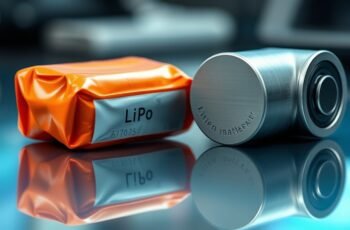
Understanding the nuances of lithium battery chemistries is essential for selecting the right technology for specific applications. Each chemistry offers distinct trade-offs in energy density, safety, lifespan, and cost. As we compare options like LCO, LFP, and NMC, it becomes clear that no single solution excels universally. To make informed decisions, we must analyze these factors critically—knowledge that can markedly impact performance, sustainability, and overall value.
Key Takeaways
- Different chemistries like LCO, LFP, and NMC vary in energy density, lifespan, safety, and environmental impact.
- LCO offers high energy density but has safety and recycling concerns; LFP is safer with longer cycle life.
- NMC balances energy density and power output, making it versatile for various applications.
- LFP excels in safety, durability, and eco-friendliness but has lower energy density.
- Application choice depends on factors like performance needs, safety, cost, and sustainability considerations.
What Are the Main Types of Lithium Battery Chemistries?
Understanding the main types of lithium battery chemistries requires a focus on their distinct cathode and anode materials, which directly influence performance characteristics such as energy density, lifespan, safety, and cost. Variations like Lithium Cobalt Oxide (LCO), Lithium Iron Phosphate (LFP), and Lithium Nickel Manganese Cobalt (NMC) each exhibit unique performance profiles. These differences also impact environmental considerations, particularly battery recycling and environmental impact. For example, LCO batteries pose recycling challenges due to cobalt’s toxicity, while LFP batteries are more environmentally benign but may have lower energy density. Selecting chemistries involves balancing performance with sustainability, emphasizing the importance of efficient battery recycling processes to reduce environmental footprint and manage resource constraints effectively.
Comparing Energy Density and Power Output Across Chemistries
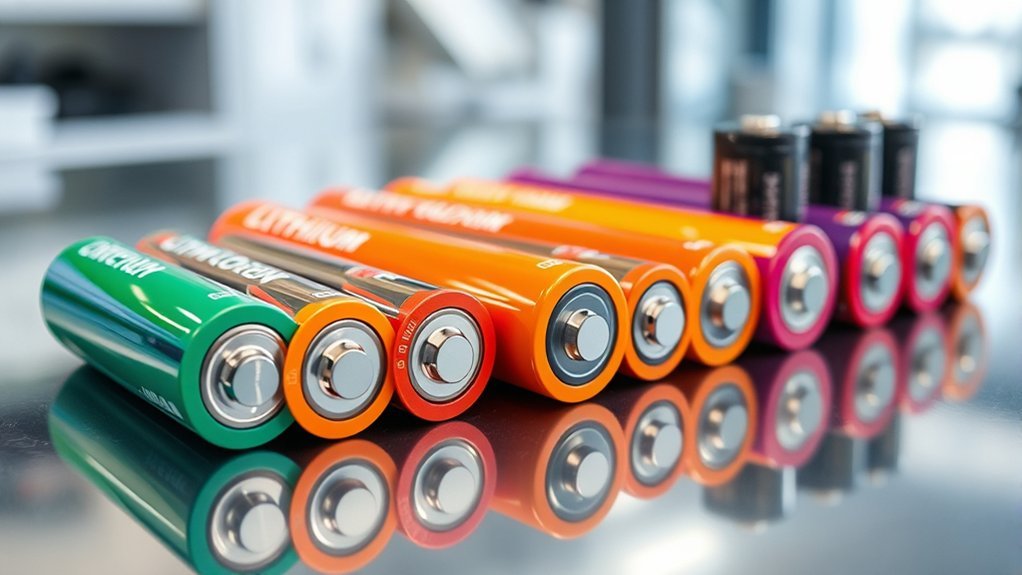
We observe notable variations in energy density and power output among different lithium chemistries, driven by their intrinsic electrochemical properties. These differences are considerably influenced by chemistry-specific factors such as electrode materials and electrolyte stability. Understanding these impacts allows us to optimize battery selection for targeted applications.
Energy Density Variations
Different lithium battery chemistries exhibit significant variations in energy density, directly impacting their suitability for specific applications. These differences largely stem from the unique electrode materials and electrolyte stability of each chemistry. For example, lithium cobalt oxide (LiCoO₂) offers high energy density due to its stable electrode structure, but electrolyte stability limits its lifespan at high voltages. Conversely, lithium iron phosphate (LiFePO₄) provides slightly lower energy density but benefits from enhanced electrolyte stability and robust electrode materials, resulting in longer cycle life. These intrinsic properties influence how much energy a cell can store per unit volume or weight. Understanding these variations helps us select the right chemistry for specific needs, balancing energy density with factors like safety, lifespan, and thermal stability.
Power Output Differences
While energy density defines how much energy a lithium battery can store, power output determines how quickly that energy can be delivered. Different lithium chemistries exhibit varying power capabilities, directly impacting performance in high-demand applications. For instance, lithium iron phosphate (LiFePO₄) offers lower energy density but excels in delivering consistent, high current output, making it ideal for power tools and electric vehicles. Conversely, lithium nickel manganese cobalt oxide (NMC) batteries balance energy density with moderate power, suitable for portable electronics. These differences influence battery recycling processes, as higher power batteries often require more robust thermal management, impacting environmental considerations. Ultimately, understanding power output variations across chemistries helps optimize application-specific performance while addressing environmental impacts associated with battery lifecycle and disposal.
Chemistry Impact Factors
Understanding how various lithium chemistries influence both energy density and power output is essential for optimizing battery performance across applications. Electrolyte stability and electrode materials primarily determine these factors. For instance, high-energy chemistries like NMC offer dense electrode materials but may compromise electrolyte stability, affecting longevity. Conversely, LFP provides excellent thermal stability and robust electrode materials but with lower energy density. The impact factors can be summarized as:
| Chemistry | Energy Density (Wh/kg) | Power Output (W/kg) |
|---|---|---|
| NMC | High | Moderate |
| LFP | Moderate | High |
| LCO | Very High | Moderate |
| Lithium Titanate | Low | Very High |
| Solid-State | Potentially High | Varies |
These factors highlight the delicate balance between electrolyte stability and electrode material selection in optimizing energy and power performance.
How Battery Lifespan and Cycle Stability Vary by Chemistry
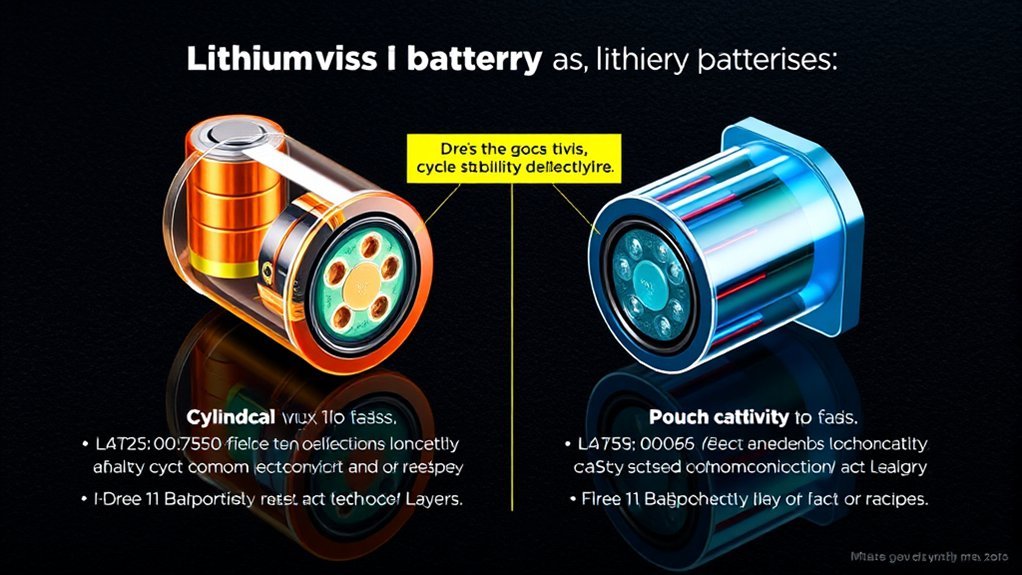
Different lithium chemistries exhibit significant variation in cycle life and degradation mechanisms, affecting overall durability. Factors such as electrode stability, electrolyte composition, and operating conditions influence their longevity and stability. Understanding these chemistry-specific degradation pathways enables optimization of lifespan and cycle performance in practical applications.
Cycle Life Differences
The cycle life and stability of lithium batteries vary considerably depending on their chemistry, as each formulation interacts differently with electrochemical processes over repeated charge-discharge cycles. For example:
- Lithium Iron Phosphate (LiFePO₄) cells typically offer 2,000-3,000 cycles, emphasizing longevity and safety.
- Lithium Nickel Manganese Cobalt Oxide (NMC) batteries usually provide 1,000-2,000 cycles, balancing capacity and lifespan.
- Lithium Cobalt Oxide (LCO) batteries generally sustain fewer cycles, around 500-1,000, impacting their environmental footprint through more frequent replacements.
Understanding these differences is vital for optimizing battery recycling efforts and minimizing environmental impact, as longer-lasting chemistries reduce waste and resource consumption over time.
Degradation Factors
Degradation factors directly influence the lifespan and cycle stability of lithium batteries, and these factors vary markedly across different chemistries. Electrolyte stability is critical; unstable electrolytes accelerate decomposition, leading to capacity loss. Electrode material also plays an essential role—materials prone to structural changes or dendrite formation diminish cycle life. For example, lithium cobalt oxide electrodes degrade faster under repeated cycling due to phase transitions, while lithium iron phosphate offers enhanced stability thanks to robust electrode chemistry. Variations in electrolyte compatibility with electrode materials further affect degradation rates. Ultimately, the interplay between electrolyte stability and electrode material determines how quickly a battery loses capacity and how reliably it performs over multiple cycles, emphasizing the importance of chemistry-specific degradation mechanisms in battery longevity.
Chemistry Durability
Battery chemistries exhibit significant variability in lifespan and cycle stability due to their distinct electrochemical properties. This directly influences their durability, affecting factors such as cycle life and degradation rates. For example, lithium iron phosphate (LiFePO₄) offers:
- Higher cycle stability, often exceeding 2,000 cycles with minimal capacity loss,
- Lower environmental impact through easier battery recycling processes,
- Reduced degradation, which extends battery lifespan.
In contrast, lithium cobalt oxide (LiCoO₂) batteries tend to have shorter cycle lives, leading to more frequent replacements and increased waste. Understanding these differences helps optimize battery design for longevity and sustainability, minimizing environmental impact. Selecting chemistries with superior durability also promotes effective battery recycling, reducing resource depletion and environmental harm over the long term.
Safety Considerations and Thermal Stability of Different Lithium Batteries
While lithium batteries offer high energy density and efficiency, their safety and thermal stability remain critical concerns, especially under extreme conditions or manufacturing defects. Thermal runaway can rapidly escalate, causing internal temperatures to spike uncontrollably, increasing the risk of fire hazards. Different chemistries exhibit varying susceptibilities; for example, lithium cobalt oxide batteries are more prone to thermal instability compared to lithium iron phosphate variants, which offer better safety profiles. The presence of dendrites and electrolyte degradation can further exacerbate these risks, leading to short circuits or catastrophic failures. Ensuring proper thermal management, robust manufacturing standards, and protective circuitry is essential to mitigate these dangers. Understanding these safety considerations enables safer application and handling of lithium batteries across diverse environments.
Cost and Availability: Which Lithium Chemistry Offers the Best Value?
Evaluating the cost and availability of various lithium chemistries is fundamental when selecting a suitable energy storage solution. To determine which offers the best value, we analyze three key factors:
- Cost efficiency: Lithium iron phosphate (LiFePO₄) provides high cycle life at a lower material cost, enhancing long-term value.
- Supply chain stability: Lithium nickel manganese cobalt oxide (NMC) benefits from a more established supply chain, ensuring consistent availability.
- Raw material accessibility: Lithium cobalt oxide (LCO) faces supply constraints due to reliance on cobalt, increasing costs and supply risks.
Balancing these factors helps us identify chemistries with ideal cost efficiency and supply chain resilience, ensuring dependable, economical energy storage solutions.
Best Use Cases for Each Lithium Battery Chemistry
Different lithium chemistries excel in distinct applications due to their unique performance characteristics and material properties. For instance, lithium iron phosphate (LiFePO₄) is favored in stationary energy storage because of its thermal stability, long cycle life, and lower environmental impact, making battery recycling more straightforward. Conversely, lithium nickel manganese cobalt oxide (NMC) batteries suit electric vehicles, where energy density and power output are critical, though their environmental footprint requires careful management during disposal. Lithium cobalt oxide (LiCoO₂) is common in portable electronics, but its complex recycling process raises environmental concerns. Overall, selecting the appropriate chemistry depends on balancing performance needs with sustainability considerations, emphasizing the importance of understanding each chemistry’s environmental impact and recycling challenges to optimize lifecycle management.
Choosing the Right Lithium Chemistry for Your Application
Selecting the appropriate lithium chemistry for your application requires a careful assessment of performance requirements, environmental considerations, and lifecycle management. To achieve this, consider these key factors:
- Energy density and power output—crucial for high-performance devices or long-lasting applications.
- Battery manufacturing complexity—some chemistries demand advanced processes, influencing cost and scalability.
- Environmental impact—prioritize chemistries with sustainable sourcing and recyclability to minimize ecological footprint.
Understanding these elements helps optimize battery design, balancing performance with environmental responsibility. For instance, lithium cobalt oxide offers high energy density but poses environmental and supply chain concerns, while lithium iron phosphate emphasizes safety and sustainability. Choosing the right chemistry aligns with your operational goals and environmental commitments, ensuring efficient, responsible battery solutions.
Frequently Asked Questions
How Do Environmental Impacts Differ Among Lithium Battery Chemistries?
We see environmental impacts vary among lithium chemistries; some have a lower environmental footprint due to resource sustainability, while others pose higher ecological risks from mining and manufacturing processes. It’s essential to assess these factors carefully.
What Are the Recycling and Disposal Challenges for Each Chemistry?
Recycling methods face monumental challenges due to complex chemistries, with disposal hazards risking severe environmental contamination; each chemistry demands tailored approaches, yet current processes often fall short, emphasizing the urgent need for innovative, sustainable solutions.
How Do Temperature Ranges Affect Battery Performance Across Chemistries?
We find that thermal stability and temperature resilience vary across chemistries, impacting performance; lithium-ion batteries excel in moderate ranges, but others like lithium-polymer or LFP show better resilience in extreme temperatures, influencing application suitability and safety.
Are There Emerging Lithium Chemistries Poised to Replace Current Types?
We see emerging lithium chemistries as promising frontiers, with alternative materials fueling future innovations. These advancements aim to enhance energy density, safety, and longevity, positioning them as potential replacements for current types in the evolving energy landscape.
How Does Manufacturing Complexity Influence Overall Battery Cost?
Manufacturing complexity considerably impacts overall battery costs, as intricate manufacturing processes require advanced equipment and quality control, affecting cost optimization; streamlined processes reduce expenses, making batteries more affordable and accessible for diverse applications.
Conclusion
In summary, selecting the ideal lithium chemistry requires careful evaluation of device requirements, durability, and desired safety standards. By balancing battery advantages with fundamental constraints, we gain a clearer understanding of the intricate nature of lithium’s landscape. Whether emphasizing power, longevity, or ecological excellence, our strategic choice guarantees superior sustainability, safety, and system efficiency. Equipped with this analytical insight, we can confidently tailor cell chemistry options, promoting innovative solutions for diverse, dynamic applications.