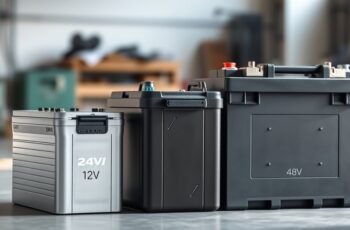
While it’s tempting to view home energy solutions as straightforward choices, the decision between batteries and generators involves nuanced considerations that can considerably impact efficiency and sustainability. Each option offers distinct advantages and drawbacks, influenced by factors like cost, environmental impact, and reliability. Understanding these differences is essential for making an informed choice tailored to your home’s specific needs. To navigate this complex landscape, we should examine the technical aspects and long-term implications of both solutions.
Key Takeaways
- Batteries enable silent, emission-free energy storage with lower ongoing maintenance compared to fuel-dependent generators.
- Generators can deliver higher power capacity but involve higher fuel costs and environmental emissions.
- Home batteries support smart grid integration, load shifting, and long-term cost savings; generators are mainly backup options.
- Batteries have a longer lifespan and are more user-friendly, requiring minimal maintenance; generators need regular fuel and upkeep.
- Initial costs for batteries are higher, but they offer better efficiency and sustainability over the long term than generators.
What Are Home Energy Storage Batteries and How Do They Work?
Home energy storage batteries are advanced devices designed to store electrical energy for later use, often integrated into residential power systems. They enable consumers to participate actively in the smart grid, balancing supply and demand efficiently. These batteries typically utilize lithium-ion or similar chemistries, allowing for rapid charge and discharge cycles. Their operation hinges on sophisticated management systems that maximize battery lifespan by controlling depth of discharge and operating temperatures. This precision guarantees maximum durability, which is vital for long-term cost-effectiveness. As part of a smart grid, they facilitate load shifting, enhance energy independence, and improve overall grid stability. Understanding how these batteries work highlights their role in modern energy infrastructure, emphasizing the significance of maintaining ideal conditions to prolong battery lifespan.
Advantages of Using Home Energy Storage Batteries Over Generators
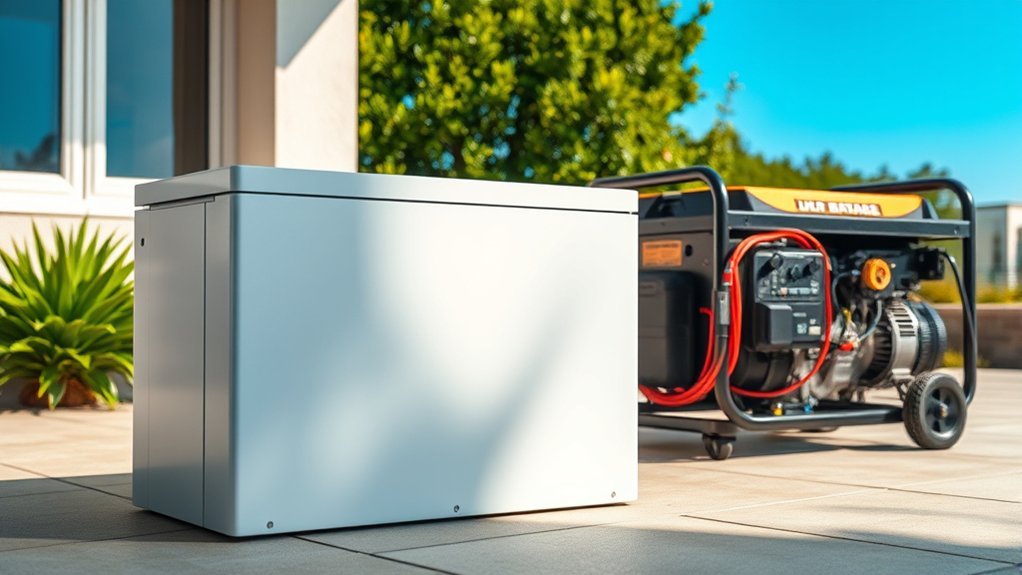
While generators have long been the go-to solution for backup power, energy storage batteries offer significant advantages that make them a more efficient and sustainable choice. Batteries integrate seamlessly with the smart grid, enabling dynamic energy management and real-time response to grid conditions. This integration allows homeowners to optimize energy consumption based on fluctuating energy tariffs, reducing costs during peak periods. Unlike generators, batteries produce no emissions, supporting environmental sustainability. They also provide silent, maintenance-free operation, enhancing safety and convenience. Additionally, batteries support load shifting and demand response strategies, improving grid stability. Overall, their ability to leverage advanced grid technologies and economic incentives underscores their superior efficiency and long-term affordability compared to traditional generators.
Pros and Cons of Traditional Generators for Home Backup Power
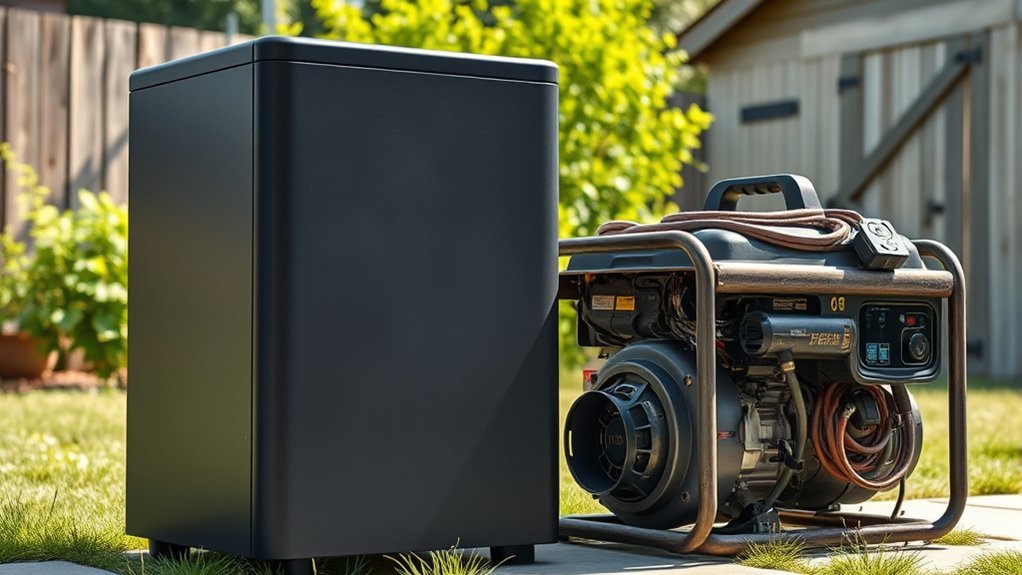
Traditional generators have long been the primary backup power solution for residences, offering a reliable source of electricity during outages. They excel in outdoor power applications, providing immediate energy independence but at the expense of high fuel consumption. This reliance on fuel, typically gasoline or diesel, results in ongoing operational costs and environmental concerns. Additionally, generators can be noisy and require regular maintenance.
| Advantage | Disadvantage | Consideration |
|---|---|---|
| Reliable outdoor power | High fuel consumption | Operational costs |
| Immediate power during outages | Noisy operation | Maintenance requirements |
| Compatibility with various loads | Environmental impact | Fuel logistics |
While effective, these pros and cons highlight the need to assess whether generators suit long-term backup needs, especially considering fuel logistics and environmental factors.
Cost Comparison: Which Is More Affordable Long-Term?
When evaluating long-term affordability, energy storage batteries generally require a higher initial investment but incur considerably lower operational costs compared to generators. The cost advantage stems from their superior fuel efficiency, as batteries store electricity efficiently without ongoing fuel expenses. Over time, battery lifespan becomes a critical factor; modern batteries typically last 8-15 years with proper maintenance, reducing replacement costs. Conversely, generators rely on fuel, which can be costly and fluctuate in price, increasing operational expenses. Although initial setup for batteries can be substantial, their lower maintenance and fuel costs make them more economical over the long term. Ultimately, for sustained savings, batteries offer a more cost-effective solution when considering both upfront costs and ongoing operational expenses.
Environmental Impact: Battery Storage vs Generator Emissions
When comparing emission levels, batteries produce no direct emissions during operation, unlike generators that emit greenhouse gases and pollutants. The integration of renewable energy sources can substantially reduce the environmental footprint of both options, but the impact varies based on their respective energy sources. Analyzing these factors helps determine which system aligns best with sustainable energy goals.
Emission Levels Comparison
Although both home energy storage batteries and generators serve to provide backup power, their environmental impacts differ considerably, particularly regarding emissions. Batteries produce minimal direct emissions, especially when integrated with solar systems, supporting grid independence without releasing pollutants during operation. Conversely, generators emit significant levels of greenhouse gases like CO₂ and NOₓ, depending on fuel type and efficiency. Key differences include:
- Battery emissions are virtually zero during use
- Generator emissions contribute to air pollution and climate change
- Solar integration reduces reliance on fossil-fueled generators
- Batteries support cleaner energy progressions, enhancing environmental sustainability
- Emission levels influence regulatory and health considerations
These factors underscore the importance of emission profiles when evaluating environmental impacts and long-term sustainability.
Renewable Energy Integration
Integrating renewable energy sources like solar and wind into home backup systems markedly impacts environmental outcomes, particularly concerning emissions. When connected to a smart grid, these sources optimize energy flow, reducing reliance on fossil fuels and lowering overall emissions. Battery storage enhances this integration by providing a buffer during periods of low renewable generation, but the battery’s lifespan influences sustainability—longer-lasting batteries decrease waste and replacement frequency. In contrast, generators often emit higher levels of pollutants during operation, especially if powered by fossil fuels. A well-designed renewable integration system minimizes emissions through cleaner energy use, while smart grid technology ensures efficient energy management. Overall, prioritizing renewable sources and optimizing battery lifespan fosters a more environmentally friendly and sustainable backup power solution.
Reliability and Performance in Power Outages
How do home energy storage batteries and generators compare in their ability to maintain power during outages? Batteries offer rapid response times and consistent performance, but their battery lifespan can limit long-term reliability. Generators, fueled by diesel or gas, depend on generator fuel availability and may experience delays during startup. Regarding performance:
- Batteries provide silent, emission-free operation, ideal for frequent outages.
- Generators can supply higher power loads but produce noise and emissions.
- Batteries have finite cycles, influencing their longevity and dependability.
- Generators require regular fuel and maintenance checks to guarantee readiness.
- Both systems’ reliability hinges on proper sizing and installation for specific power needs.
Ease of Use and Maintenance for Batteries and Generators
When evaluating ease of use and maintenance, batteries generally require less ongoing attention compared to generators, as they have fewer moving parts and do not involve fuel management. Battery lifespan typically spans several years with proper care, and routine maintenance mainly involves monitoring charge levels and ensuring thermal management. In contrast, generators demand regular oil changes, filter replacements, and fuel system checks, increasing maintenance requirements and potential downtime. Batteries offer a simplified operation process, often with automated controls, reducing user intervention. Conversely, generators require manual startup and shutdown procedures, along with periodic inspections to maintain ideal performance. Overall, batteries tend to be more user-friendly, with lower maintenance demands, making them more convenient for continuous home energy storage.
Which Solution Fits Different Home Sizes and Energy Needs?
Determining the most suitable energy storage solution depends heavily on the size of the home and its specific energy consumption patterns. Larger homes with higher demands benefit from robust storage like batteries integrated into smart grid systems, optimizing power management. Smaller residences may find generators sufficient for backup needs, especially if occasional use is anticipated. For medium-sized homes, a hybrid approach combining batteries and generators maximizes efficiency and reliability. Factors influencing choice include peak load times, renewable energy integration, and grid dependency. Key considerations include:
- Home size and energy load profile
- Frequency of power outages
- Integration with smart grid systems
- Renewable energy sources availability
- Budget constraints and scalability
These factors guarantee the solution aligns with energy needs, maximizing efficiency and resilience.
Making the Right Choice: Factors to Consider Before Buying
When selecting between a home energy storage battery and a generator, evaluating the initial investment and ongoing costs is vital for financial planning. We must also analyze each option’s energy efficiency and capacity to guarantee it aligns with our consumption patterns. Both technical and budget considerations are essential to optimize long-term performance and value.
Cost and Budget Considerations
Evaluating the costs associated with home energy storage options requires a clear understanding of both upfront investment and ongoing expenses. Batteries typically involve higher initial costs but lower operational expenses, especially when integrated into a smart grid that leverages dynamic energy tariffs. Generators may present lower upfront costs but incur higher fuel and maintenance costs over time. Additional considerations include:
- Initial purchase price versus long-term savings
- Operational costs related to fuel or electricity
- Potential subsidies or incentives for smart grid integration
- Impact of energy tariffs on storage and generation efficiency
- Maintenance and replacement costs over the system lifespan
Balancing these factors helps determine the most cost-effective solution aligned with your budget, energy goals, and local grid policies.
Energy Efficiency and Storage
How do energy efficiency and storage capabilities influence your choice between a home energy storage battery and a generator? Efficiency impacts operational costs and reliability. A battery’s lifespan determines long-term value, as frequent cycling can degrade capacity over time. Conversely, generators rely on fuel, with generator fuel costs fluctuating based on market conditions, affecting overall efficiency. Batteries typically convert stored energy with minimal losses, offering consistent performance, but their capacity is limited by storage size. Generators can produce higher power outputs, but fuel consumption and emissions reduce overall efficiency. When evaluating options, consider that batteries may require fewer maintenance interventions, enhancing their efficiency over time. Ultimately, understanding these factors helps match your energy needs with the most suitable, cost-effective, and reliable solution.
Frequently Asked Questions
How Long Do Home Energy Storage Batteries Typically Last?
We find that home energy storage batteries typically last 10 to 15 years, depending on battery lifespan and storage maintenance. Proper management extends their efficiency, ensuring reliable energy backup over their expected service life.
Can Batteries Be Used Alongside Generators for Backup Power?
Yes, batteries can be used alongside generators for backup integration, provided they’re compatible with your system’s voltage and control mechanisms. Proper battery compatibility guarantees seamless operation, optimizing reliability and efficiency during power outages.
What Safety Features Are Included in Home Energy Storage Systems?
We guarantee safety with advanced features like thermal management, circuit protection, and automatic shutdowns. Proper battery maintenance and monitoring of storage capacity prevent overcharging or overheating, maintaining system integrity and safety during operation.
How Do Weather Conditions Affect Generator Performance?
Weather impact profoundly affects generator performance, causing fluctuations due to temperature, humidity, and wind. Extreme conditions can lead to efficiency drops or mechanical issues, emphasizing the need for weather-resilient designs to maintain consistent operation.
Are There Government Incentives for Installing Energy Storage or Generators?
We find that renewable subsidies and tax credits often support installing energy storage systems and generators, making them more financially viable. These incentives vary by region, encouraging adoption and enhancing the economic feasibility of renewable energy investments.
Conclusion
Ultimately, choosing between home energy storage batteries and generators hinges on your specific needs, budget, and sustainability goals. As we’ve seen, batteries offer silent, emission-free operation ideal for modern smart homes, while generators provide robust backup power but with higher environmental and maintenance costs. Coincidentally, recent advancements in battery technology are closing the gap in affordability and performance, making them a compelling choice for those prioritizing efficiency and eco-friendliness in an increasingly energy-conscious world.