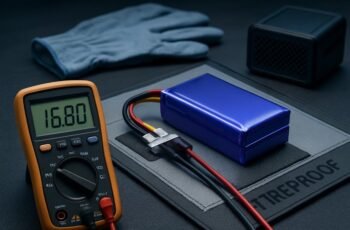
We’re outlining a practical approach to LiPo battery storage, focusing on stable conditions that extend life and curb risk. We’ll cover ideal temperatures, SOC targets, prep steps, and ongoing monitoring, with clear, repeatable methods you can trust. Our aim is to keep packs safe and ready, even as conditions change. If you’re pursuing reliable storage routines, this guide sets the baseline—and we’ll address edge cases that demand careful handling. Let’s start with the essentials.
Key Takeaways
- Store LiPo packs at 15–25°C with a state of charge around 40–60% to minimize electrolyte viscosity changes, self-discharge, and dendrite risk.
- Use vented pouches or rigid, labeled containers with anti-movement packing and maintain humidity below 60% for longevity.
- Regularly monitor pack voltage, date, and conditioning every 2–4 weeks; adjust frequency based on ambient temperature.
- Prepare packs by cleaning surfaces with isopropyl alcohol, inspecting for damage, and labeling with date and SOC before storage.
- If issues arise, isolate damage, balance cells within safe voltage limits, document changes, and consider proper recycling and disposal options.
What LiPo Batteries Are and Why LiPo Storage Matters
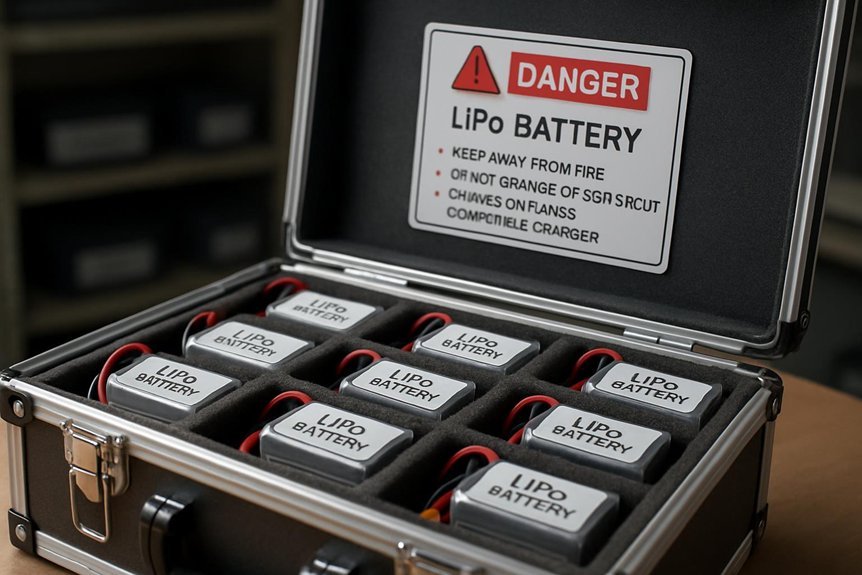
Lithium polymer (LiPo) batteries are lightweight, high-energy storage units built with a polymer electrolyte that enables flexible form factors and compact pack designs. We define LiPo as a rechargeable energy source whose performance depends on internal chemistry, electrode interfaces, and packaging. In practice, storage matters because voltage, temperature, and state of charge influence cycle life, capacity retention, and safety margins. We examine how nominal voltage, C-rate, and refuse heat generation interact with enclosure design to determine long-term reliability. We address unrelated topic considerations only insofar as they illuminate material properties or electrochemical behavior, avoiding distraction. Our approach is to quantify stability, monitor impedance trends, and maintain consistent conditioning routines. For readers seeking context, miscellaneous discussion clarifies terminology without diverging from core storage principles.
Ideal LiPo Storage Temps and State of Charge
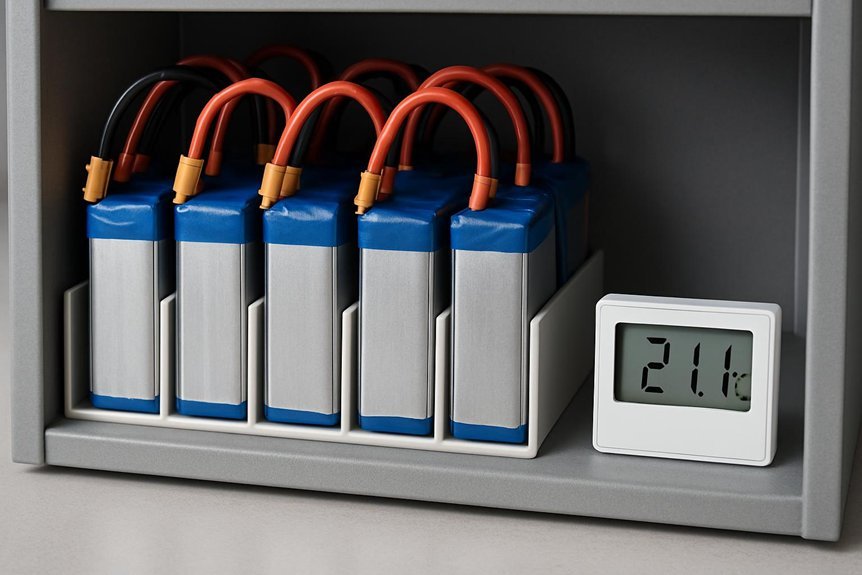
| Parameter | Recommended Range | Rationale |
|---|---|---|
| Temperature | 15–25°C (59–77°F) | Limits electrolyte viscosity, self-discharge |
| SoC | 40–60% | Minimizes Li-dendrite risk, capacity fade |
| Humidity | <60% | Reduces corrosion and corrosion-related impedance |
| Duration | Short-term to months | Stability depends on calendar aging |
Prep LiPos for Storage: Clean, Inspect, and Package
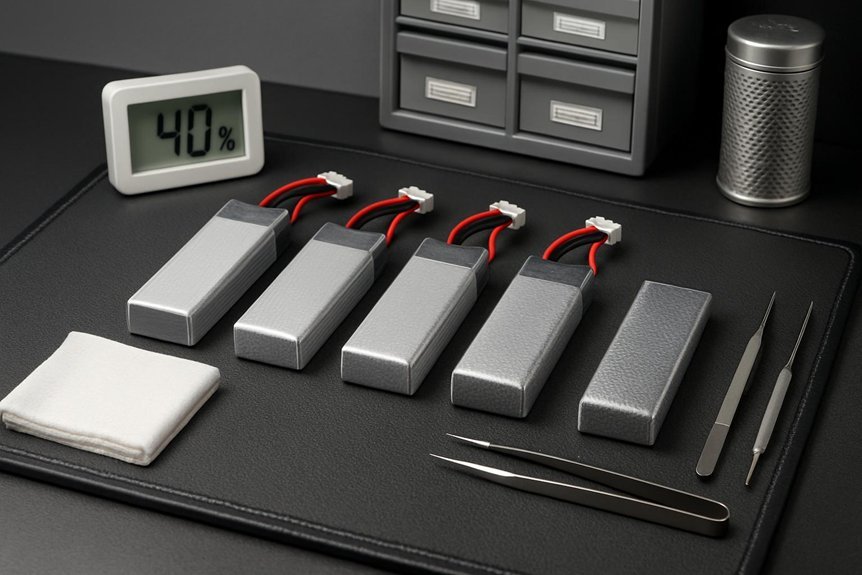
Are you ready to establish a clean, low-risk baseline before storing LiPo cells? We are outlining a focused prep workflow that minimizes risk and preserves pack integrity. We address only actionable steps, avoiding unrelated topics or irrelevant discussion that doners might drift into.
1) Clean and dry surfaces: wipe connectors, cases, and balance leads with isopropyl alcohol on a lint-free cloth; let dry completely.
2) Inspect: check for swelling, punctures, torn seams, loose tabs, and discoloration; note any anomalies for discard or professional evaluation.
3) Package: place individual packs in vented, protective pouches or rigid, labeled containers; include packing material to prevent movement and mark with date and SOC.
This routine keeps handling safe and performance predictable, without venturing into unrelated topics.
Long-Term LiPo Storage Care: Schedule, Monitoring, and Safety
Maintaining LiPo storage long-term requires a disciplined schedule, vigilant monitoring, and strict safety protocols to preserve pack integrity and minimize risk. We outline a clear storage schedule: store packs at a stable state of charge, typically 40–60%, in a fireproof container, away from heat sources. Record pack voltage, date, and conditioning every two to four weeks, adjusting based on ambient temperature. For monitoring safety, use a dedicated charger with reverse polarity protection, and keep a dedicated area free of combustibles with a smoke detector nearby. Inspect insulation, balance leads, and connectors during each check, noting any swelling or odor. If deviations arise, pause use, recheck, and consult manufacturer guidelines before reintroducing packs into service. Consistency across cycles preserves performance and reduces risk.
Troubleshooting LiPo Storage Issues and Reconditioning
When troubleshooting LiPo storage issues, we start by systematically verifying the storage state of charge, enclosure integrity, and connection safety before any reconditioning steps. We then proceed with controlled testing to identify root causes and apply conservative remediation.
- Check and confirm optimal storage SOC readings, surface insulation, and connector stability to prevent further degradation.
- Isolate potential enclosure damage, verify vent integrity, and assess seal continuity before attempting reconditioning.
- Implement staged reconditioning: balance the pack within safe voltage limits, monitor temperature, and document changes for market value assessment and recycling solvents considerations.
We emphasize documentation, strict safety protocols, and post-reconditioning verification. If unresolved, consider recycling solvents disposal plans and evaluate market value implications for legacy cells.
Frequently Asked Questions
How Often Should I Recalibrate Lipo Storage Chargers?
We recalibrate monthly to maintain accuracy; recalibration frequency depends on usage. We perform charger maintenance quarterly, inspecting connections and firmware, and recalibrate after any repair or suspected drift to ensure safe, precise LiPo storage charging performance.
Can Lipos Be Stored With Damaged Cells?
We can’t store lipos with damaged cells; doing so risks thermal runaway. We assess lipos safety, isolate damaged packs, use proper disposal, and replace them. If uncertain, consult professionals; never transport or recharge compromised batteries.
Do Different Brands Require Different Storage Procedures?
Yes, different brands can differ; we assess brand compatibility before storage. We juxtapose routine precautions with precise steps, ensuring charger calibration matches each brand’s specs, then follow uniform safety practices for all packs we handle.
What Is the Impact of Ambient Humidity on Lipo Storage?
Ambient humidity degrades lipo storage stability, increasing swelling risk and reducing capacity; we guard against this with controlled conditions. We maintain storage safety by low humidity, cool temps, and monitoring. We avoid high heat exposure during lipo storage.
Are There Legal Restrictions for Transporting Stored Lipos?
Yes, there are legal restrictions for transporting stored lipos; we ensure transport compliance. We exaggerate how strict it is, we methodically follow rules, and we document every pack, ensuring safe, precise handling during shipping and storage.
Conclusion
We’ve walked through safe, methodical LiPo storage steps, from ideal temps and SOC to prepping packs and ongoing monitoring. By keeping packs in vented containers at 15–25°C with roughly 40–60% charge, inspecting before storage, and documenting changes, we minimize risks and extend life. Schedule checks every 2–4 weeks, adapt cadence to temperature, and use dedicated chargers. If issues arise, reconditioning or recycling is the prudent path—consistently, we guard against heat, swelling, and failures, rain or shine. Stay diligent. It’s a smart move.