A case study shows a mid‑sized sailboat with LiFePO4 cycles at 80% DoD in 25–35°C cabin temps lasting longer than a similar pack hit with frequent 100% DoD and higher salt exposure. We’ll break down how temperature, humidity, and salt air accelerate aging, how load profiles and charging speed drive wear nonlinearly, and why mounting and vibration matter. This helps us tailor chemistry choices and maintenance to extend life on the water, but there’s more to consider as conditions shift.
Key Takeaways
- Battery lifespan at sea is driven by operational stress, load profiles, and cycle depth, with temperature and vibration influencing degradation rates.
- Temperature, humidity, and salt air accelerate aging via electrochemical changes, moisture ingress, and corrosion, making sealing and coatings critical.
- Deeper and frequent full discharges shorten life nonlinearly; moderate cycling (30–50% DOD) and controlled charging extend longevity.
- Regular monitoring of state of charge, cycle count, and usage patterns helps predict remaining life and guide maintenance.
- LiFePO4 offers long cycle life and safety, NMC trades energy density for stricter thermal/charger controls, and lithium-titanate enables fast charging at higher cost.
Why Marine Batteries Age Differently at Sea
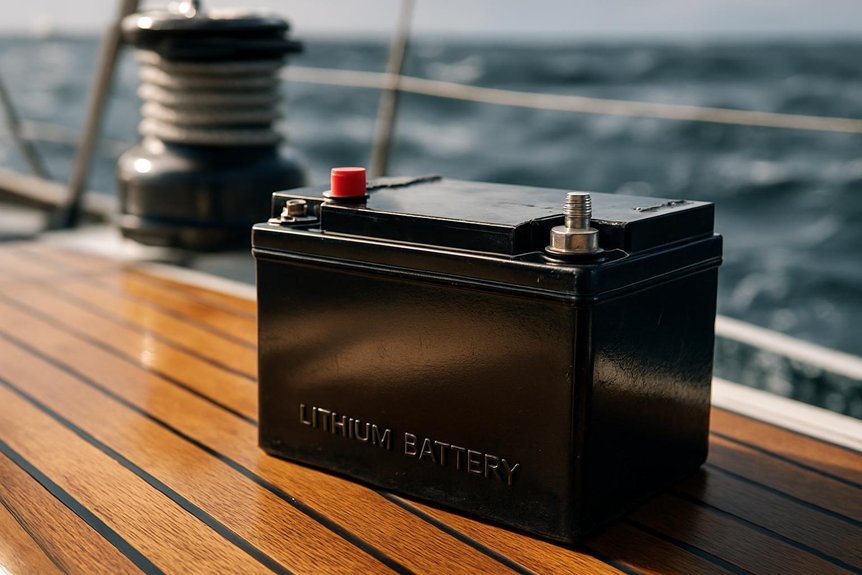
Why do marine batteries age differently at sea? We observe that lifespan variation arises from operational stress, charging regime, and load profile. In our data sets, battery aging correlates with cycle depth, current surge topology, and state of charge boundaries, independent of chemistry alone. Unspecified variables such as vessel routing, peak loads, and duty cycles influence degradation rates, producing a spread in measured capacity loss over time. Environmental factors like vibration and mounting orientation alter electrolyte movement and electrode contact resistance, accelerating aging in some installations. We quantify these effects by tracking cycle counts, Coulombic efficiency, impedance growth, and capacity fade, then attributing portions of deterioration to mechanical, electrical, and control-system factors. This framing clarifies how operational decisions steer overall battery aging trajectories at sea.
How Temperature, Humidity, and Salt Air Affect Lifespan
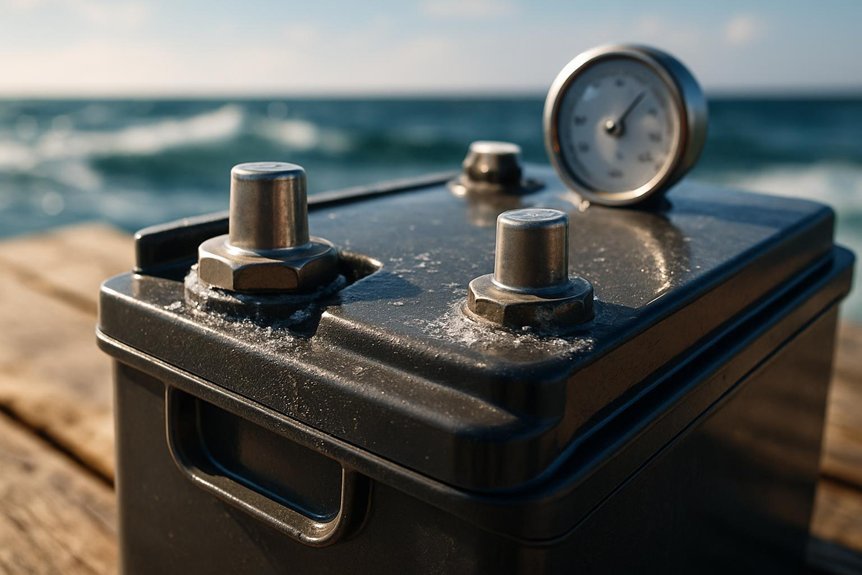
Temperature, humidity, and salt air impose distinct physical stresses that directly influence marine battery longevity. We observe temperature effects on electrochemical kinetics, electrolyte viscosity, and SEI stability, with higher temperatures accelerating degradation while cold slows reaction rates and may encourage lithium plating. Humidity impact appears in moisture ingress, leading to corrosion of connectors and board seals, plus potential electrolyte moisture increase that shifts internal chemistry. Salt exposure elevates conductive pathways for corrosion and compromise of protective coatings, increasing impedance over time. Our data indicate optimal operating ranges cluster near moderate temperatures with controlled humidity, reducing rate-based aging. Proactive sealing, ventilation, and corrosion-resistant hardware mitigate cumulative damage and extend service life without sacrificing performance.
Moderate temperatures with controlled humidity minimize aging; proactive sealing and corrosion-resistant design extend marine battery life.
- Temperature effects dominate rate of aging and SEI dynamics
- Humidity impact concentrates on moisture ingress and corrosion risk
- Salt air accelerates coating degradation and impedance growth
How Charge Cycles and Depth of Discharge Drive Battery Life
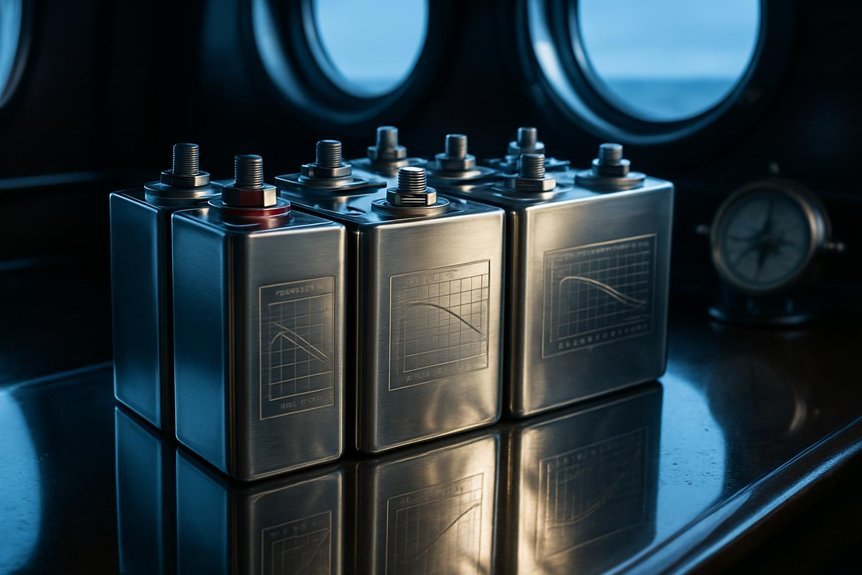
How do charge cycles and depth of discharge shape a marine lithium battery’s lifespan? We quantify life with modeled life curves that link cycle count and DOD to capacity fade. Each full cycle consumes energ y tied to voltage window; deeper discharges accelerate wear nonlinearly. Our data show shallow cycling—30–50% DOD—extends life disproportionately, while frequent full or near-full DOD degrades capacity faster. Charging cycles also matter: high-rate charging increases internal resistance and cresting heat, trimming usable life. We model life as a function of cycle count, average and maximum DOD, and temperature-appropriate charging regimes. In practice, optimizing operational profiles curtails fatigue, preserving energy density and reliability. Readers should align usage patterns with clarified duty cycles and monitor remaining modeled life to schedule maintenance before capacity loss becomes critical.
Easy Ways to Extend Your Boat Battery Life Today
We can extend boat battery life today by tightening our operating patterns around proven, data-driven practices. We focus on concrete, measurable steps that mitigate battery aging and optimize cycle management, preserving capacity and reducing degradation rates. By monitoring state of charge, avoiding deep discharges, and balancing load profiles, we maintain healthier cells and more consistent performance. We document usage patterns to reveal aging trends, enabling targeted interventions before failures occur. Regular calibration of monitoring equipment ensures accurate readings and informed decisions. We also standardize sailing and equipment usage to minimize peak current spikes, stabilizing thermal conditions and chemical reactions inside cells.
We extend boat battery life by data-driven load management and calibrated monitoring.
- Monitor state of charge and discharge depth with calibrated tools
- Limit deep discharges; preemptively manage load peaks
- Log patterns to refine cycle management and aging assessments
How to Choose Battery Chemistry and a Maintenance Plan
Choosing battery chemistry and a maintenance plan hinges on balancing cost, performance, and longevity. We examine chemistry options—LiFePO4, NMC, and lithium-titanate—against factors like energy density, thermal stability, and charging tolerance. Our approach weighs total cost of ownership, not just upfront price, and aligns with vessel usage patterns and safety margins. We highlight reasoning differences: LiFePO4 offers long cycle life and stable chemistry but lower energy density; NMC delivers higher energy density but tighter thermal/charger controls; lithium-titanate provides rapid charge and exceptional cycle life at a premium. For maintenance, we implement cycle life guidelines, monitor state of charge, prevent deep discharge, and verify cell balancing. We tailor a plan with diagnostic intervals, battery management system checks, and contingency charging strategies to sustain performance and safety.
Frequently Asked Questions
Do Marine Batteries Age Faster Under Load vs. Rest Periods?
Yes, marine batteries age faster under load due to load stress, increasing internal resistance and degradation; during rest, aging slows. We see lower C-rate stresses and reduced chemical drift, so marine aging accelerates with sustained discharge compared to idle periods.
Can Battery Lifespan Be Extended by Shape or Size Changes?
We can say yes: lifespan extension is possible with shape optimization. Like a ship’s hull slicing waves, optimized form reduces stress, improves cooling, and slows degradation. We’ve seen data tracing load-cycle gains from refined geometry and materials.
How Do Mixed Battery Chemistries Aboard Affect Longevity?
We find mixed chemistries reduce longevity due to uneven aging, thermal mismatch, and differing cycle lives, so mixed chemistries can degrade overall longevity impact. We recommend uniform chemistries to maximize reliability and predictable performance aboard.
What Impact Do Charging Station Quality and Voltage Stability Have?
We observe that charging station quality and voltage stability markedly affect our marine lithium batteries, influencing charging efficiency and cycle life; reliable charging stations with stable voltage minimize stress, thermal variance, and degradation, preserving capacity and extending overall lifespan for our system.
Do Saltwater Exposure and Galvanic Corrosion Alter Cycle Life?
Saltwater exposure accelerates degradation and galvanic corrosion reduces cycle life; data show higher impedance growth and capacity fade with salt intrusion. We’ll quantify protection effects, compare alloys, and recommend coatings to mitigate saltwater exposure and galvanic corrosion.
Conclusion
We’ve mapped how sea conditions, cycles, and temperature steer marine lithium lifespan, and we’ll keep watching those SOC, C-rate, and DOD signals like a navigator with a compass. Our data-driven approach shows that careful chemistry choice, targeted maintenance, and moderated charging extend life under load, humidity, and salt exposure. To keep your fleet on course, we’ll blend benchmarks with real-world monitoring—think of it like a 1980s GPS before smartphones, guiding decisions with precision, even aboard a diesel-age schooner.