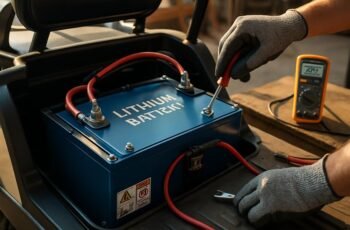
We manage deep cycle Li batteries with a focus on reliability, precise charging, and proactive diagnostics. We’ll monitor impedance trends, under-load voltages, and capacity drift to catch early issues, while documenting every cycle and maintenance action. Our approach emphasizes thermally aware operation, proper storage, and auditable records across RV, off-grid, and marine applications. There’s a threshold where routine checks reveal the next actionable step, and that point is where we’ll pause to reassess our plan before moving forward.
Key Takeaways
- Monitor health metrics (capacity, impedance, voltage under load) and log trends to detect drift early.
- Implement preventive maintenance with regular inspections of connectors, enclosure integrity, and thermal pathways.
- Use fixed upper voltage limits, tapering charge rates near 80–90% SoC, and document each cycle’s states and impedance changes.
- Prevent deep discharge by maintaining SOC above safe floors and scheduling restarts or short recharges as needed.
- Manage temperature with continuous sensing, cooling, and uniform cell temperatures; store at 40–60% SoC in stable conditions.
What Deep Cycle Li Batteries Are and How Maintenance Extends Life
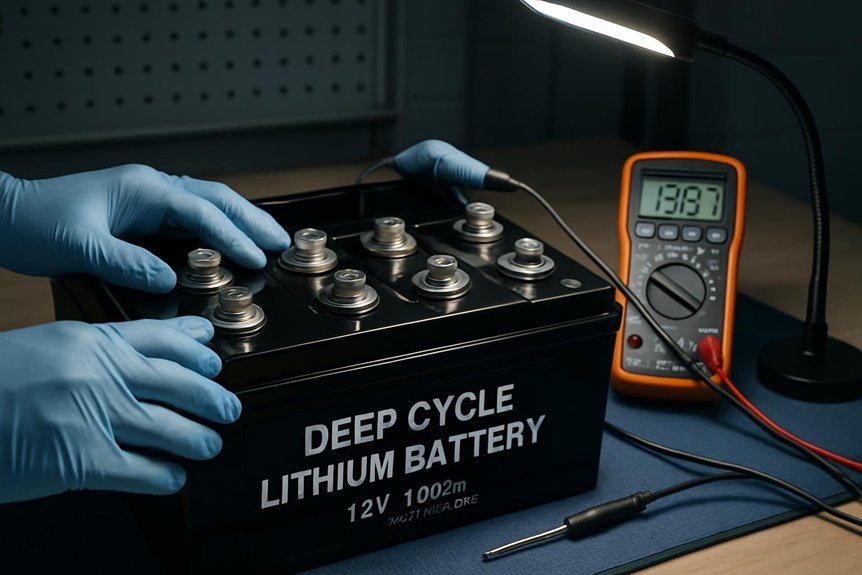
Deep cycle lithium (Li) batteries are rechargeable energy storage systems designed to endure repeated deep discharges, typically 80% or more, with high cycle life and stable capacity. We define them by robust electrochemistry, standardized chemistries, and predictable performance. Our focus is on reliability, thermal management, and lifecycle metrics that guide maintenance decisions. We monitor state of health, impedance trends, and voltage under load to detect drift early. Regular inspection of connectors, coatings, and enclosure integrity prevents parasitic losses and corrosion. We emphasize lithium safety through proper insulation, venting, and enclosure design, reducing risk during charging and discharging cycles. By logging cycle counts, temperatures, and SOC, we forecast maintenance windows, optimize storage, and extend endurance without sacrificing performance.
Optimal Charging Practices for Li Batteries

We’ll outline our charge window best practices and highlight the risks of bricking capacity with improper timing. We align charging within an optimal range to minimize stress, maximize cycle life, and enable reliable diagnostics of cell health. We’ll also flag deep-discharge pitfalls and how they skew state-of-charge estimates, guiding you to implement conservative, data-driven charging limits.
Charge Window Best Practices
How should we set the charge window for a Li battery to maximize lifespan and reliability? We define a tight, repeatable charging window that preserves voltage consistency and minimizes stress. Our approach uses precise target voltages, staged current tapering, and verified termination criteria to prevent overcharge and high-rate aging. We document each cycle’s start/end states and monitor impedance drift to validate health.
1) Establish a fixed upper voltage limit with margin for temperature, and log any deviations in real time.
2) Use controlled charge rates that taper near 80–90% SoC to maintain voltage stability and reduce strain.
3) Periodically confirm voltage consistency across cells with balanced charging and discharge tests.
Avoid Deep Discharge Pitfalls
We understand our charging window minimizes stress, but avoiding deep discharge prevents a different class of reliability issues. In this subsection, we outline concrete steps for risk mitigation when operating Li batteries. We begin with voltage thresholds: avoid letting state of charge dip below the recommended floor, and never cross unsafe, hard limits. Monitor cell balance and temperature during discharge cycles; imbalances amplify capacity fade and thermal events. ImplementScheduled restarts or short recharge windows to prevent lingering low SOC. Use accurate state estimation, log discrepancies, and flag any deviations for diagnostic review. Apply conservative depth-of-discharge targets appropriate to chemistry, age, and temperature. Regularly verify pack integrity, connectors, and fuses. Through disciplined procedures, we reduce risk and extend cycle life.
Temperature Considerations for Safe, Long-Life Li Batteries
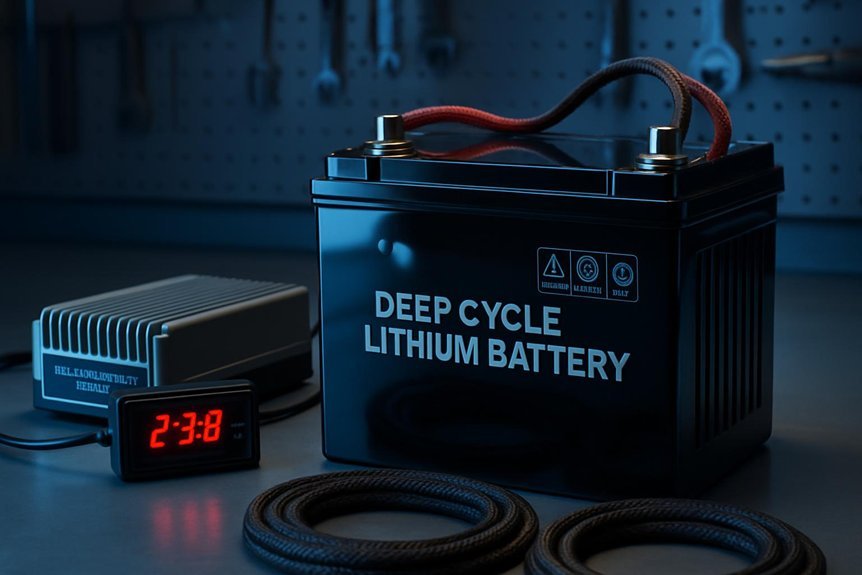
Temperature profoundly affects Li battery life and safety, so controlling temperature during operation and storage is essential. We approach this topic with a disciplined method: define acceptable ranges, monitor in real time, and act preemptively to prevent thermal escalation. Our guidance emphasizes predictable performance and long life through proactive diagnostics and precise temperature management, while recognizing the impact of thermal effects on capacity, cycle life, and safety margins.
1) Establish operating and charging temperature bands, with automatic safeguards for excursions.
2) Implement continuous sensing and data logging to detect drifts, hotspots, or ambient inconsistencies.
3) Prioritize cooling strategies, ventilation, and thermal barriers to minimize transient spikes and ensure uniform cell temperatures.
Safe Storage Routines to Prevent Li Battery Degradation
We’ll outline safe storage routines that minimize Li battery degradation by controlling state of charge, temperature, and long-term exposure. We’ll emphasize maintaining a target SOC (typically 40–60%), ensuring a stable, moderate ambient temperature, and periodic checks for voltage drift or swelling. If we detect any deviation from these conditions, we’ll diagnose promptly and adjust storage parameters to preserve capacity and cycle life.
Safe Storage Practices
Proper storage of a deep cycle lithium battery centers on maintaining a stable, modest state of charge and a clean, controlled environment. We approach safe storage with repeatable procedures, verifying each parameter before sealing the system. Our goal is to minimize self-discharge and thermal drift while enabling rapid restoration when needed. We document checks, anticipate risks, and adjust to ambient conditions with disciplined discipline that supports longevity.
1) Maintain a moderate SOC, calibrated to manufacturer guidance, and monitor temperature continuously.
2) Implement strict environmental controls—clean, dry, ventilated enclosure, and corrosion-free terminals.
3) Adhere to storage protocols, perform periodic health checks, and plan responsible battery recycling when retirement is warranted.
Battery Degradation Prevention
How can we prevent Li battery degradation during safe storage? We start by isolating cells from load and maintaining a stable environment. We monitor temperature, state of charge, and voltage limits to minimize drift in battery chemistry. Our routine prioritizes full-cycle consistency through calibrated storage parameters, logging each parameter for lifecycle tests and trend analysis. We keep SOC at mid-range, typically 40–60%, and nudge storage temperature toward 20°C ±5°C to reduce corrosion and electrolyte aging. We apply protective insulation and moisture control, inspecting vent integrity and connectors before long-term stays. We perform periodic self-tests and impedance checks to detect degradation early, enabling corrective actions. This systematic approach preserves capacity, extends calendar life, and supports reliable, repeatable performance.
Proper Balancing and Monitoring for Consistent Li Battery Performance
Balancing and monitoring are essential to maintain consistent Li battery performance, prevent capacity fade, and extend cycle life. We approach balancing as a targeted process that corrects cell voltage disparities, while monitoring tracks real-time health metrics to preempt degradation. Our method pairs precise balancing frequency with clear monitoring thresholds, reducing drift before it impacts capacity. By systematically validating cell uniformity, we minimize over- and under-balancing, preserving pack efficiency and safety. Early detection of anomalies enables proactive adjustments, preserving performance over dozens to hundreds of cycles. Implementing defined criteria ensures reproducible results and helps diagnose root causes quickly.
Balancing and monitoring safeguard Li batteries through targeted corrections and real-time health tracking.
- Establish balancing frequency based on observed voltage variance and temperature trends.
- Set monitoring thresholds that trigger alerts for cell deviation, heat rise, or impedance shifts.
- Regularly verify balancing outcomes with post-balance voltage equality checks.
Routine Inspections and a 12-Month Maintenance Schedule
Routine inspections form the backbone of our maintenance discipline, linking our balancing and monitoring results to ongoing reliability. We perform structured quarterly checks on cell voltages, impedance, and temperature, then cross-validate with state-of-charge data to confirm balance integrity. A 12-month calendar cycle guides our tasks: visual inspections, connector torque verification, and electrolyte enclosure cleanliness, followed by capacity-based discharge tests to quantify aging trends. We document deviations, correlate them with usage patterns, and adjust cycling strategies accordingly to minimize stress. Recordkeeping includes warranty implications, ensuring traceability of preventative actions and any remedial steps. Our approach emphasizes repeatable procedures, threshold-based alerts, and rapid diagnostic triage. By maintaining disciplined inspection routines, we sustain consistent performance, extend service life, and reduce unplanned downtime.
Fault Detection: Signs of Declining Health and What to Do
Are warning signs of declining health signaling trouble early enough for proactive intervention? We recognize fault detection as our first line of defense, translating data into actionable steps. Health signs such as reduced capacity, elevated internal resistance, and irregular charge-discharge behavior trigger targeted checks, not guesses. We document metrics, compare against baselines, and prioritize repeatable diagnostics to avoid ambiguity. When indicators breach thresholds, we implement controlled cycling, voltage-current profiling, and thermal monitoring to quantify degradation rate and remaining life. Our approach is proactive, not reactive, ensuring safer operation and extended pack longevity. We share findings with clear rationale, so readers understand what to measure, why it matters, and how to respond promptly.
- Metric baselining and drift analysis
- Resistance and voltage anomaly profiling
- Thermal event correlation with capacity decline
Troubleshooting Common Li Battery Problems: Step-by-Step
Have you ever encountered a Li battery that won’t hold charge, heats unexpectedly, or shows erratic voltage during use? We approach this with a disciplined, step-by-step method. First, confirm symptoms against baseline readings; document voltages, currents, and temperature profiles. Next, execute our maintenance checklist: inspect connections for corrosion, verify pack balancing, and test for internal shorts with appropriate equipment. If anomalies persist, isolate affected cells or modules to prevent cascading failure. Systematically recheck safety protocols before any disassembly. Use diagnostic tests to differentiate surface charge loss from true capacity decline, and assess insulation integrity and thermal pathways. Record results, compare to manufacturer specs, and schedule rebalancing or replacement as indicated. Close with updated safety protocols and a revised maintenance checklist to prevent recurrence.
Practical Use-Case Plans: RV, Off-Grid, and Marine Maintenance
With our maintenance framework established, we now tailor practical plans for RV, off-grid, and marine use to guarantee dependable Li battery performance. We outline standardized cycles, DoD limits, and inspection cadences to ensure longevity while meeting marketing terminology expectations and legal compliance requirements. Our approach emphasizes proactive diagnostics, data logging, and conditional actions based on state of health and charge status. By aligning system topology with use-case demands, we minimize risk, optimize runtime, and maintain safety margins across environments.
Optimized Li battery upkeep through proactive diagnostics, standardized cycles, and use-case tailored safety margins.
- RV: install dedicated BMS thresholds, preventive venting checks, and vibration-tolerant cabling with documented procedures.
- Off-grid: implement solar-aux balance, heat management, and remote monitoring alerts for continuous operation.
- Marine: enforce moisture barriers, corrosion control, and shore-power transition tests with auditable compliance records.
Frequently Asked Questions
How Often Should I Recalibrate the Battery’s State-Of-Charge Indicator?
We recalibrate every 3–6 months to maintain SOC accuracy. We monitor usage, voltage trends, and calibration drift, then verify with a full discharge/charge cycle. This recalibration frequency preserves SOC accuracy and supports proactive diagnostics.
What Are the Signs of a Failing Battery Connector or Cable?
We notice signs of a failing battery connector or cable: signaling corrosion, insulation wear, sensing faults, and connector heating. We systematically inspect, test impedance, and measure temps to proactively diagnose and prevent failures.
Can High-Draw Loads Affect Cycle Life in Lithium Batteries?
Yes, high-draw loads shorten cycle life; they increase stress and heat. We’ll quantify high drain impact, model stress, and map cycle life tradeoffs, then diagnose management steps to minimize degradation and extend longevity.
Do Li-Ion Batteries Require Ventilation in Enclosed Spaces?
Yes, li‑ion batteries require proper ventilation in enclosed spaces to mitigate gas build‑ups and odor. We assess ventilation needs, monitor temperature and pressure, and ensure enclosed space safety with sensors, exhaust, and timely diagnostics.
Is There a Recommended Pre-Ride/Launch Charging Routine for Boats/Rvs?
Yes, we recommend a pre ride charging and launch routine. We systematically verify cell balance, SOC, and voltages, perform a proactive diagnostic, and complete a controlled pre-ride charge to guarantee peak performance and reliable operation before launch.
Conclusion
We wrap up by reaffirming that disciplined, data-driven maintenance preserves capacity, safety, and reliability across RV, off-grid, and marine uses. We consistently monitor impedance trends, voltages under load, and thermal data, log preventive actions, and execute calibrated discharge tests to validate health. Our approach is systematic: anticipate failures, verify with audits, and iterate fixes. Remember: follow a 40–60% storage rule and balanced charging. As they say, even Daedalus kept wax-tight controls—flight hinges on braced, precise routines.