We’ll unpack what shapes a Lithium Polymer battery’s lifespan, from cycles and impedance growth to temperature and storage. We’ll separate how depth of discharge, charging habits, and mid-range state of charge influence aging, then translate those factors into practical tests and maintenance steps. Our approach is precise and methodical, balancing theory with real‑world constraints. If the numbers and conditions don’t align with your setups, you’ll still gain a solid framework to refine your approach and decide what to adjust next.
Key Takeaways
- Lifespan hinges on charge-discharge cycles, internal resistance growth, and electrolyte stability, all influenced by temperature and current rates.
- Deeper discharges cause greater stress per cycle, accelerating capacity fade and aging, while shallow cycles extend life.
- Monitor capacity fade (per-cycle loss, slower recharge after rest) and rising internal impedance as primary aging indicators.
- Use mid-range states of charge, balanced charging, and temperature control to minimize degradation and impedance growth.
- Proper storage (3–25°C, partial SOC for long-term rest) and routine inspections help slow deterioration and support recyclability.
What Determines LPB Lifespan (in Plain Terms)

So, what actually sets the lifespan of a lithium polymer battery (LPB)? We base answers on chemistries, usage patterns, and environmental factors, not opinions. Lifecycle hinges on charge-discharge cycles, internal resistance growth, and electrolyte stability, all influenced by temperature and current rates. We track degradation by capacity fade and impedance rise, ensuring our assessment stays measurable and repeatable. We avoid marketing hype and separate genuine performance data from hype-driven claims; this keeps our conclusions grounded. Disposal ethics also shape lifespan considerations, since end-of-life handling affects material recovery efficiency and environmental impact. We examine storage conditions, peak voltages, and charging protocols as levers for longevity, identifying practical, reproducible practices readers can apply without compromising safety or reliability.
How Depth of Discharge Affects Capacity Fade
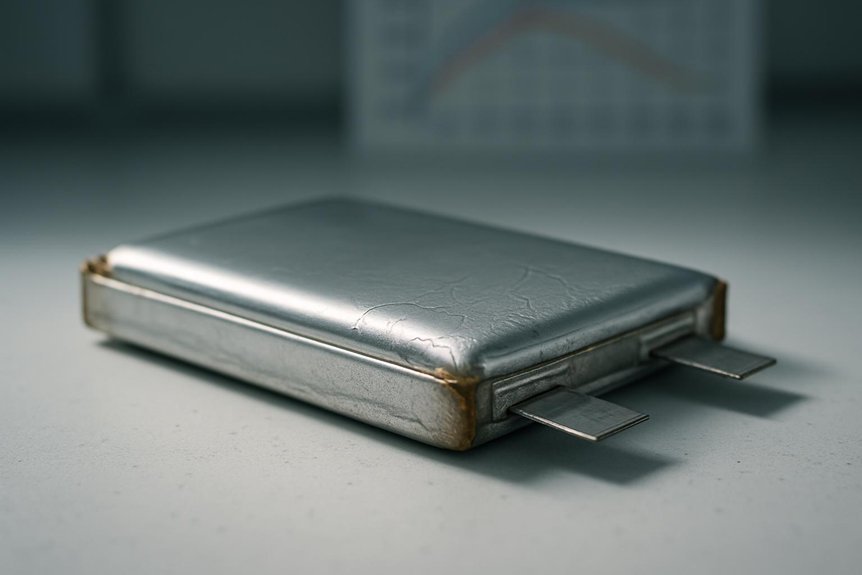
Depth of Discharge (DOD) directly shapes capacity fade in lithium polymer batteries: deeper discharges drive higher stress per cycle, accelerating active-material loss and impedance growth. We observe that discharge depth governs how quickly usable capacity declines, with partial cycles preserving structure but still contributing to gradual degradation. When DOD is high, each cycle imposes intensified mechanical and electrochemical strain, reducing cycle responsiveness over time. Conversely, shallower discharges maintain more stable electrode interfaces, slowing fade and extending useful life. Our analysis shows that cumulative effects accumulate nonlinearly, meaning small increases in DOD can disproportionately accelerate capacity loss. We emphasize consistent monitoring of discharge depth to anticipate performance shifts, rather than relying on nominal cycle counts. This helps us quantify remaining life and plan maintenance with greater precision.
How Charging Habits Extend Cycle Life
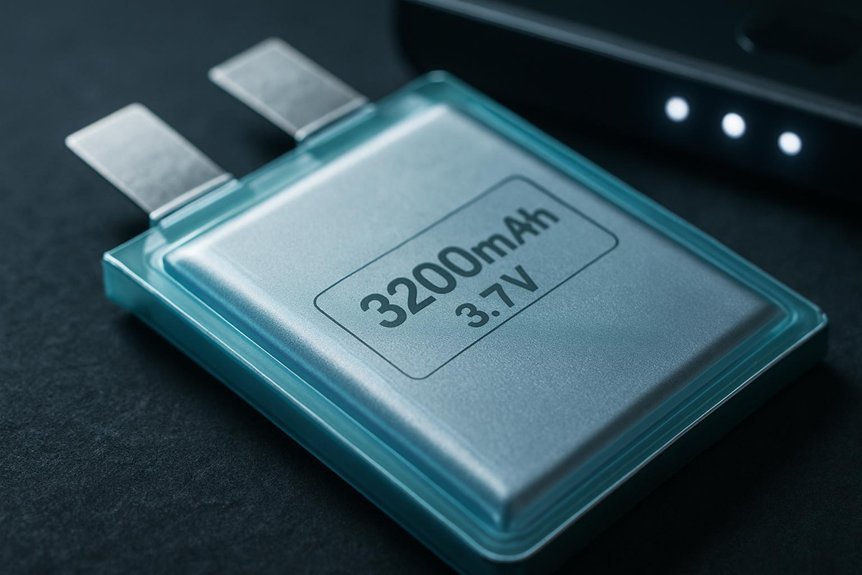
Charging habits directly influence cycle life by shaping how often and how deeply the battery is stressed. We approach this topic with a disciplined framework: minimize unnecessary charging cycles by avoiding frequent partial charges, and favor full discharge only when purposeful testing is required. In practice, shallow, regular top-ups tend to preserve electrolyte stability, reducing impedance growth and internal heating that accelerate degradation. We balance convenience with longevity by avoiding extreme states of charge and maintaining a mid-range window during routine use. Our guidance emphasizes respecting manufacturer recommendations and monitoring voltage limits, ensuring charge currents remain within safe, modeled boundaries. By aligning charging cycles with the battery’s design, we reduce stress, prolong usable capacity, and sustain performance over more cycles without sacrificing reliability or safety.
How Temperature Ages Lithium Polymer Batteries
We examine how temperature influences aging in lithium polymer batteries, focusing on how elevated heat accelerates chemical changes and capacity loss. We outline that higher temperatures raise aging rates, increase degradation pathways, and elevate the risk of thermal runaway if cooling or safety margins fail. We’ll discuss the interconnected effects on performance, safety, and lifespan as we pursue strategies to mitigate these risks.
Temperature Effects On Aging
How temperature accelerates aging in lithium polymer batteries can be understood by examining accelerated degradation mechanisms and practical operating ranges. We examine how elevated temperatures speed SEI growth, electrolyte decomposition, and cathode cracking, while cold slows reaction kinetics and can cause lithium plating on charging. In practical terms, typical operating envelopes remain within moderate temperatures, avoiding sustained extremes. For readers in tiny homes, thermal management is critical; localized heat from space heaters or insulating gaps can create hot spots that hasten degradation, even if average room temperature seems safe. We emphasize balanced cooling and ventilation to maintain stable, mid-range temperatures during charging and discharging. By tracking temperature alongside cycle counts, we better predict lifespan and optimize usage patterns.
High-Temp Degradation Rates
Could high temperatures dramatically accelerate aging in lithium polymer batteries? We examine how heat impacts material and electrochemical stability, focusing on degradation pathways that differ from room-temperature behavior. Our approach is precise: quantify rates, compare to baseline, and identify mitigations that preserve performance. We emphasize two word ideas: energy density and thermal management.
- Elevated temperature accelerates side reactions at the electrodes, reducing usable capacity over time.
- Higher heat shifts equilibrium, increasing impedance and lowering power delivery.
- Thermal fluctuations cause microstructural changes that disrupt ion transport.
- Effective thermal management slows aging, preserving energy density and extending cycle life.
Thermal Runaway Risks Increasing
Thermal runaway risks rise as we shift from aging at moderate temperatures to scenarios where heat compounds instability in lithium polymer cells. We observe how elevated temperatures accelerate chemical reactions, stressing the cell’s thermodynamic stability and pushing it toward irreversible failure modes. In practice, small imbalances—overcharge, mechanical damage, or poor thermal management—can trigger runaway chains that release gas, ignite electrolyte, or vent. We assess these pathways with a disciplined lens: reaction kinetics, diffusion limits, and containment constraints define thresholds. Electrolyte migration under heat alters separator performance, increasing cross-talk and internal shorts. By measuring heat generation relative to capacity, we map risk envelopes and identify safe operating windows. Our conclusion is precise: maintaining uniform temperatures preserves stability, postpones degradation, and reduces catastrophic outcomes.
Best Storage Practices to Slow Deterioration
Proper storage is essential to slow lithium polymer battery deterioration because internal chemistry is sensitive to temperature, voltage, and humidity. We address how to minimize degradation by maintaining stable conditions and disciplined handling. Discussion ideas: battery chemistry, storage temperature.
Proper storage slows LiPo degradation by stabilizing temperature, voltage, and humidity through disciplined handling.
- Keep storage temperature within a narrow range, ideally around 3–25°C, to reduce drift in cell chemistry.
- Charge LiPo packs to a partial state of charge, preventing overextension of chemical layers during long-term rest.
- Use a fireproof, ventilated container and avoid direct sunlight or heat sources.
- Monitor and regulate humidity, avoiding condensation that can compromise seals and impedance.
LPB Myths Debunked: What’s True and What Isn’t
So, what myths about lithium polymer batteries actually hold up under scrutiny, and which are just old wives’ tales? We examine common beliefs with a methodical lens, separating myth from reality. Our evidence shows that many consumer misunderstandings arise from overgeneralizations about charge cycles, storage, and aging indicators. Not all rapid voltage drops mean imminent failure, and not every swell signals catastrophe; context and usage patterns matter. We debunk the idea that all high-temperature exposure instantly destroys capacity, identifying tolerances and recovery possibilities. We also challenge the notion that capacity loss is strictly linear, acknowledging nonlinear aging under real-world duty cycles. In short, many claims are overstated; rigorous testing and clear thresholds reveal true limits, guiding informed decisions. myth vs reality, consumer misunderstandings.
How to Assess LPB Health: Essential Indicators
We’ll start by outlining the key indicators of LPB health: capacity fade signals and internal resistance trends. We’ll compare how gradual capacity loss pairs with rising resistance to reveal aging patterns and remaining life. Our aim is to provide a clear, repeatable check that readers can apply to gauge condition and plan maintenance.
Capacity Fade Indicators
How can we quickly gauge a lithium polymer battery’s health? We look for capacity fade indicators that signal true health rather than temporary variation. We measure these with repeatable tests and compare against fresh nominal capacity. Key signals include declines in usable capacity per cycle and sluggish recharge recovery after rest. We track how many recharge cycles it takes to reach a target voltage or energy threshold, noting any non-linear degradation. We also observe changes in capacity recovery after unloading and rest periods, which reveals internal structural shifts.
- Declining usable capacity per cycle
- Slower recharge recovery after rest
- Non-linear capacity loss patterns
- Consistent deviation from baseline after repeated cycles
Internal Resistance Signals
Could internal resistance tell us more about a lithium polymer battery’s health than capacity alone? We believe so, and we measure it with a disciplined approach. We begin by establishing baseline internal resistance at known state-of-charge and temperature, then track shifts over cycles. Small rises signal aging indicators, often preceding capacity loss. We distinguish instantaneous resistance under load from transient recovery after rest, noting how rapid spikes imply degraded electrodes or compromised electrolyte. We quantify trends with percent-per-cycle or per-temperature deviations, avoiding single-point judgments. We also compare charge-discharge profiles, C-rate responses, and impedance spectroscopy results to separate contact resistance from active-material deterioration. In practice, consistent, gradual increases alert us to early aging indicators, guiding maintenance intervals, safety checks, or targeted conditioning.
Practical Tips for Real-World LPB Longevity
Practical LPB longevity hinges on disciplined usage and proactive maintenance: small, consistent habits far outrun occasional, aggressive charging. We outline pragmatic steps that respect batteries chemistry and safety protocols while maximizing lifespan.
- Calibrate usage patterns to avoid deep discharges, keeping cycles shallow and frequent for stability.
- Monitor temperature and voltage during charging to prevent thermal stress and electrolyte degradation.
- Use appropriate chargers and balanced charging to maintain uniform cell health and reduce imbalances.
- Schedule routine inspections for swelling, leakage, or cap venting, addressing issues before failure risks rise.
When to Replace and How to Recycle LPB Packs
We’ve covered how disciplined usage extends LPB life; now we assess when replacement makes sense and how to recycle packs safely. We present a precise decision framework: monitor capacity fade, internal resistance rise, and voltage behavior; if cumulative aging pushes below a usable threshold or safety margins tighten, replacement is warranted. Visual inspection for swelling, electrolyte leakage, or vent damage confirms risk beyond repair. When choosing packs, favor consistent cell counts, balanced cells, and reputable manufacturers to minimize failure modes. For disposal, follow local electronics recycling ethics and avoid landfilling. Prioritize licensed recyclers with documented processes and traceable chains. In our exploration of counterfeit cells, verify packaging, labels, and performance specs to prevent unsafe substitutions. This disciplined approach protects users, environments, and data integrity.
Frequently Asked Questions
Can LPB Lifespan Be Predicted Precisely Before Use?
We can’t predict LPB lifespan with absolute precision before use; however, we rely on precise forecasting and predictive modeling to estimate remaining life. We’ll assess materials, usage, and environmental factors to refine our predictions over time.
Do All LPBS Age the Same Under Identical Conditions?
Imagine a hypothetical case where two LPBs age differently under identical conditions; yes, aging differences occur. We observe varied degradation rates due to manufacturing tolerances, usage, and micro-variances, even when environmental factors are the same.
How Does Storage Voltage Affect Long-Term Capacity?
Storage voltage significantly influences long term capacity; we’ve found that too high or too low voltages accelerate degradation, while maintaining an optimal mid-range preserves capacity over time. We’ll quantify effects and recommend precise storage targets to you.
Do Charging Rate Changes Impact Calendar Aging?
Charging rate can influence calendar aging, but effects are modest if you stay within safe ranges; we monitor remotely, follow safety protocols, and adjust usage to minimize stress while tracking degradation trends over time. A steady pulse keeps batteries honest.
Is There a Universal Indicator for Remaining LPB Life?
We don’t have a universal indicator for remaining life. Instead, we assess remaining life via capacity fade, internal resistance increases, and cycle counts, methodically tracking trends to estimate remaining life with quantified confidence for our readers.
Conclusion
We’ve learned that LPB lifespan hinges on cycles, resistance, and electrolyte stability, shaped by temp, current, and storage. Coincidentally, the same habits we adopt to protect our batteries—moderate depth of discharge, steady charging, and cool, stable storage—also pace our devices’ reliability in daily life. By tracking capacity fade and impedance, we spot trends before trouble hits. So, we stay precise, proactive, and consistent, replacing only when necessary and recycling responsibly to end on a clean, practical note.