We know some folks worry lithium batteries are overrated, but with clear routines they’re reliable on the road. We’ll keep terminals clean, vents unblocked, and BMS alerts promptly addressed, while tracking cycles, temps, and voltages. If we notice unusual heat, swelling, or drift, we pause and reassess. There’s more to tune for longevity, like SOC targets and proper charging, and we’ll guide you through practical checks you can act on today. What comes next could save your trip.
Key Takeaways
- Regularly inspect terminals, bus bars, and vent areas for corrosion, looseness, or blockages; address issues before departure or charging.
- Maintain SOC between 20% and 90%, use a chemistry-matched charger, and favor balanced, regular charging cycles.
- Monitor voltage, current, and temperature; pause heavy use if temps spike or cells are imbalanced; isolate affected banks and log readings.
- Implement seasonal storage care: resting voltage 12.8–13.2V, disconnect nonessential loads, clean terminals, and store in a cool, dry place.
- Use the BMS to diagnose errors, verify connections, and ensure ventilation; seek professional help for persistent or dangerous symptoms.
Foundations of Safe RV Lithium Use
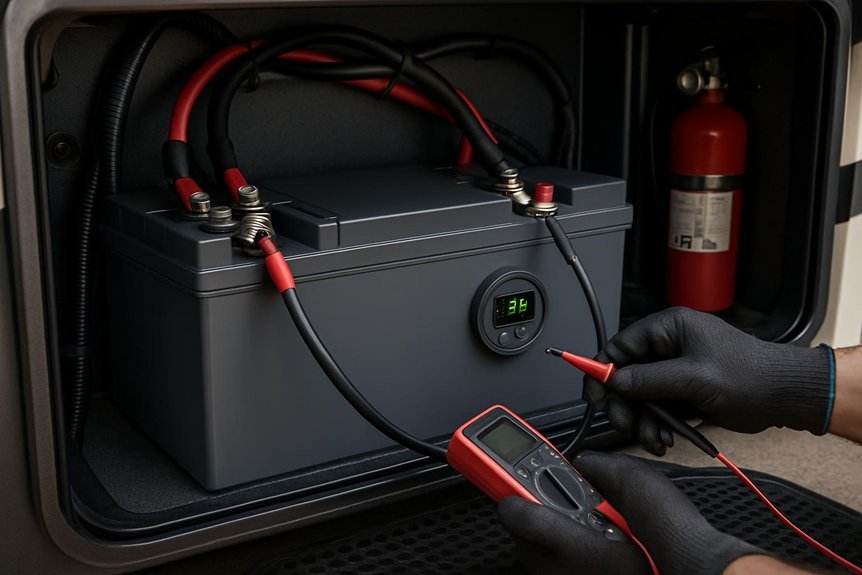
Foundations of Safe RV Lithium Use: We start with the basics you’ll rely on every trip—treat lithium like a high-performance tool. We’ll outline practical checks you can perform before departure, and we’ll call out warning signs you shouldn’t ignore. Our approach centers on a clear, repeatable routine: inspect terminals for corrosion, verify venting isn’t blocked, and confirm battery BMS alerts are addressed promptly. We emphasize charging etiquette—keep connections clean, use the correct charger, and avoid deep discharges. Maintain a maintenance mindset by documenting cycles, temperatures, and any voltage anomalies. If you notice unusual heat, swelling, or voltage drift, pause use and troubleshoot methodically. This foundation keeps your system safe, reliable, and ready for every road ahead.
How to Charge for Longevity: Daily Habits That Protect Lifespan

How can we maximize your RV lithium battery’s life with everyday charging? We approach this with practical daily habits that protect lifespan. First, auto-fill that you don’t fully drain—aim to keep state of charge above 20% and below 90% when possible. Use a charger that matches your battery chemistry to avoid excessive heat or voltage stress. Favor balanced charging cycles: run partial, regular cycles rather than rare deep pushes. If you’re parked for days, maintain a steady trickle or storage charge to prevent drift. Avoid using high-current bursts for long periods; spread loads to prevent spikes. Monitor voltage, current, and temperature alerts, and reset if readings spike unexpectedly. Troubleshoot issues promptly: a dropped SOC or inconsistent cycles usually signals calibration or connector problems.
Temperature and Environment: Keeping Cells Happy on the Road
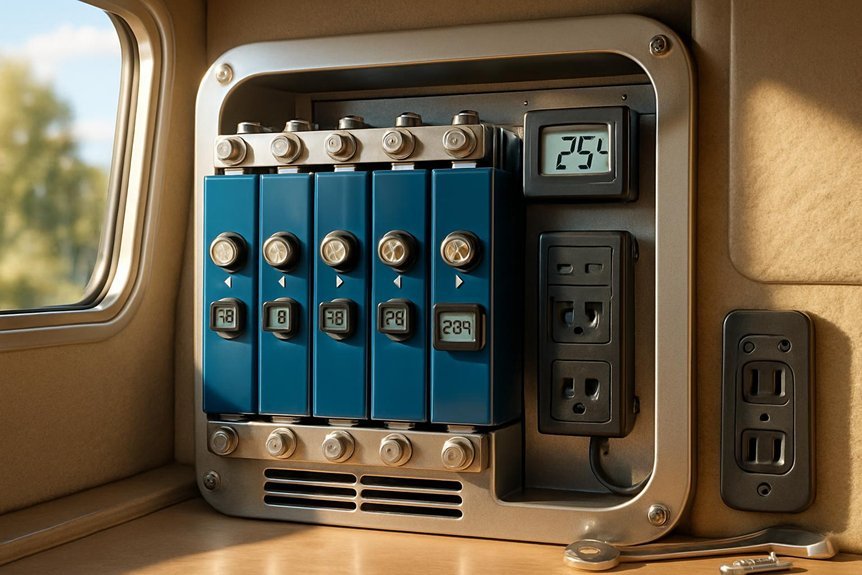
We’ll walk you through how temperature affects our cells, from charge efficiency to aging, so you know what to expect on the road. We’ll pin down the optimal operating range and what happens when you stray outside it, then share practical climate-control tips to stay in range. If you notice performance gaps, we’ll troubleshoot potential causes like ambient heat, cold starts, and ventilated storage to keep your pack happy.
Temperature Effects On Cells
Temperature can make or break a battery’s performance on the road, so we’re focused on keeping cells inside a tight thermal window. Extreme temperatures accelerate cell aging and reduce capacity, so we monitor ambient and pack temps continuously. If you notice voltage sag or extra heat, check airflow, vents, and insulation first, then verify charger and BMS settings. In cold weather, preheat before heavy loads and avoid rapid discharges that spike internal resistance. In heat, improve cooling, remove sun exposure, and don’t stack batteries in a closed cabinet without ventilation. Regularly log temperatures during trips to identify trends, and implement proactive temperature maintenance like pacing high-drain cycles and shifting charging to cooler periods. These steps preserve lifespan, reliability, and overall system performance.
Optimal Operating Range
What’s the best way to keep cells within their prime window on the road? We keep our guidance practical and concise, focusing on the optimal operating range. We monitor ambient and battery temps, aiming for a consistent mid-20s to low-30s Celsius as a baseline, adjusting for pack tolerance. We avoid rapid temperature swings and minimize exposure to extreme heat or cold; if temps drift, we pause high-demand use until stability returns. We prefer a steady charging cadence within the daily ideal window, avoiding overcharging and deep discharges. We verify cell balance and monitor voltage sag during load. We document deviations, reassess insulation, and adjust the road routine to preserve capacity and longevity. This approach centers on predictable performance, reliability, and sustainable daily usage.
Climate Control Strategies
Even when parked, we manage heat and cold intelligently to keep cells within their prime. Climate control isn’t fancy—it’s practical, proactive, and repeatable. We target temperature regulation by monitoring ambient conditions and battery pack temps, then adjust cabin and storage ventilation, insulation, and idle heat as needed. Charge scheduling matters too: we favor moderate temps for charging windows and avoid high-heat charging sessions. If temps swing, we precondition cells before heavy use and during travel, using smart BMS alerts to pause or adapt.
| Strategy | Benefit |
|---|---|
| Precondition before charging | Maintains stable voltage and faster SOC recovery |
| Schedule charging in cooler periods | Reduces heat stress and prolongs life |
| Insulate cargo areas | Minimizes ambient swings |
Daily Inspections You Should Do (and What to Look For)
How do our RV lithium batteries stay dependable day after day? We perform brief daily inspections that focus on form, function, and safety. Check for signs of physical wear or damage, including cracked cases or swollen packs, and note any unusual warmth after charging or use. Inspect connections at terminals and bus bars for corrosion, looseness, or discoloration, and tighten or clean as needed with proper tools. Look at cables for fraying or kinks that could impede performance. Confirm that vent or lid areas aren’t blocked—good lid management prevents heat buildup and moisture intrusion. Monitor electrolyte indicators and ensure protective caps are seated, and verify that covers are secure. Record observations, address issues promptly, and avoid relying on memory alone for ongoing daily wear patterns.
Using Your Battery Management System: Diagnostics and Alarms Explained
We rely on the Battery Management System to keep our RV lithium pack safe and healthy, so it helps us spot issues early with clear diagnostics and alarms. We explain the readings in plain terms, focusing on actionable steps. When the BMS flags a fault, we check the error code, then verify connections, pack temperature, and cell balance. If temperatures rise, we pause heavy loads and improve ventilation; if a cell imbalance appears, we isolate the affected bank and monitor after cycling the system. Pay attention to inverter alarms, which often indicate overload, low voltage, or grounding issues. Always consult the manual for code meanings, then confirm with a controlled reboot. Regularly log alarms to track trends and prevent cascading failures.
Seasonal Storage: Shutdown Protocols for Long Stops
As we head into long stops, we’ll walk you through a concise Seasonal Storage Checklist and a clear Long-Stop Shutdown Protocol you can trust. We’ll cover battery isolation, resting voltage targets, and how to prevent self-discharge during extended periods. If anything isn’t right, we’ll flag the exact steps to adjust without guesswork.
Seasonal Storage Checklist
Should you be prepared for long storage periods, a clear shutdown protocol helps protect your RV’s lithium battery system from degradation and failure? We outline a practical seasonal storage checklist we can follow together. First, confirm battery state, aiming for 12.8V–13.2V resting with no load. Disconnect nonessential loads, unplug devices, and enable campground or off-grid power monitoring if available. Inspect terminals for corrosion; clean with a neutral solution and reseal. Set charger to a storage voltage target specified by your battery manufacturer, and avoid full charge or deep discharge during storage. Schedule a monthly voltage check and surface inspect for swelling or heat signs. Store in a cool, dry place with adequate ventilation. Document dates, voltages, and any observed anomalies to refine future shutdown protocols.
Long-Stop Shutdown Protocols
When preparing for long stops, we start with a conservative, low-risk shutdown: verify resting voltage, then disconnect nonessential loads and enable any available energy monitoring.
| Step | Action |
|---|---|
| 1 | Verify resting voltage with a multimeter or BMS readout. |
| 2 | Disconnect nonessential loads and enable energy monitoring. |
| 3 | Set a known storage voltage target and document it. |
| 4 | Store in a cool, shaded location and recheck periodically. |
This protocol avoids longevity myths by sticking to measured values, not guesses. If voltage drifts, recheck connections and recharge per charging etiquette guidelines. Troubleshoot common issues like parasitic drains by isolating circuits one by one. Maintain a written log of voltage, date, and conditions. Regular checks prevent surprises on return. We’ll keep discussing practical steps, focusing on reliability and safe, minimal-risk resting states during long stops.
Troubleshooting on the Move: Common Issues and Quick Fixes
What’s going wrong with a lithium battery on the road? We run through quick checks when symptoms pop up. First, if voltage drops unexpectedly, we verify connections and inspect for corrosion, then test with a known-good charger. Next, if cycles are uneven, we balance cells or use a dedicated BMS to re-sort the pack, avoiding odd reboots. For slow drone charging or stalled solar integration, we confirm panel output under current conditions and ensure charge controllers match the battery spec. If the pack won’t accept a charge, reevaluate fuses and precharge resistors, then cycle the system off and back on. Finally, if temps spike, pause use and inspect cooling paths, ventilations, and ambient heat. These quick fixes keep you moving without unnecessary downtime.
When to Call a Pro: Warning Signs You Need Expert Help
We’ve covered quick road fixes, but some signs won’t improve with tweaks. When warning signs appear, we know it’s time to call a pro. Ignoring these indicators can jeopardize safety and battery life, so we’ll be precise and proactive.
1) Sudden, unexplained capacity loss that drops usable amps fast.
2) Heat that climbs unusually high during charging or balancing cycles.
3) Fizzy, leaking, or swollen packs, or corrosive smells near terminals.
4) Persistent errors or alarms that resist reset and troubleshooting.
If you notice any of these warning signs, stop using the system, document symptoms, and seek professional assessment. Calling a pro early can prevent catastrophic failure, misdiagnosis, and costly downtime. We’ll prioritize safety, proper diagnostics, and warranty-compatible repairs.
Frequently Asked Questions
Can I Mix Different Brands of Lithium Batteries in One System?
We don’t recommend mixing brands in one system. It’s risky due to unequal cell chemistry and aging. If you must, balance with identical specs and monitor closely for faults, unrelated topic pairing, and off topic pairing to prevent issues.
How Often Should I Recalibrate the Battery’s SOC Reading?
Do we recalibrate when needed? We recalibration frequency depends on usage, but we recommend monthly checks to maintain battery SOC accuracy. We’ll verify readings, then recalibrate if disparities exceed 2–3%. Stay proactive, precise, and troubleshoot-focused.
What Impact Does High Altitude Have on Performance?
High altitude can reduce performance due to thinner air and cooler temps, stressing aging components; check warranty limits, monitor voltage sag, and verify cooling. If issues persist, contact support—no, that’s not two word—and we’ll troubleshoot with you.
Are There Silent Failure Indicators I Should Watch For?
Sure—watch for silent indicators like unexpected voltage dips, creeping temp rises, or rapid SOC shifts; these signal battery anomalies. We’ll monitor closely, document patterns, and troubleshoot quickly, because a small clue today saves a bigger setback tomorrow.
Is a Full Discharge Harmful to Lithium Packs?
Yes, a full discharge can harm lithium packs. We recommend avoiding deep discharges, use protective low-voltage cutoffs, and monitor cell balance. If it happens, perform a gradual recharge and check BMS, two word discussion ideas, subtopic unrelated.
Conclusion
We’ve learned, log by log, to keep our lithium lively and our rigs reliable. Stay steady with sagely, systematic steps: inspect, monitor, and maintain, never neglecting nuanced nuisance signs. Practice practical, precise protocols: protect terminals, preserve temps, and polish charging habits. If alarms arise, act alertly; if issues persist, seek skilled support promptly. With thoughtfulThermal care, balanced cycles, and routine records, we’ll sustain safe, satisfying, trouble-free journeys. Let’s keep cruising, confidently, and consistently.