We’re often surprised by how a simple charger and pack can collide with our safety plans, and that coincidence underscores why we must get LiPo charging right. We’ll cover proper balance charging, cell count matching, and real-time monitoring to prevent overcharge, swelling, or thermal issues. We’ll outline safe limits, handling, and enclosure requirements to reduce risk. If anything seems off, we pause and reassess before proceeding—because the next steps matter when lives—and the next detail could change everything.
Key Takeaways
- Use a purpose-built LiPo charger with balance charging and verify compatibility with your pack’s cell count and chemistry.
- Charge at safe voltages (4.20 V per cell) and current (typically 1C–2C), avoiding overcharging or over-discharging.
- Prefer balanced charging to equalize all cell voltages and minimize heat and stress.
- Monitor charging in a fire-safe area with proper containment, ventilation, and working safety equipment; pause if swelling or heat appears.
- Inspect packs before and after charging, log readings, and store at 3.7–3.85 V per cell in cool, dry conditions.
LiPo Charging Essentials: Chemistry, Voltage, and Safety
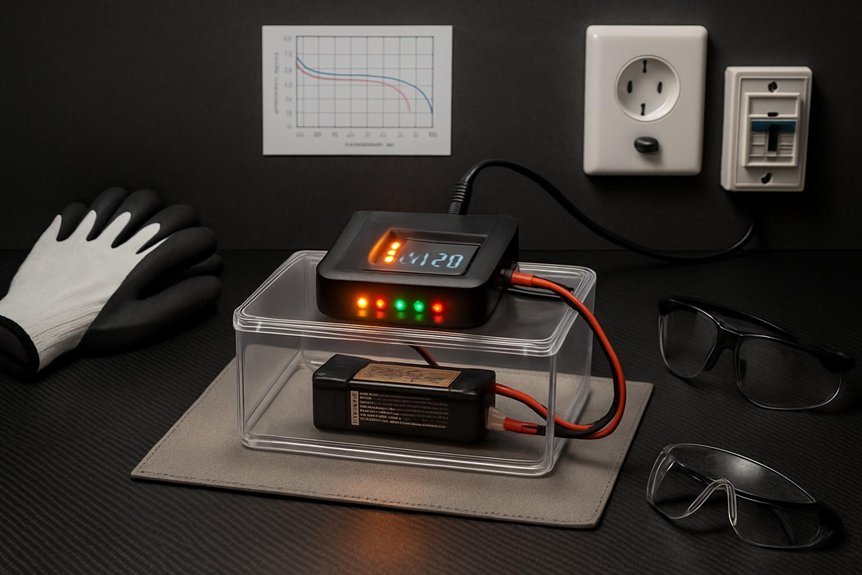
Lithium polymer (LiPo) batteries require careful handling from the outset: their chemistry dictates strict voltage limits and charging practices to avoid safety risks. We approach LiPo charging with a clear framework: chemistry awareness, precise voltage control, and proactive safety steps. By understanding finding chemistry, we match charge parameters to each cell’s specification, avoiding overcharge and imbalance. We verify pack voltage, monitor ambient conditions, and employ a purpose-built charger with balance charging and cell monitoring. We insist on a fire-safe location, non-flammable surface, and supervised sessions. We disable charging on damaged packs and inspect for swelling, punctures, or loose connectors before any session. Our focus remains consistent: maintain battery safety through strict adherence to manufacturer recommendations and vigilant fault checks during every charge.
How to Pick the Right LiPo Charger for Your Pack
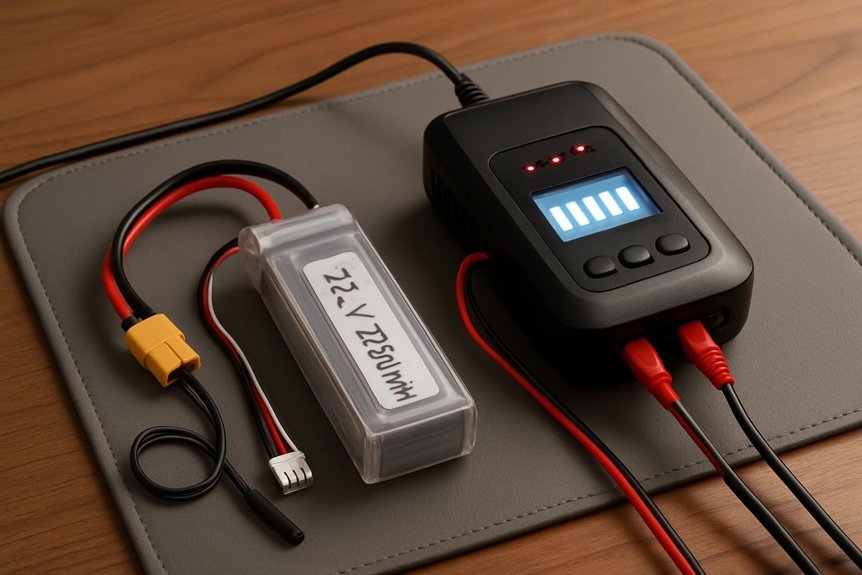
Choosing the right LiPo charger starts with matching it to your pack’s cell count, chemistry, and intended use. We assess charger features by confirming proper voltage limits, current ranges, and safety protections align with your pack’s requirements. Identify battery chemistry to ensure compatible charging profiles and avoid mismatched charging parameters that could heat or swell cells. Evaluate connector types to confirm physical compatibility with your balance and main leads, reducing manipulation risk during setup. Consider charge mode options—DC power sourcing, preconditioning, and cell monitoring—so you can control temperature and termination criteria precisely. Verify thermal safeguards, fuse protection, and automatic fault handling are present and functional. Finally, prioritize reputable manufacturers, clear documentation, and easy-to-follow programming steps to minimize setup errors and maximize pack longevity.
Balanced vs. Unbalanced Charging: What It Means for You
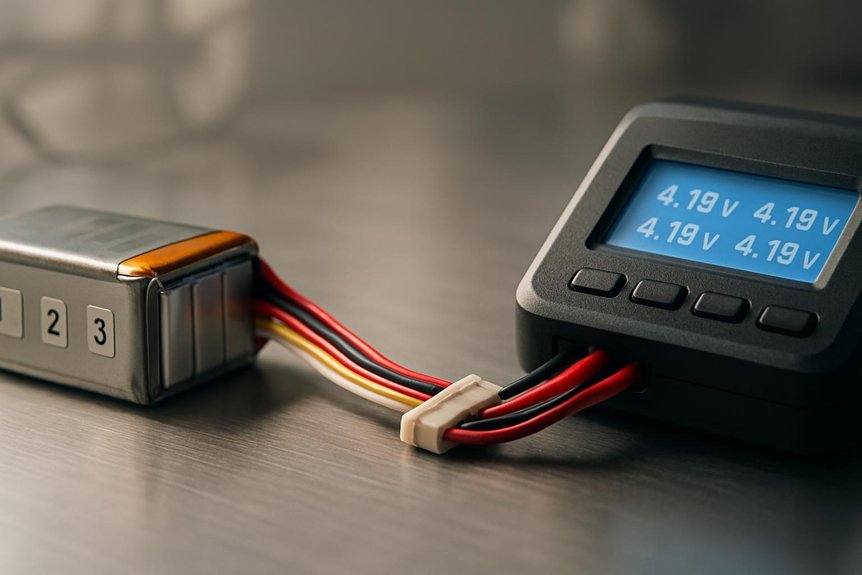
Balanced charging uses a monitor to keep all cells equal, while unbalanced charging can leave cells at different voltages and increase risk. We’ll compare the basics, note the risks, and explain how to choose the method safely. Our goal is to help you understand implications for performance, safety, and pack longevity.
Balanced Charge Basics
Properly charging lithium polymer batteries requires understanding the difference between balanced and unbalanced charging. We’ll focus on balanced charging basics, emphasizing how it protects battery safety and preserves pack chemistry. Using balanced charging ensures each cell reaches full voltage, preventing overcharge damage and imbalanced cell drift. This approach enhances capacity retention and thermal stability during routine top-ups.
- What to expect: simultaneous cell voltage monitoring and equalization.
- How it helps: reduces cyclic stress, minimizes heat generation, and maintains consistent performance.
- Safety note: always use a charger with a dedicated balance function and proper connectors.
Unbalanced Charging Risks
Unbalanced charging introduces disparities among cells that can build up quickly, even with good overall pack voltage. We, as technicians, must recognize that individual cell voltages diverge during charge, stressing chemistry and insulation. Unbalanced charging creates safety risks that escalate with higher cell counts and higher capacity packs, especially when charging currents aren’t matched to cell health. We monitor each cell or use balancing circuits to prevent overvoltage in any segment, reducing thermal runaway potential and electrolyte degradation. Temperature rise, voltage clipping, and unequal impedance signal emerging faults early. We establish strict procedures: verify pack type, use appropriate chargers, enable balancing when indicated, and avoid fast-charging beyond recommended limits. By adhering to controlled, monitored charging, we minimize safety risks and preserve cycle life. Continuous vigilance protects operators and equipment.
Choosing the Method
Are you aware of how the charging method affects cell health and safety in a lithium polymer pack? We compare balanced versus unbalanced charging to determine risk, efficiency, and longevity. Our approach emphasizes charging fundamentals and strict safety protocols to minimize failure modes and thermal stress.
- Understand equalization: balanced charging maintains uniform cell voltage, reducing overcharge risk and capacity loss.
- Assess suitability: unbalanced charging may save time in certain packs, but increases cell imbalance, heat generation, and monitoring needs.
- Apply safeguards: always use a proper charger, monitor cell temperatures, and follow manufacturer guidelines for your pack chemistry.
Set Safe Voltage and Current Limits for LiPo Packs
What exact voltage and current limits should you set for LiPo packs to ensure safe charging and operation? We define limits to prevent cell damage and thermal runaway. For a typical 2S to 6S LiPo, set a maximum charge voltage per cell of 4.20 V and a charge current no greater than 1C to 2C, depending on pack rating and manufacturer guidance. Use a balanced charger that ends at 4.20 V per cell and confirm balance leads are healthy. Discharge limits should protect integrity: do not exceed 0.8C to 1C for high-drain packs, and never drop below 2.7 V per cell. Enforce standardization, adhere to regulation, and prioritize safety through verified equipment and routine checks.
Monitor Charging: Real-Time Tips for Safety
How can we keep LiPo charging safe in real time? We monitor every parameter, respond quickly, and maintain discipline. Real-time monitoring reduces risk by catching anomalies before they escalate. We focus on immediate actions, not guesses, to protect both people and packs. diy charging remains a controlled activity if we follow strict procedures and safety margins.
- Observe cell voltage, pack temperature, and charger current continuously; pause or stop if any value deviates from the preset limits.
- Use a fireproof enclosure and non-flammable workspace, with a functioning smoke detector and accessible extinguisher for quick containment.
- Log readings and review trends after each session to refine limits and responses, reinforcing hobby safety.
Stay vigilant, precise, and deliberate in every charging session.
Store and Maintain LiPos to Extend Life
We’ll cover proper storage practices and regular LiPo maintenance to extend pack life. By keeping cells at the recommended voltage, in a cool, dry environment, and inspecting for damage on a routine basis, we reduce degradation and safety risks. We’ll outline practical steps you can implement now to maintain performance and reliability over time.
Proper Storage Practices
Proper storage is essential to extending LiPo life and maintaining safe performance. We, as practitioners, follow precise protocols to minimize degradation and hazard. Adhering to recommended voltage, temperature, and containment reduces cycle loss and swelling risk. We emphasize preparation, inspection, and documentation to ensure traceability and accountability.
- Store at a safe voltage (typically 3.7–3.85V per cell) and cool, dry conditions, in a fire-resistant container.
- Inspect for swelling, punctures, or electrolyte leakage; segregate damaged packs and follow disposal guidelines.
- Maintain organized records of storage dates, voltages, and shelf life, and implement recycling practices when units reach end-of-life.
We communicate these steps clearly to readers, prioritizing safety and responsible disposal.
Regular LiPo Maintenance
Regular LiPo maintenance builds on solid storage practices by focusing on ongoing health checks, conditioning, and documentation that prevent capacity loss and safety risks. We monitor cell voltage, balance, temperature, and internal impedance after every cycle, logging results to detect trends early. Conditioning involves gentle rest cycles and periodic shallow discharge tests to verify usable capacity without stressing cells. Maintain thorough records of batch numbers, aging, and usage to forecast replacement timing and avoid risky reuse. When inspecting packs, verify connector integrity, insulation, and flavorless electrolyte signs; remove any damaged packs promptly according to lipo disposal guidelines. Practice disciplined charging etiquette, using approved chargers, proper charging rates, and balanced connections. Adhere to safe handling, storage limits, and immediate response procedures for swelling or heat during operation.
Troubleshooting Charging Issues and Red Flags
Have you ever encountered charging hiccups with lithium-polymer packs, and wondered whether the issue is a simple user error or a sign of a dangerous fault? We approach this with caution, focusing on clear diagnostics and safety. Common red flags include swelling, warm to the touch after limited use, and charging that never reaches full capacity. When issues arise, verify connections, inspect for damaged leads, and confirm charger compatibility.
- Check cell balance and voltage range before each session to prevent over-discharge or overcharge.
- Isolate the pack from heat sources and inspect for swelling or damaged casing; discontinue use immediately if observed.
- Validate charger settings, connector polarity, and enclosure ventilation to avoid thermal runaway and fire risk.
Note: this applies to drone battery and power tool packs alike.
Frequently Asked Questions
How Do Lipo Chargers Affect Cycle Life Over Time?
Lipos chargers can shorten cycle life if used improperly, but with proper lipos maintenance and strict charging safety, they preserve cells longer. We monitor temps, balance packs, avoid overcharging, and follow recommended rates to maintain reliable, safe performance.
Can Temperature Impact Charging Efficiency and Safety?
Temperature effects do impact charging efficiency and safety; yes, they matter. We’ll guarantee safe operation by monitoring ambient and cell temps, and calibrating cell counts. The lipo charger influence and fast charging safety require vigilant, precise practices, reader.
Are There Hazards With Charging From Portable Power Banks?
We should note hazards from powerbanks exist, though rare; avoid damaged or counterfeit units. We prioritize safety considerations: use certified devices, monitor temperature, never charge embedded electronics via high-output banks, and disconnect if swelling or heat appears.
Is Fast Charging Always Safe for All Lipos?
Yes, not always. We advocate caution: safety is essential, charging speed matters, but every LiPo is different. We parallel our guidance: assess cell quality, use proper limits, monitor temperature, and avoid fast charging beyond manufacturer specs.
Do Chargers Need Calibration for Different Cell Counts?
We do need calibration for different cell counts because calibration needs vary with cell count differences, ensuring accurate voltage and current readings and safe charging. We stay safety-conscious, precise, and use calibrated chargers for each cell configuration.
Conclusion
We’ve covered the essentials of charging LiPo batteries with a focus on accuracy and safety. By pairing the right charger, balanced charging, and proper limits, you’ll minimize risk while maximizing life. Think of it as tuning a precision instrument—small adjustments prevent big failures. Always monitor real-time parameters, inspect packs before charging, and charge on a fire-safe surface in a controlled area. Follow guidelines, pause on anomalies, and store cells properly to keep performance steady and safe.