As we handle lithium batteries, understanding proper disposal becomes essential for safety and environmental health. These batteries can pose fire hazards if damaged or improperly discarded, making cautious handling and responsible recycling critical. Since regulations and best practices vary, it’s important to stay informed to prevent accidents and pollution. We invite you to explore the key safety measures and disposal methods that can help us all manage lithium batteries more responsibly.
Key Takeaways
- Recognize signs of damaged or deteriorating lithium batteries, such as swelling, leaks, or overheating, and handle them with caution.
- Use designated, non-conductive containers for storing used batteries and avoid regular trash disposal.
- Follow local and federal regulations for proper disposal, ensuring batteries are taken to certified recycling facilities.
- Never puncture, crush, or expose damaged batteries to heat to prevent fires or chemical leaks.
- Educate communities on safe handling, storage, and responsible recycling practices for lithium batteries.
What Are Lithium Batteries and Why Do They Need Special Disposal?
Lithium batteries are rechargeable power sources commonly found in smartphones, laptops, and electric vehicles. Their unique battery chemistry allows for high energy density and long-lasting charge, but it also introduces significant disposal hazards. If damaged or improperly handled, lithium batteries can short circuit, overheat, or even ignite. This makes safe disposal essential to prevent fires, chemical leaks, and environmental contamination. The disposal hazards stem from the materials inside, such as lithium, cobalt, and other toxic metals, which can leach into soil and water if not properly recycled. Due to these risks, lithium batteries require special handling and disposal procedures. Ignoring these precautions can cause serious safety issues, highlighting the importance of understanding their proper disposal methods to protect both people and the environment.
Recognizing When a Lithium Battery Is Truly Dead or Damaged
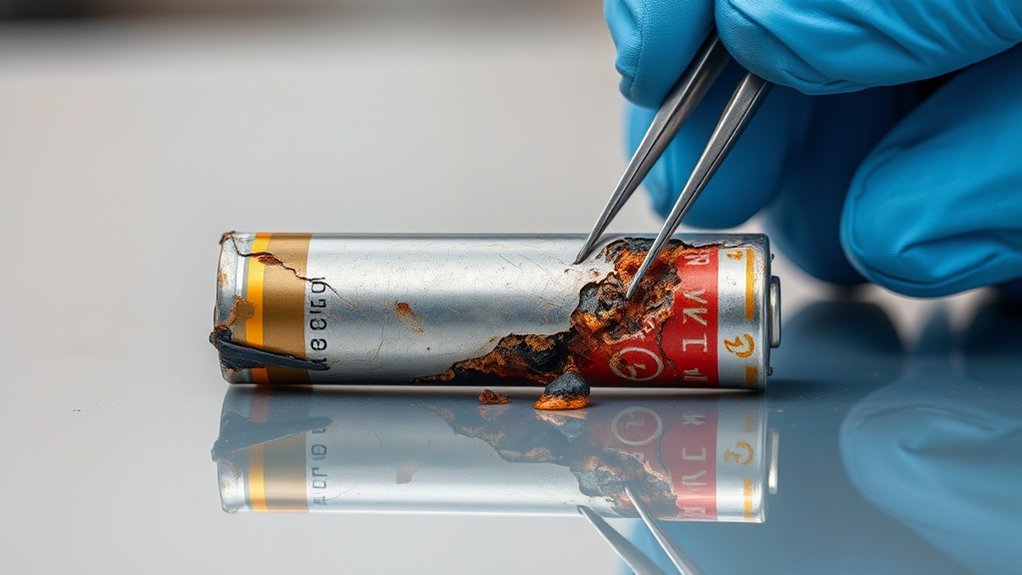
We need to be vigilant for visible damage like swelling, cracks, or leaks, which indicate a battery may be compromised. Changes in performance, such as rapid discharges or inability to hold a charge, also signal potential issues. Additionally, safety warnings like overheating, strange odors, or smoke require immediate attention to prevent hazards.
Visible Damage Indicators
Visible damage is often the most immediate and telling sign that a lithium battery may be compromised or no longer safe to use. Damage such as bulges, cracks, or leakage indicates a breakdown in the battery chemistry, increasing the risk of failure or fire. If a battery appears swollen, it’s a clear sign of internal gas buildup, making it unsafe to handle or charge. Leaking fluid or corrosion around the terminals also signals deterioration, which can compromise charging safety. Additionally, discoloration or burn marks suggest overheating and potential internal damage. Always treat visibly damaged batteries with caution, as continued use can lead to dangerous failures. Recognizing these indicators helps prevent accidents and guides proper disposal procedures.
Battery Performance Changes
How can you tell if a lithium battery is truly dead or just underperforming? Significant performance degradation, reduced battery longevity, or inconsistent operation signal underlying issues. If a battery no longer holds a charge or drains quickly despite minimal use, it’s likely beyond repair. Here’s a quick comparison:
| State | Indicators |
|---|---|
| Dead Battery | No response, no charge retention, physical damage |
| Underperforming | Shorter runtime, slow charging, minor voltage drops |
| Damaged or Deteriorated | Swelling, leakage, or unusual heat during use |
Recognizing these signs helps prevent hazards. When performance declines sharply or the battery exhibits physical damage, safe disposal is essential.
Safety Warning Signs
Identifying when a lithium battery is truly dead or damaged requires careful attention to specific warning signs. Changes in battery chemistry can cause swelling, leaks, or unusual odors, indicating potential hazards. Visible damage, such as cracks or corrosion, also signals that the battery may be compromised. Additionally, if the battery no longer holds a charge or exhibits rapid discharging, it’s likely unsafe. Recognizing these signs is essential for safe disposal, as improper handling can lead to fires or chemical leaks. Always follow local disposal regulations and avoid attempting to repair or recharge damaged batteries yourself. Proper identification helps prevent accidents and guarantees responsible disposal, protecting both people and the environment. Stay cautious and prioritize safety when dealing with suspect lithium batteries.
Safe Handling Tips Before Disposal to Prevent Fires and Leaks
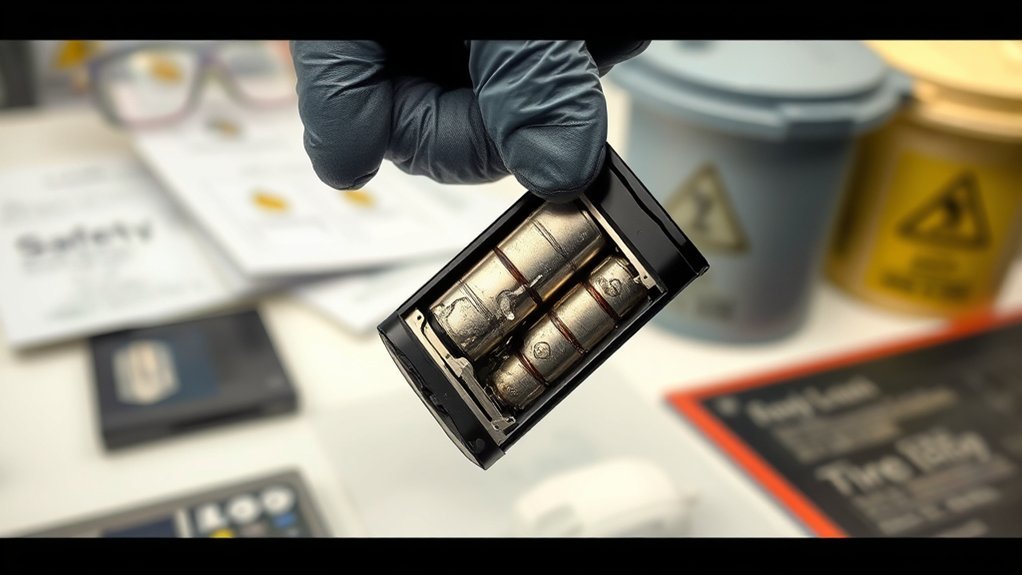
Handling lithium batteries carefully before disposal is vital to prevent potential fires and leaks. Understanding battery chemistry helps us recognize the risks associated with damaged or degraded cells, which can short circuit or overheat. Before disposal, we should inspect batteries for swelling, corrosion, or leakage, and handle any suspect units with caution. It’s essential to adhere to disposal regulations that specify proper procedures for different types of lithium batteries, especially larger or damaged ones. Properly isolating terminals and storing batteries in non-conductive, fire-resistant containers minimizes hazards. We must never attempt to puncture or dismantle batteries ourselves, as this can trigger dangerous chemical leaks or fires. Following these safety tips ensures responsible handling and reduces the risk of accidents during disposal.
Proper Methods for Disposing of Small Lithium Batteries at Home
Although small lithium batteries are common in everyday devices, proper disposal at home requires careful attention to safety. Advances in battery innovation have improved device performance but also introduced disposal challenges, especially with tiny batteries. To safely dispose of these, follow these guidelines:
- Use designated collection containers: Store used batteries in non-conductive, leak-proof containers away from metal objects.
- Avoid trash disposal: Do not throw small lithium batteries in regular trash or recycling bins, as they can short-circuit or ignite.
- Seek local disposal programs: Contact community hazardous waste facilities or retailer take-back programs for proper disposal options.
How to Recycle Large or Used Lithium Batteries Responsibly
Recycling large or used lithium batteries responsibly is essential to prevent environmental harm and guarantee safety. When handling batteries, we consider factors like battery capacity and charging cycles, which influence their lifespan and safety risks. Once a battery’s capacity drops drastically or it has undergone numerous charging cycles, it’s time to recycle. Proper recycling prevents hazardous materials from leaking into the environment and reduces resource waste. We should never attempt to dismantle or dispose of these batteries at home, as they pose fire and chemical risks. Instead, we must take them to certified recycling centers equipped to handle lithium batteries safely. Following these procedures ensures both personal safety and environmental protection, emphasizing the importance of responsible recycling practices.
What Not to Do When Disposing of Lithium Batteries
When disposing of lithium batteries, it’s essential to avoid common mistakes that can lead to safety hazards or environmental contamination. Mishandling these batteries can cause fires, chemical leaks, or damage due to improper handling of their battery chemistry.
- Do not throw lithium batteries in the trash or incinerate them, as this can trigger fires or release toxic substances.
- Avoid puncturing, crushing, or exposing batteries to extreme heat, which increases the risk of thermal runaway.
- Never discard damaged or swollen batteries without proper caution, since they pose significant disposal hazards.
Being cautious ensures safe disposal and prevents environmental harm. Proper handling minimizes risks associated with battery chemistry and reduces potential safety hazards during disposal.
Finding Local Recycling Centers and Collection Events for Lithium Batteries
To safely dispose of lithium batteries, we need to identify local recycling centers and collection events that accept them. Proper disposal begins with locating authorized recycling programs in our area, which often handle battery storage safely. Many communities offer designated collection events or drop-off sites specifically for lithium batteries, ensuring they are handled correctly and do not pose hazards. It’s essential to confirm that the facility is equipped to process lithium batteries safely, preventing leaks or fires. We should avoid general trash disposal and instead focus on certified programs that comply with safety standards. By researching local options and participating in organized collection events, we can contribute to safer battery disposal and environmental protection.
Regulations and Legal Requirements for Lithium Battery Disposal
Understanding the legal landscape for lithium battery disposal is essential to guarantee compliance and safety. We need to take into account federal regulations, as well as state and local laws, which can vary considerably. Proper disposal certifications may also be required to meet legal standards and prevent environmental harm.
Federal Disposal Regulations
Federal regulations establish strict guidelines for the proper disposal of lithium batteries, reflecting their potential environmental and safety hazards. These rules are designed to prevent fires, leaks, and pollution caused by improper handling. Key points include:
- Proper identification of battery chemistry to guarantee correct disposal methods
- Compliance with recycling technology standards to recover valuable materials safely
- Certification requirements for disposal facilities handling lithium batteries
Adhering to these regulations helps mitigate risks associated with lithium battery disposal. Understanding the legal framework is essential for safe and environmentally responsible practices. Federal guidelines emphasize the importance of specialized recycling processes that accommodate battery chemistry, ensuring that hazardous components are managed correctly. By following these regulations, we protect both public safety and the environment while supporting advancements in recycling technology.
State and Local Laws
Are state and local regulations for lithium battery disposal more stringent or different than federal guidelines? Often, they are, especially regarding battery chemistry and storage conditions. States may impose specific requirements for handling batteries based on local environmental concerns or safety issues. For example, some jurisdictions require separate collection of lithium-ion batteries or specify storage conditions to prevent fire hazards. Local laws can also dictate proper storage conditions to minimize risks during transportation and disposal. It’s vital to stay informed about these regulations, as they can vary markedly between regions. Failure to comply with state or local laws can result in penalties. Consequently, understanding and adhering to these legal requirements guarantees safe, compliant disposal that minimizes environmental impact.
Proper Disposal Certification
Proper disposal of lithium batteries requires adherence to specific certification and legal requirements that guarantee safety and environmental protection. Ensuring compliance with disposal regulations is essential for responsible handling, especially given the complexities of battery manufacturing and potential hazards. Certification processes verify that disposal facilities meet safety standards and environmental laws. Without proper certification, improper disposal can lead to fires, chemical leaks, and legal penalties. It’s vital to understand and follow local, state, and federal regulations governing lithium battery disposal. These regulations often mandate trained personnel, proper packaging, and documentation to prevent accidents. By adhering to certified disposal procedures, we help safeguard public health, protect ecosystems, and promote sustainable practices in battery manufacturing and waste management.
Tips for Businesses and Organizations to Manage Lithium Battery Waste
To effectively manage lithium battery waste, businesses and organizations must implement strict handling and disposal protocols that prioritize safety and compliance. Understanding battery chemistry is vital, as different chemistries pose varying risks and require specific disposal methods. It’s essential to stay updated on disposal regulations, which often dictate proper procedures for recycling or disposal. Proper segregation of lithium batteries from other waste streams minimizes hazards and facilitates compliance. Regular staff training ensures everyone understands safe handling practices and the importance of following regulations. Partnering with certified recycling facilities guarantees proper disposal and reduces liability. Ultimately, a cautious, well-informed approach minimizes risks, prevents accidents, and guarantees environmental responsibility in managing lithium battery waste.
Educating Yourself and Others on Lithium Battery Safety and Disposal
Understanding lithium battery safety and disposal begins with thorough education, as knowledge is essential to prevent accidents and ensure compliance. We must stay informed about proper battery storage practices to minimize risks and understand the importance of recycling incentives that encourage responsible disposal. Educating yourself and others involves recognizing potential hazards, such as thermal runaway or leaks, and knowing how to handle damaged batteries safely.
Educate yourself on lithium battery safety to prevent hazards and promote responsible disposal through proper storage and recycling awareness.
To improve safety awareness, consider these key points:
- Regularly review lithium battery safety guidelines and updates.
- Promote awareness of proper battery storage to prevent accidents.
- Share information about recycling incentives that motivate responsible disposal.
Frequently Asked Questions
Are There Specific Storage Requirements for Lithium Batteries Before Disposal?
We recommend proper battery storage—keeping lithium batteries in a cool, dry, and fire-resistant container—to prevent leaks or fires. Follow disposal precautions diligently, avoiding punctures or damage, and consult local regulations for safe disposal procedures.
How Can I Identify if a Lithium Battery Is Leaking Hazardous Materials?
We identify leaking lithium batteries by checking for corrosion, which appears as white or bluish residue, and chemical leakage, characterized by a foul odor or visible fluid. Always handle these cautiously to prevent exposure to hazardous materials.
What Are the Risks of Improper Disposal of Lithium Batteries?
Improper disposal risks environmental hazards, like soil and water contamination, and hampers battery recycling efforts. We must handle lithium batteries carefully, ensuring proper disposal to protect ecosystems and promote safe, sustainable waste management practices.
Can Lithium Batteries Be Disposed of With Regular Household Waste?
We can’t dispose of lithium batteries with household waste because they contain hazardous waste. Instead, we encourage you to participate in battery recycling programs to prevent environmental harm and guarantee safe handling of these potentially dangerous materials.
How Do I Safely Transport Lithium Batteries for Recycling?
Transport lithium batteries like fragile glass, ensuring safe battery shipping as hazardous material. We always use proper packaging, avoid damage, and follow regulations, because mishandling can cause fires or leaks, risking safety and environmental harm.
Conclusion
In the end, handling lithium batteries with the utmost caution isn’t just a good idea—it’s a necessity we can’t afford to ignore. After all, a tiny spark or leak can turn our eco-friendly efforts into fiery disasters. So, let’s stay informed, follow regulations, and treat these batteries with the respect they demand. Because if we don’t, Mother Nature might just remind us who’s boss—preferably before we accidentally turn our homes into bonfires.