Approximately 80% of lithium-ion battery failures are linked to improper handling or storage, posing significant safety risks. Ensuring safe use requires understanding specific precautions, from proper charging techniques to recognizing early signs of damage. Addressing these factors not only protects individuals but also minimizes environmental impact. As safety protocols evolve, mastering these practices becomes essential—so, let’s explore the critical steps to prevent hazards and extend your battery’s lifespan.
Key Takeaways
- Handle and dispose of lithium-ion batteries following proper safety protocols and authorized recycling channels.
- Store batteries in a cool, dry place at partial charge (30-50%) to prevent damage or capacity loss.
- Regularly inspect batteries for signs of damage, swelling, or leakage, and dispose of damaged units safely.
- Use compatible chargers, avoid overcharging, and prevent exposure to extreme temperatures during charging.
- In case of overheating or fire, evacuate, use a suitable fire extinguisher, and avoid disassembling the battery.
How to Properly Handle Lithium-Ion Batteries to Prevent Safety Risks
To minimize safety risks associated with lithium-ion batteries, it is vital that we handle them correctly by following established safety protocols. Proper handling begins with understanding the importance of battery recycling to prevent environmental hazards and potential safety issues. When a battery reaches the end of its life, we must dispose of it through authorized recycling channels, avoiding improper disposal that could lead to fires or leaks. Additionally, adhering to proper charging etiquette is essential; we should always use compatible chargers, avoid overcharging, and prevent exposure to extreme temperatures. Proper handling and disposal practices reduce the risk of thermal runaway and other safety hazards. By following these guidelines, we guarantee safe usage while supporting responsible battery lifecycle management.
Best Practices for Storing Lithium-Ion Batteries Safely
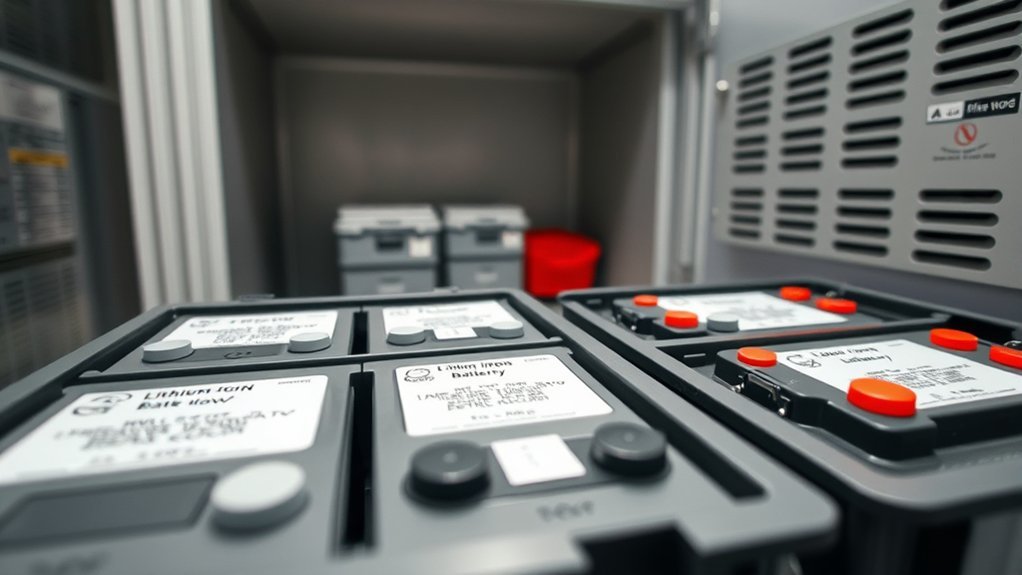
Proper storage of lithium-ion batteries is critical to maintaining their safety and prolonging their lifespan. We recommend storing batteries in a cool, dry environment, ideally between 32°F and 77°F (0°C and 25°C), to minimize thermal stress. Keep batteries at a partial charge, around 30-50%, to reduce capacity loss over time. Guarantee terminals are insulated to prevent short circuits. Implement emergency preparedness by having a designated fire-safe container for disposal and understanding battery recycling protocols to prevent environmental hazards. Regularly inspect stored batteries for signs of damage or swelling. Proper storage not only safeguards against thermal runaway but also facilitates responsible battery recycling, reducing safety risks and supporting sustainable practices.
Recognizing Warning Signs of Battery Damage or Malfunction
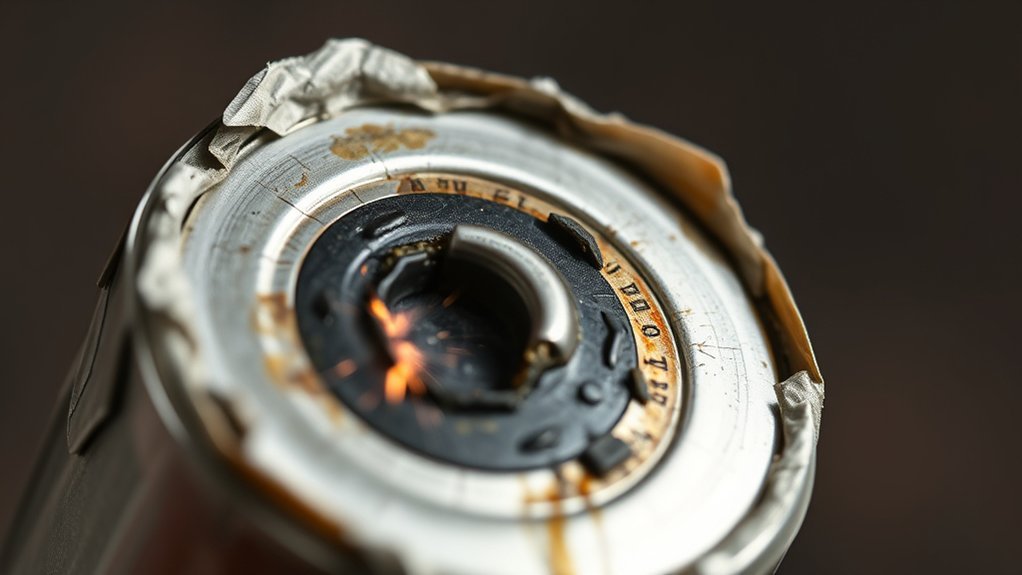
Monitoring the condition of lithium-ion batteries during storage is essential for ensuring safety. Visible signs such as battery leakage indicate compromised seals or damaged casing, increasing the risk of hazardous exposure. Internal swelling is another vital warning sign, often caused by gas buildup from internal damage or overcharging, leading to deformation of the battery housing. These symptoms suggest the battery’s internal chemistry has been disrupted, raising the likelihood of thermal runaway or failure. Regular inspection for any abnormal bulging, leaks, or leaks residue helps identify potential malfunctions early. Recognizing these warning signs allows prompt action, such as safe disposal or professional testing, to prevent accidents. Never ignore signs of damage, as they pose significant safety risks during storage or use.
What to Do in Case of a Battery Overheat or Fire
When a lithium-ion battery overheats or catches fire, immediate and appropriate action is critical to minimize hazards. First, evacuate the area and avoid inhaling fumes. Second, use a Class D fire extinguisher or a specialized lithium-ion battery fire extinguisher, as traditional extinguishers may be ineffective. Water should generally be avoided, as it can intensify the fire. Third, do not attempt to disassemble the battery; contact professional fire responders for proper disposal. After extinguishing, verify the battery is placed in a non-flammable container for safe battery disposal, following local regulations. Remember, prompt response minimizes risks and ensures safe battery disposal, preventing further damage or injury.
Tips for Extending the Lifespan of Your Lithium-Ion Batteries
To maximize the lifespan of your lithium-ion batteries, we must adopt specific usage and maintenance practices that minimize stress and degradation. Proper charging habits are vital; avoid deep discharges and keep the state of charge between 20% and 80% to reduce capacity loss. Using chargers compatible with your device’s specifications prevents overvoltage and overheating. Additionally, regular battery recycling is essential—disposing of batteries responsibly prevents environmental harm and supports sustainable reuse of materials. Avoid exposing batteries to high temperatures, which accelerate aging, and store them in cool, dry environments when not in use. By following these practices, we can extend battery life, guarantee safety, and contribute to environmental preservation through responsible recycling.
Frequently Asked Questions
Are Lithium-Ion Batteries Safe to Use During Travel?
Travel safety with lithium-ion batteries is generally safe if we follow battery precautions, such as keeping devices in carry-on luggage, avoiding damage, and adhering to airline regulations, which help prevent thermal events and guarantee safe usage during travel.
Can Lithium-Ion Batteries Be Recycled or Disposed of Safely?
We can responsibly handle lithium-ion batteries through proper battery recycling and disposal safety practices, ensuring environmental protection and safety. Follow local regulations and utilize certified recycling centers to minimize risks associated with improper disposal.
What Are the Environmental Impacts of Lithium-Ion Battery Disposal?
Disposing of lithium-ion batteries can lead to environmental contamination due to hazardous materials, and recycling challenges hinder proper material recovery; we should prioritize safe disposal methods and improved recycling technologies to mitigate ecological impacts effectively.
How Do Temperature Changes Affect Lithium-Ion Battery Safety?
We understand temperature shifts can trigger thermal runaway, risking battery failure. Staying below critical temperature thresholds guarantees safety, as extreme heat or cold can compromise internal chemistry, potentially causing fires or explosions—so, always monitor and control operating conditions carefully.
Are There Specific Safety Regulations for Lithium-Ion Battery Manufacturing?
We adhere to strict manufacturing standards and guarantee regulatory compliance, which include specific safety regulations for lithium-ion battery production. These guidelines help us maintain quality, prevent hazards, and meet international safety requirements effectively.
Conclusion
By following these lithium-ion battery safety tips, we can prevent potential hazards and guarantee peak performance. Proper handling, storage, and prompt action during malfunctions are vital. Think of it as shielding your devices from a fortress of safety, where risks are minimized to almost zero. Staying vigilant and informed empowers us to protect ourselves, our environment, and our valuable electronics, turning what could be a disaster into a mere whisper of a problem.