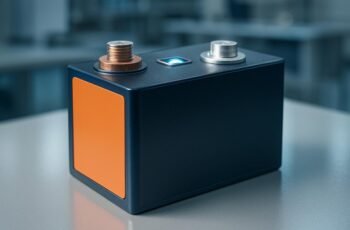
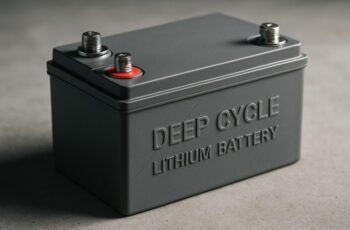
In the quiet hum of our test bench, we set the scene as careful custodians of charge. We’ll verify chemistry, nominal voltage, and charge profile, then inspect cables, connectors, and power supply for integrity. We’ll run basic safety checks, measure under load, and confirm isolation and fuses before we probe the charger circuitry. As we isolate subsystems and log every reading, a clear path emerges—one that invites you to follow our method to a dependable fix.
Key Takeaways
- Confirm charger compatibility: match chemistry, nominal voltage, and charging profile to prevent improper termination or overheating.
- Visually inspect and test cables, connectors, and power supply for insulation damage, wear, or loose connections.
- Verify safety features and input conditions: correct power source rating, proper polarity, intact fuses, and isolation from mains.
- Use controlled loads to test charger behavior with and without a battery; document timing, indicators, and temperature readings.
- Check charger and pack connections, sense lines, and protection features (OC/thermal shutdown) to ensure safe, repeatable operation.
What Your Charger Should Do for Your Battery
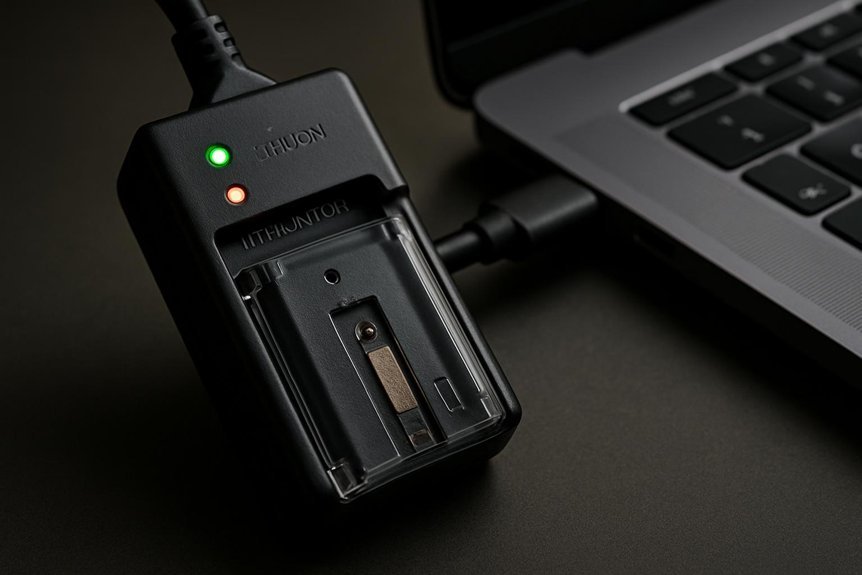
A charger should deliver a safe, reliable charge to the battery by recognizing its chemistry, current state, and temperature. We verify charge termination, current ramping, and voltage thresholds to prevent overcharge, undercharge, and heat buildup. We monitor constant-current and constant-voltage phases, ensuring transitions occur within defined tolerances and time limits. We measure cell balance when applicable, enabling uniform energy distribution across cells and reducing stress. We enforce charger safety through fault detection, isolation, and spark-risk mitigation, promptly pausing if an anomaly arises. We ensure battery compatibility by matching nominal voltage, charging current, and end-of-charge criteria to the cell design. We log parameters, detect drift, and enable safe recalibration, so performance remains within spec and degradation remains controlled.
Is Your Charger Compatible With Your Battery?
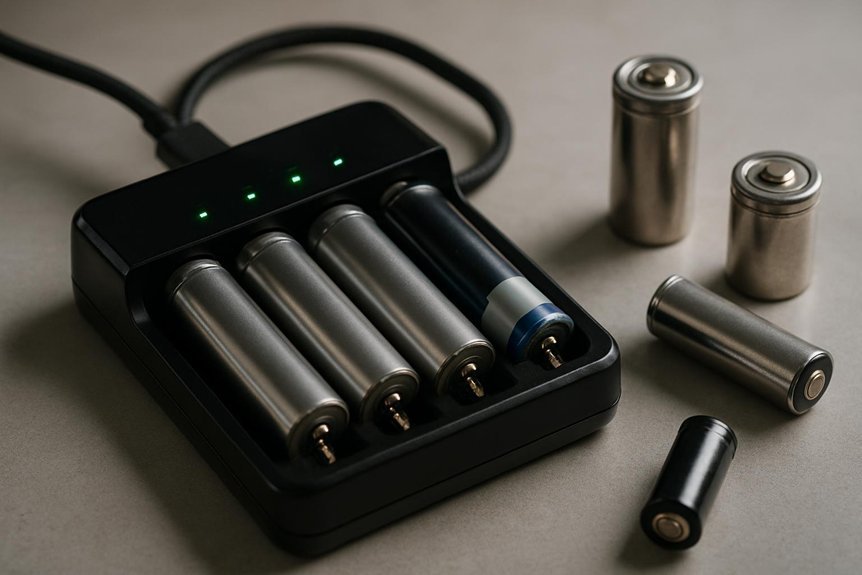
Is your charger truly compatible with your battery? We approach compatibility methodically, verifying chemistry, voltage, and charging profile before connecting. If any element mismatches, performance and safety suffer. We examine three core checks: battery chemistry, charger voltage, and charge termination behavior. Incompatible chemistry or mismatched voltage can cause overheating, reduced capacity, or failure to terminate properly. Our protocol uses labeling, spec sheets, and a multimeter where needed to confirm alignment. If a discordance appears, do not proceed. Instead, select a charger that matches the battery’s chemistry and nominal voltage, and review the recommended charging curve. The table below summarizes the critical dimensions we compare.
| Chemistry | Nominal Voltage | Charge Profile |
|---|---|---|
| Li-ion | 3.7V per cell | CC/CV with termination |
| LiPo | 3.7V per cell | CC/CV with termination |
| LiFePO4 | 3.2V per cell | CC/CV with termination |
Quick Visual Check: Cables, Connectors, and Power Supply
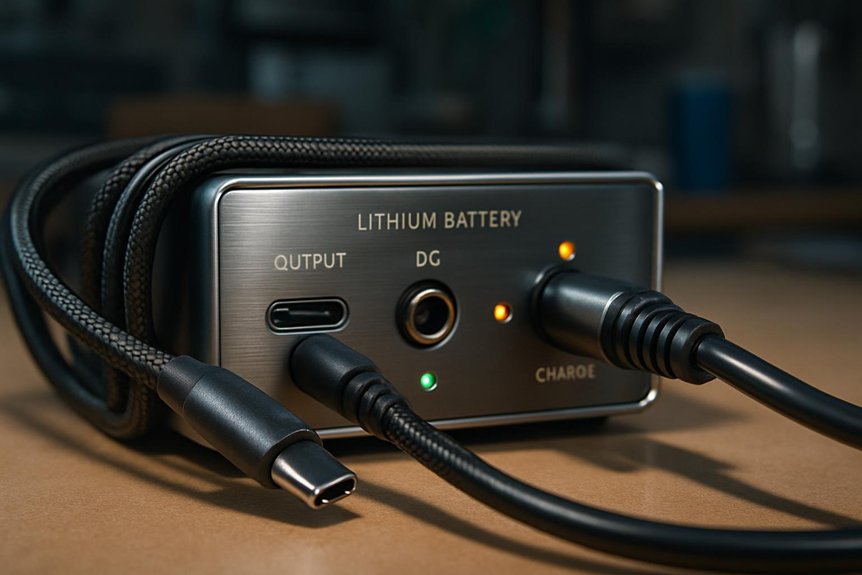
Have you checked the cables, connectors, and power supply for obvious issues before charging? We start with a deliberate visual scan of all external components. Inspect cable insulation for cracks, kinks, or softened areas that indicate heat stress or abrasion. Look for exposed conductors at terminations and any signs of fraying. At connectors, verify alignment, plug integrity, and consistency of mating surfaces; note any looseness or unusual play that could cause intermittent contact. Test power supply stability by observing proper voltage output under load, and confirm connector pins are clean and undamaged. Document any signs of connector wear and replace worn parts promptly to prevent charging faults. These steps emphasize cable inspection and reliable connections as prerequisites for safe, effective charging.
Basic Safety Tests for Immediate Diagnosis
What immediate safety tests should we run to diagnose a lithium battery charger issue? We begin with a controlled, stepwise approach focusing on charging safety and fault isolation. First, confirm the power source rating matches the charger’s input specification, then measure input voltage and current to detect under- or over- supply conditions. Next, inspect protective features: verify polarity, confirm fuse integrity, and test for proper isolation between mains and low-voltage circuits. Use a known-good load to observe charger behavior without a battery, noting any abnormal heating, arcing, or unexpected shutdowns. Document timer behavior and LED indicators for reliable fault isolation. Finally, perform a non-contact temperature check on components, ensuring safe operating limits, and recheck all connections before reintroducing the battery.
Diagnosing the Charger Circuit and Battery Pack
We begin by examining the charger circuit and its connection to the battery pack, applying the safety and fault-isolation steps from the previous tests. Our approach is systematic: verify wiring continuity, assess connector integrity, and confirm proper polarity at all interfaces. We perform diagnostic methods such as live-bridge checks, current sensing, and voltage rails under controlled loads, documenting readings for trend analysis. Next, we isolate the charger from the pack to test each subsystem independently, ensuring no parasitic paths skew results. We evaluate protection features, such as overcurrent and thermal shutdown, and verify that sense lines match the battery’s specification. Safety considerations guide every step; we wear PPE and observe isolation practices. Clear, repeatable measurements reduce ambiguity, enabling precise identification of contact resistance, damaged components, or controller faults.
Confirming a Fix and Preventing Recurrence
We verify the fix by re-testing the charger circuit and battery pack under nominal and stressed loads to confirm expected performance. We outline concrete steps for recurrence prevention, including setting threshold alerts, standardized test procedures, and documentation of results. We will monitor battery health over time, logging capacity, impedance, and cycle count to detect any drift or regression.
Verify Fix Effectiveness
To verify fix effectiveness, we first reproduce the failure scenario and confirm the symptom no longer occurs under normal operating conditions. We perform controlled tests to verify stability, repeatability, and input-output consistency after the repair. We focus on objective criteria and documented thresholds, ensuring results align with specifications. We also assess potential secondary effects to prevent false positives.
1) Reproduce the failure under defined load, then confirm resolution with three consecutive trials.
2) Verify that all safety interlocks, indicators, and protection circuits respond within spec.
3) Confirm no degradation in performance over a typical cycle, considering Recycling guidelines and Warranty implications.
Documentation is updated with test results, acceptance criteria, and any residual risk, ensuring traceability and future reference.
Document Recurrence Prevention
Do recurrence prevention by documenting the fix and locking in safeguards that prevent reoccurrence. We approach this with disciplined procedures: record the failure pattern, list contributing factors, and assign responsible owners. Our failure analysis identifies root causes, traces symptom timelines, and verifies corrective actions with objective criteria. We codify changes in a formal containment plan, update standard operating procedures, and embed checklists to ensure consistent execution. We require traceability for parts, configurations, and firmware versions, plus versioned change control and audit trails. We schedule follow-up reviews to confirm sustained effectiveness, capturing metrics such as incident recurrence rate and time to resolution. By institutionalizing these practices, we minimize variability, accelerate learning, and sustain reliability across charger systems in ongoing operations.
Monitor Battery Health
How can we guarantee ongoing battery health after a fix has been applied? We approach monitoring with structured checks, documenting results, and validating objectives through repeatable tests. Our focus remains on battery maintenance and charger diagnostics to confirm stability and prevent recurrence.
- Establish baselines after repair, recording voltage, current, and temperature profiles for reference.
- Schedule periodic verification tests, comparing new data against baselines to detect deviations early.
- Implement automated alerts for out-of-spec conditions, prompting immediate diagnostics and corrective actions.
Frequently Asked Questions
How Often Should I Calibrate a Lithium Battery Charger?
We calibrate whenever drift exceeds tolerance; calibration frequency depends on usage, environment, and maker specs. For charger maintenance, perform a baseline recalibration after firmware updates or sensor changes, then quarterly or semi-annually during normal operation.
Can a Charger Leak Current When Unplugged?
Charger can exhibit unplugged leakage via standby draw when unplugged, yes. We measure standby draw, document intake, and establish acceptable limits; if leakage exceeds thresholds, we isolate, replace, or redesign to minimize unplugged leakage and ensure safety.
Do Chargers Require Software Updates or Firmware Checks?
We need software updates and firmware checks; we must stay current. We, readers, monitor calibration frequency, environmental temperature, and protection circuit lifespan, ensuring reliability through methodical checks and disciplined maintenance. Updates, checks, and temp limits guide safe charging.
Can Environmental Temperature Affect Charging Efficiency?
Yes, temperature effects physics at play: we observe charging efficiency declines in extreme temps and improves near optimum. We measure, control, and document cycles to quantify how temperature influences charging efficiency, applying precise methods for safe, reliable results.
What’s the Typical Lifespan of a Charger’s Protection Circuit?
We typically see a charger protection circuit last 5–10 years under normal use. We’ll note battery health and warranty coverage inform longevity; we monitor currents and temperatures, testing repeatedly to ensure reliability, precision, and continued safe operation.
Conclusion
We’ve walked through the checks, and with disciplined, methodical steps we can confirm compatibility, safety, and performance. We verify chemistry, voltage, and charging profile, inspect the power path, and test isolation and fuses. We document readings and monitor temperatures to catch parasitic paths early. If issues arise, we isolate subsystems, re-test, and recalibrate protections to prevent overcharge and heat buildup. In short, rigor keeps chargers reliable and batteries safe—like clockwork, we keep time with careful diagnostics.