When selecting a deep cycle marine lithium battery, understanding the key technical factors—such as capacity retention, cycle life, safety systems, and environmental considerations—is essential for making an informed decision. Different lithium chemistries like LiFePO4 and NMC offer distinct advantages, but their performance depends heavily on design, BMS integration, and installation practices. As we compare these options, it’s important to take into account how each element impacts reliability and long-term costs, which are essential for demanding marine environments.
Key Takeaways
- Compare capacity retention and cycle life to assess long-term durability of different marine lithium batteries.
- Evaluate safety features, BMS quality, and resistance to vibration and environmental stressors.
- Consider compatibility with existing chargers, monitoring systems, and overall installation requirements.
- Analyze costs versus lifespan benefits, including warranty support and brand reputation.
- Review charging efficiency, thermal management, and maintenance needs for optimal performance.
What Are the Key Factors to Consider When Choosing a Marine Lithium Battery
When selecting a marine lithium battery, it’s essential to evaluate several critical factors that directly impact performance, safety, and longevity. Proper battery installation is paramount; secure mounting and appropriate wiring ensure maximum operation and reduce risks of damage or failure. Compatibility with marine accessories, such as chargers and monitoring systems, is also crucial to maintain efficiency and safeguard against overcharging or deep discharges. Consider the battery’s built-in safety features, like thermal management and protection circuits, to prevent hazards in marine environments. Additionally, assess the battery’s resistance to vibration and corrosion, which are common in marine conditions. Choosing a model designed specifically for marine use guarantees better resilience and reliability, ultimately enhancing safety and ensuring long-term, trouble-free operation on your vessel.
Comparing Battery Capacity and Longevity for Marine Use
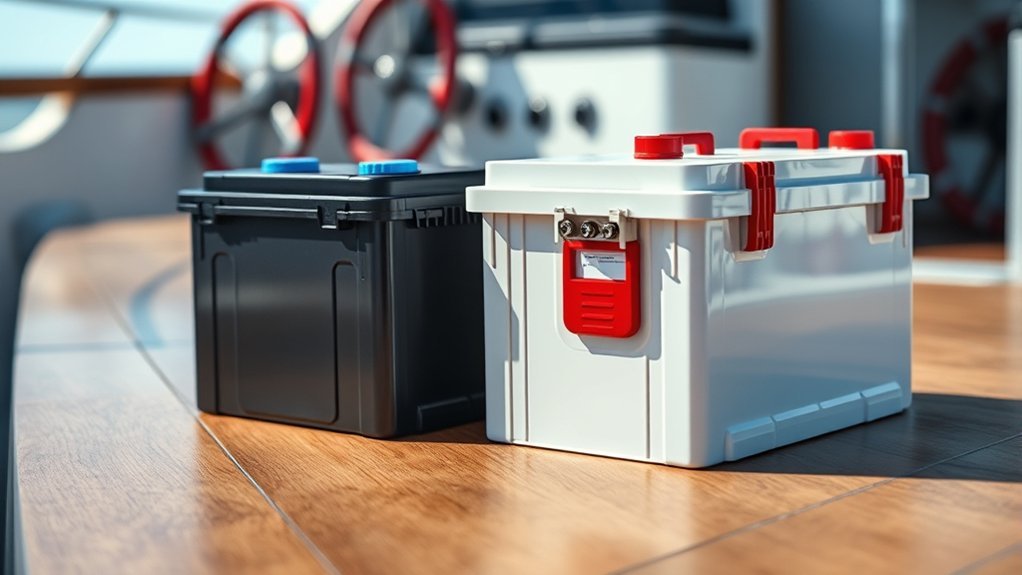
When evaluating marine lithium batteries, we focus on capacity retention over time and how usage cycles influence overall durability. Understanding the relationship between initial capacity and long-term performance allows for more accurate lifespan predictions. By analyzing these factors, we can determine the most reliable options for sustained marine use.
Capacity Durability Over Time
The capacity durability of deep cycle marine lithium batteries considerably influences their long-term performance and reliability in demanding marine environments. Proper battery installation and adherence to maintenance procedures are critical to maximizing this durability. Over time, factors such as temperature fluctuations, charge cycles, and operational conditions can degrade capacity, but well-maintained batteries retain their capacity longer.
- Regularly inspect connections and guarantee proper torque during installation to prevent capacity loss.
- Follow manufacturer-recommended maintenance procedures, including avoiding deep discharges and ensuring ideal charging protocols.
- Monitor battery health periodically with specialized tools to detect capacity fade early.
Impact of Usage Cycles
Usage cycles considerably influence both the capacity retention and overall lifespan of marine lithium batteries, as each complete charge-discharge cycle gradually diminishes the battery’s ability to deliver ideal performance. Repeated cycling accelerates capacity fade, especially if battery temperature fluctuates beyond ideal ranges, leading to increased internal stress. Manufacturing quality plays a key role; higher-quality cells with precise engineering exhibit reduced capacity loss over cycles, maintaining performance longer. Proper thermal management minimizes temperature-induced degradation, ensuring consistent performance throughout the battery’s lifespan. In marine environments, frequent cycling combined with variable temperatures can hasten capacity decline, but batteries built with superior manufacturing standards and thermal controls tend to withstand these stresses better. Ultimately, understanding the interplay of usage cycles, temperature, and manufacturing quality enables more accurate predictions of battery longevity.
How Do Charging Times and Efficiency Differ Among Top Marine Lithium Batteries?
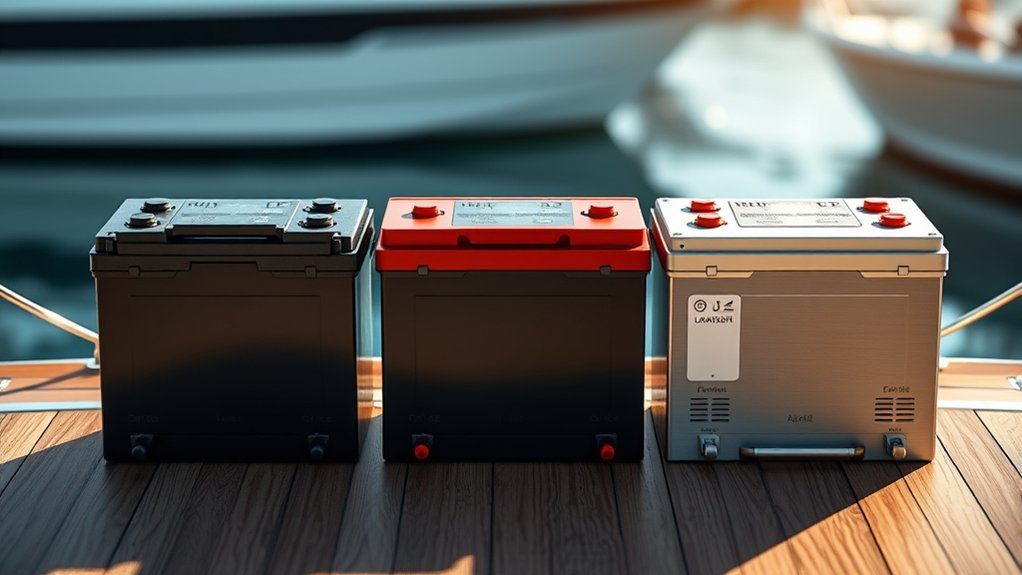
Charging times and efficiency vary considerably among top marine lithium batteries, influenced by their cell chemistry, management systems, and overall design. These factors directly impact battery charging rates and power efficiency, essential for marine applications. Significantly:
Top marine lithium batteries vary in charging speed and efficiency due to chemistry, management, and design factors.
- Cell Chemistry: Lithium Nickel Manganese Cobalt (NMC) cells typically enable faster charging and higher power efficiency compared to Lithium Iron Phosphate (LiFePO4) variants.
- Management Systems: Advanced Battery Management Systems (BMS) optimize charge cycles, reducing charging time and enhancing power efficiency through precise voltage and temperature regulation.
- Design Architecture: Modular and high-quality internal wiring minimizes resistance, improving overall battery charging performance and power efficiency.
Understanding these distinctions helps us choose batteries with ideal charging characteristics and power efficiency for marine use.
Evaluating Safety Features and Durability in Marine Lithium Batteries
Evaluating safety features and durability is essential when selecting marine lithium batteries, as these attributes directly influence operational reliability and vessel integrity. Battery safety involves multiple layers of protection, including thermal management, cell insulation, and integrated safety circuits designed to prevent overcharge, over-discharge, and thermal runaway. Durability testing assesses how well batteries withstand harsh marine conditions, such as vibration, moisture, and temperature fluctuations. Robust construction, high cycle life, and consistent performance under stress are key indicators of durability. Manufacturers that prioritize thorough safety features and rigorous durability testing ensure their batteries offer long-term reliability, minimizing risks of failure or safety hazards at sea. These factors are critical for maintaining vessel safety and ensuring dependable power throughout demanding marine operations.
Which Battery Management Systems (BMS) Ensure Reliable Marine Performance?
A reliable marine battery management system (BMS) is critical for guaranteeing ideal performance and safety in harsh marine environments. An effective BMS safeguards battery chemistry by precisely monitoring voltage, current, and temperature, preventing thermal runaway and prolonging lifespan. To guarantee reliable performance, look for systems with:
A robust BMS ensures safety, prolongs battery life, and maintains optimal performance in challenging marine conditions.
- Advanced Cell Balancing – maintains uniform voltage across cells, optimizing capacity and longevity.
- Integrated Overcharge/Discharge Protection – prevents damage from voltage spikes, safeguarding marine accessories.
- Real-Time Diagnostic Capabilities – provides detailed insights into battery health, enabling proactive maintenance.
These features ensure the BMS can adapt to fluctuating conditions typical of marine settings, maintaining safety and efficiency. A well-designed BMS is indispensable for maximizing deep cycle marine lithium battery performance and durability.
Cost Analysis: Are Higher-Priced Batteries Worth the Investment?
When evaluating the cost of high-end marine lithium batteries, we must consider their long-term savings potential through extended lifespan and reduced maintenance. While initial costs are higher, their superior performance and reliability often justify the investment over traditional options. A thorough cost analysis reveals whether the upfront premium aligns with operational efficiencies and total ownership expenses.
Long-Term Savings Potential
Are higher-priced marine lithium batteries truly cost-effective over the long term? We believe they often are, especially when considering their durability and efficiency. Here are three key aspects:
- Extended cycle life: Superior lithium technology ensures more charge-discharge cycles, reducing replacement frequency and total ownership costs.
- Lower operational costs: Higher efficiency minimizes energy loss, translating into fuel and maintenance savings. Additionally, advanced battery recycling initiatives make disposal more sustainable and cost-effective.
- Resilience and reliability: Enhanced thermal management decreases degradation, prolonging battery lifespan and reducing downtime.
Investing in premium lithium batteries may seem expensive upfront, but their long-term savings—through durability, efficiency, and environmental benefits—outweigh initial costs, making them a smarter, more sustainable choice.
Initial Cost Considerations
Considering the higher initial costs of marine lithium batteries, it is vital to assess whether these investments deliver sufficient long-term value. Despite upfront expenses, lithium batteries offer significant advantages, including extended lifespan and superior charge retention, which can offset initial costs over time. Additionally, modern batteries utilize eco-friendly materials, reducing environmental impact, and are designed with battery recycling in mind, facilitating responsible disposal and reuse. While initial purchase prices are higher than traditional lead-acid options, the durability and reduced maintenance requirements enhance overall cost-effectiveness. It’s important to weigh not only purchase price but also lifecycle benefits, environmental sustainability, and the potential for battery recycling. These factors collectively justify the premium, making lithium batteries a strategic investment for long-term marine power solutions.
Performance and Reliability
While the higher initial investment in marine lithium batteries may seem intimidating, their performance and reliability often justify the cost through consistent, superior power output and durability. Advanced battery chemistry guarantees rapid charge acceptance and minimal capacity fade over time, maintaining peak performance. Strict manufacturing standards assure uniform quality, reducing failure risk under demanding marine conditions. Key performance factors include:
- Cycle Life: Lithium batteries with high-grade chemistry often surpass 2000 cycles, far exceeding traditional lead-acid counterparts.
- Voltage Stability: Superior manufacturing standards deliver consistent voltage output, essential for sensitive electronic equipment.
- Temperature Tolerance: High-quality cells maintain performance across wide temperature ranges, ensuring reliability in diverse marine environments.
Investing in batteries adhering to rigorous standards and optimized chemistry translates into long-term reliability and cost savings.
User-Friendliness: Installation, Maintenance, and User Feedback
Installing a deep cycle marine lithium battery is straightforward due to its standardized design and thorough user instructions, which facilitate seamless integration into various marine power systems. The clear user manual enhances installation efficiency, providing detailed wiring diagrams, safety precautions, and troubleshooting guidance, ensuring proper setup. Maintenance requirements are minimal; regular inspections of terminals and monitoring of state of health are recommended to optimize lifespan. User feedback consistently highlights the ease of installation and the intuitive nature of maintenance procedures. Additionally, many manufacturers emphasize responsible battery recycling, aligning with environmental best practices. Overall, the combination of precise user manual clarity and straightforward installation processes makes marine lithium batteries highly user-friendly, supporting both novice and experienced operators in achieving reliable, safe, and efficient marine power management.
Environmental Impact and Recycling of Marine Lithium Batteries
As the adoption of marine lithium batteries increases, understanding their environmental impact and the importance of effective recycling becomes essential. Lithium batteries contain hazardous materials, making proper battery recycling critical to prevent environmental contamination. Compliance with stringent environmental regulations ensures safe disposal and resource recovery. Key considerations include:
- Battery Recycling Processes: Efficient recycling recovers valuable materials like lithium, cobalt, and nickel, reducing the need for raw material extraction.
- Environmental Regulations: Regulations mandate safe handling, transportation, and disposal practices to minimize ecological risks.
- Environmental Impact: Proper recycling mitigates toxic leakage, reduces landfill accumulation, and supports sustainable practices in marine applications.
Adhering to these principles helps balance technological advancement with ecological responsibility, ensuring marine lithium batteries contribute to a cleaner environment.
Real-World Performance: Case Studies and User Experiences
Examining real-world performance provides critical insights into the longevity and power consistency of marine lithium batteries under operational conditions. User case studies reveal that these batteries maintain stable output over extended cycles, markedly outperforming traditional lead-acid alternatives. This evidence underscores their reliability and suitability for demanding marine applications.
Longevity in Marine Use
Real-world performance data consistently demonstrates that deep cycle marine lithium batteries outlast traditional lead-acid counterparts, often by a significant margin. Their superior longevity stems from advanced battery chemistry, which reduces degradation over repeated cycles. In practical applications, users report:
- Extended cycle life, often exceeding 2,000 cycles with minimal capacity loss.
- Reduced maintenance needs, thanks to stable chemistry and sealed design compatible with marine accessories.
- Enhanced durability, allowing batteries to withstand harsh marine environments, including vibrations and temperature fluctuations, without compromising lifespan.
These factors contribute to a reliable power source, ultimately lowering total cost of ownership. The combination of robust battery chemistry and compatibility with marine accessories underscores the long-term viability of lithium technology for marine use.
Real-World Power Performance
Numerous case studies and user testimonials confirm that deep cycle marine lithium batteries deliver consistent, high-performance power under real-world conditions. Their advanced battery chemistry guarantees stable voltage output and high charge retention, even during extended use. Users report that these batteries outperform traditional lead-acid options in demanding environments, providing reliable energy for navigation, propulsion, and onboard systems. Additionally, lithium batteries’ superior power density allows for rapid charge and discharge cycles, critical during peak operational demands. Shipping regulations, which now strictly govern lithium battery transportation, necessitate compliance with safety standards—yet, these batteries remain accessible due to standardized packaging and certification processes. Overall, their proven performance in diverse marine scenarios underscores their suitability for demanding marine applications, reaffirming their status as a superior power source.
Final Tips for Selecting the Best Deep Cycle Marine Lithium Battery
When selecting the most suitable deep cycle marine lithium battery, it’s essential to prioritize key technical specifications that directly impact performance and longevity. Focus on aspects such as cell chemistry, real-world battery lifespan, and built-in safety features. These factors influence long-term reliability and safety during marine operation. To optimize battery lifespan, adhere to proper maintenance tips, including avoiding deep discharges and maintaining optimal charge levels.
Prioritize cell chemistry, lifespan, safety features, and proper maintenance for long-lasting, reliable marine lithium batteries.
Consider these critical points:
- Cycle life and capacity retention – ensures longevity and sustained power output.
- Battery management system (BMS) – protects against overcharge, over-discharge, and temperature extremes.
- Warranty and brand reputation – indicates product durability and manufacturer support.
Prioritizing these details guarantees a durable, high-performance marine lithium battery.
Frequently Asked Questions
How Do Temperature Variations Affect Marine Lithium Battery Performance?
Temperature variations notably impact marine lithium battery performance due to temperature sensitivity; ideal thermal management maintains consistent operation, preventing capacity loss or damage. We recommend monitoring ambient conditions and employing advanced thermal regulation for reliable, long-term battery efficiency.
Are Marine Lithium Batteries Compatible With Existing Marine Electrical Systems?
Absolutely, marine lithium batteries integrate seamlessly with existing systems when proper charging protocols are followed; their battery lifespan benefits from correct setup, ensuring compatibility, reliability, and efficiency, much like a well-orchestrated symphony that withstands the test of time.
What Are Common Troubleshooting Issues With Marine Lithium Batteries?
We find that troubleshooting marine lithium batteries often involves checking battery lifespan, which can be affected by high temperatures, and evaluating charging efficiency, as improper charging can lead to reduced performance or early failure.
How Do Warranty and After-Sales Support Vary Between Brands?
We find that warranty coverage and customer support vary vastly between brands; some offer extensive warranties and expert assistance, while others provide limited coverage and lack prompt support, impacting reliability and reassurance for marine lithium battery users.
Can Marine Lithium Batteries Be Safely Used With Solar Power Systems?
Yes, marine lithium batteries are safe for solar power systems when considering battery capacity and compatible charging methods; we guarantee proper voltage regulation and use specialized chargers to optimize performance and longevity in renewable energy applications.
Conclusion
In the end, selecting the perfect marine lithium battery isn’t just about price tags or shiny specs—it’s about embracing the future with a dash of skepticism. We must scrutinize safety, longevity, and environmental impact like seasoned detectives. After all, in the unpredictable world of marine adventures, only the most reliable, well-protected, and eco-conscious batteries will keep us afloat—literally. So, choose wisely, lest your vessel’s heart give out when you least expect it.