Imagine powering your RV’s systems with a battery that charges faster and lasts longer than traditional options. When comparing lithium and lead-acid batteries, it’s clear that each has distinct technical advantages and limitations that can substantially impact performance and cost-efficiency. Understanding these differences is essential for making an informed choice, but the decision isn’t straightforward. We’ll explore the key factors that should influence your selection to optimize your RV’s energy system.
Key Takeaways
- Lithium batteries offer higher energy density and longer lifespan compared to lead-acid, making them more efficient for RV use.
- They charge faster and maintain better performance across various temperatures, reducing downtime during trips.
- Lithium batteries are lighter and more space-efficient, freeing up interior space and improving RV fuel economy.
- Despite higher initial costs, lithium batteries are more cost-effective over time due to fewer replacements and higher durability.
- Lead-acid batteries contain hazardous materials and require more maintenance, while lithium batteries are safer and more environmentally friendly when recycled properly.
What Are RV Lithium and Lead-Acid Batteries?
While both RV lithium and lead-acid batteries serve the essential function of storing electrical energy for recreational vehicle use, they differ considerably in their chemistry, performance, and maintenance requirements. Lithium batteries utilize advanced lithium-ion technology, offering higher energy density, longer lifespan, and faster charging. Lead-acid batteries, traditionally used in RVs, rely on lead plates submerged in sulfuric acid, making them heavier and less durable over time. From an environmental impact perspective, lithium batteries pose fewer concerns during use but require responsible battery recycling due to their chemical complexity. Lead-acid batteries are more easily recycled but involve hazardous materials that can impact the environment if improperly disposed of. These distinctions are vital for understanding their operational and ecological implications.
How Do Lithium and Lead-Acid Batteries Work?
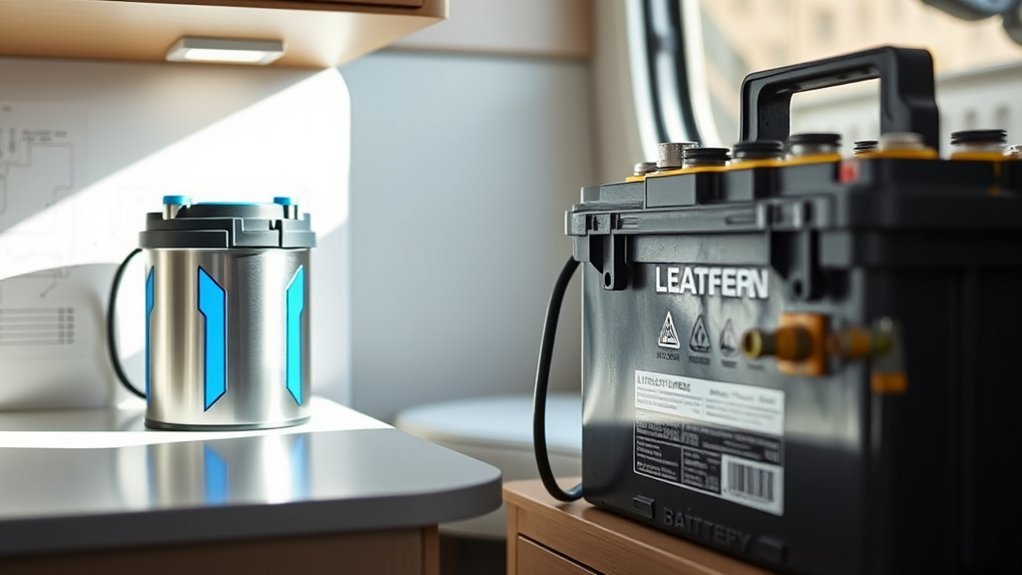
Lithium and lead-acid batteries differ fundamentally in their chemical compositions, affecting how they store and release energy. Their charging processes also vary considerably, with lithium batteries enabling faster, more efficient charging cycles. Additionally, lithium batteries typically achieve higher discharge efficiency, making them more effective at delivering sustained power compared to lead-acid counterparts.
Chemical Composition Differences
Understanding the chemical composition of batteries reveals fundamental differences in how lithium and lead-acid cells operate. Lithium-ion batteries utilize a complex chemistry involving lithium cobalt oxide or similar compounds, which offer high chemical stability during charge and discharge cycles. This stability enhances safety and prolongs lifespan. Conversely, lead-acid batteries rely on lead plates immersed in sulfuric acid, resulting in less chemical stability, especially under deep cycling conditions. Additionally, the materials in lead-acid batteries pose greater environmental impact concerns due to lead toxicity and acid handling. Lithium batteries, although more energy-dense, generally have a lower environmental footprint when properly recycled. These chemical composition differences directly affect performance, safety, and environmental considerations for RV applications.
Charging Process Variations
The charging processes of lithium-ion and lead-acid batteries differ considerably due to their distinct chemistries and internal structures. Lithium batteries utilize a constant current/constant voltage (CCCV) method, allowing for rapid charging while maintaining voltage stability. Proper control of battery temperature is critical to prevent thermal runaway, especially during high current phases. Conversely, lead-acid batteries require a multi-stage charging process, including bulk, absorption, and float phases, which are sensitive to voltage fluctuations. Voltage stability is essential for preventing overcharging and extending lifespan, but lead-acid batteries are more prone to sulfation if overcharged or charged unevenly. Overall, lithium batteries offer more precise control over charging parameters, whereas lead-acid batteries demand careful voltage regulation to avoid damaging thermal or chemical effects.
Discharge Efficiency Levels
While both lithium-ion and lead-acid batteries convert stored chemical energy into electrical power, their discharge efficiency levels differ considerably due to their distinct chemistries. Lithium batteries generally exhibit higher discharge efficiency, often exceeding 95%, because they maintain a stable voltage during discharge, which is advantageous for solar compatibility. Lead-acid batteries, on the other hand, typically operate with around 80-85% efficiency and experience voltage drops as they discharge, reducing energy transfer effectiveness. Additionally, temperature sensitivity impacts their discharge performance; lithium batteries perform reliably across broader temperature ranges, whereas lead-acid batteries suffer efficiency losses in extreme cold or heat. This variance influences how effectively each type can sustain power during prolonged use, especially in variable environmental conditions.
Comparing Cost and Budget Considerations
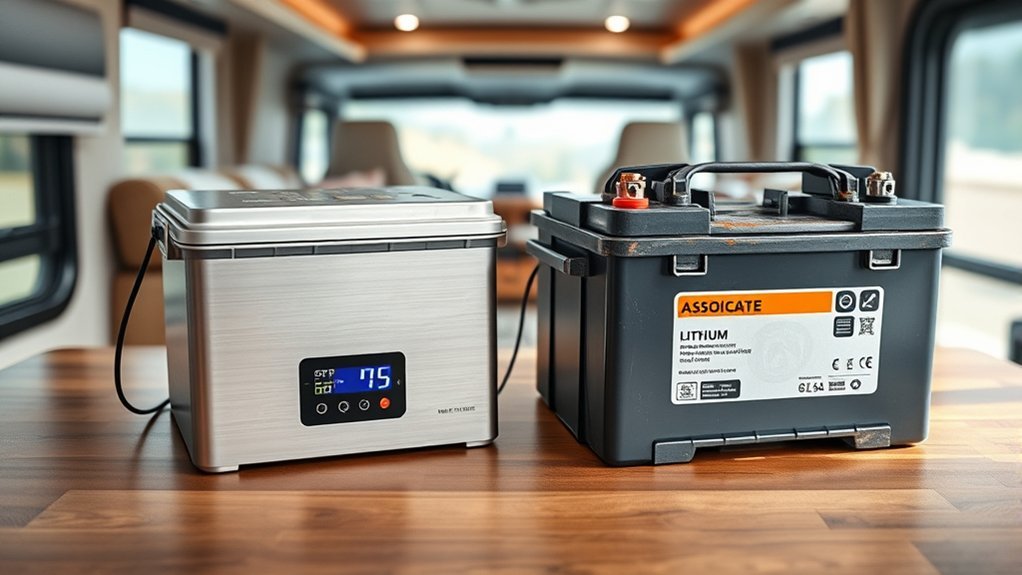
When evaluating the initial costs of RV batteries, lithium systems generally have a higher upfront price compared to lead-acid options. This difference markedly impacts budget planning, requiring careful cost comparison. While lithium batteries typically cost 2-3 times more initially, they offer higher efficiency and longer-term savings. The table below highlights key financial aspects:
| Aspect | Lead Acid | Lithium |
|---|---|---|
| Upfront Cost | Lower | Higher |
| Maintenance Expenses | Higher | Lower |
| Total Cost Over Time | Potentially Higher | More economical long-term |
Considering these factors, choosing the appropriate system depends on balancing initial investment with long-term benefits, especially for budget-conscious RV owners.
Durability and Lifespan of Each Battery Type
When evaluating durability, we focus on cycle life, resistance to degradation, and overall structural integrity. Lithium batteries typically offer higher cycle counts and better resistance to capacity loss over time, whereas lead-acid batteries tend to degrade more quickly under repeated use. Understanding these differences allows us to assess their long-term performance in RV applications accurately.
Battery Cycle Life
How do lithium and lead acid batteries compare regarding cycle life, and what does that imply for their durability? Lithium batteries typically offer a significantly higher cycle life, often exceeding 2000 cycles, compared to lead acid batteries’ 500-1000 cycles. This extended lifespan enhances durability and reduces replacement frequency. Key factors include:
- Greater resilience to deep discharges with lithium batteries
- Reduced capacity loss over time
- Longer overall service life
- Lower environmental impact through improved battery recycling processes
A longer cycle life not only improves performance but also minimizes waste, supporting sustainable battery recycling and reducing environmental impact. Consequently, lithium batteries are more suited for demanding RV applications where longevity and eco-friendliness are crucial.
Resistance to Degradation
Lithium batteries generally demonstrate superior resistance to degradation compared to lead acid counterparts, contributing to a longer overall lifespan. This resilience stems from their stable chemistry, which reduces capacity loss over time. However, battery temperature sensitivity plays a critical role; lithium batteries perform ideally within specific temperature ranges, and extreme heat or cold accelerates degradation. Lead acid batteries are more tolerant but still suffer from sulfation and corrosion, which diminish lifespan. From an environmental impact perspective, lithium batteries tend to have a smaller ecological footprint due to longer cycle life and recyclability, whereas lead acid batteries pose disposal challenges and contain hazardous materials. Overall, lithium batteries offer enhanced durability, but managing temperature and environmental considerations remains essential to maximize their resistance to degradation.
Overall Durability
Although both lithium and lead acid batteries are designed for long-term use, lithium batteries generally outlast lead acid options due to their higher cycle life and resistance to wear. Lithium batteries typically endure over 2,000 cycles compared to 500-1,000 cycles for lead acid, markedly extending their lifespan. Their durability also benefits from reduced degradation over time, which contributes to better performance and lower maintenance needs. When considering environmental impact, lithium batteries are more sustainable, especially with ongoing advancements in battery recycling techniques. Key points include:
- Higher cycle life reduces replacement frequency
- Superior resistance to degradation prolongs usable life
- Enhanced battery recycling processes mitigate environmental impact
- Longer lifespan decreases overall ecological footprint
These factors make lithium batteries a more durable and environmentally conscious choice for RV applications.
Weight and Space Savings With Lithium Batteries
While traditional lead-acid batteries tend to be bulky and heavy, lithium batteries offer significant advantages in weight and space savings due to their higher energy density. Lithium batteries have a lower battery weight, which directly enhances overall vehicle payload and simplifies mounting requirements. Their superior space efficiency allows for more compact battery packs, freeing valuable interior space and enabling more flexible installation configurations. This reduction in size and weight not only optimizes RV design but also improves fuel efficiency by decreasing overall weight. In technical terms, lithium’s higher energy density translates into more power stored per unit volume, making them an ideal choice for maximizing limited space and minimizing weight in RV applications. This efficiency is critical for enhancing both performance and usability.
Charging Speed and Efficiency
How quickly a battery can be recharged considerably impacts the overall efficiency and usability of an RV’s power system. Lithium batteries generally offer faster charging speeds compared to lead-acid, thanks to their higher charge acceptance rates. They also tend to have superior solar compatibility, enabling more efficient use of renewable energy sources. Additionally, lithium batteries exhibit better temperature tolerance, maintaining ideal charging performance across varied climates.
Key points include:
- Faster charge acceptance reduces downtime during trips
- Higher solar compatibility maximizes renewable energy utilization
- Superior temperature tolerance ensures consistent charging efficiency
- Reduced charge cycle times extend overall battery lifespan
These factors make lithium batteries more suitable for dynamic RV environments where quick, efficient recharging is essential.
Maintenance and Safety Requirements
Lithium batteries require less maintenance than lead-acid batteries due to their sealed design and fewer fluid management concerns, but they still demand careful handling to guarantee safety and longevity. Proper battery installation is critical, ensuring secure connections and correct polarity to prevent hazards. Regular inspection of terminals for corrosion and verifying that the battery management system (BMS) functions correctly are essential safety precautions. In emergency situations, lithium batteries offer advantages through their stable chemistry and reduced risk of acid spills; however, they still pose safety risks if damaged, such as thermal runaway. Adequate emergency preparedness involves having fire suppression resources and clear protocols for handling battery malfunctions. Overall, while lithium batteries simplify maintenance, diligent safety measures remain crucial for reliable operation and risk mitigation.
Which Battery Is Best for Different RV Needs?
Selecting the appropriate RV battery depends heavily on the specific energy demands and operational priorities of the user. For high-demand applications, lithium batteries offer higher energy density, longer lifespan, and faster recharge times. Conversely, lead-acid batteries may suffice for lower energy requirements but demand more maintenance and have a shorter cycle life. When evaluating options, consider:
- Energy capacity relative to usage patterns
- Weight constraints for portability
- Recycling and disposal processes affecting environmental impact
- Overall lifecycle costs and environmental considerations
Lithium batteries generally have a lower environmental impact due to improved battery recycling processes and longer service life, reducing waste. Lead-acid batteries, while cheaper upfront, pose a greater challenge in battery recycling and disposal, impacting sustainability. Understanding these factors helps match the right battery type with your RV needs.
Making Your Choice: Factors to Consider
When choosing between lithium and lead-acid batteries for your RV, it’s essential to evaluate several critical factors that directly influence performance, cost-effectiveness, and environmental impact. Lithium batteries generally offer higher energy density, longer cycle life, and faster recharge times, which can justify their higher upfront cost. However, considerations like battery recycling and disposal are crucial since lithium batteries require responsible handling to mitigate environmental impact. Lead-acid batteries are more affordable initially but have shorter lifespans, produce more emissions during manufacturing, and pose recycling challenges due to hazardous materials. Ultimately, your decision should balance these factors based on your usage patterns, sustainability priorities, and long-term maintenance costs, ensuring a responsible and efficient power solution for your RV.
Frequently Asked Questions
Are Lithium Batteries Environmentally Friendly Compared to Lead-Acid?
We believe lithium batteries are more environmentally friendly due to higher energy density, reducing resource use, and easier battery recycling processes, which minimize waste; in contrast, lead-acid batteries pose greater recycling challenges and contain more hazardous materials.
Can Lithium Batteries Be Used in All Climate Conditions?
Think of lithium batteries as the chameleon of energy storage—they excel in diverse climates due to superior climate resilience and battery compatibility. We find they perform reliably across temperature ranges, unlike traditional lead-acid, which struggles in extreme conditions.
What Are the Warranty Differences Between Lithium and Lead-Acid Batteries?
We find lithium batteries typically offer longer warranties, reflecting their superior battery lifespan, whereas lead-acid batteries often come with shorter warranties. Despite higher upfront costs, lithium’s durability makes it a more cost-effective, technically advantageous choice over time.
How Do Batteries Impact Overall RV Resale Value?
Batteries influence RV resale value through their battery lifespan and charging efficiency, with lithium options generally offering longer lifespan and better efficiency. These factors appeal to buyers seeking durability, potentially boosting resale value and perceived modernity of the RV.
Are There Any Specific RV Models Better Suited for Lithium Batteries?
Powerful, pioneering models like the Pleasure-Way and Winnebago are well-suited for lithium batteries, considering their lightweight design and extended lifespan. These tech-savvy, trendsetting rigs optimize RV weight and battery longevity, promising peak performance and prolonged power potential.
Conclusion
Ultimately, choosing between RV lithium and lead-acid batteries is like selecting the right tool for a precise job. Lithium batteries, with their superior efficiency and durability, are an investment that pays off over time, much like a well-tuned engine. Lead-acid batteries may suit initial budgets better but can lead to more frequent replacements. We recommend weighing your specific needs—performance, budget, space—carefully, to guarantee your RV’s power system runs smoothly and reliably.