Lithium battery chemistry offers compelling benefits, such as high energy density and lightweight design, making them crucial for modern electronics and transportation. However, these advantages come with notable risks, including safety concerns from thermal runaway and material degradation over time. As we explore the technical intricacies and ongoing innovations, it becomes clear that understanding both the potential and the limitations of lithium batteries is essential for responsible utilization—yet, many challenges remain that warrant closer examination.
Key Takeaways
- Lithium batteries offer high energy density, enabling compact and lightweight devices.
- They provide long cycle life and capacity retention, supporting durability over many charge cycles.
- Safety concerns include thermal runaway and dendrite formation, which can cause fires or short circuits.
- Environmental challenges involve resource extraction, recycling difficulties, and potential ecological impacts.
- Cost varies with chemistry choice; high-energy options may be more expensive but offer superior performance.
What Is the Chemistry Behind Lithium Batteries?
Lithium batteries operate based on the movement of lithium ions between two electrodes—namely, the anode and cathode—through an electrolyte. This process involves electrochemical processes that facilitate charge transfer, where lithium ions migrate during charging and discharging cycles. The stability of the electrode materials greatly influences battery performance and longevity. Material stability ensures that electrode structures resist degradation under repeated electrochemical reactions, maintaining consistent electrochemical processes over time. The choice of electrode materials, such as graphite for the anode and metal oxides for the cathode, directly impacts the battery’s capacity, cycle life, and safety. Understanding these fundamental chemical interactions allows us to optimize lithium battery design, balancing efficient electrochemical processes with the stability needed for reliable, long-term operation.
Key Advantages of Lithium Battery Chemistry
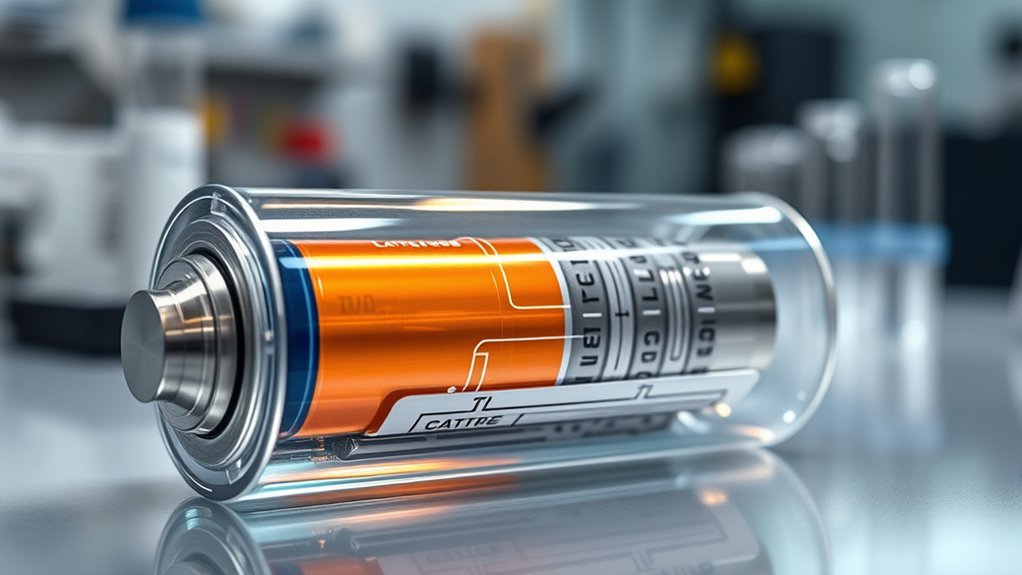
Lithium battery chemistry offers a high energy density, enabling compact designs with extended runtime, which is essential for portable and electric applications. Additionally, their long cycle life reduces the need for frequent replacements, improving overall durability and cost-effectiveness. These attributes make lithium batteries a preferred choice for demanding energy storage needs.
High Energy Density
Because of their high energy density, lithium batteries can store considerably more power in a smaller, lighter package compared to alternative chemistries. This advantage stems from their ability to maximize energy storage within a compact form factor, making them ideal for portable electronics and electric vehicles. The high energy density results from the material stability of lithium-based cathodes and anodes, which enable efficient charge transfer and minimal energy loss. This stability guarantees that lithium ions can intercalate and de-intercalate reliably over numerous cycles, maintaining capacity and performance. Consequently, lithium batteries deliver superior energy storage capabilities without excessive size or weight, aligning with the demands for high-performance, lightweight power sources across various industries.
Long Cycle Life
The durability of lithium batteries is largely attributed to their long cycle life, which refers to the number of charge-discharge cycles they can endure before experiencing significant capacity loss. This characteristic directly influences battery lifespan, making lithium chemistries highly suitable for applications requiring longevity. Typically, lithium batteries sustain 500 to over 2,000 charge cycles, depending on design and usage conditions. Their ability to maintain a high percentage of original capacity over numerous cycles results from stable electrode materials and electrolyte compositions. This extended cycle life reduces replacement frequency and improves overall cost-effectiveness. Consequently, lithium batteries are favored in scenarios demanding reliable, long-term performance, such as electric vehicles and grid storage, where maximizing charge cycles translates into enhanced durability and operational efficiency over time.
Common Challenges and Risks of Lithium Battery Chemistry
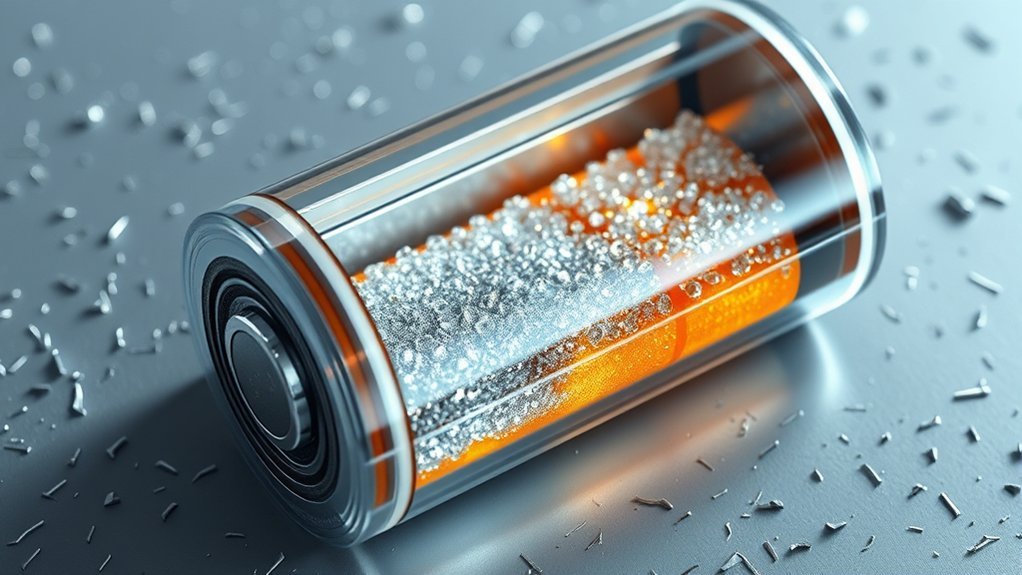
We need to take into account the inherent risks associated with lithium battery chemistry, particularly thermal runaway and dendrite formation. These issues can compromise safety and battery longevity if not properly managed. Understanding these challenges is essential for developing safer, more reliable energy storage solutions.
Thermal Runaway Risks
Have you ever wondered how thermal runaway poses a significant safety challenge for lithium batteries? This phenomenon occurs when internal heat causes the battery’s thermal stability to degrade rapidly, resulting in a destructive chain reaction. Managing this risk requires robust safety measures and an understanding of heat generation during operation. Key factors influencing thermal runaway include:
- Material decomposition at elevated temperatures
- Inadequate thermal management leading to heat accumulation
- Internal defects or damage that compromise safety measures
These factors highlight the importance of designing batteries with high thermal stability and implementing effective safety protocols. Preventing thermal runaway involves controlling temperature thresholds and integrating fail-safe mechanisms, ensuring that safety measures effectively mitigate the risk of catastrophic failure.
Dendrite Formation Issues
During efforts to improve lithium battery safety, addressing internal structural challenges becomes essential, particularly the formation of dendrites. Dendrite growth occurs when lithium deposits unevenly during charging, potentially piercing the separator and causing short circuits. Effective dendrite suppression relies heavily on electrolyte stability; unstable electrolytes can facilitate uneven lithium plating, increasing dendrite risk. To mitigate this, researchers focus on developing electrolytes with enhanced chemical stability and optimized ionic conductivity. Additionally, modifying electrode surfaces and employing solid electrolytes are promising strategies for reducing dendrite formation. Ultimately, ensuring electrolyte stability and implementing dendrite suppression techniques are critical to enhancing battery safety and longevity, minimizing the risk of internal short circuits, and advancing lithium battery technology for safer applications.
Environmental Impact and Recycling Concerns
Although lithium-ion batteries enable widespread adoption of renewable energy and electric vehicles, their environmental footprint raises significant concerns. Recycling challenges stem from complex chemistries and the difficulty of efficiently recovering valuable materials like lithium and cobalt. These issues hinder sustainable disposal and increase reliance on mining, which exacerbates ecological degradation. The environmental footprint of manufacturing and disposal contributes to resource depletion and potential soil and water contamination. Key concerns include:
Lithium-ion batteries’ environmental impact includes complex recycling, resource depletion, and ecological harm from mining and disposal.
- Limited recycling infrastructure impairs effective recovery of critical materials
- Hazardous waste generation during improper disposal or processing
- Resource-intensive extraction amplifies ecological and social impacts
Addressing these issues requires technological advancements in recycling processes and improved lifecycle management, ensuring batteries’ environmental benefits do not come at an unsustainable cost.
How Lithium Battery Chemistry Affects Performance and Safety
The chemistry of lithium batteries directly determines their performance metrics and safety profiles, as different cathode and anode materials influence energy density, charge rates, and thermal stability. For example, lithium cobalt oxide offers high energy density but poses safety risks, while lithium iron phosphate enhances thermal stability at the expense of energy density. These material choices impact battery manufacturing complexity and cost considerations, affecting overall performance and safety.
| Material Type | Energy Density | Thermal Stability | Cost | Safety Risks |
|---|---|---|---|---|
| Lithium Cobalt Oxide | High | Moderate | High | Elevated |
| Lithium Iron Phosphate | Moderate | High | Lower | Lower |
| Lithium Nickel Manganese Cobalt | Very High | Moderate | High | Moderate |
| Lithium Manganese Oxide | Moderate | High | Moderate | Low |
| Lithium Titanate | Lower | Very High | Very High | Minimal |
Innovations in Lithium Battery Chemistry for the Future
Advancements in lithium battery chemistry are driving the development of safer, more efficient energy storage solutions that meet the growing demands of electric vehicles and portable electronics. Significantly, solid state innovations and solid electrolyte developments are pivotal in this progress. These innovations aim to replace liquid electrolytes with solid materials, reducing flammability risks and enhancing thermal stability. Key developments include:
- Solid electrolytes with high ionic conductivity for faster charge/discharge cycles
- Thin, flexible solid-state designs improving energy density and form factor
- Enhanced stability leading to longer cycle life and safety improvements
These advancements promise to overcome current limitations, enabling batteries that are not only safer but also more durable and energy-dense, setting the stage for next-generation energy storage solutions.
Comparing Lithium Chemistry to Other Battery Technologies
While lithium-ion batteries dominate the current energy storage landscape, comparing their chemistry to other technologies reveals key differences in performance, safety, and application suitability. Lithium’s high energy density and efficient battery manufacturing have driven rapid market adoption, yet alternatives like nickel-metal hydride (NiMH) and solid-state batteries offer distinct advantages and challenges.
| Feature | Lithium-ion | Alternatives |
|---|---|---|
| Energy Density | High | Moderate to high |
| Safety & Stability | Moderate, risk of thermal runaway | Generally safer, lower risk |
| Market Adoption | Extensive, mature | Growing but still emerging |
Understanding these differences helps inform ideal technology choices for specific energy storage needs.
Is Lithium Chemistry Suitable for Your Application?
Evaluating whether lithium chemistry suits your application requires a thorough understanding of its core strengths and limitations relative to your specific energy, safety, and cost requirements. Lithium batteries excel in high energy density and lightweight design, but their battery durability can vary based on usage patterns and thermal management. Cost considerations are also critical, as lithium chemistry often involves higher initial costs compared to other technologies, though it can offer longer-term savings through superior performance.
Lithium batteries offer high energy density but require careful safety and durability considerations.
- Suitable for applications demanding compact, high-capacity power sources
- Requires careful assessment of safety protocols due to thermal risks
- Long-term cost benefits depend on durability and maintenance needs
Ultimately, lithium chemistry fits well where performance outweighs upfront costs and safety measures are manageable.
Frequently Asked Questions
How Long Do Lithium Batteries Typically Last Before Degrading?
Typically, lithium batteries last about 2-3 years or 300-500 charge cycles before degrading considerably, influenced by factors like temperature, charge rate, and usage patterns, which accelerate degradation and reduce overall battery lifespan.
Are There Specific Safety Protocols for Handling Lithium Batteries?
Handling precautions are essential; data shows lithium battery fires account for 25% of electronics-related fires. We follow strict safety protocols, including proper storage, avoiding punctures, and using fire-resistant containers, to mitigate risks associated with lithium battery fires.
What Are the Cost Differences Between Lithium and Alternative Batteries?
We find lithium batteries typically cost more upfront than alternatives like nickel-metal hydride, but their efficiency reduces overall environmental impact through better battery recycling potential, making them cost-effective long-term despite higher initial expenses.
Can Lithium Batteries Be Safely Used in Extreme Temperatures?
We find lithium batteries generally safe in moderate temperatures, but their thermal stability and temperature resilience decline in extreme conditions, risking thermal runaway or capacity loss. Proper thermal management is essential for safe, reliable operation under such circumstances.
How Does Lithium Battery Chemistry Evolve With Technological Advancements?
Imagine batteries as evolving ecosystems; as technology advances, chemistries like solid-state or silicon anodes improve battery lifecycle, enabling safer, more efficient energy storage. This chemistries evolution drives innovation, optimizing performance and longevity in diverse applications.
Conclusion
Just as Icarus soared toward the sun despite risks, we must weigh lithium’s soaring benefits against its safety and environmental challenges. By understanding its chemistry, we can better harness its potential while mitigating hazards. Continuous innovation—like Daedalus’s wings—guides us toward safer, more sustainable solutions. As we navigate this technological ascent, a balanced approach guarantees lithium remains a powerful tool rather than a peril, driving progress responsibly into the future.