When comparing 48V e-bike lithium battery packs, capacity, energy density, and build quality all directly impact performance, durability, and safety. Evaluating these technical factors helps identify the most dependable options suited to specific riding needs. As we analyze different models, understanding the nuances of BMS features, certification standards, and brand reputation becomes essential. This approach guarantees you select a battery pack that balances performance, longevity, and safety—yet, the ideal choice depends on how these elements align with your particular riding conditions.
Key Takeaways
- Compare battery capacity (Wh) to assess expected riding range and performance differences.
- Evaluate battery chemistry, cycle life, and durability for long-term reliability.
- Check compatibility with your e-bike’s voltage, connector type, and mounting specifications.
- Consider safety features, BMS quality, and safety certifications for secure operation.
- Review brand reputation and user feedback to gauge real-world performance and reliability.
What to Look for in a 48V E-Bike Lithium Battery Pack
When selecting a 48V e-bike lithium battery pack, it’s essential to evaluate key technical specifications that directly impact performance and reliability. Battery maintenance plays a vital role in longevity, so understanding the recommended care routines is important. Proper charging protocols, including avoiding overcharging or deep discharges, help preserve cell integrity and prevent capacity loss over time. Look for battery management systems (BMS) that monitor voltage, current, and temperature, guaranteeing safe operation and consistent performance. The pack’s cycle life also indicates durability, reflecting how many charge cycles it can endure before capacity diminishes. Ultimately, a well-designed battery with clear maintenance and charging guidelines ensures maximum functionality, safety, and extended lifespan, making it a key factor in your e-bike’s overall dependability.
Top Features of Leading 48V E-Bike Batteries
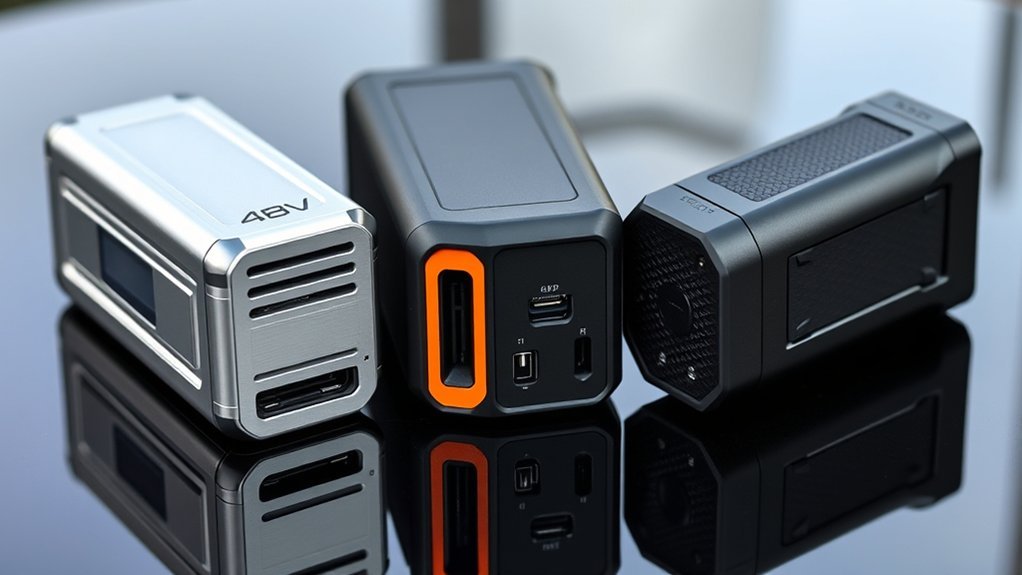
Leading 48V e-bike batteries incorporate several advanced features that enhance performance, safety, and durability. High-quality cells ensure consistent power delivery and longevity, while integrated BMS systems monitor voltage, current, and temperature for peak operation. Safety features like thermal management reduce the risk of overheating, enhancing reliability. Additionally, many top batteries incorporate designs that facilitate battery recycling, reducing environmental impact by enabling the reuse of valuable materials. Durability is further supported through robust casing and water resistance, ensuring resilience in various conditions. These features collectively improve user experience and promote sustainability, reflecting industry trends toward eco-friendly practices. By prioritizing environmental impact and safety, leading batteries set a standard for efficient, responsible e-bike energy solutions.
Comparing Capacity and Range Across 48V Battery Models
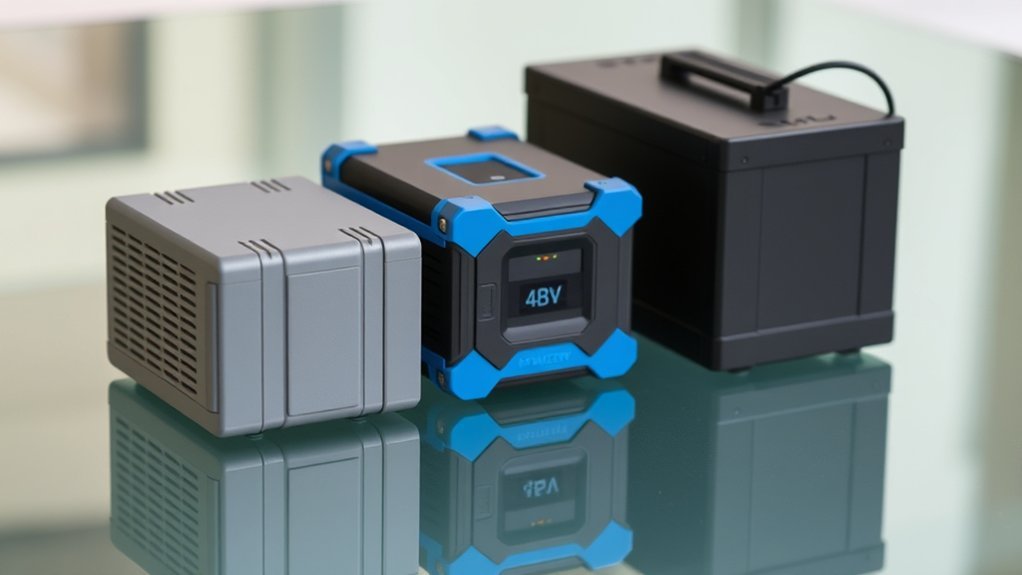
When comparing 48V e-bike batteries, variations in capacity directly influence potential range, but other factors like discharge rates and efficiency also play significant roles. Understanding how different models optimize energy storage and delivery helps clarify their real-world performance. Analyzing these aspects enables more informed choices based on specific riding needs and usage patterns.
Battery Capacity Variations
Battery capacity directly influences the range of a 48V e-bike, with higher capacities generally enabling longer rides before recharging. Variations in capacity often stem from differences in battery chemistry, such as lithium-ion types, which impact energy density and longevity. Larger capacity packs typically contain more cells, allowing for increased watt-hours (Wh), thereby enhancing potential riding distance. However, charging methods also play a role; faster chargers can reduce downtime but may affect battery lifespan, especially with high-capacity packs. Understanding these variations helps in selecting an ideal balance between capacity, durability, and charging efficiency. Ultimately, evaluating capacity differences requires considering both the technical aspects of battery chemistry and the practical implications of charging protocols.
Range Performance Factors
The relationship between battery capacity and actual riding range is a key consideration when evaluating different 48V e-bike models. While higher capacity generally extends range, other factors considerably influence performance. Effective battery cooling prevents thermal degradation during prolonged use, maintaining ideal chemical reactions and consistent range. Additionally, charging speed impacts overall usability; faster charging allows more frequent use, indirectly affecting total riding time. A battery with superior cooling may sustain higher discharge rates without overheating, improving range under heavy loads. Conversely, slow charging might limit rapid turnaround, reducing ride opportunities. By analyzing these range performance factors—battery cooling and charging speed—we gain a clearer understanding of how different 48V battery models deliver real-world range, beyond mere capacity figures.
Assessing Battery Quality: Longevity and Reliability Factors
Evaluating the longevity and reliability of a 48V e-bike lithium battery pack requires a detailed analysis of its chemical stability, cycle life, and build quality. High-quality cells maintain performance over numerous charge cycles, reducing the frequency of replacements. Consistent chemical stability minimizes degradation, directly impacting the battery’s lifespan. Build quality, including robust casing and secure connections, enhances durability and safety. Additionally, examining environmental impact and battery recycling practices is crucial for sustainable use. A battery designed with recyclability in mind reduces waste and ecological footprint. The following table summarizes key factors influencing longevity and reliability:
| Factor | Impact |
|---|---|
| Chemical stability | Ensures consistent performance over time |
| Cycle life | Determines number of charge/discharge cycles |
| Build quality | Affects durability and safety |
Understanding Price Differences and Value for Money
Understanding price differences among 48V e-bike lithium battery packs requires a careful analysis of the balance between cost and performance. Higher-priced packs often feature superior battery aesthetics, with sleek designs and durable casing, enhancing visual appeal and long-term durability. Additionally, charging speed plays a critical role in value for money; faster charging capabilities reduce downtime and improve user convenience. Cheaper options may compromise these factors, offering less refined aesthetics and slower charging times, which can lead to increased total ownership costs. When evaluating value, it’s essential to consider whether the investment in advanced design and rapid charging justifies the initial price premium. Ultimately, the most cost-effective choice aligns with the rider’s specific needs, balancing performance, appearance, and charging efficiency.
Compatibility and Ease of Installation: What Matters?
Making certain compatibility with specific bike models is essential to prevent fit issues and optimize performance. The installation process’s complexity depends on connector types and mounting requirements, which directly impact setup time. Checking connector compatibility beforehand helps avoid wiring errors and ensures seamless integration.
Compatibility With Bike Models
How well a 48V e-bike lithium battery pack fits a specific bike model directly impacts installation ease and overall performance. Compatibility depends on factors like mounting dimensions, connector types, and weight distribution, which influence ride stability and battery longevity. Proper fit guarantees efficient power delivery and reduces the risk of damage or malfunction, ultimately extending the battery’s lifespan. Considering environmental impact, choosing compatible batteries facilitates proper disposal and battery recycling, minimizing ecological harm. Incompatible packs may lead to premature failure or increased waste, highlighting the importance of precise matching. Manufacturers often specify compatible models, but verifying dimensions and connector standards is essential for peak performance and sustainability. Clear compatibility ensures the battery’s reliability and promotes eco-friendly practices.
Installation Process Simplicity
The ease of installing a 48V e-bike lithium battery pack hinges on several key factors, primarily related to compatibility with the bike’s design and components. Ensuring proper integration depends on understanding the battery’s chemistry and matching it with the bike’s existing charging technology. Compatibility influences how straightforward the installation process is, especially regarding mounting and electrical connections. Additionally, battery chemistry impacts safety and maintenance, while charging technology determines ease of power management post-installation.
- Compatible mounting brackets and dimensions
- Standardized voltage and power output
- Plug-and-play connectors aligned with bike wiring
- Support for the bike’s charging protocols and technology
Connector Compatibility Checks
Why do connector compatibility checks matter so much when installing a 48V e-bike lithium battery? Ensuring connector compatibility is critical because mismatched charging connectors can prevent proper installation or damage components. Compatibility extends beyond just the physical fit; electrical specifications like voltage and current ratings must align to avoid safety hazards. Precise charging connectors are essential for secure, reliable connections that facilitate efficient power transfer. Verifying connector compatibility reduces the risk of connection failures or shorts, which could compromise battery performance or safety. It also simplifies installation, as incompatible connectors often require adapters or modifications. Ultimately, thorough compatibility checks streamline the process, ensuring the battery integrates seamlessly with the e-bike’s existing electrical system and functions as intended.
Battery Safety and Certification: Ensuring Peace of Mind
Ensuring safety and compliance in lithium battery packs is critical for reliable e-bike performance and user confidence. Certification standards such as UL 2271 or IEC 62133 verify that batteries meet rigorous safety protocols, minimizing risks like thermal runaway. Proper adherence to charging protocols guarantees safe operation and prolongs battery lifespan, while responsible battery recycling mitigates environmental impact and hazards associated with disposal.
Key considerations include:
- Compliance with international safety certifications
- Implementation of standardized charging protocols
- Adoption of battery recycling programs
- Continuous safety testing and quality assurance
User Reviews and Brand Reputation: Which Batteries Stand Out?
User reviews and brand reputation serve as essential indicators of lithium battery pack quality and reliability, offering real-world insights beyond technical specifications. We find that batteries from brands with strong reputations consistently excel in key areas like battery aesthetics and longevity, reflecting quality manufacturing. Customer service also plays a critical role in user satisfaction, especially when addressing issues like warranty claims or technical support. The following table highlights notable brands based on recent reviews:
| Brand | Battery Aesthetics & Build | Customer Service |
|---|---|---|
| PowerMax | Sleek design, durable | Responsive, helpful |
| EcoVolt | Modern, lightweight | Prompt support |
| VoltMaster | Minimalist, compact | Reliable assistance |
Choosing a reputable brand ensures confidence in both product quality and ongoing support.
Choosing the Right 48V Battery for Your Riding Needs
Selecting the appropriate 48V lithium battery hinges on understanding your specific riding requirements and usage patterns. To optimize performance, consider factors like capacity, weight, and cycling stability. Prioritize batteries made with eco-friendly materials to reduce environmental impact and facilitate battery recycling, guaranteeing sustainability.
Choose a 48V lithium battery based on your riding needs, focusing on capacity, weight, durability, and eco-friendly materials.
Key considerations include:
- Range needs: Higher capacity batteries suit long-distance rides.
- Weight constraints: Lighter batteries improve handling and acceleration.
- Charging cycles: Durability depends on cycle life and build quality.
- Environmental impact: Choose batteries designed with eco friendly materials and recycling options.
Balancing these factors ensures the battery aligns with your riding style while supporting sustainable practices. Analyzing technical specifications helps you make informed choices, maximizing efficiency and longevity in your e-bike.
Frequently Asked Questions
How Often Should I Recharge My 48V E-Bike Battery?
We recommend recharging your 48V e-bike battery after each use, maintaining consistent charging habits and performing periodic battery calibration to optimize lifespan and performance, rather than waiting for complete depletion.
What Is the Best Way to Store a Lithium Battery Long-Term?
Ironically, neglecting battery maintenance and storage techniques risks long-term damage; we recommend storing lithium batteries in a cool, dry place at around 50-70% charge, avoiding extreme temperatures to preserve capacity and lifespan.
Can I Upgrade My Battery to Increase Range?
Yes, upgrading your battery can increase range by boosting capacity, but consider that higher capacity batteries may affect charging cycles and weight. We recommend analyzing your bike’s specifications to guarantee compatibility and peak performance with the new battery.
How Do Temperature Changes Affect Battery Performance?
Temperature changes can considerably impact battery performance; poor thermal stability leads to capacity loss, while effective temperature management maintains ideal operating conditions, ensuring consistent power output and prolonging battery lifespan during temperature fluctuations.
Are There Eco-Friendly Disposal Options for Lithium Batteries?
Are eco-friendly disposal options available for lithium batteries? Yes, recycling programs and proper disposal methods minimize environmental impact. We analyze these processes, emphasizing technical safety and sustainability, ensuring responsible handling of lithium batteries to protect ecosystems and human health.
Conclusion
Choosing the right 48V e-bike lithium battery is like steering through a complex maze—each factor from capacity to safety plays a critical role. By analyzing features, reliability, and value, we can identify options that maximize performance and longevity. It’s crucial to balance technical specifications with your riding needs, ensuring a safe, efficient, and cost-effective investment. With careful evaluation, you’ll find a battery that powers your journey as smoothly as a well-calibrated engine.