When comparing lithium and lead-acid batteries, understanding their lifespan differences is essential for informed decision-making. Lithium batteries typically last longer and endure more charge cycles, but they come with higher upfront costs. Factors such as usage patterns, maintenance, and application demands greatly influence their durability. Recognizing these variables can help determine which type offers better long-term value, yet the nuances of each option often lead to more questions about ideal choices for specific needs.
Key Takeaways
- Lithium batteries typically last 8-15 years or 1,000-2,000 charge cycles, outperforming lead-acid batteries’ 3-5 years or 500-1,000 cycles.
- Proper maintenance and temperature management are crucial for extending the lifespan of both battery types.
- Lithium batteries are more resistant to degradation from deep discharges, offering longer service life.
- Lead-acid batteries have higher environmental impacts but are easier and cheaper to recycle.
- Despite higher initial costs, lithium batteries often provide better long-term value due to their durability and reduced replacement frequency.
How Do Lithium and Lead-Acid Batteries Differ in Lifespan?
While both lithium and lead-acid batteries serve as reliable energy storage solutions, their lifespans differ substantially due to their fundamental chemical and structural characteristics. Lithium batteries typically last 8-15 years or 1,000-2,000 charge cycles, thanks to their stable chemistry and advanced design. In contrast, lead-acid batteries generally endure 3-5 years or 500-1,000 cycles, with degradation accelerated by sulfation and corrosion. These lifespan disparities directly influence environmental impact, emphasizing the importance of effective battery recycling to mitigate waste. Lithium batteries, with longer service lives, reduce the frequency of replacements, lowering overall environmental footprint. Conversely, lead-acid batteries require more frequent recycling efforts, highlighting the need for sustainable waste management practices to minimize ecological harm.
Factors That Influence the Durability of Lithium and Lead-Acid Batteries

Charging practices and operating temperature considerably affect the longevity of both lithium and lead-acid batteries. Proper charging protocols minimize stress and degradation, while temperature extremes accelerate capacity loss. Understanding these factors enables us to optimize battery performance and extend service life.
Charging Practices Impact
The way we manage the charging process plays a critical role in determining the longevity of lithium and lead-acid batteries. Proper charging protocols—such as avoiding overcharging, maintaining ideal voltage levels, and adhering to recommended current rates—minimize stress on the cells and prolong lifespan. Lithium batteries benefit from sophisticated charge controllers that prevent capacity fade, whereas lead-acid batteries require careful regulation to prevent sulfation. Additionally, aggressive charging practices accelerate degradation, increasing the frequency of battery recycling and consequently impacting environmental sustainability. Reduced battery lifespan leads to more waste, amplifying environmental impact. Implementing precise charging practices not only extends battery durability but also supports responsible lifecycle management, reducing waste and promoting environmentally conscious battery recycling efforts.
Operating Temperature Effects
Operating temperature considerably influences the lifespan and performance of both lithium and lead-acid batteries, as excessive heat accelerates chemical degradation while cold temperatures impair capacity and efficiency. Battery chemistry determines how each type responds to environmental factors; lithium-ion batteries are more sensitive to high temperatures, which increase parasitic reactions and shorten cycle life. Lead-acid batteries, meanwhile, suffer from reduced capacity at low temperatures due to slowed chemical reactions. Elevated temperatures can cause electrolyte evaporation and corrosion, impacting both chemistries. Conversely, cold environments hinder ion mobility, decreasing power output. Proper thermal management is essential to mitigate these environmental factors and optimize durability. Understanding the distinct effects of operating temperature on each battery chemistry helps inform usage protocols, extending service life and maintaining performance.
Comparing Maintenance Needs for Extended Battery Life
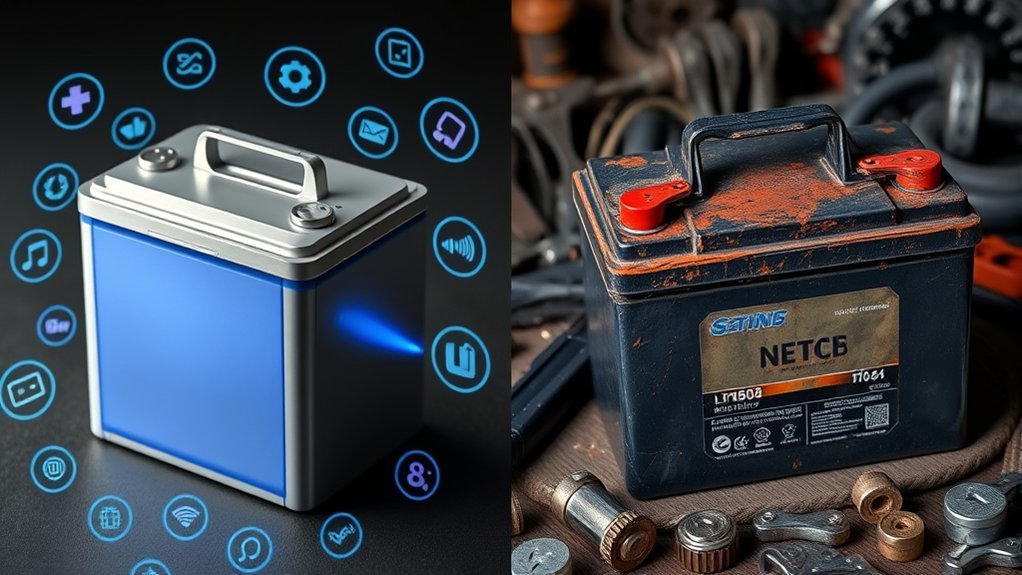
We need to compare the maintenance routines of lithium and lead-acid batteries to understand their impact on longevity. This includes analyzing regular inspection protocols, ideal charging and discharging practices, and associated costs. Such assessments reveal critical differences that influence long-term performance and total ownership expenses.
Regular Inspection Requirements
While both lithium and lead-acid batteries require regular inspections to guarantee ideal performance, their maintenance protocols differ considerably. Lithium batteries demand minimal oversight, primarily focusing on monitoring voltage levels and ensuring thermal stability to prevent degradation. Lead-acid batteries, however, necessitate more frequent checks of electrolyte levels and terminal cleanliness to maintain capacity. Regular inspections also serve to identify potential failure points, reducing environmental impact by preventing leaks and hazardous failures. Additionally, proper inspection routines facilitate effective battery recycling at end-of-life, minimizing ecological harm. Lithium batteries’ lower maintenance needs contribute to extended lifespans and reduced environmental impact, whereas lead-acid batteries’ frequent inspections help mitigate the environmental risks associated with improper disposal, underscoring the importance of tailored maintenance for sustainable operation.
Charging and Discharging Practices
Charging and discharging practices play a crucial role in determining the lifespan and performance of both lithium and lead-acid batteries, but their maintenance requirements differ markedly. Lithium batteries tolerate deeper discharges and higher charge rates more effectively, reducing stress during cycles, which extends their lifespan. Conversely, lead-acid batteries require careful management of discharge depth and frequent equalization charges to prevent sulfation and capacity loss. Proper practices influence not only performance but also environmental impact, as efficient cycling minimizes waste and facilitates battery recycling processes. Overcharging or deep discharges accelerate degradation, increasing disposal frequency and potential environmental hazards. To optimize longevity and sustainability, adhering to manufacturer-recommended charging protocols is essential, ensuring batteries remain functional longer and support responsible battery recycling initiatives.
Maintenance Cost Differences
Maintaining battery health over time involves distinct cost considerations for lithium and lead-acid systems. Lithium batteries generally require less frequent maintenance, reducing labor and replacement costs. Conversely, lead-acid batteries demand regular checks on electrolyte levels and terminal cleanliness, increasing ongoing expenses. Additionally, lithium batteries’ longevity minimizes the frequency of replacements, impacting total lifecycle costs positively.
Furthermore, both types influence environmental impact through battery recycling requirements, with lithium batteries often posing higher challenges but offering improved recyclability. Lead-acid batteries, while easier to recycle, pose greater environmental hazards if improperly disposed of.
Key factors include:
- Lower maintenance frequency for lithium batteries
- Higher initial investment offset by reduced replacement costs
- Recycling complexities and environmental considerations
- Impact of maintenance practices on overall lifecycle expenses
- Long-term sustainability and disposal costs
Cost-Effectiveness: Which Battery Type Offers Better Value Over Time?
When evaluating the long-term value of lithium batteries versus lead acid, cost-effectiveness hinges on their total lifecycle expenses, including initial purchase price, maintenance, and replacement costs. Lithium batteries, with advanced battery chemistry, typically have higher upfront costs but lower maintenance and longer lifespan. This reduces overall replacement frequency and environmental impact over time. Conversely, lead acid batteries are cheaper initially but incur higher maintenance and more frequent replacements, increasing lifecycle expenses.
| Aspect | Lithium Battery | Lead Acid Battery | Emotional Impact |
|---|---|---|---|
| Initial Cost | Higher | Lower | Hope for affordability, frustration for costs |
| Lifespan | Up to 10 years | 3-5 years | Confidence in durability |
| Maintenance | Minimal | Regular, costly maintenance | Relief from upkeep responsibilities |
| Environmental Impact | Lower, recyclable chemistry | Higher, hazardous materials | Responsibility towards sustainability |
| Total Cost | Often more economical over time | Less economical long-term | Assurance of value over time |
Real-World Usage: How Longevity Varies by Application and Care
The longevity of lithium and lead acid batteries in real-world applications substantially depends on how they are used and cared for. Proper maintenance, operating within recommended parameters, and regular monitoring greatly influence lifespan. Factors such as deep cycling, temperature control, and avoiding overcharging are critical. Additionally, advancements in manufacturing have improved battery durability, but user habits remain pivotal. Effective battery recycling reduces environmental stress and can extend functional life by encouraging responsible disposal. For lithium batteries, careful management prevents capacity fade, while lead acid batteries benefit from regular water level checks. Ultimately, understanding how application-specific demands and proper care impact longevity helps optimize performance and sustainability. Continuous improvements in manufacturing and recycling practices are essential for maximizing battery lifespan in diverse real-world scenarios.
Signs Your Battery Is Nearing the End of Its Life Cycle
As batteries approach the end of their operational life, several telltale signs emerge that indicate reduced performance and impending failure. Significantly, a noticeable decline in capacity results in shorter run times and increased recharging frequency. Additionally, voltage drops under load signal diminishing efficiency. Swelling, leakage, or corrosion can also serve as physical indicators of deterioration. These signs are vital because they inform proper battery recycling practices, reducing environmental impact and preventing hazardous waste. Recognizing these indicators early helps avoid abrupt failure and promotes responsible disposal. Ultimately, monitoring performance metrics ensures timely replacement, preserving system reliability. Identifying these signs allows for better lifecycle management, emphasizing the importance of environmentally conscious recycling and minimizing negative ecological effects associated with battery degradation.
Which Battery Is the Better Choice for Your Energy Needs?
Choosing the appropriate battery type depends heavily on your specific energy requirements and operational priorities. Lithium batteries excel in high energy density, longer lifespan, and rapid charge capabilities, whereas lead-acid batteries offer cost advantages and proven reliability. When evaluating your needs, consider:
- Environmental impact: Lithium batteries have a more sustainable profile due to advanced battery recycling processes.
- Cost efficiency over time: Lithium batteries may have higher upfront costs but lower total lifecycle expenses.
- Maintenance requirements: Lead-acid batteries demand regular maintenance, unlike lithium variants.
- Recycling infrastructure: Lithium battery recycling is evolving, reducing environmental concerns.
- Application suitability: For mobile or high-demand applications, lithium batteries tend to outperform lead-acid options.
Ultimately, balancing environmental impact, lifecycle costs, and operational demands will guide the most suitable choice for your energy needs.
Frequently Asked Questions
Can Lithium Batteries Be Recycled More Easily Than Lead-Acid Ones?
We find lithium batteries generally easier to recycle than lead-acid ones due to advanced battery recycling techniques, which reduce environmental impact. This efficiency in recycling processes helps minimize hazardous waste, making lithium batteries more environmentally friendly overall.
How Does Temperature Affect the Lifespan of Each Battery Type?
We find that temperature critically impacts battery lifespan, with a 20°C increase halving lithium’s thermal stability, while lead acid’s degradation accelerates by 50%. Effective temperature regulation extends both batteries’ lifespan considerably, emphasizing careful thermal management strategies.
Are Lithium Batteries More Resistant to Deep Discharges Than Lead-Acid Batteries?
We find lithium batteries more resistant to deep discharges than lead-acid, maintaining higher battery capacity and more discharge cycles without significant capacity loss, making them better suited for applications requiring frequent deep discharges.
What Safety Concerns Are Associated With Each Battery Type’s Longevity?
Like Icarus flying too close to the sun, we see lithium batteries pose thermal runaway risks due to their chemistry, while lead-acid’s sulfuric acid risks, though lower, impact environmental safety, raising concerns over long-term sustainability and safety measures.
How Do Charging Protocols Impact the Lifespan Differences Between Lithium and Lead-Acid Batteries?
Charging protocols, including precise charging algorithms and voltage regulation, considerably influence battery lifespan; lithium batteries tolerate higher voltages with proper regulation, extending life, whereas lead-acid batteries benefit from controlled charging to prevent sulfation and capacity loss.
Conclusion
In comparing lithium and lead-acid batteries, we see a clear trade-off between upfront costs and long-term value. Lithium batteries, like a steady marathon runner, offer exceptional longevity and minimal maintenance, making them a cost-effective choice over time. While initial investments are higher, their durability and reliability often outweigh the expense, especially in demanding applications. Ultimately, selecting the right battery depends on balancing immediate budget constraints with long-term energy reliability and sustainability.