As we compare EV lithium battery chemistries, it’s clear that each offers unique trade-offs in energy density, safety, and cost. Understanding these differences is essential for optimizing vehicle performance and sustainability. However, choosing the right chemistry depends on specific use cases and future trends. This nuanced landscape warrants a closer look at how these technologies evolve and influence the next generation of electric vehicles.
Key Takeaways
- Lithium-ion chemistries like NMC and LFP dominate EV batteries due to their energy density, safety, and longevity differences.
- NMC offers higher energy density but relies on cobalt, raising ethical and supply concerns.
- LFP provides enhanced safety, longer cycle life, and easier recycling, but with lower energy density.
- Safety profiles vary: LiFePO₄ (LFP) has superior thermal stability; NMC and LCO pose higher thermal runaway risks.
- Emerging chemistries aim to improve performance, safety, sustainability, and recyclability for future EV applications.
What Are the Most Common Lithium Battery Chemistries Used in EVs?
Lithium-ion battery chemistries dominate the electric vehicle (EV) market due to their ideal balance of energy density, longevity, and safety. Among these, lithium nickel manganese cobalt oxide (NMC) and lithium iron phosphate (LFP) are the most prevalent. Their composition influences not only performance but also the broader supply chain, affecting raw material sourcing and recycling strategies. NMC batteries offer higher energy density, but their reliance on cobalt raises ethical and supply concerns, emphasizing the importance of effective battery recycling to recover valuable materials. Conversely, LFP batteries, lacking cobalt, provide enhanced safety and longer cycle life, simplifying the supply chain and disposal processes. Understanding these chemistries helps optimize sustainability efforts, ensuring a resilient supply chain while addressing environmental impacts of battery recycling.
How Do Lithium Nickel Manganese Cobalt (NMC) Batteries Compare in Performance?
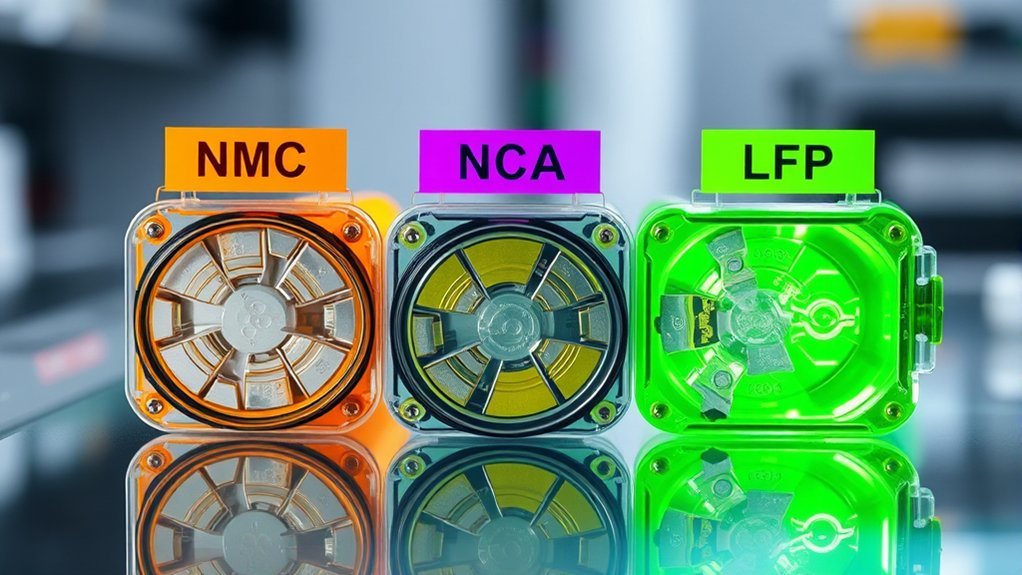
Lithium Nickel Manganese Cobalt (NMC) batteries are renowned for their balanced performance characteristics, making them a popular choice in electric vehicles. They offer high energy density and stable cycle life, supporting longer ranges and durability. Their performance is influenced by the precise ratio of nickel, manganese, and cobalt, which optimizes capacity and safety. However, their reliance on cobalt raises concerns about ethical sourcing and environmental impact, especially regarding battery recycling. Recycling NMC batteries presents challenges due to complex material recovery processes, but improving recycling efficiency can reduce environmental footprint. Overall, NMC batteries strike a favorable balance between performance and sustainability considerations, but ongoing advancements in recycling technologies are vital to mitigating environmental impacts associated with their use.
What Are the Advantages and Disadvantages of Lithium Iron Phosphate (LiFePO₄) Batteries?
LiFePO₄ batteries offer several notable advantages rooted in their chemical stability and safety profile. Their robust thermal stability reduces the risk of thermal runaway, making them safer for various applications. Additionally, their longer cycle life enhances durability, and their environmentally friendly chemistry simplifies battery recycling processes.
LiFePO₄ batteries are safer, more durable, and environmentally friendly due to their stable chemistry and thermal stability.
Key benefits include:
- Lower manufacturing costs due to less complex production processes compared to other chemistries.
- Enhanced safety profile minimizes the need for extensive safety systems.
- Improved battery recycling prospects because of the stable, non-toxic materials used.
However, these batteries also have disadvantages. They typically have lower energy density, which can limit range for EVs. Furthermore, their slower charging rates and relatively higher initial costs might impact widespread adoption.
How Do Lithium Cobalt Oxide (LCO) Batteries Differ From Others?
Lithium cobalt oxide (LCO) batteries are distinguished by their high energy density, making them ideal for compact applications like smartphones and laptops. However, this advantage comes with concerns over safety and thermal stability compared to other chemistries such as LiFePO₄. Understanding these differences is vital for evaluating their suitability in various EV contexts.
Energy Density Differences
While lithium cobalt oxide (LCO) batteries are widely used in portable electronics, their energy density substantially influences their suitability for various applications. LCO batteries typically offer energy densities around 150-200 Wh/kg, limiting their use in larger-scale EVs. In comparison, lithium nickel manganese cobalt oxide (NMC) and lithium iron phosphate (LiFePO4) batteries provide higher energy densities, enhancing range and performance. Key factors include:
- Material Composition: LCO’s high cobalt content boosts energy density but complicates battery recycling and raises environmental impact concerns.
- Trade-offs: Higher energy density often correlates with reduced thermal stability, affecting safety.
- Environmental Impact: Cobalt extraction has significant ecological and ethical implications, emphasizing the need for sustainable recycling practices to mitigate environmental harm.
Safety and Stability
How do Lithium Cobalt Oxide (LCO) batteries compare to other chemistries regarding safety and stability? LCO batteries exhibit high energy density but are comparatively less stable, especially under thermal stress, increasing risks of thermal runaway and fires. Their chemical composition makes them more sensitive to overcharging and mechanical damage, demanding robust battery management systems. When considering environmental impact, LCO batteries pose challenges in battery recycling due to cobalt’s toxicity and scarcity, complicating sustainable disposal. Other chemistries, like lithium iron phosphate (LFP), offer enhanced stability and reduced safety risks but at lower energy densities. Ultimately, while LCO batteries excel in energy density, their safety and environmental concerns necessitate careful handling, recycling, and consideration of alternative chemistries for safer, more sustainable applications.
Which Lithium Battery Chemistry Offers the Best Balance of Cost and Longevity?
Determining the most suitable lithium battery chemistry for balancing cost and longevity involves examining the trade-offs inherent in each option. Lithium iron phosphate (LiFePO4) batteries often provide the best overall balance, with longer cycle life and lower costs due to their stability and widespread supply chain. Key considerations include:
LiFePO4 batteries offer optimal balance of cost, longevity, and sustainability for widespread EV adoption.
- Battery recycling: LiFePO4’s simpler chemistry facilitates more sustainable recycling processes, reducing long-term costs.
- Supply chain stability: Abundant raw material availability for LiFePO4 enhances supply chain resilience and cost predictability.
- Cost-to-longevity ratio: These batteries typically offer lower upfront costs with extended cycle life, making them a cost-effective choice for EV applications.
While other chemistries may excel in specific areas, LiFePO4’s balance of affordability, durability, and recyclability makes it the most viable for widespread adoption.
How Do Safety Profiles Vary Across Different EV Lithium Chemistries?
The thermal stability of lithium chemistries considerably influences their safety profiles, with some materials more prone to heat-induced instability than others. Understanding the risk of thermal runaway across different chemistries is critical, as it directly impacts battery safety during operation and failure modes. Analyzing these thermal behavior differences allows us to evaluate how each chemistry manages safety under extreme conditions.
Thermal Stability Differences
Thermal stability is a vital factor influencing the safety profiles of different EV lithium chemistries, as it determines how well a battery resists thermal runaway and degradation under abuse conditions. Variations in thermal stability directly impact safety, battery recycling, and environmental impact. For instance:
- Lithium Iron Phosphate (LiFePO₄) exhibits superior thermal stability, reducing risks of thermal runaway and easing disposal concerns.
- NMC (Nickel Manganese Cobalt) chemistries tend to have lower thermal stability, increasing safety challenges and potential environmental hazards during recycling.
- Solid-state batteries promise enhanced stability, potentially minimizing safety and environmental risks by reducing flammable electrolyte use.
Understanding these differences is essential for evaluating the lifecycle safety and environmental footprint of EV batteries, shaping future sustainable solutions.
Risk of Thermal Runaway
Different lithium chemistries exhibit varying susceptibilities to thermal runaway, directly influencing their safety profiles in EV applications. Lithium Nickel Manganese Cobalt (NMC) batteries generally have moderate risk, but their complex chemistry poses manufacturing challenges impacting safety consistency. Lithium Iron Phosphate (LiFePO4) batteries show lower risk due to stable thermal properties, yet recycling processes are more straightforward. Conversely, Lithium Cobalt Oxide (LCO) batteries are more prone to thermal runaway, demanding rigorous safety controls. The table below summarizes these differences:
| Chemistry | Thermal Runaway Risk | Key Safety Considerations |
|---|---|---|
| NMC | Moderate | Manufacturing complexity influences safety |
| LiFePO₄ | Low | Easier battery recycling, stable chemistry |
| LCO | High | Higher safety controls needed, recycling challenges |
What Factors Should Manufacturers Consider When Choosing a Battery Chemistry?
When selecting a battery chemistry for EV applications, manufacturers must carefully evaluate several critical factors to optimize performance, safety, and cost-effectiveness. Key considerations include:
- Energy density and power output, influencing vehicle range and acceleration capabilities.
- Environmental impact and battery recycling, which determine sustainability and lifecycle management.
- Cost and supply chain stability, affecting production scalability and long-term viability.
Choosing the appropriate chemistry requires balancing these factors to minimize environmental footprint while ensuring safety and performance. For instance, chemistries with high energy density may pose challenges for recycling, impacting sustainability goals. Manufacturers must also consider the availability of raw materials, potential safety risks like thermal runaway, and the overall lifecycle costs. Ultimately, a holistic evaluation supports the development of safer, more sustainable EV batteries that align with market and environmental demands.
How Will Emerging Lithium Battery Chemistries Impact Future EV Designs?
Emerging lithium battery chemistries are poised to substantially reshape future EV designs by addressing current limitations and enabling new performance potentials. Advances in chemistries like solid-state and lithium-silicon aim to improve energy density, safety, and longevity, which directly influence vehicle architecture and component integration. These innovations can reduce the dependency on scarce materials, easing supply chain constraints, and facilitate more efficient battery recycling processes by simplifying material recovery. As chemistries evolve, manufacturers can optimize form factors for improved vehicle aerodynamics and weight distribution. Additionally, sustainable practices, such as streamlined battery recycling, become integral to design strategies, ensuring resource efficiency and environmental responsibility. Overall, these emerging chemistries will drive more durable, efficient, and adaptable EV architectures suited for diverse driving needs.
Which Lithium Chemistry Is Best Suited for Different EV Use Cases?
Selecting the most suitable lithium chemistry for an electric vehicle depends on the specific performance requirements and use case scenarios. Different chemistries excel in distinct areas:
- LFP (Lithium Iron Phosphate) is ideal for short-range, cost-sensitive applications due to its thermal stability and long cycle life, facilitating easier battery recycling and fewer manufacturing challenges.
- NMC (Nickel Manganese Cobalt) offers higher energy density, suitable for long-range EVs, but faces increased manufacturing complexity and resource constraints.
- Solid-State Batteries promise rapid charging and enhanced safety for high-performance use cases, yet they introduce significant manufacturing hurdles and scalability issues.
Understanding these distinctions helps optimize design choices aligned with use case demands, balancing performance, sustainability, and manufacturing feasibility.
Frequently Asked Questions
How Do Different Lithium Chemistries Affect EV Charging Times?
Different lithium chemistries influence EV charging times by affecting battery longevity and cost efficiency; for example, NMC batteries charge faster but may degrade quicker, while LFP batteries offer longer lifespan, balancing faster charging with durability for peak performance.
What Are the Environmental Impacts of Each Lithium Battery Chemistry?
Imagine a hypothetical case where LFP batteries reduce resource extraction and emissions due to stricter environmental regulations; this highlights how different lithium chemistries impact resource sustainability and environmental footprints, guiding us toward more sustainable EV battery solutions.
How Does Temperature Influence the Performance of Various Lithium Chemistries?
Temperature impacts lithium chemistries by affecting thermal stability and electrochemical efficiency; higher temperatures often enhance performance temporarily but risk instability, while lower temperatures reduce efficiency, highlighting the need for thermal management to optimize battery longevity and safety.
Are There Recycling Challenges Specific to Certain Lithium Battery Types?
We find recycling challenges vary by lithium battery type, as different chemistries experience distinct degradation patterns affecting recycling processes. Certain chemistries, like NMC, complicate separation, while others, like LFP, allow more straightforward, efficient recycling due to uniform material composition.
What Innovations Are Emerging in Lithium Battery Chemistry for EVS?
We see emerging innovations like solid-state batteries and silicon anodes, which enhance energy density and safety. These advancements promise better performance and longevity for EVs, driving forward the development of more efficient, durable, and cost-effective lithium battery chemistries.
Conclusion
In essence, understanding these chemistries is vital for optimizing EV design and performance. NMC batteries dominate with about 70% of the market, thanks to their high energy density, but LFP’s safety and longevity make it increasingly attractive for cost-sensitive applications. Emerging solid-state tech promises further safety and efficiency gains, potentially revolutionizing the industry. As battery chemistry advances, manufacturers must carefully balance performance, safety, and sustainability to meet evolving market demands.