Some might assume that a swollen lithium polymer battery is merely an inconvenience, but in reality, it poses serious safety risks that cannot be overlooked. The internal pressure can lead to rupture or thermal runaway, risking fires or chemical leaks. Handling or ignoring such signs can result in dangerous consequences. Understanding these hazards is essential for safe device management and proper disposal—something everyone with such batteries should be fully aware of.
Key Takeaways
- Swollen lithium polymer batteries pose a risk of rupture and chemical leaks, potentially causing burns or injuries.
- Internal pressure from swelling can lead to thermal runaway, increasing fire and explosion hazards.
- Puncturing or damaging a swollen battery can release toxic chemicals and ignite fires.
- Swelling indicates compromised internal chemistry, reducing battery safety and performance.
- Handling or disposing of swollen batteries improperly can endanger people and the environment.
What Causes Lithium Polymer Batteries to Swell?
Lithium polymer batteries swell primarily due to internal chemical reactions that produce gases, such as lithium dendrites or electrolyte decomposition. During battery manufacturing, impurities or improper assembly can lead to unstable internal chemistry, increasing the likelihood of gas formation. Additionally, storage conditions greatly impact swelling risk; exposing batteries to high temperatures or humidity accelerates electrolyte breakdown and dendrite growth. These reactions generate pressure inside the battery casing, causing swelling. It’s essential to follow proper storage protocols and guarantee high-quality manufacturing standards to minimize these risks. Understanding these factors helps us recognize that swelling isn’t solely a sign of aging but can also result from manufacturing flaws or poor storage practices, which can compromise safety and battery longevity.
Recognizing the Signs of a Swollen Battery
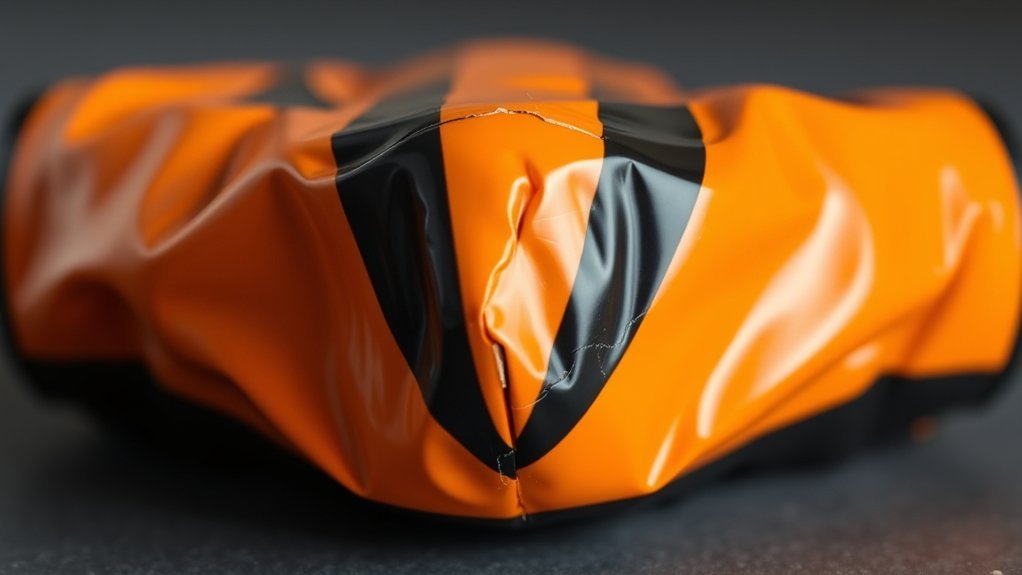
When a lithium polymer battery begins to swell, it often shows visible signs that should not be ignored. You might notice the device feels unusually hot or the casing appears bulging or warped. Swelling is a clear indicator that the battery’s internal chemistry is compromised, which can considerably shorten its lifespan. Other warning signs include a distorted shape, misaligned seams, or difficulty fitting the device’s cover back on properly. Recognizing these signs early is essential for swelling prevention. Ignoring them can lead to dangerous failures, including leaks or fires. Regularly inspecting your battery for these visual cues helps maintain safety and extends overall battery lifespan. Prompt action upon noticing swelling can prevent more severe damage and guarantee safer device operation.
Why Is a Swollen Battery Dangerous?
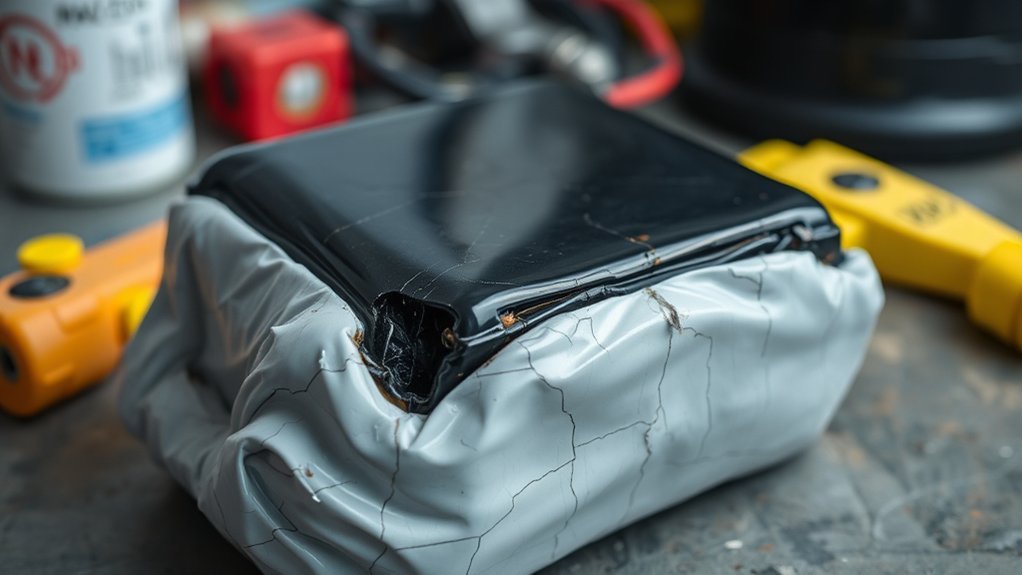
A swollen battery poses significant safety risks because the internal pressure can cause the cell to rupture unexpectedly. This rupture may release hazardous chemicals and pose fire hazards. The swelling often results from issues in battery chemistry, such as gas buildup from electrochemical reactions, or manufacturing defects that weaken the cell structure. These factors compromise the integrity of the battery, increasing the risk of thermal runaway.
- Gas accumulation from faulty battery chemistry causes pressure buildup
- Manufacturing defects create weak points, heightening rupture risk
- Internal pressure can lead to leakage of dangerous chemicals
- Rupture or fire hazards pose safety threats to users and devices
How to Safely Handle a Swollen Lithium Polymer Battery?
When handling a swollen lithium polymer battery, safety must be our top priority. We need to follow strict disposal procedures and take handling precautions to prevent accidents or injuries. Proper knowledge and caution are essential to mitigate the risks associated with these compromised batteries.
Proper Disposal Procedures
Handling a swollen lithium polymer battery requires immediate caution to prevent safety hazards. Proper disposal is essential due to the potential for thermal runaway and chemical leakage. Always wear protective gloves and eye protection when handling. First, isolate the battery in a non-conductive container and avoid exposing it to extreme storage conditions that could exacerbate damage. Do not puncture or dismantle the battery, as this risks releasing hazardous chemicals. Instead, contact local hazardous waste disposal facilities or recycling centers specializing in battery chemistry. Confirm the battery is stored in a cool, dry place away from flammable materials until disposal. Proper disposal procedures minimize environmental impact and health risks associated with lithium polymer batteries. Remember, safety depends on adhering to responsible handling and disposal standards.
Handling Precautions
To safely handle a swollen lithium polymer battery, we must prioritize protective measures that minimize the risk of further damage or hazardous exposure. Understanding the battery chemistry and swelling mechanisms is essential, as swelling indicates internal damage typically caused by gas buildup from electrolyte decomposition or overcharging. We should avoid puncturing or applying pressure, which could trigger thermal runaway. Instead, use insulated tools and wear protective gloves and eye protection. Move the battery to a well-ventilated area away from combustible materials. Handling should be done with caution to prevent leaks or fire hazards. Recognizing the signs of swelling and understanding its causes help us assess risk and respond appropriately, always erring on the side of safety when dealing with compromised lithium polymer batteries.
Proper Disposal and Recycling of Swollen Batteries
Proper disposal and recycling of swollen lithium polymer batteries are critical to preventing environmental contamination and safety hazards. Swollen batteries pose risks due to compromised battery chemistry, which can lead to fires or leaks if mishandled. It’s crucial to follow established recycling programs designed for lithium polymer cells, guaranteeing that hazardous materials are safely recovered and processed.
Proper disposal of swollen lithium polymer batteries prevents hazards and environmental damage through safe recycling practices.
Key steps include:
- Contacting authorized recycling centers familiar with lithium polymer batteries.
- Avoiding disposal in regular trash or recycling bins.
- Using certified collection points for damaged batteries.
- Educating oneself on local regulations regarding battery disposal.
Adhering to these precautions guarantees that the battery’s chemical components are handled responsibly, reducing potential harm to ecosystems and human health. Proper disposal is a fundamental part of safe battery management.
Preventing Battery Swelling: Tips for Safe Usage
While using lithium polymer batteries, we must remain vigilant to prevent swelling, which often results from overcharging, excessive heat, or physical damage. Proper battery storage is crucial; store batteries in cool, dry environments away from direct sunlight and extreme temperatures to minimize thermal stress. Establishing safe charging habits is essential—use chargers compatible with the battery’s specifications and avoid leaving devices plugged in after reaching full charge. Regularly inspecting batteries for signs of swelling or damage helps catch issues early. Avoid exposing batteries to mechanical shocks or punctures. Maintaining ideal charging practices, combined with appropriate storage, considerably reduces the risk of swelling. Adhering to these precautions ensures safer operation and prolongs battery lifespan, preventing potentially hazardous swelling incidents.
When to Replace Your Lithium Polymer Battery
Knowing when to replace your lithium polymer battery is critical for maintaining safety and performance. Over time, battery capacity diminishes due to factors like age, usage, and degradation from manufacturing processes. A significant drop in capacity indicates it’s time for replacement, especially if the battery no longer holds a charge or discharges rapidly. Swelling, leaks, or unusual heat are clear warning signs linked to compromised battery integrity. Battery manufacturing flaws can accelerate deterioration, making early replacement necessary. Regular monitoring of battery performance helps prevent failures.
- Noticeable reduction in battery capacity during normal use
- Excessive swelling or physical deformation
- Frequent overheating or rapid discharge
- Visible damage or leaks from the battery casing
Frequently Asked Questions
Can a Swollen Lithium Polymer Battery Catch Fire Spontaneously?
A swollen lithium polymer battery can catch fire spontaneously due to battery venting and chemical leakage, which create hazardous conditions. We advise immediate discontinuation of use and proper disposal to prevent potential fires and chemical exposure.
How Long Does It Take for a Battery to Swell After Damage?
A damaged lithium polymer battery can swell within hours to days, depending on severity. To prevent swelling, avoid battery repair shortcuts, handle with care, and follow strict swelling prevention protocols. Delays risk catastrophic failure and safety hazards.
Are Some Devices More Prone to Battery Swelling Than Others?
Certain device types, especially those with high power demands or frequent charging cycles, are more prone to battery swelling due to usage patterns. We recommend cautious handling, regular inspections, and avoiding overcharging to mitigate risks effectively.
Can Environmental Factors Cause Lithium Polymer Batteries to Swell?
Environmental exposure, such as extreme temperatures and humidity, can cause lithium polymer batteries to swell, especially if manufacturing defects are present. We advise caution, as these factors can accelerate internal damage, risking safety and device integrity.
Is It Safe to Continue Using a Slightly Swollen Battery Temporarily?
We advise against using a slightly swollen lithium polymer battery temporarily; it poses safety risks. Proper battery disposal and swelling prevention measures are vital, and replacing it promptly minimizes hazards and guarantees device safety and performance.
Conclusion
In our experience, understanding the risks of swollen lithium polymer batteries is vital—sometimes, a small bulge is the first sign of a hidden danger. We’ve seen how ignoring these signs can lead to dangerous failures, emphasizing the significance of proper handling and disposal. Staying vigilant not only protects your device but also guarantees safety for everyone around you. Remember, a cautious approach can prevent unexpected disasters, turning a coincidence into a safeguard against potential hazards.