Ensuring safe storage of lithium batteries is critical to preventing accidents and maintaining their lifespan. We must understand the specific requirements for different battery types, select appropriate environments, and follow strict handling protocols. Proper organization, regular inspections, and adherence to manufacturer guidelines are essential, but implementing these practices involves intricate considerations. The next steps involve examining each aspect in detail to establish a thorough safety framework that minimizes risks and maximizes efficiency.
Key Takeaways
- Store batteries in temperature-controlled, well-ventilated areas away from heat, sparks, and flammable materials.
- Keep batteries at 30-50% charge and regularly monitor environmental conditions with sensors.
- Use non-conductive, fire-resistant containers and organize batteries by type, voltage, and charge level.
- Handle batteries with protective gear, secure during transport, and follow safety standards like OSHA and IEC.
- Have emergency response plans for fires or leaks, using appropriate extinguishers and containment methods.
The Importance of Proper Lithium Battery Storage Safety
Why is proper storage of lithium batteries so critical for safety? Incorrect storage can lead to thermal runaway, fires, or explosions, posing serious hazards. Following manufacturer guidelines ensures that batteries are stored in ideal conditions, reducing risks associated with temperature fluctuations, physical damage, and moisture exposure. Proper storage also facilitates safe battery recycling, preventing environmental contamination and harmful exposure during disposal. Adhering to these guidelines minimizes the likelihood of short circuits, leaks, or other failure modes that could compromise safety. By strictly observing manufacturer instructions, we maintain the integrity of the battery’s chemistry and structure, guaranteeing safe handling and disposal. Overall, proper storage is vital for protecting personnel, property, and the environment from the dangers inherent in lithium battery management.
Understanding Lithium Battery Types and Their Storage Needs
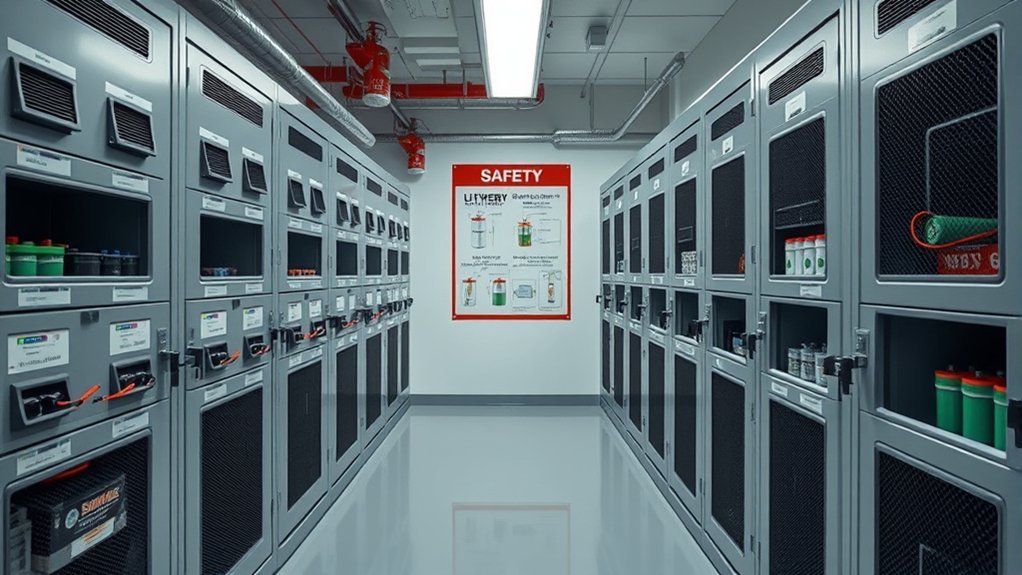
Understanding the different types of lithium batteries is essential because each has unique storage requirements that impact safety and performance. Lithium-ion, lithium-polymer, and lithium iron phosphate batteries vary in chemistry, affecting their ideal storage conditions. Proper handling minimizes risks such as thermal runaway and prolongs battery lifespan. Additionally, understanding battery recycling processes supports sustainable practices, reducing environmental impact tied to lithium mining and disposal.
- Lithium-ion batteries require stable, cool environments to prevent capacity degradation.
- Lithium-polymer batteries demand low humidity to maintain structural integrity.
- Lithium iron phosphate batteries are more thermally stable but still need temperature regulation.
- Knowledge of battery chemistry informs safe storage and disposal practices, supporting responsible lithium resource management.
Choosing the Right Storage Location for Lithium Batteries
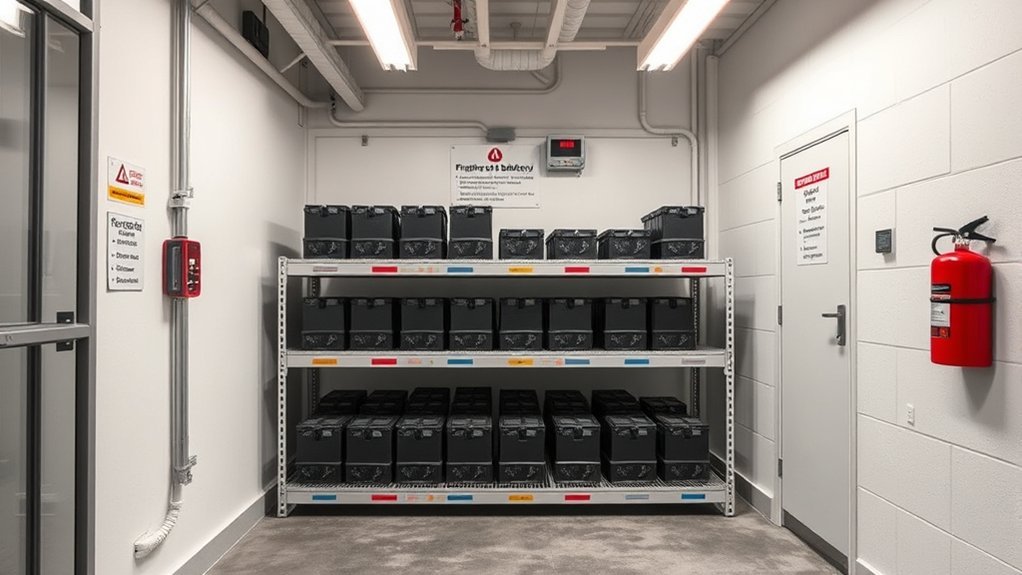
When selecting a storage location for lithium batteries, it’s crucial to prioritize safety, environmental control, and accessibility. The area should be well-ventilated and free from sources of heat, sparks, or open flames to prevent thermal hazards. Storage container types must be durable, non-conductive, and compliant with safety standards, such as fire-resistant enclosures designed for lithium batteries. Proper containment minimizes the risk of damage and reduces the potential for hazardous leaks. Additionally, proximity to battery recycling facilities ensures safe disposal when batteries reach end-of-life, supporting environmental sustainability. Accessibility is essential for regular inspections and maintenance, but handling should be restricted to trained personnel. By carefully selecting the location and appropriate containers, we mitigate risks and promote safe, compliant lithium battery storage practices.
Ideal Conditions for Lithium Battery Storage: Temperature and Humidity
Maintaining ideal temperature and humidity levels is critical for lithium battery longevity and safety. We recommend keeping storage temperatures between 20°C and 25°C and humidity levels below 50% to prevent degradation. Additionally, avoiding temperature fluctuations minimizes stress on the battery cells, ensuring consistent performance over time.
Optimal Temperature Range
Lithium batteries perform ideally when stored within a specific temperature range, as deviations can considerably impact their lifespan and safety. The essential storage temperature is generally between 0°C and 25°C (32°F to 77°F). Exposure to temperatures outside this range accelerates chemical degradation, increases risk of thermal runaway, and reduces overall battery capacity. Temperature fluctuations can cause internal stress, degrading the electrode materials over time. Humidity control is also vital, but maintaining stable temperatures minimizes the effects of moisture-related corrosion.
- Keep storage environments within the recommended temperature range at all times
- Avoid rapid temperature changes that induce thermal stress
- Monitor ambient conditions regularly for temperature consistency
- Incorporate insulation to buffer against external temperature fluctuations
Humidity Level Control
Controlling humidity levels is essential for guaranteeing the longevity and safety of lithium batteries during storage, as excessive moisture can accelerate corrosion and degrade internal components. Effective humidity monitoring allows us to maintain ideal conditions, typically between 20-50% relative humidity. Incorporating moisture barriers in storage containers prevents ambient moisture infiltration, reducing exposure to fluctuating humidity levels. Precise control minimizes the risk of internal electrochemical deterioration and external corrosion, which can compromise battery integrity and safety. We recommend using sealed, humidity-controlled environments with desiccants or dehumidifiers for added protection. Regular humidity monitoring ensures conditions remain within safe parameters, helping to extend battery lifespan and maintain performance. Proper humidity level control is a critical aspect of thorough lithium battery storage protocols.
Avoiding Temperature Fluctuations
Fluctuations in temperature can considerably impair lithium battery performance and safety during storage. Maintaining temperature stability is essential to prevent capacity loss, reduce the risk of thermal runaway, and prolong battery lifespan. Sharp temperature changes induce stress on internal components, compromising integrity. Effective climate control systems help regulate ambient conditions, minimizing temperature swings.
- Keep storage environments within the recommended temperature range, typically 15°C to 25°C.
- Use insulated containers or climate-controlled rooms to stabilize temperature fluctuations.
- Avoid exposure to direct sunlight or sources of heat, which can cause rapid temperature spikes.
- Regularly monitor storage conditions with precise sensors to ensure consistent temperature stability.
Adhering to these practices ensures batteries remain within ideal thermal parameters, reducing safety risks and maintaining performance over time.
How to Properly Prepare Lithium Batteries for Storage
To guarantee lithium batteries remain healthy during storage, we recommend charging them to approximately 40-60% capacity, which minimizes capacity loss over time. Additionally, storing them in a cool, stable environment helps prevent thermal degradation. Proper preparation includes these steps to maintain battery integrity for future use.
Charge to Optimal Level
Have you ever wondered how to prepare lithium batteries for long-term storage effectively? Properly charging to an ideal level is essential to maintain battery health and safety. Lithium batteries should be stored at approximately 40-60% charge, which minimizes capacity loss and prevents over-discharge. Confirming the battery is at this level reduces risks during storage and makes future use more efficient. Before storage, avoid fully charging or completely depleting the battery, as both can accelerate degradation. For disposal or recycling, contact authorized battery recycling facilities or use designated charging stations to ensure environmentally responsible handling. Maintaining this charge level supports safe storage practices and facilitates battery recycling when the time comes. Proper charge management ultimately extends battery lifespan and promotes sustainable usage.
Store in Cool Area
Why is it important to store lithium batteries in a cool environment? Temperature markedly impacts battery longevity and safety. Elevated temperatures accelerate chemical reactions, increasing the risk of capacity loss, thermal runaway, and potential fire hazards. Maintaining a cool storage area, ideally between 20-25°C, slows these processes, preserving battery integrity. Proper storage also involves selecting suitable storage container materials that are non-conductive, corrosion-resistant, and flame-retardant to prevent damage and hazards. When batteries reach the end of their lifecycle or are no longer functional, responsible battery recycling is essential to prevent environmental contamination. Ensuring a cool environment, appropriate container materials, and proper recycling practices collectively enhance safety, prolong battery life, and promote environmental stewardship.
Best Practices for Organizing and Securing Stored Batteries
Proper organization and security of stored lithium batteries are critical to guaranteeing safety and maintaining their longevity. To achieve this, systematically categorize batteries by voltage, chemistry, and charge level, reducing risks associated with accidental activation or thermal events. Secure storage containers should be fire-resistant and equipped with appropriate ventilation. Avoid common lithium battery myths that suggest storing batteries with fully charged cells; instead, store them at 30-50% charge for ideal preservation. Additionally, implement protocols for safe battery recycling, preventing environmental hazards and potential safety issues. Regular inventory audits and documentation help track battery condition and expiration dates. These practices ensure that batteries remain safe, functional, and compliant with safety standards, ultimately reducing fire risks and supporting responsible disposal and recycling processes.
Safety Measures for Handling and Accessing Stored Lithium Batteries
Handling and accessing stored lithium batteries demands strict adherence to safety protocols to prevent accidents and damage. Proper procedures include wearing protective gear, ensuring proper ventilation, and using insulated tools. Additionally, compliance with regulatory standards is essential for safe handling and environmental responsibility, especially during battery recycling processes. To reinforce safety, consider this table:
| Step | Safety Measure | Regulatory Aspect |
|---|---|---|
| Initial Access | Use insulated gloves and tools | Follow OSHA and IEC standards |
| Transport & Handling | Secure batteries to prevent movement | Adhere to transportation laws |
| Disposal & Recycling | Verify proper disposal channels | Comply with local waste laws |
Adhering to these guidelines guarantees safety, regulatory compliance, and environmentally responsible battery management.
Recognizing and Preventing Common Lithium Battery Storage Hazards
Recognizing and preventing common lithium battery storage hazards is essential for maintaining safety and avoiding incidents. Improper storage can lead to thermal runaway, chemical instability, or environmental risks. To mitigate these hazards, guarantee batteries are stored in well-ventilated, temperature-controlled environments to maintain chemical stability. Avoid physical damage, such as punctures or crushing, which can initiate fires or leaks. Regularly inspect batteries for swelling, corrosion, or corrosion, and prioritize proper procedures for battery recycling to minimize environmental hazards. Additionally, storing batteries away from flammable materials reduces fire risk. Proper labeling and segregation prevent accidental misuse or cross-contamination, which could compromise safety. Implementing these measures preserves battery integrity and safety, reducing potential hazards associated with lithium battery storage.
What to Do in Case of a Lithium Battery Fire or Leak?
When a lithium battery fire or leak occurs, immediate and informed actions are vital to minimize damage and guarantee safety. Our first step is to activate emergency response protocols promptly. Use non-flammable, insulating materials to contain leaked electrolyte and prevent its spread. For fires, employ a Class D or Lithium Fire extinguisher, avoiding water, which can worsen the situation. The table below illustrates essential containment procedures:
| Step | Description |
|---|---|
| Isolate the battery | Move to a well-ventilated area, away from ignition sources |
| Use appropriate extinguishers | Deploy Class D or lithium-specific extinguishers |
| Avoid water contact | Water reacts with lithium, exacerbating the fire |
| Ventilate the area | Increase airflow to disperse hazardous fumes |
Adhering to these protocols guarantees effective containment and safety during emergencies.
Frequently Asked Questions
How Often Should Stored Lithium Batteries Be Inspected?
We recommend inspecting stored lithium batteries every three to six months, focusing on battery maintenance and storage techniques. Regular checks help detect potential issues early, ensuring safe storage and ideal performance while preventing hazards associated with prolonged inactivity.
Can Lithium Batteries Be Stored Outdoors Safely?
Storing lithium batteries outdoors is like leaving a delicate plant in harsh weather; outdoor exposure risks damage. We recommend proper temperature regulation, shielding from elements, and monitoring conditions to guarantee safety and battery longevity.
What Are Signs of Deteriorating Lithium Batteries During Storage?
We observe signs of deteriorating lithium batteries during storage through battery aging indicators like reduced capacity, increased internal resistance, swelling, or thermal effects such as heat generation, which signal compromised integrity and potential safety hazards.
Are There Specific Storage Containers Recommended for Lithium Batteries?
We recommend using fire-resistant containers with a dedicated battery compartment for lithium batteries, ensuring secure isolation and heat containment. These specialized storage units minimize risk, prevent thermal runaway, and comply with safety standards for ideal lithium battery safety.
How Does Storage Duration Impact Lithium Battery Safety?
Prolonged storage can gently influence lithium battery safety by affecting battery temperature and voltage stability, which may lead to capacity loss or safety risks over time if not monitored. Proper storage duration guarantees ideal performance and safety.
Conclusion
By adhering to these best practices, we guarantee lithium batteries remain safe and reliable, safeguarding lives and the environment. Proper storage isn’t just a protocol—it’s a commitment to responsibility, like a shield against potential disasters. When we prioritize safety, we turn caution into confidence, protecting everyone around us. Let’s stay vigilant and diligent, transforming safety measures into a steadfast safeguard—because in this, our diligence is the true power that keeps us secure.