Ensuring the safe use of lithium battery chargers is crucial to preventing potential hazards such as fires, explosions, and environmental damage. Proper procedures, including selecting the right charger and monitoring the charging process, are essential. Understanding these safety measures can greatly extend battery life and reduce risks. We will explore key safety tips that are essential for anyone handling lithium batteries, starting with the importance of choosing the appropriate equipment and recognizing warning signs during charging.
Key Takeaways
- Use certified chargers compatible with your lithium battery to prevent overcharging and damage.
- Always connect and disconnect terminals carefully, ensuring they are clean, dry, and properly aligned.
- Charge batteries in well-ventilated, fire-resistant areas away from flammable materials.
- Monitor for signs of overheating, swelling, or unusual odors, and disconnect immediately if detected.
- Store batteries properly, avoiding extreme temperatures, physical damage, and over-discharging to extend lifespan.
How Lithium Batteries Work and Why Safety Matters
Lithium batteries operate through the movement of lithium ions between the anode and cathode within a charged electrolyte, storing and releasing energy efficiently. This process relies on specific battery chemistry that enables high energy density, allowing for compact, powerful cells. The energy density is a key factor in their widespread use, but it also underscores the importance of safety. Variations in temperature, manufacturing defects, or improper handling can cause thermal runaway, risking fires or explosions. Understanding how these batteries function helps us appreciate their vulnerabilities, emphasizing the need for proper precautions. Safe operation depends on maintaining ideal conditions and avoiding damage, ensuring the delicate balance of battery chemistry remains stable for reliable, safe energy storage and release.
Choosing the Right Charger for Your Lithium Battery
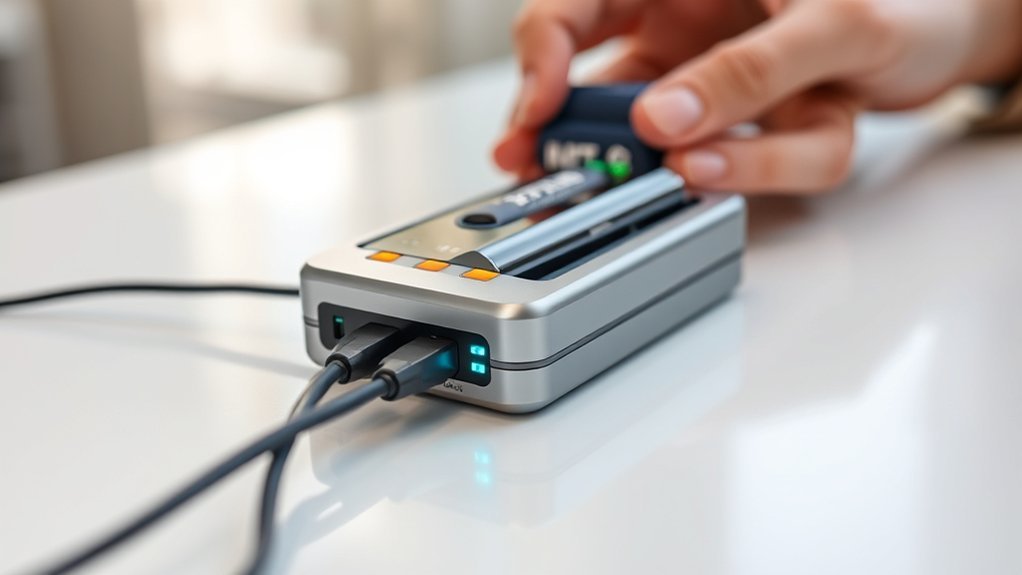
Selecting the appropriate charger is essential to guarantee the safety and longevity of your lithium battery. A compatible charger ensures proper charging speed, preventing overcurrent that can damage the battery or reduce its lifespan. When choosing a charger, verify it matches the battery’s voltage and current specifications, as mismatched chargers can lead to safety hazards. Additionally, a quality charger supports battery recycling protocols, promoting environmentally responsible disposal once the battery reaches end-of-life. Ideal charging speed not only minimizes thermal stress but also preserves battery capacity over time. Using the correct charger reduces the risk of thermal runaway and other safety issues, ensuring efficient energy transfer. Always select chargers certified by relevant safety standards to maintain safe and sustainable battery operation.
How to Properly Connect and Disconnect Your Charger

Properly connecting and disconnecting your charger is essential to maintaining battery safety and performance. For connecting procedures, verify the charger and battery terminals are clean and dry. Align the positive terminal of the charger with the positive terminal of the battery, then securely attach the connector, avoiding excessive force that could damage connectors. Confirm a firm, stable connection before initiating charging. When disconnecting, follow precise disconnecting techniques: power off the charger before removal, then carefully detach the connectors, starting with the negative terminal, to prevent sparks or short circuits. Always handle connectors by the casing, not the wires, to prevent damage. Proper procedures minimize risks, ensure efficient charging, and extend battery lifespan.
Recognizing and Preventing Overheating During Charging
Monitoring charging temperatures is essential to prevent overheating, as elevated temperatures can compromise battery integrity. Using appropriate charging equipment guarantees consistent current flow and reduces thermal risk. Recognizing signs of overheating, such as swelling or unusual heat, allows for immediate action to avoid safety hazards.
Monitoring Charging Temperatures
Keeping a close eye on charging temperatures is essential to prevent overheating, which can compromise battery safety and lifespan. Effective temperature regulation is a core component of thermal management during charging, ensuring the battery remains within safe operational limits. Overheating signals that heat dissipation is insufficient, risking thermal runaway or capacity loss. Monitoring devices should include temperature sensors that provide real-time data, enabling prompt response to temperature fluctuations. Proper thermal management involves maintaining consistent heat flow away from the battery, preventing hotspots that accelerate degradation. By actively tracking charging temperatures and implementing robust temperature regulation strategies, we can considerably reduce safety risks and extend battery longevity. Accurate thermal management is fundamental to safe, efficient lithium battery charging practices.
Using Proper Charging Equipment
Using the correct charging equipment is critical to prevent overheating and guarantee safe lithium battery operation. Always select chargers that match the battery’s voltage and current specifications, as improper equipment can cause excessive heat buildup. Utilize chargers with built-in temperature regulation features to monitor and control heat during charging cycles. Proper equipment reduces the risk of thermal runaway, which can damage batteries and pose safety hazards. Additionally, follow storage best practices to minimize residual heat and degradation when batteries aren’t in use. Implementing effective battery recycling practices ensures damaged or overheated units are disposed of correctly, preventing potential hazards. Consistently using appropriate chargers and adhering to storage guidelines are essential steps in maintaining battery integrity and preventing overheating during charging.
Recognizing Overheating Signs
Recognizing the signs of overheating during charging is essential for maintaining lithium battery safety. Elevated temperature, swelling, or a burnt smell indicate imminent failure and risk of thermal runaway. If these signs occur, immediately disconnect the charger and move the battery to a cool, well-ventilated area. Consistent overheating can damage the battery’s internal structure, complicate recycling processes, and compromise storage precautions. Overheated batteries should never be stored or disposed of with general waste but instead directed to specialized battery recycling facilities. Proper storage precautions—such as avoiding high temperatures and physical damage—help prevent overheating incidents. Monitoring temperature during charging, along with prompt action on early signs, markedly reduces fire hazards and prolongs battery lifespan.
Safe Charging Environment: Tips for a Secure Space
Ensuring a safe charging environment involves selecting a well-ventilated space to prevent heat buildup and reduce the risk of fire. It’s essential to keep chargers away from flammable materials and to place devices on fire-resistant surfaces during charging. These measures minimize potential hazards and promote a secure charging process.
Choose Well-Ventilated Area
A well-ventilated area is essential for safe lithium battery charging, as it helps dissipate heat and reduces the risk of hazardous gas buildup. Proper airflow prevents thermal runaway and minimizes emissions of potentially dangerous gases, which is especially critical in enclosed spaces. When charging batteries indoors, avoid confined environments like indoor gardening setups, where humidity and limited airflow can exacerbate risks. Confirm the space allows for continuous ventilation, reducing gas concentration in case of leaks or thermal events. Additionally, consider nearby activities like battery recycling, which generate heat and fumes; a well-ventilated area safeguards against accumulation. Adequate airflow enhances safety, protects surrounding equipment, and supports responsible disposal practices, ultimately minimizing fire hazards and health risks associated with lithium battery charging.
Keep Away From Flammable Items
Maintaining a safe charging environment requires actively keeping flammable items away from the battery and charging area. Flammable materials, such as paper, cloth, or combustible liquids, greatly increase fire hazards if exposed to heat or sparks. To minimize risk, designate a specific space solely for charging, making sure it’s free of any combustible substances. Keep cords organized to prevent accidental damage or short circuits that could ignite nearby materials. Avoid placing batteries or chargers near curtains, upholstery, or other items that can easily ignite. Regularly inspect the area for potential fire hazards, and discard any flammable materials in proximity. By controlling the environment and removing flammable materials, we reduce the risk of fire hazards and guarantee a safer charging process.
Use Fire-Resistant Surfaces
Using fire-resistant surfaces for charging lithium batteries is a crucial safety measure that minimizes fire hazards in case of thermal runaway or accidental damage. Fire-resistant surfaces provide a stable, non-combustible platform that contains potential fires, preventing them from spreading. Implementing this safety precaution guarantees that any heat generated during charging remains controlled and confined, reducing risk to surrounding objects and individuals. It’s important to select appropriate fire-resistant materials, such as ceramic or specialized fireproof mats, and position batteries on these surfaces during all charging sessions. Proper use of fire-resistant surfaces, combined with other safety precautions, notably enhances the overall safety of charging environments and mitigates the danger of fire-related incidents involving lithium batteries.
Understanding Charging Indicators and When to Stop
Understanding charging indicators is essential for safe lithium battery operation, as they provide real-time information about the battery’s status and health. Proper interpretation guarantees we don’t overcharge or undercharge, optimizing battery life and safety. Indicator lights communicate critical stages of the charging process, including when the battery is fully charged. Monitoring these lights helps us determine the appropriate time to stop charging, preventing potential hazards.
Monitoring charging indicators ensures safe, efficient lithium battery use and prevents hazards.
Key points include:
- Recognizing the change in indicator lights from charging to fully charged
- Avoiding extended charging beyond the recommended charging time
- Noticing any abnormal indicator signals that may indicate faults
- Using charging time estimates as a guideline, but relying primarily on indicator lights for stopping
Accurate interpretation of these signals ensures safe, efficient charging.
Common Mistakes That Can Damage Your Battery or Cause Safety Hazards
Failing to adhere to proper charging practices can lead to significant damage to your lithium battery or pose safety risks. Common mistakes include overcharging, which accelerates capacity loss and increases thermal runaway risk, and improper storage, such as exposing batteries to high temperatures or humidity, which degrades cell integrity. Neglecting storage best practices can cause capacity fade or permanent damage. Additionally, improper disposal or neglecting battery recycling protocols can result in environmental hazards and safety issues. We recommend always using compatible chargers, monitoring charging cycles, and following manufacturer guidelines. Proper storage, ideally in a cool, dry environment, prolongs battery life. Recognizing these risks and assure adherence to recommended practices ensures safety, optimizes battery longevity, and supports responsible battery recycling efforts.
What to Do If Your Battery Overheats or Swells
If your lithium battery begins to overheat or shows signs of swelling, immediate action is critical to prevent potential hazards such as fire or chemical leaks. Battery swelling indicates internal cell failure and compromises safety. To address this, disconnect the battery from power sources and avoid applying pressure or puncturing it. Use protective gear and carefully contain the swollen battery in a non-flammable container away from heat sources. Avoid further use until the issue is resolved. Overheat prevention is essential; regularly monitor temperature during charging and avoid exposing batteries to extreme temperatures. Promptly replacing swollen batteries reduces risk and maintains safety.
- Disconnect power immediately
- Handle with protective gloves and eye protection
- Store in a non-flammable, ventilated container
- Seek professional disposal or replacement
Tips for Extending Your Lithium Battery’s Lifespan Through Safe Charging
To maximize your lithium battery’s lifespan, it’s essential to follow safe charging practices that minimize stress on the cell chemistry. Use chargers that are compatible with your specific battery model, as incompatible chargers can cause overcharging or undercharging, accelerating degradation. Avoid frequent deep discharges and keep the charge level between 20% and 80%, reducing stress on the cells. Proper charger compatibility also ensures appropriate voltage and current regulation, extending battery health. Additionally, prioritize battery recycling when replacing old cells, preventing environmental harm and supporting sustainable practices. Consistent adherence to these safe charging tips preserves capacity over time, reduces the risk of thermal events, and promotes peak performance throughout the battery’s lifespan.
Frequently Asked Questions
Can Using an Incompatible Charger Damage My Lithium Battery?
Using an incompatible charger can damage your lithium battery due to poor battery compatibility and non-compliance with charging regulations, leading to overcharging, overheating, or reduced lifespan. Always verify chargers match the battery’s specifications for safety.
How Often Should I Calibrate My Lithium Battery Charger?
We recommend calibrating your lithium battery charger every three to six months, as proper calibration maintains ideal Battery lifespan and accuracy. Regular calibration frequency ensures reliable charging performance and prevents premature battery degradation, extending overall device longevity.
Are There Specific Storage Conditions That Affect Charging Safety?
Like delicate seeds in a controlled climate, we store lithium batteries in environments with stable temperature and humidity control, because temperature sensitivity and humidity fluctuations can compromise charging safety, leading to potential hazards and battery degradation over time.
What Emergency Steps Should I Take if My Battery Catches Fire?
If a lithium battery catches fire, we prioritize fire prevention by using a Class D fire extinguisher or sand, avoid water, and guarantee emergency response protocols are in place, including alerting fire services and evacuating the area promptly.
Is It Safe to Leave My Lithium Battery Charging Overnight?
We advise against overnight charging because it risks overheating, which can compromise battery longevity and safety. Always monitor charging sessions and use certified chargers to guarantee peak performance and minimize potential hazards.
Conclusion
By prioritizing safety, we protect both our devices and ourselves. Think of a well-charged battery as a calm, steady stream—versus the chaos of overheating or damage, akin to a burst pipe. Vigilance during charging transforms potential hazards into controlled processes, ensuring longevity and safety. When we follow these guidelines, we turn a routine task into a safeguard, preventing disasters and fostering a secure environment for everyone involved.