A hypothetical club run showed a 20% range gain after swapping to a modular LiFePO4 pack with a tuned BMS and active cooling. We’ll look at how energy density, chemistry, and efficiency interact, then quantify parasitic losses and regen benefits. Our approach stays data-driven and optimization-focused, pinpointing where pack design and SOC calibration matter most. If we optimize cooling, wiring, and monitoring, we can push usable energy per cycle while reducing risk, and that trade-off framework is what we’ll unpack next.
Key Takeaways
- Choose high-energy lithium chemistries (e.g., LiFePO4, NMC) with robust BMS to maximize usable capacity and safety.
- Optimize SOC windows, peak power usage, and regenerative braking to minimize voltage drop and heat.
- Implement active thermal management to keep pack and motor temperatures in a safe, efficient range.
- Use modular packs and precise calibration of controllers to reduce parasitic losses and voltage ripple.
- Track range, temps, and cycles to drive data-backed maintenance and continuous range improvements.
Why Lithium Golf-Cart Batteries Are Worth It
Lithium golf-cart batteries are worth it because they deliver higher energy density, longer life, and faster, more flexible charging compared to traditional lead-acid packs. We quantify gains through system-level metrics: energy density up to 2–3x, cycle life extending beyond 2,000–3,000 cycles, and depth-of-discharge utilization that preserves capacity. In practice, this translates to longer intervals between charges and reduced total cost of ownership. We optimize pack sizing, thermal management, and BMS integration to sustain performance under varying loads. Key concerns include lithium safety, which we address with robust protection schemes, venting, and fault diagnostics. Charging habits matter: controlled ramp rates, temperature-aware charging, and schedule alignment with usage patterns maximize efficiency and longevity. Together, these factors justify switching from lead-acid to lithium for improved reliability.
What Determines Golf-Cart Range: Energy Density, Chemistry, and Efficiency
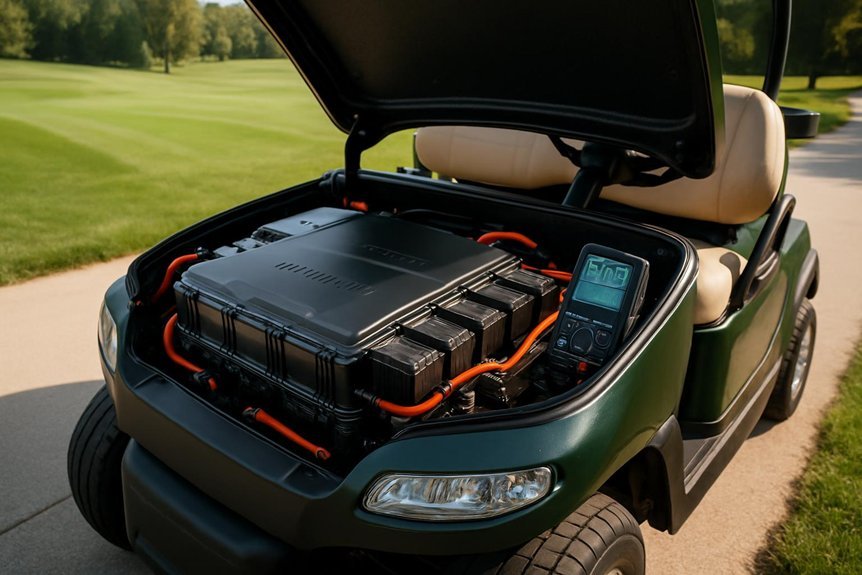
What chiefly determines a golf cart’s range? We quantify range through range estimation models that combine energy capacity, discharge profiles, and load conditions. Energy density sets the physics boundary: higher energy per unit mass or volume yields more usable energy for the same footprint, directly expanding range under identical driving behavior. Chemistry governs charge acceptance, cycle life, and internal resistance, influencing effective capacity at operating temperatures and during high-power bursts. Efficiency reflects how much energy is lost to heating, cabling, and motor/controller integration, and it varies with speed, terrain, and duty cycle. Our focus is on maximizing usable energy while maintaining reliability; we compare chemistries, calibrate state-of-charge algorithms, and optimize pack design to minimize parasitic losses. This disciplined approach sharpens range estimation and informs practical, data-driven improvements.
Practical Tuning to Stretch Miles: Management, Cooling, and Regen
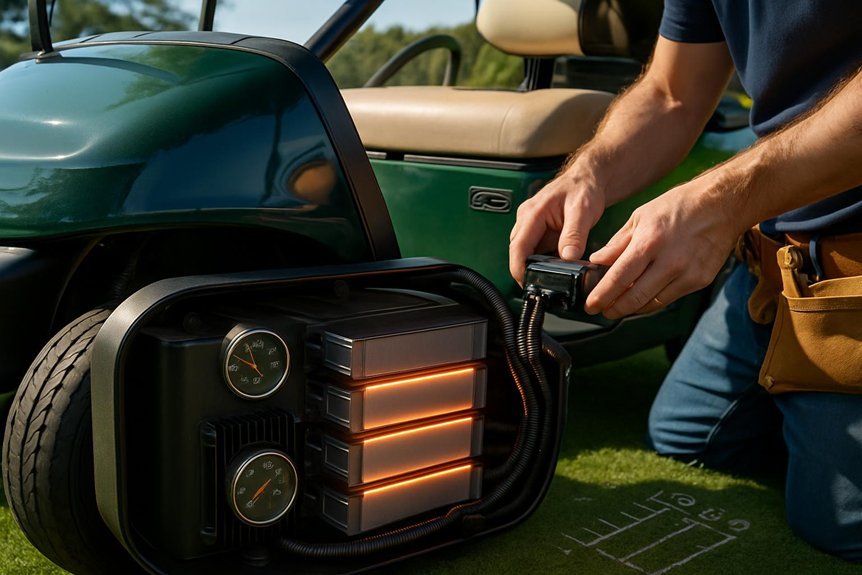
Can we squeeze more miles from a golf cart by tightening how we manage energy, cool the pack, and harness regen? Yes, and we’ll quantify the impact with repeatable practices. Our approach targets range optimization through disciplined energy management, optimized cooling strategies, and Regen efficiency gains that preserve usable capacity during ride cycles.
- Optimize state-of-charge windows and peak-power usage to minimize voltage drop and heat generation.
- Implement active cooling schedules aligned with load patterns to maintain pack temperatures within specifications.
- Calibrate regen thresholds and accelerator mapping to maximize recoveries without compromising drive feel.
- Monitor temperature, current, and voltage drift in real time to sustain long-term pack health and performance.
Together, these steps sharpen efficiency, reduce parasitic losses, and extend practical range.
Lithium Chemistries and Pack Options: Which Fits Clubs and Hobbyists
We compare lithium chemistries and pack configurations to determine what best suits clubs and hobbyists, focusing on cost per cycle, cycle life, weight, and maintenance. We evaluate LiFePO4, NMC, and LiPo options against pack options like format, modules, and BMS integration. Our goal is range optimization through energy density, thermal stability, and discharge curves, with attention to depth of discharge and charging regimes. We quantify tradeoffs: higher energy per kilogram improves range but can increase cost and thermal risk; longer cycle life lowers replacement frequency; lighter packs reduce cart weight but may elevate cost per watt-hour. We prioritize uniform cell chemistry, modular packs, and robust BMS for predictable performance. Informed choices yield durable, scalable, cost-effective range enhancements for clubs and hobbyists.
Actionable Steps to Maximize Range Safely and Reliably
How can we maximize range safely and reliably without compromising longevity or safety? We approach with data-driven steps that balance performance and battery safety, tightening charge/discharge discipline and thermal management. By monitoring cell temperatures and voltage sag, we optimize the pack’s usable capacity while preventing degradation. Our strategy emphasizes real-world operating envelopes, charger compatibility, and consistent maintenance to sustain range over time.
- Establish operating windows: maintain moderate SOC, avoid deep discharges, and use recommended charge rates to minimize stress.
- Implement thermal governance: active cooling/heating as needed to keep cells within optimal temperature bands.
- Calibrate power draw: optimize accessories and driving modes to reduce peak current and voltage ripple.
- Track metrics: log range, temperature, and cycle counts to refine routines for ongoing range optimization and battery safety.
Frequently Asked Questions
How Long Do Lithium Golf-Cart Batteries Actually Last in Years?
We typically see lithium golf-cart batteries last 5–10 years, depending on usage and cycles. We analyze performance data to estimate lithium longevity, inform retirement planning, and optimize charging schedules for durable, cost-effective operation.
Do Lithium Packs Require Special Charging Equipment or Cycles?
We do require specialized lithium charging equipment and careful cycle compatibility checks, yes. We emphasize using purpose-built chargers and balanced charging profiles; we monitor cycle quality, voltage, and temperature to optimize performance and extend pack longevity.
Can Colder Temperatures Drastically Reduce Lithium Range?
Yes, colder temps can drastically reduce range due to reduced chemical activity. We explain cooling efficiency and thermal management trade-offs, quantify losses, and propose optimization-focused strategies to maintain peak capacity and predictable performance.
Are There Affordable Lithium Options for Retrofitting Older Carts?
Yes, there are affordable retrofit options we can pursue within budget constraints. We’ll compare costs, weights, and efficiencies, then optimize to maximize range, using data-driven choices and practical installation steps for retrofitting older carts.
What Safety Risks Should Users Know With Lithium Golf Batteries?
We must address dangerous handling and improper charging risks with lithium golf batteries, and we’ll back every claim with data. We’ll outline precautions, monitoring, and procedures to optimize safety, reliability, and performance for our readers.
Conclusion
We’ve shown that lithium golf-cart upgrades boost range by boosting energy density, optimizing SOC, and tightening thermal management. With modular packs, robust BMS, tuned regen, and active cooling, you gain meaningful miles per charge while cutting parasitic losses. Think of it as a data-driven optimization: measure temps, voltages, and currents; model capacity versus depth of discharge; tune charging and regen profiles accordingly. In short, smarter chemistry, smarter controls, smarter ranges—together.