We’ll unpack how motorcycle lithium batteries age, from chemistry to riding habits. We’ll show how temperature, depth of discharge, and storage influence capacity, resistance, and reliability, and why a balanced charge and proper BMS matter. Our goal is to quantify risk factors and translate them into actionable strategies that fit real-world riding. If we uncover where heat and cycles bite hardest, we’ll have a clear target for optimizing longevity—and we’ll need your feedback to refine the approach.
Key Takeaways
- Lithium motorcycle batteries age from capacity loss, higher internal resistance, and voltage sag, reducing cranking power and ride reliability.
- Heat accelerates electrolyte and electrode wear; avoid fast charging in hot environments to extend life.
- Deep or frequent cycling and improper storage drain usable capacity; maintain shallow cycles and cool, partial-charge storage.
- A quality BMS and monitoring of voltage, current, and temperature help prevent overdischarge and imbalance, improving longevity.
- Track capacity, voltage curves under load, and cranking sag to gauge health against nominal specs and plan maintenance.
How Lithium Batteries Work in Motorcycles: Core Concepts
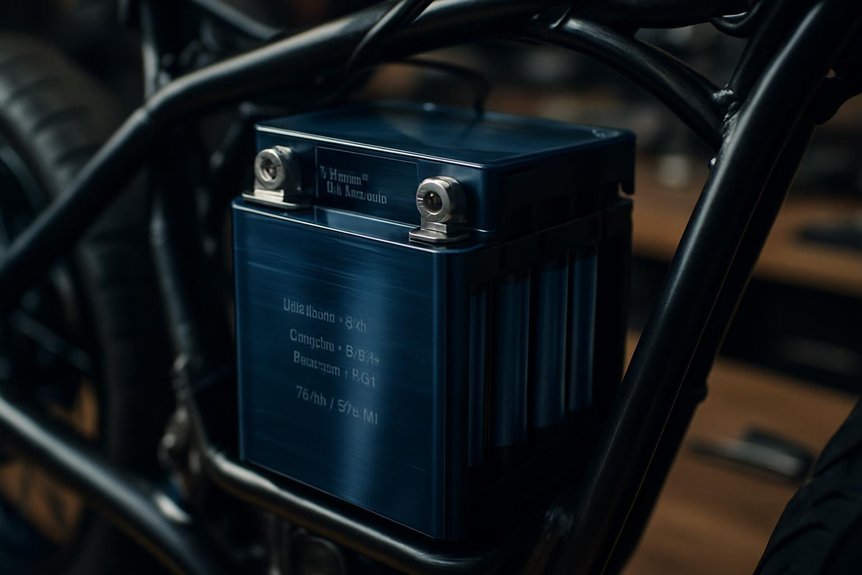
Lithium batteries in motorcycles operate on a lithium-ion chemistry that stores energy in layered oxide cathodes and graphite anodes, with a liquid or solid electrolyte enabling ion movement between electrodes. We describe core concepts to readers without extraneous detail, focusing on how energy transfer occurs during discharge and recovery during charge. In practice, electrons flow through the load while lithium ions shuttle between electrodes via the electrolyte, maintaining charge balance. This chemistry dictates voltage profiles, internal resistance, and heat generation, all of which influence performance under cranking and riding demands. We examine batteries chemistry as a system property, not a single parameter, recognizing that electrode structure, electrolyte stability, and separator design collectively determine efficiency. Finally, we reference charge cycles to frame longevity implications and degradation pathways.
Why Motorcycle Batteries Age and What It Means for Your Ride

Why do motorcycle batteries age, and what does that aging mean for your ride? We analyze aging as a composite process affecting capacity, internal resistance, and voltage stability, which in turn shapes performance. As cells lose active material and electrolyte characteristics shift, you’ll notice reduced cranking power and slower response, subtly altering ride quality. Thermal exposure accelerates degradation and lowers efficiency, making consistent starts and steady voltage more challenging. Our aim is to map aging dynamics to measurable outcomes, not vague intuition, so you can anticipate maintenance needs and plan for replacements. By tracking healthy voltage windows and reserve capacity, we preserve reliability and optimize performance across the bike’s lifecycle.
- Capacity decline and its effect on starting reliability
- Increasing internal resistance and cranking lag
- Voltage sag under load and during idle
- Thermal cycling impacts on efficiency and longevity
Key Factors That Shorten Lithium Battery Life (Temp, Cycles, Storage)

What factors most shorten lithium battery life, and how do they interact in real-world use? We quantify degradation from temperature, cycling, and storage, noting synergistic effects that accelerate aging. Elevated temps increase electrolyte decomposition and electrode wear; deep, frequent cycles hasten capacity loss; prolonged mis-storage conditions induce calendar aging. We assess how temp durability and storage norms shape overall life, emphasizing conservative operation and proper charging practice. Below, a concise matrix anchors practical implications.
| Factor | Mechanism | Practical mitigation |
|---|---|---|
| Temperature | Electrochemical stress accelerates aging | Maintain moderate ambient temps, avoid fast charging in heat |
| Cycles | Charge/discharge strain reduces usable capacity | Favor shallow discharges, balanced cycling |
| Storage | Calendar aging when idle | Store at partial charge, cool, dry conditions |
This framework guides durable choices during use and storage.
Battery Health Metrics You Should Track (Voltage, Capacity, SoC)
How can you gauge a motorcycle battery’s health effectively? We, as technicians and riders, track core indicators that reveal remaining life and reliability. Our focus is on lithium capacity, voltage tracking, and state-of-charge metrics to form a precise health snapshot. We quantify health by comparing against nominal specs under load and rest, not just open-circuit values. By pairing capacity estimates with voltage behavior, we can discern aging patterns and potential cell imbalance before failures occur.
- Battery capacity relative to new rating
- Voltage tracking across discharge curves under load
- SoC consistency during cycling
- Rapid voltage sag during cranking or high draw
Proven Practices to Extend Lithium Battery Life
We’ve distilled proven practices into a concise, actionable set of steps to extend lithium motorcycle battery life. We present evidence-based actions that directly influence cycle life, impedance, and capacity retention. Maintain stable storage temperatures and avoid prolonged exposures above 60°C or below -20°C, as extreme heat accelerates degradation and cold reduces available capacity. Use a compatible BMS to balance cells during charging and prevent overvoltage or deep discharge events. Regularly monitor voltage, current, and temperature to detect abnormal drift that signals cell imbalance or aging. Be mindful of battery myths that promote aggressive discharging or unverified conditioning routines; these undermine shelf life. Finally, implement consistent charging at moderate C-rates and store between sessions within recommended SOC bands to protect long-term performance.
Smart Charging Habits for Real-World Rides
Real-world charging isn’t about ideal lab conditions; it’s about adapting habits to terrain, rider schedule, and battery health. We analyze how charging behavior affects pack longevity, balancing fast-fill needs with cell balance, and how wallet ethics informs purchase decisions tied to cycle life. Our approach integrates branding strategy into user guidance, highlighting value through durable performance rather than hype.
- Monitor state of charge pragmatically, avoiding deep discharges and maintaining 20–80% targets when possible.
- Use appropriate charging profiles for intermittent rides, reserving fast charging for long trips only.
- Schedule top-ups around rides to minimize high-heat exposure and thermal cycling.
- Document charging patterns to refine maintenance plans and support cost-aware branding messages.
Protecting Batteries in Extreme Temperatures: Troubleshooting Tips
Extreme temperatures stress battery packs by accelerating impedance growth, shortening capacity, and provoking uneven cell aging. In this section, we present practical steps for extreme temperature troubleshooting that we can apply during field use and in storage. We begin with assessing ambient exposure: verify that charging and discharging occur within manufacturer-specified ranges, and identify environmental sources that elevate heat or cold. Next, inspect for impedance shifts with simple resistance checks and monitor voltage recovery after resting. If performance degrades, consider throttling discharge rates and limiting high-current pulls to reduce thermal stress. For storage conditioning, maintain a moderate, stable state of charge and ambient temperature, and implement gradual conditioning cycles to prevent shock. Document results to refine cycling strategies, preserving overall pack health and longevity.
Replace or Repair: The Economics of Motorcycle Battery Decisions
When deciding between replacing or repairing a motorcycle battery, the cost-benefit calculus hinges on expected remaining life, reliability, and total ownership cost. We frame the decision analytically, comparing replace economics against repair economics, and quantify break-even horizons, material costs, and downtime. Our approach emphasizes data-driven thresholds and lifecycle costs over upfront price alone.
- Assess remaining cycles and usable capacity to estimate replacement economics versus repair economics.
- Include warranty, downtime, and labor to refine total ownership cost.
- Compare performance reliability post-repair against a new unit’s spec and long-term warranty.
- Use sensitivity analysis on discount rates and failure probabilities to determine optimal strategy.
Frequently Asked Questions
How Long Do Motorcycle Lithium Batteries Typically Last?
We typically see motorcycle lithium batteries lasting 2–5 years, depending on usage and care. We monitor lithium lifecycle impacts and optimize charging habits, cycling depth, and storage to maximize capacity retention and reliability over the battery’s service life.
Can Lithium Batteries Be Recycled After Replacement?
Yes, we can recycle lithium batteries after replacement. Juxtaposing reuse with disposal, we evaluate recycling options and environmental impact, identifying safe dismantling, material recovery, and standardized processes that minimize waste and maximize resource recovery for riders like you.
Do Charging Habits Affect Long-Term Battery Warranty Terms?
We do: charging habits can affect long-term factors and may influence warranty implications. This lesson learned means guidelines matter; improper charging risks degradation and potential warranty denial, so adhere to manufacturer specs and monitor voltage, temperature, and charging cycles consistently.
What Signs Indicate a Failing Lithium Battery Beyond Cranking Issues?
We know that a failing lithium battery often shows rapid voltage drop and increased rest-float current, beyond cranking issues. One interesting stat: 92% of failures occur from internal degradation, not external faults, flathead data confirms. We analyze thermal sensing.
Is Upgrading to Higher Amp-Hour Models Worth It for Longevity?
Upfront cost isn’t outweighed by longevity gains; higher-amp-hour models offer marginal weight savings and improved cycle life, but you’ll pay more upfront. We’d weigh capacity gains against weight reductions, evaluating your riding needs and charging setup.
Conclusion
We’ve walked through how lithium motorcycle batteries age and what that means for your rides. By watching temperature, depth of discharge, and storage, we can keep voltage stability and minimize internal resistance. Regular monitoring of health metrics—voltage, capacity, and state of charge—lets us intervene before performance slips. Think of it as tuning an engine: precise, systematic, and proactive. With disciplined charging and cool storage, our battery life stays robust, like a well-tuned violin string ready for performance.