We approach golf cart lithium battery installs with practicality, safety, and cost in mind, choosing compatible cells and packs from reputable suppliers to match real-world use. We’ll align capacity, cooling, fuses, and a solid BMS with clear alerts, while securing the pack for even weight and minimal movement. We’ll cover vehicle compatibility, proper mounting, and ongoing maintenance, then consider charging, ventilation, disposal, and documentation—yet a critical step still demands our collective attention before we proceed.
Key Takeaways
- Choose a compatible lithium chemistry and pack size based on golf cart usage, climate, and safety margins; balance performance, cost, and availability.
- Verify voltage, amp-hours, connectors, charger, fuses, and cooling paths to meet controller and safety requirements.
- Mount packs securely with proper weight distribution, gasket sealing, and routed cables away from heat and moving parts.
- Install a Battery Management System with real-time monitoring, fault thresholds, current sensing, and clear alerts for safe operation.
- Plan maintenance, documentation, and disposal per guidelines, including regular SOC checks, corrosion inspection, and certified recycling.
Choose the Right Lithium Battery Chemistry for Your Golf Cart
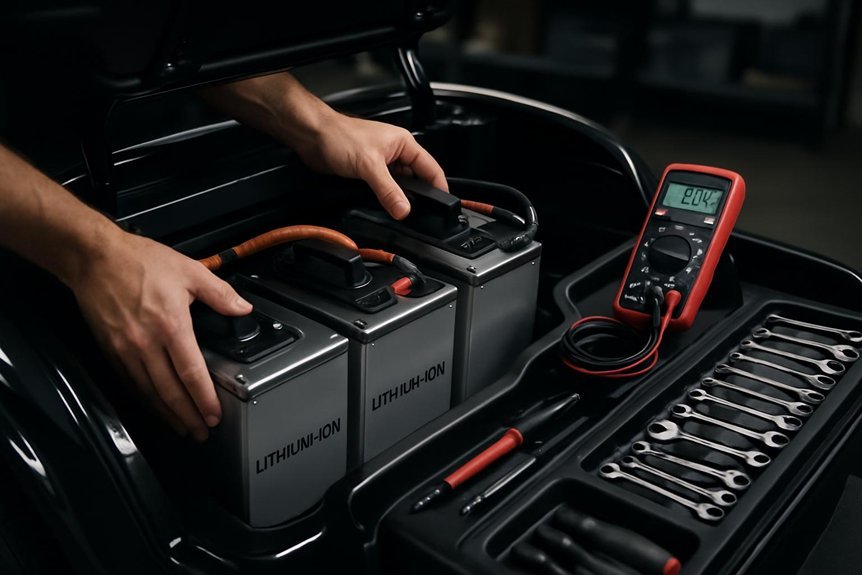
Choosing the right lithium chemistry sets the baseline for performance, safety, and cost in your golf cart. We approach this decision with a practical mindset, balancing real-world needs with clear constraints. We assess availability options, ensuring you can source cells, modules, and packs reliably from reputable suppliers. We evaluate lifecycle tradeoffs, recognizing that higher energy density can come with higher cost, and that durability matters in frequent charge-discharge cycles on the course. Safety considerations guide our checks: thermal behavior, protection circuitry, and proper cooling must align with your usage profile. We factor installation compatibility, charging compatibility, and warranty terms to avoid surprises. In short, we choose a chemistry that matches your duty cycle, maintenance expectations, and total ownership costs.
Assess Capacity and Range Based on Your Use
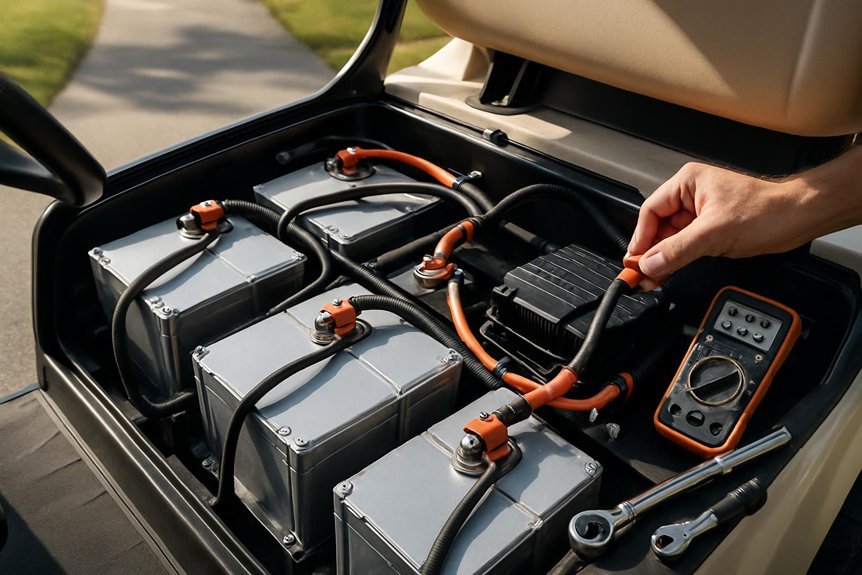
What capacity do you really need, and how far will that put you on the course? We approach this with practical capacity planning and honest range estimation, aligning battery size to usage patterns and safety margins. We factor trip length, climate, and terrain to avoid mid-game drops. We’ll estimate energy per mile and apply a conservative buffer for reliability and charging options. By mapping daily routines to expected cycles, we determine a sensible chemistry and pack size, minimizing weight and risk. This isn’t guesswork; it’s data-driven decision making that keeps you safe and productive. Always validate with real-world tests after installation to confirm range targets.
| Use Case | Desired Range | Estimated Battery Size |
|---|---|---|
| Hilly Course | 18 holes | 60-70 Ah |
| Flat Course | 36 holes | 80-100 Ah |
| Mixed Terrain | 24 holes | 70-90 Ah |
Prerequisites: Vehicle Compatibility and Safety Foundations
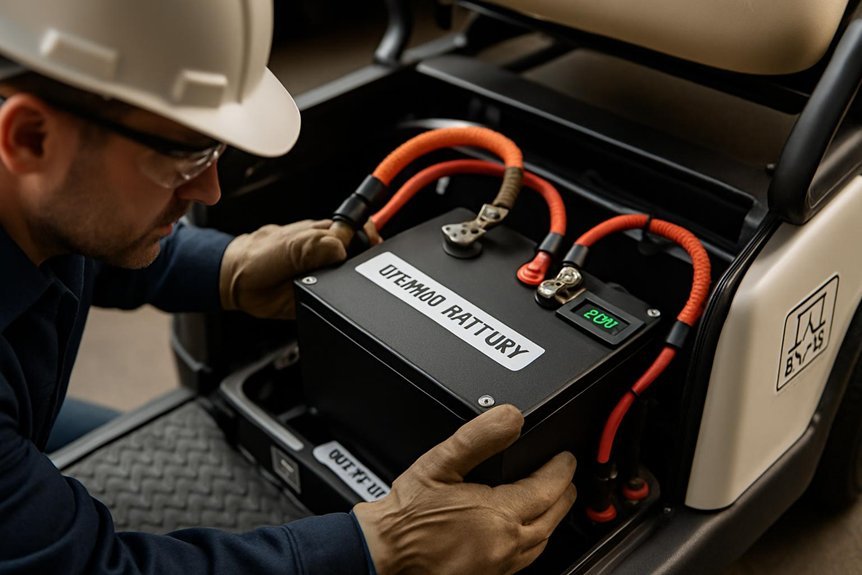
Are you sure your golf cart is ready for a lithium battery upgrade? We’ll start with essential checks that protect both performance and people, grounding our choices in battery chemistry awareness and safety foundations. Compatibility isn’t just voltage; it’s connectors, controller tolerances, and cooling needs. We assess the chassis, wiring harness, and motor ratings to prevent overstress and failures.
1) Confirm battery voltage, amp-hour rating, and connector type match your cart’s controller and charger.
2) Verify charging system, fuses, and cooling paths meet manufacturer safety foundations.
3) Review overall condition and continued maintenance history to ensure no hidden faults.
Mount the Battery Pack Securely and Safely
To mount the battery pack securely and safely, we’ll start with solid fixation that minimizes movement and reduces strain on wiring and connections. We select appropriate gasket sealing and mounting hardware, then position the pack for balanced weight distribution. We tighten fasteners to manufacturer specs, avoiding over-torque that could crack housings. We check that all mounting points align with chassis studs and reserve space for cooling air flow. We verify cable routing stays clear of moving parts and heat sources. We perform a final torque audit after initial vibration testing.
| Step | Action |
|---|---|
| 1 | Align and secure |
| 2 | Apply gasket sealing |
Wire, Fuse, and Protect: Electrical Safety Essentials
Wire sizing, fusing, and protection aren’t optional extras—they’re the core of a safe, reliable golf cart electrical system. We’ll focus on practical gains you can verify now: reliable power, reduced fire risk, and predictable behavior under load. Here are the essentials:
- Confirm wire safety by matching gauge to current and routing away from heat sources.
- Size fuses correctly for the circuit and battery configuration to prevent overcurrent events.
- Protect all connections with corrosion-resistant hardware and enclosure seals to maintain integrity.
In practice, document wire routes, use correct terminals, and recheck after any modification. Remember, wire safety and fuse sizing aren’t afterthoughts—they’re the first line of defense against shorts, overheating, and failures. If in doubt, consult the manufacturer’s guidance.
Design Cooling and Ventilation for Your Pack
We design our pack with a clear airflow path to prevent hot spots and maintain stable temperatures. We’ll outline vent placement, ensure unobstructed intake and exhaust, and apply proven thermal management techniques to keep performance safe. We’ll keep you oriented on practical steps for airflow, placement, and cooling strategies that support reliability and safety.
Airflow Path Optimization
Have you considered how airflow shapes battery longevity and safety in a golf cart? We optimize airflow path to promote wind flow and air exchange, reducing hotspots and moisture buildup. Our approach is practical and precise, focusing on predictable ventilation rather than guesses.
- Map the cooling corridor: ensure a clear, unobstructed air path from intake to exhaust.
- Maintain positive channel pressure: avoid recirculation by directing fresh air across cells before it exits.
- Verify unobstructed vents: keep vents clean and free of debris to sustain consistent flow.
Vent Placement Guidance
Where should vent placement start when designing cooling for your pack? We begin with a clear goal: remove heat safely without compromising enclosure integrity. We assess the enclosure and its seals, ensuring vents don’t create paths for moisture or dust ingress. Position vents to align with the highest heat zones identified earlier, not merely the top surface. Prefer dedicated exhaust paths that connect to external airflow, avoiding recirculation inside the cabinet. Size vents to match anticipated thermal loads and allow steady air movement at idle and peak, while preserving enclosure considerations like gasket compatibility and IP rating. Include filters where appropriate, and ensure vent covers resist impact and corrosion. In short, plan vent placement with precise routing, robust seals, and verified external exhaust.
Thermal Management Techniques
Thermal management for a golf cart lithium pack must be deliberate and data-driven: design cooling and ventilation paths that reliably remove heat without compromising enclosure integrity. We prioritize predictable thermal regulation and effective heat dissipation to prevent hot spots and degrade performance. Our approach is measured, not decorative, with clear pathways for airflow and heat transfer.
- Establish low-resistance intake and exhaust routes that align with pack geometry and avoid recirculation.
- Use conductive interfaces and thermal pads to spread heat to the enclosure or dedicated radiators, ensuring consistent temperature distribution.
- Validate with real-world load tests, monitoring temperatures at cells, bus bars, and pack corners to confirm safety margins.
Set Up a Battery Management System and Monitoring
We set up a Battery Management System to monitor cell voltages, temperatures, and state of charge, so you always know the pack’s health. We’ll cover Battery Monitoring Basics, establish a solid Management System setup, and outline clear Real-Time System Alerts to flag anomalies. By keeping these elements precise and proactive, we reduce risks and keep your golf cart operating safely and reliably.
Battery Monitoring Basics
Battery monitoring is essential to protect your golf cart’s lithium pack and maximize longevity. We act as a team to track health indicators, watch for anomalies, and enforce disciplined usage. By monitoring in real time, we guard battery life and prevent surprises on the course or in storage. Our approach centers on clear thresholds and documented actions.
1) We establish monitoring thresholds for voltage, current, and temperature to respect cycling limits and extend overall life.
2) We verify safety protocols before charging, logging events and performing routine inspections to detect degradation early.
3) We review warranty considerations, ensuring our records support claims and that care guidelines are followed consistently.
Management System Setup
How can we guarantee robust protection and visibility for our lithium golf cart pack? We set up a Battery Management System that aligns with our pack’s chemistry and operating profile. Start with a tight monitoring design: cell voltages, temperatures, and state of charge wired to a central controller, plus fault thresholds that trip early. Use balanced cell monitoring to prevent weak cells from dragging the pack down. Integrate current sensing and a safe shutdown path for overcurrent or short conditions. Calibrate alarms and logging at regular intervals, ensuring that data is readable and traceable. Document procedures, maintenance intervals, and safety overrides. Prioritize accessible serviceability, clear labeling, and adherence to manufacturer guidance on battery chemistry. This approach delivers reliable protection and actionable insights.
Real-Time System Alerts
Real-Time System Alerts are the frontline of a reliable BMS, and they must trigger instantly when any parameter drifts outside safe bounds. We design alerts to be actionable, not noisy, so you can respond without delay. Here’s how we make them effective:
- real time alerts notify you immediately of voltage, current, or temperature excursions, with clear cause and recommended action.
- alert customization lets you set thresholds, escalation paths, and preferred contact methods for different fault severities.
- consistent logging and diagnostics provide a trail for maintenance, traceability, and future upgrades, reducing surprises on the course.
Charge, Maintain, Troubleshoot, and Dispose Responsibly
To keep your golf cart safe and reliable, we’ll cover how to charge correctly, maintain the battery, troubleshoot common issues, and dispose of packs responsibly. We charge with a compatible charger, monitor voltage, and avoid overcharging; use drift-free charging cycles and record charge times. For maintenance, follow a strict maintenance schedule, inspect terminals for corrosion, and keep vents clear; test the state of charge and capacity periodically. Troubleshooting is targeted: check connections, balance cells if needed, and review error codes from the BMS. When it’s time to dispose, follow disposal guidelines and recycle through certified facilities. Prioritize safety: wear PPE, disconnect power before service, and store connectors safely. This approach minimizes risk while extending life and performance.
Frequently Asked Questions
How Long Does It Take to Install a Lithium Battery in a Golf Cart?
We typically estimate installation duration at about 2–4 hours, depending on cart model and battery pack. We always require a professional requirement for safe handling, wiring, and calibration, and we’ll follow strict safety protocols throughout the process.
Will Lithium Batteries Affect Existing Cart Warranty?
Absolutely not—lithium may affect warranty, so we document, verify, and discuss warranty implications with the dealer. We’ll check mixing compatibility, safety standards, and follow manufacturer guidance to avoid voiding coverage and ensure compliant operation.
Can I Mix Lithium With Lead-Acid Batteries in One Cart?
We don’t recommend mixing lithium with lead-acid in one cart due to safety considerations and mixing incompatible batteries. It’s unsafe; maintain uniform chemistries, use proper BMS, and follow manufacturer guidelines for reliable performance and safety.
What Are the Most Cost-Effective Lithium Options Long Term?
We understand lithium options remain most cost-effective long term, with cost comparison favoring higher upfront but lower total ownership; we estimate 20–40% savings over lead-acid. We’ll emphasize maintenance scheduling and safety, avoiding costly mistakes.
Is Professional Installation Required for All Lithium Conversions?
We believe professional installation isn’t mandatory for all lithium conversions, but we strongly recommend it for safety and warranty considerations. We’ll assess your cart, wiring, and cooling, ensuring certifications are met and potential hazards are avoided.
Conclusion
We know the exact moment a quiet cart becomes a reliable partner—when the cells, modules, and mounts align with real-world use. As coincidences stack—a climate shift, a steep fairway, a sudden surge in power—we tighten fuses, verify venting, and confirm the BMS is watching. Stay pragmatic, stay safe, and document every step. If something feels off, pause, reassess, and adjust. That disciplined rhythm keeps performances steady and yours worry-free on every round.