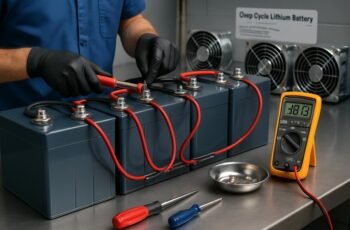
We evaluate golf cart lithium lifespan by pairing chemistry, charging discipline, and temperature control, and we’ll guide you through practical, data-backed steps. We’ll weigh depth of discharge, charger profiles, and ambient conditions, then monitor health metrics and connections for corrosion. We’ll note how storage SOC, balance cycles, and regenerative charging influence aging. If our approach holds under real-world constraints, the next details should clearly show how to maximize longevity while maintaining performance.
Key Takeaways
- Use chemistry-compatible, high-cycle Li battery packs and balanced discharge/charge regimens to maximize lifespan.
- Maintain moderate state-of-charge ranges and avoid deep discharges to reduce capacity fade.
- Keep temperatures within manufacturer specs; use staged charging and proper cooling to minimize heat stress.
- Regularly monitor health metrics, SOC accuracy, and impedance; address anomalies promptly to prevent cascading aging.
- Prefer manufacturer-approved chargers and schedules; perform routine maintenance and module replacement as needed.
Maximize Golf Cart Lifespan: Core Factors You Can Control
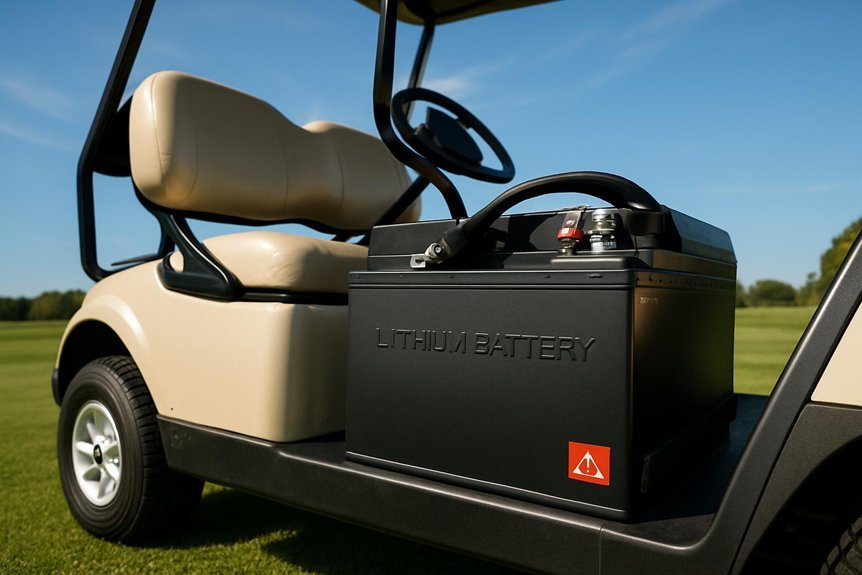
What core factors can you control to maximize a golf cart’s lifespan? We systematically evaluate operational parameters that influence longevity. We prioritize battery chemistry compatibility, charging regimens, and ambient conditions, since these determine cycle life and capacity retention. We monitor charge acceptance, avoid deep discharges, and schedule balanced discharge/charge cycles to minimize stress. Temperature management is critical; we implement and maintain cooling or heating as needed to keep cells within optimal ranges. Regular maintenance, including connector integrity and voltage balance checks, reduces parasitic losses. Selecting components with proven reliability offers low cost by lowering replacement frequency, while ensuring warranty coverage aligns with usage patterns. Documentation of every cycle, fault, and service event enables data-driven adjustments and clearer long-term prognostics for peak performance.
Depth of Discharge and Usage: How Your Riding Habits Matter

How does depth of discharge shape golf cart battery life, and what riding patterns matter most? We, as users, impact life through cycles, not just total hours. Deep discharge accelerates capacity fade and raises internal resistance, shortening usable life. Frequent shallow cycles preserve health, while occasional deep discharges must be balanced with proper rest and charging windows. Regenerative charging provides partial recovery, but its limits depend on state of charge and load; it cannot fully offset high DOD. We should tailor usage to minimize deep discharge events, avoiding sustained low-SoC runs. Analyzing duty cycles, we optimize range between charges and maintain even discharge profiles. Practical patterns include staggered trips, gradual acceleration, and planned rest periods to align with regenerative gains. Consistency beats sporadic high drains for long-term longevity.
Temperature, Charging, and Maintenance: Practical Practices That Preserve Life
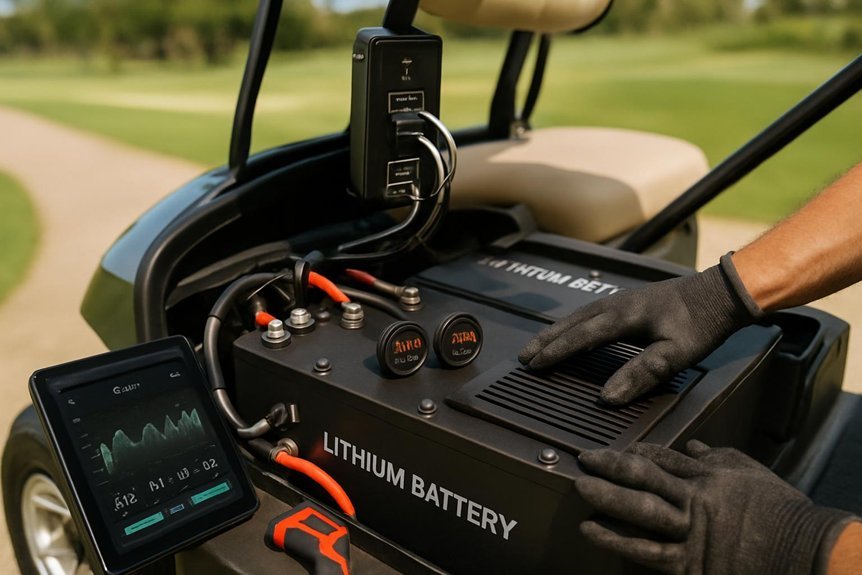
Temperature, charging, and maintenance collectively determine a lithium golf cart battery’s longevity. We assess how environmental conditions and operational routines interact to affect internal resistance, cycle count, and capacity fade. Temperature management emerges as a primary lever; excessive heat accelerates electrolyte degradation and separator wear, while cold impedes chemical reactions, reducing usable capacity. We recommend keeping storage and operation within manufacturer-specified ranges and monitoring ambient shifts that influence cell balance. Charging etiquette matters: avoid rapid top-offs after high-drain use, and prefer staged charging with appropriate soak times to minimize voltage stress and heat generation. Regular maintenance includes inspecting connectors for corrosion, ensuring ventilation, and validating BMS alarms. Together, disciplined temperature control and proper charging practices support predictable performance and extended service life.
Step-by-Step Guide to Prolong Lithium Battery Life
To extend lithium golf cart battery life, we follow a disciplined, step-by-step approach that combines environment, charging, and maintenance actions. We emphasize aging capacity and battery chemistry to optimize performance over time, avoiding unnecessary cycles and stress. Our protocol focuses on consistent state-of-charge ranges, temperature control, and calibrated charging profiles that respect chemistry limits. We document cycle behavior, monitor voltage and impedance, and schedule regular conditioning checks to sustain usable capacity. By minimizing deep discharges and ensuring proper storage states, we reduce degradation pathways. We also track charge efficiency and electrolyte trends, adapting usage as aging progresses.
- Maintain moderate SOC windows aligned with battery chemistry
- Control ambient temperature to suppress aging
- Use manufacturer-approved chargers and profiles
- Schedule routine tracking of capacity and health metrics
Red Flags and Troubleshooting: When Deterioration Signals a Problem
As we monitor long-term performance, deterioration flags emerge when capacity fades faster than expected, impedance rises beyond baseline, or voltage sag under load becomes pronounced. We identify deterioration signals promptly, guiding targeted troubleshooting cues and corrective actions. First, verify state-of-charge accuracy, then assess cell balance and thermal management. Next, inspect connections for corrosion or looseness and measure pack impedance under load to isolate weak modules. Consider electrolyte condition and age-related internal resistance, noting any rapid shifts. If anomalies persist, plan a controlled discharge/charge test and compare to manufacturer specs. Documentation of trends aids predictive maintenance. Table summarizes key cues and responses.
| Cue | Action |
|---|---|
| Capacity fade | Check SOC accuracy; test balance |
| Impedance rise | Measure under load; inspect terminals |
| Voltage sag | Test during high demand; verify cooling |
| Thermal anomalies | Monitor temps; inspect cooling system |
| Aging indicators | Schedule module replacement |
Frequently Asked Questions
How Do You Calculate the True Daily Cost of Ownership for Lithium Golf Cart Batteries?
We calculate true daily ownership by summing discounted maintenance, replacement, and energy costs, subtracting resale value, then dividing by usable days; hidden costs like charging infrastructure and warranty gaps are included to refine accuracy.
Which Lithium Chemistry Is Best for Golf Carts and Why?
We think lithium iron offers safety and lifecycle durability, while cobalt phosphate provides robust cycle life; choose based on cost, thermal stability, and duty cycle. We present: lithium iron and cobalt phosphate, with targeted performance tradeoffs for carts.
Do Lithium Batteries Require Equalization Charging Like Lead-Acid?
We don’t require equalization charging for lithium batteries; unlike lead acid, we avoid it. Lithium chemistry shows minimal need for an equalization cycle, and we note lead acid similarity only in charging discipline and voltage monitoring.
How Does Altitude Affect Lithium Performance and Lifespan?
Altitude effects reduce lithium performance slightly at high elevations due to air temperature and cooling dynamics; we observe modest capacity loss but stable cycle life. We, readers, analyze data and adapt charging profiles to minimize altitude impacts and maximize performance.
Can Onboard Battery Monitors Extend Overall Battery Life Effectively?
Onboard monitoring can extend battery life, we claim—ironically, by proving how-awareness preserves battery health. We adjust usage, avoid non lithium hype, and monitor golf cart speed and load, ensuring accurate data guides maintenance and longevity.
Conclusion
We’ve seen how smart chemistry and disciplined charging mirror precision work: the battery thrives on control, not chance. Depth of discharge, temp, and maintenance act like gears in a finely tuned drivetrain, so a small misstep compounds into rapid aging. Yet when we balance SOC, use approved chargers, and monitor health, life extends—quietly, predictably. Juxtapose stress and stewardship: heat versus ventilation, deep discharge versus steady routine. In disciplined practices, durability outpaces degradation.