We compare lithium and lead-acid by core chemistry, lifespan, weight, and efficiency, then weigh total ownership and real-world performance. We’ll assess upfront costs against replacement intervals, operating costs, and safety needs, all with a technical lens. Our goal is a practical framework, not hype, so we’ll show where each excels and where trade-offs emerge. The picture isn’t simple, and the next details may prompt a closer look at your specific cycle, budget, and risk tolerance.
Key Takeaways
- Lithium offers higher energy density and lighter weight, delivering more usable capacity for the same volume or mass than lead-acid.
- With proper management, lithium provides longer cycle life and better efficiency, reducing replacement frequency and operating costs.
- Lead-acid is simpler, cheaper upfront, and robust, but suffers more sulfation, heavier mass, and shorter high-discharge cycle life.
- Safety and thermal management are more complex for lithium, but well-designed systems with protections reduce fault risk and improve reliability.
- Total cost of ownership favors lithium over time due to efficiency, longer life, and reduced maintenance, despite higher initial price.
Core Differences: Lithium Batteries vs Lead-Acid-Chemistry, Lifespan, Weight, and Efficiency
Lithium batteries and lead-acid chemistries differ fundamentally in chemistry and design, which drives key performance gaps in lifespan, weight, and efficiency. We examine core differences by comparing active materials, voltage profiles, and internal resistance, then translate those contrasts into real-world implications. Lithium chemistries offer higher energy density and lower weight per usable kWh, supporting better gravimetric and volumetric efficiency, while maintaining competitive cycle life under proper management. Lead-acid favors simplicity and cost but incurs greater weight and shorter cycles at higher discharge rates. We assess degradation mechanisms, temperature sensitivity, and safety considerations, linking chemistry differences to practical outcomes. We address lithium safety concerns and how thermal runaway risks shape system architecture, charging regimes, and fault tolerance. Overall, chemistry differences dictate performance trajectories, reliability envelopes, and design trade-offs.
Total Cost of Ownership: Upfront Price, Replacement, and Operating Costs
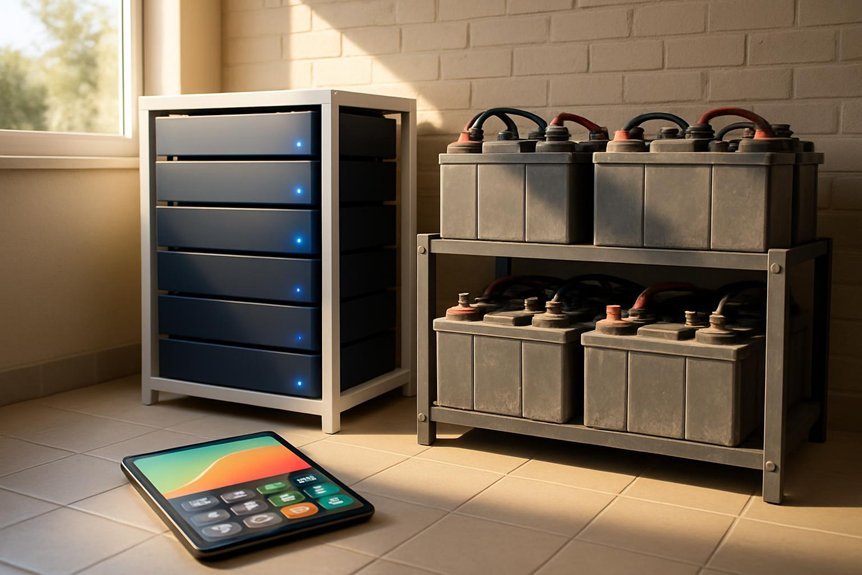
What does total cost tell us when comparing lithium and lead-acid systems, beyond sticker price alone? We analyze total cost of ownership by separating the cost structure into upfront price, replacement, and operating expenditures. Lithium systems typically incur higher initial investment, but longer replacement intervals and lower maintenance reduce lifecycle costs. We estimate durability and charging cycles as central determinants of end-of-life timing and capacity fade, affecting replacement frequency. Operating costs include electricity efficiency, cycling costs, and auxiliary hardware needs such as battery management systems. Disposal considerations influence total cost, since regulatory recycling may offset part of the initial expenditure. We emphasize that high upfront price can be offset by superior durability and reduced replacement cycles, yielding a favorable long-range financial profile.
Real-World Performance: Weight, Efficiency, and Longevity in Practice
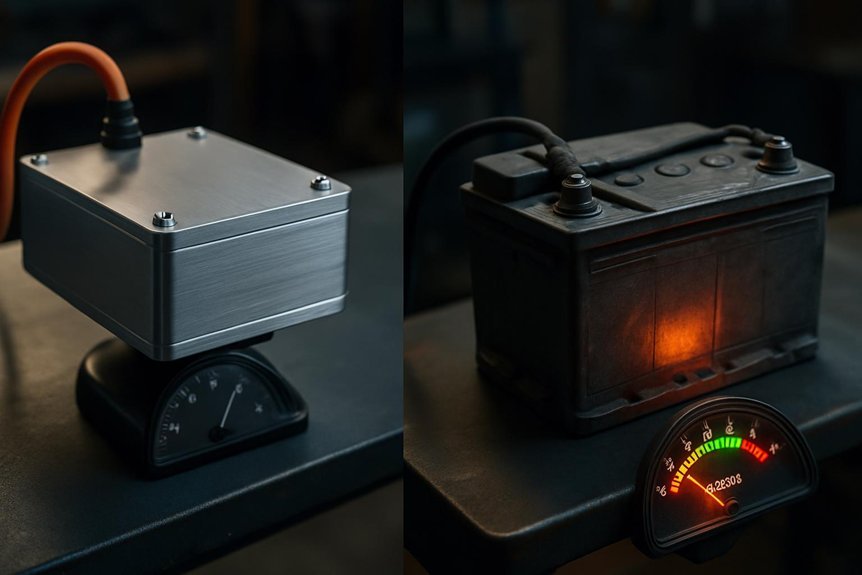
How do real-world metrics for weight, efficiency, and longevity translate into practical performance differences between lithium and lead-acid systems? We analyze observed data from field deployments, lab tests, and lifecycle studies to quantify impact. Lithium’s lower weight reduces vehicle and module mass, mitigating weight bias effects on energy use and handling, while higher gravimetric energy density tightens packaging constraints and improves usable capacity under typical duty cycles. Efficiency gains manifest as higher round-trip efficiencies and shallower discharge losses, translating to longer usable runtimes between charges. Longevity is driven by cycle life, calendar aging, and temperature resilience, with lithium chemistries often sustaining performance longer in realistic operating temperatures. Supply chain considerations, including component sourcing and supplier stability, influence availability and maintenance planning, shaping real-world reliability.
Safety, Reliability, and Practical Use Cases
Given safety, reliability, and real-world use cases, we evaluate how lithium and lead-acid systems perform under typical operating conditions and fault scenarios. We compare thermal management, fault tolerance, lifecycle integrity, and maintenance demands with a focus on practical deployment. Lithium systems offer higher energy density, active protection, and fault isolation, but require robust safety training and strict handling procedures. Lead-acid proves resilient in low-demand cycles, though aging and sulfation reduce capacity, demanding regular calibration. Recycling policies influence environmental impact, shaping lifecycle decisions for both chemistries. The table below summarizes critical factors, guiding deployment choices and risk assessment.
| Factor | Lithium Ion | Lead-Acid |
|---|---|---|
| — | — | — |
| Safety training | Required | Basic |
| Reliability under fault | High, with protections | Moderate, simpler faults |
| End-of-life policy | Strict recycling | Recycling acceptable |
Choosing the Right Battery: A Simple Framework to Match Your Need and Compare Options
Choosing the right battery hinges on a clear framework that matches your usage profile to each chemistry’s strengths and trade-offs. We present a simple, decision-focused approach that aligns application requirements with intrinsic performance. First, define energy needs, depth of discharge, cycle life, and charging tolerance. Next, compare battery chemistry options by evaluating energy density, weight, cost, and environmental impact. Then translate these factors into actionable specs: voltage windows, maximum C-rate, and recommended charging protocols. Consider thermal behavior, safety margins, and maintenance demands to avoid premature degradation. We also account for lifecycle costs, including replacement intervals and efficiency losses. Finally, validate the framework against real-world duty cycles and charging access. With this method, you select outputs that optimize reliability, efficiency, and total cost of ownership.
Frequently Asked Questions
How Do Charging Practices Affect Lithium vs. Lead-Acid Longevity?
We analyze charging practices: charging habits and temperature effects strongly shape longevity. Lithium chemistries tolerate higher charge rates and temperatures better, but overheating and deep discharges degrade both; lead–acid suffers from sulfation and gassing under poor charging discipline.
Can Lithium Batteries Degrade Differently in Extreme Temperatures?
Yes, lithium batteries degrade differently in extreme temperatures. Summer temperature effects accelerate capacity loss; cold weather performance declines discharge efficiency. We analyze internal impedance and chemical reactions, noting improved low-temp tolerance with proper thermal management and charging strategies.
What Recyclability and Environmental Impacts Differ Between Chemistries?
We find recyclability and environmental impacts differ by chemistry, with lithium-ion generally offering advanced recycling technologies and potentially lower lifecycle emissions, while lead-acid emphasizes established recycling rates; we must consider supply chain ethics and efficient recycling technologies.
Do Warranties Vary Significantly by Application or Use Case?
Warranties vary significantly by application, with application specific impacts driving coverage, term length, and limitations; we see dramatic differences in duty cycles and usage profiles, so testing and specs must guide decisions, reader, not assumptions about chemistry.
How Do Safety Incidents Compare in Real-World Deployments?
We observe that safety incidents differ: lithium-ion shows higher risks under load and opportunistic thermal runaway, often linked to manufacturing defects, while lead-acid incidents center on sulfation and overcharging, with generally slower, more predictable failure modes.
Conclusion
We’ve weighed the numbers, weighed the risks, and mapped the tradeoffs. From density and efficiency to lifespan and cost, the choice hinges on your priorities and constraints. Lithium promises lighter, longer-lasting packs with steadier performance, but demands smarter management and higher upfront investment. Lead-acid lingers with simplicity and robustness, yet heavier and shorter-lived. So, what’s your breaking point for safety, cost, and duty cycle? The answer isn’t universal—it’s a calculated balance that reveals the best fit.