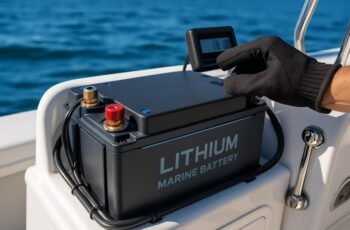
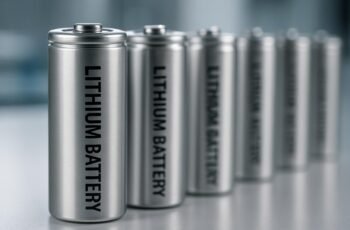
We question the idea that any storage method will do for lithium batteries without risk. We must establish a safe baseline: cool, dry conditions; a stable, partial charge; and protective, nonconductive containment. If we overlook these basics, failures can escalate. We’ll outline concrete steps and checks that minimize swelling, leaks, and thermal runaway. Stay with us as we set practical, repeatable practices you can implement immediately to protect people and equipment.
Key Takeaways
- Store lithium batteries at 0–25°C (32–77°F) with an idle SOC of 40–60% to minimize aging and thermal stress.
- Use leak-proof, non-conductive containment with proper shielding; keep packs upright and separated.
- Monitor ambient and pack temperatures regularly; halt storage if temps exceed 25°C or drift outside range.
- Inspect for swelling, corrosion, or leaks; maintain documented baseline and conduct regular visual and seal checks.
- Label and organize by chemistry and voltage; follow disposal guidelines and have emergency procedures in place.
Set Storage Voltage for Li Batteries at 3.6–3.8v per Cell
Setting the storage voltage to 3.6–3.8V per cell is essential for long-term Li battery health and safety. We monitor this parameter to ensure a stable offline state that minimizes self-discharge and degradation. By maintaining a consistent storage voltage, we reduce stress across cells and prevent imbalanced aging. We follow a defined procedure: disconnect load, measure each cell, and adjust collectively to 3.6–3.8V in a balanced pack. We emphasize that storage voltage and cell balancing are interrelated; imbalances elevate risk during storage and later reactivation. We document voltage trends and preserve a known-good resting state within spec. We avoid overcharge, undercharge, or intermittent top-ups that could drift toward harmful levels. This practice supports safe, predictable condition monitoring during dormant periods.
Store at 0–25°C (32–77°F) and Monitor Surface Temps
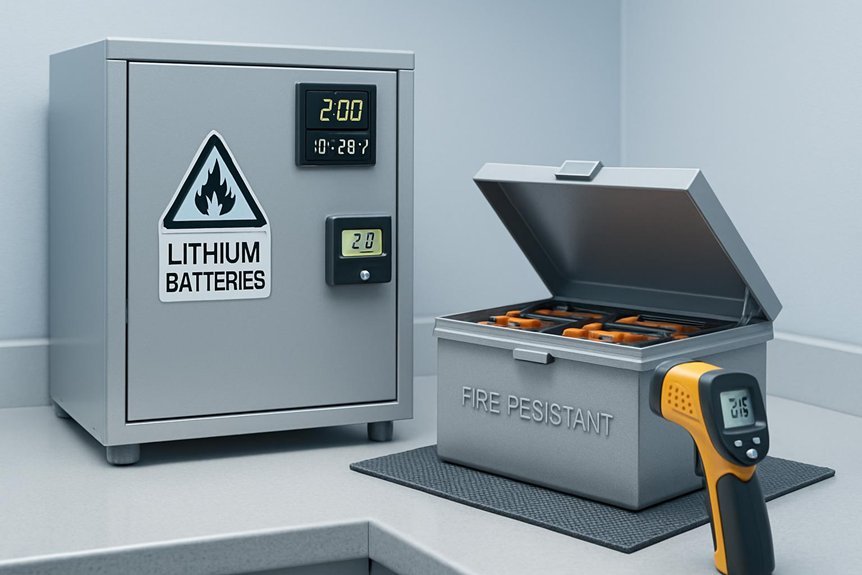
Should we keep lithium batteries chilled to a safe range? We store them at a defined storage temperature to minimize aging and mitigate thermal stress. Our practice is to maintain 0–25°C (32–77°F) for dormant packs, avoiding extreme heat or cold that accelerates degradation. We verify ambient conditions with calibrated sensors and document any excursions. Surface monitoring is essential: we routinely check for uneven heating, blistering, or softening that could indicate internal tension or insulation faults. We log surface temperatures alongside pack serials and date codes, ensuring traceability. When conditions drift beyond acceptable limits, we relocate or suspend storage until stabilization is confirmed. This disciplined approach protects capacity, safety, and reliability for long‑term storage and future use. PMID
Choose Leak-Proof Containers and Shielding to Prevent Shorts
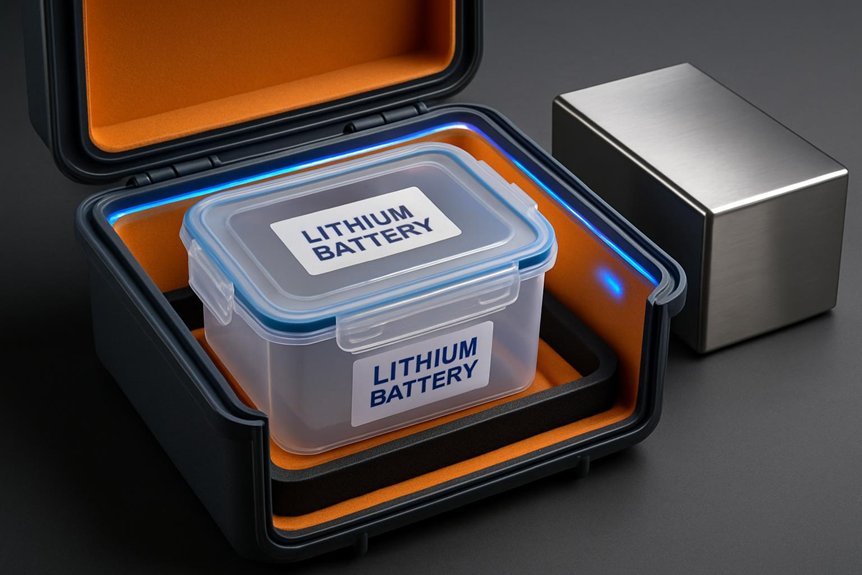
We select leak-proof containers to prevent any electrolyte leakage from reaching other items or surfaces. We then apply proper shielding techniques to minimize the risk of external shorts, using compatible barriers and labeled enclosures. Finally, we adopt short-preventive storage methods—arranging components to avoid contact, moisture exposure, and thermal runaway scenarios.
Leak-Proof Containers
Choosing leak-proof containers and appropriate shielding is essential to prevent electrolyte leakage and electrical shorts in lithium battery storage. We, as practitioners, specify containment that resists corrosion and venting under normal and abnormal temperatures. Use rigid, nonreactive containers leakproof to tears or puncture, with tight-fitting lids and gasketed interfaces. Select materials compatible with electrolyte components and capable of thermal dissipation; avoid porous plastics that absorb liquids. Label containers clearly with battery type, date, and hazard notes, and store upright to minimize pressure buildup. Maintain separation between cells to prevent cross-contamination, and ensure containers are stored away from heat sources, moisture, and flammable materials. Regularly inspect for cracks, swelling, or leaks, and replace compromised units promptly.
Proper Shielding Techniques
In storage setups, effective shielding is essential to prevent electrical shorts and thermal events. We evaluate leak-proof containers and shielding materials to minimize exposure to conductive paths and stray metals. Our approach emphasizes robust enclosure design, gasket integrity, and controlled venting to address short circuit risks while containing any thermal runaway. We select non-conductive barriers, layered containment, and grounded housings to reduce spark ignition and cross-contact between cells. We also account for environmental concerns by avoiding materials that offgas or degrade under temperature fluctuations and humidity. Shielding should be implemented with verification steps: inspect seals, test for continuity leaks, and confirm isolation from metallic debris. Clear labeling and accessibility ensure rapid response without compromising safety or performance.
Short-Preventive Storage Methods
How can we ensure long-term safety when storing lithium batteries? We choose leak-proof containers and effective shielding to prevent shorts during unplugged storage. Our approach minimizes external contact and internal arcing risk by selecting containers with robust seals and non-conductive, flame-retardant materials. We separate modules to reduce cross-contact and ensure vents remain unobstructed in case of venting. Shielding should extend beyond the pack, covering terminals and exposed edges, while avoiding pressure buildup. We implement unplugged storage in a temperature-controlled environment, and we emphasize temperature monitoring to detect drift that could prompt accelerated aging or thermal runaway. Regular inspections verify seal integrity and shielding positioning, and we document conditions to support traceability and timely intervention if anomalies appear.
Shelf and Label Multiple Packs for Safe, Organized Access
We’ll emphasize consistent shelf orientation to ensure packs aren’t stacked crooked or toppled. Clear labeling enables rapid access and reduces handling time during inspections or emergencies. By aligning packs and using concise labels, we minimize mix-ups and improve overall safety.
Shelf Orientation Practices
Have you organized multiple lithium packs for quick, safe access? We begin with consistent shelf orientation to minimize mishandling and streamline retrieval. Our storage guidance emphasizes upright placement, with terminals insulated or covered to prevent short circuits. We group packs by chemistry, voltage, and remaining charge, ensuring identical units stay together to avoid cross-contact risks. Use dedicated, non-slip shelving at eye level wherever possible, and maintain even spacing to reduce heat buildup. We rotate stock in a first-in, first-out manner, preventing prolonged retention that degrades performance. Clearly label each row with date codes and batch identifiers, and keep aisles uncluttered for rapid access and inspection. Regularly verify that supports and fasteners remain secure, and document deviations from standard shelf orientation procedures for corrective action.
Labeling For Quick Access
Labeling for quick access begins with clear, consistent identifiers that facilitate rapid, safe handling. We, as the storage team, advocate precise labeling to reduce retrieval errors and exposure risks. Each pack should be tagged with product type, cell chemistry, capacity, date of storage, and a unique identifier. Use durable, legible labels resistant to cool, dry environments and potential fingerprints or condensation. Position labels on the most accessible face, away from venting areas, so quick visibility doesn’t require movement. Group packs by similarity and maintain an index indicating shelf location, quantity, and expiration risk windows. This practice supports organizational labeling standards, minimizes handling time, and informs routine inspections. Regularly verify label integrity and update after repackaging or transfer.
Maintain Partial-Discharge Storage and Idle Charging Routines
Partially discharging a lithium battery before storage and employing idle charging routines helps minimize capacity loss and thermal stress. We maintain a target state of charge around 40–60% and avoid full charge or complete discharge, which reduces aging in idle periods. We monitor temperature and voltage drift, stopping storage if safety limits are approached. Our approach emphasizes consistent, low-risk handling, preventing insufficient depth misinterpretations that could lead to damage. We also acknowledge that certain scenarios fall into unrelated scope when considering long-term health, so we keep procedures tightly scoped to storage conditions.
| Phase | Target SOC | Rationale |
|---|---|---|
| Pre-storage discharge | 40–60% | Minimizes anode/cathode stress |
| Idle charging | Maintain 40–60% | Balances voltage stability |
| Temperature check | ≤25°C | Reduces degradation |
Inspect for Swelling, Corrosion, and Wear; Monitor Regularly
We regularly inspect lithium batteries for swelling, corrosion, and wear to detect early safety concerns and prevent failures. We perform swelling monitoring by visual and tactile checks, noting any dome or soft bulge, uneven curvature, or gas under pressure. We document changes in dimensions, lid fit, and seal integrity, and we compare against baseline when available. For corrosion checks, we inspect terminals, cases, and connectors for discoloration, galvanic staining, or electrolyte residue, cleaning with approved materials only if permitted. Wear indicators include cracked casings, warped surfaces, or loose fittings. We monitor state of charge and temperature during inspections, recording anomalies promptly. Regular cadence builds a reliable trend; halt use if rapid change is detected or symptoms worsen, and follow established safety protocols.
Know Emergency Steps and Proper Disposal for Damaged Packs
If a pack is damaged, we act immediately to protect people and property: stop using it, isolate the pack from heat sources and ignition, and move it to a non-flammable, well-ventilated area away from combustible materials. We then assess the risk level based on deformation, leakage, or smoke; evacuate nearby areas if necessary and call local hazardous materials or emergency services for guidance. Do not attempt to puncture, crush, or repair the pack. In handling, wear appropriate PPE, avoid metal tools, and keep moisture away to prevent short circuits. For damaged pack disposal, follow local regulations and manufacturer directives, document the incident, and arrange authorized collection or recycling. Never dispose of damaged packs with household waste; specialized facilities are required.
Frequently Asked Questions
How Often Should I Recalibrate the Storage Voltage per Cell?
We recalibrate on a cadence of quarterly checks, addressing recalibration cadence and per cell voltage drift if anomalies appear; we maintain strict tolerances and document drift thresholds, ensuring safety, accuracy, and consistent storage health across all cells.
Can Room Humidity Affect Li Battery Storage Safety?
Yes—room humidity can affect Li battery storage safety, especially with heat exposure and compromised storage maintenance. We, however, monitor humidity levels, use desiccants, and maintain stable temperatures to protect battery safety and performance.
Are There Signs of Cell Degradation During Long-Term Storage?
We can detect signs of degradation during long-term storage by monitoring capacity fade, voltage drift, increased internal resistance, and unexpected self-discharge; these long term indicators guide our safety checks and maintenance routines for lithium batteries.
Is It Safe to Store Mixed Cell Chemistries Together?
We think it’s not safe to store mixed cell chemistries together due to varying voltage and chemistry risks; prioritize safety considerations and storage best practices, segregating cells, monitoring temperatures, and using approved containment and protection measures.
What PPE Is Recommended When Handling Damaged Packs?
We recommend PPE for damaged packs: gloves, splash goggles, and a face shield, plus a datalogger, and a PAPR or supplied-air respirator if fumes are present; Handling damaged packs PPE should prioritize containment and ventilation.
Conclusion
We, with carefulness and candor, close this concise guide by conveying calm, concrete precautions. Keep packs cooled, contained, and correctly charged, choosing chilled, shielded storage with stable SOC around 40–60%. Safeguard surfaces, sealings, and sleeves to prevent slick slips or shorts. Systematically log temps and voltages, shelf and sort by chemistry, and label for easy access. If swelling or damage appears, pause promptly, pursue proper disposal, and pursue professional support to prevent perilous pitfalls.