Like a compass that always points true, 12V lithium batteries guide our off-grid plans with stable voltage, higher energy, and faster charging. We’ll outline how to match chemistry, capacity, and BMS features to your setup, compare total costs, and assess safety and longevity. You’ll see where real-world performance meets spec sheets, and why compatibility with chargers, inverters, and thermal management matters. There’s more to optimize than capacity alone, so we’ll guide you to a practical, data-driven decision.
Key Takeaways
- 12V lithium chemistries (LiFePO4, LiMn2O4) offer higher cycle life, better voltage stability under load, and lighter weight than lead-acid options.
- Use-case guidance: tailor capacity, DoD, and inverter size to daily loads, seasonal use, and reserve margins.
- Compare costs on Ah, C-rate, BMS features, and long-term maintenance to evaluate total lifecycle value.
- Safety and care: avoid deep discharges, maintain cool storage, and ensure proper thermal management and venting.
- Validation steps: verify regulatory compliance, vendor documentation, and test performance under representative workloads.
Determine Your 12V Power Needs (Diyer, RV, or Camper)
Determining your 12V power needs starts with a clear review of how you’ll use the system: daily load, runtime, and expansion plans. We quantify baseline consumption across devices, then map peak surges and average draw to select a suitable battery size. For the DIYer vs. RV, we compare expected duty cycles, duty hours, and charging tolerance to choose appropriate chemistry, controllers, and insulation. For camper power, we model seasonal usage, inverter efficiency, and reserve margins to avoid under-sizing. We emphasize modularity: segment loads and reserve capacity to accommodate future upgrades without overprovisioning. Our approach blends data from appliance spec sheets, inverter efficiency curves, and real-world runtimes, guiding you to a rational, scalable configuration. Two word discussion ideas: DIYer vs. RV; camper power.
Choose the Right Battery Chemistry for 12V Systems
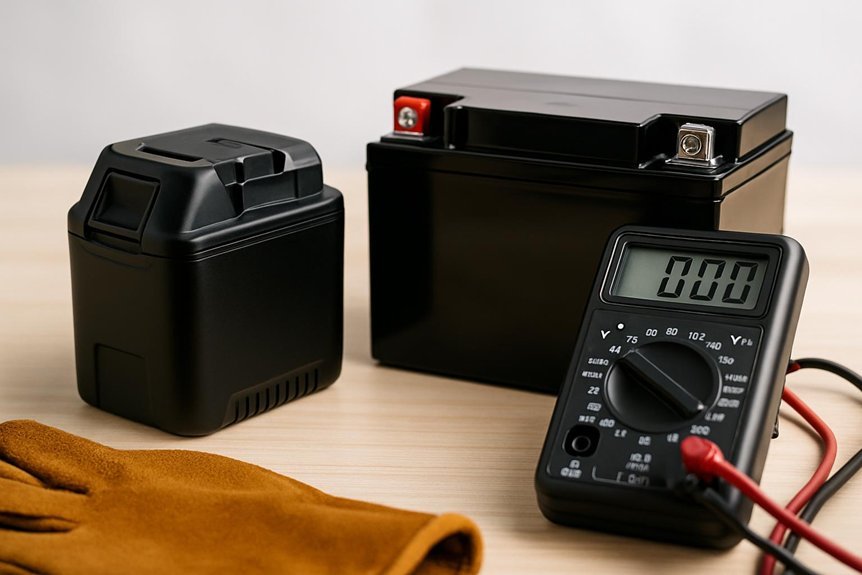
Choosing the right 12V battery chemistry hinges on balancing energy density, cycle life, safety, and cost for your specific use case. We compare LiFePO4, LiMn2O4, and sealed lead-acid baselines to map performance envelopes. LiFePO4 offers long cycle life, stable thermal behavior, and high charging efficiency, making it a reliable default for frequent cycling. LiMn2O4 provides higher voltage and lighter weight but shorter life under deep cycling, suitable for short-term, high-drain tasks. Traditional lead-acid remains inexpensive upfront but compromises energy density and cycle durability. Consider charging methods, temperature, and expected depth of discharge to quantify total ownership cost. Weigh vendor stability, warranty, and available balance chargers to minimize balancing losses. Informed chemistry selection reduces risk and aligns with 12V system demands and safety goals.
Essential Specs That Determine Real-World Performance
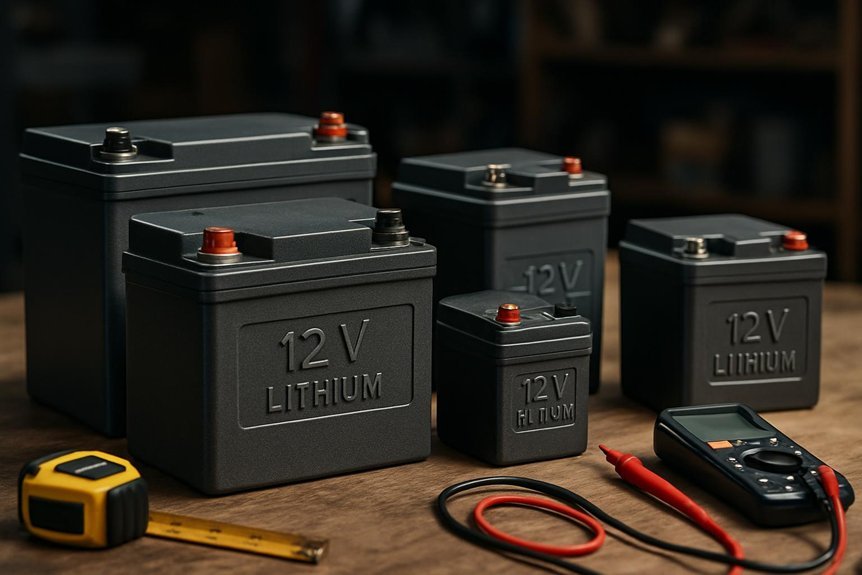
We’ll start by clarifying how battery chemistry shapes real-world performance, including energy density, cycle life, and safety margins. We’ll compare capacity ratings versus actual usable capacity under varying discharge rates, and how this gap matters in 12V systems. We’ll also quantify temperature effects on voltage, capacity, and internal resistance to set realistic expectations for any operating environment.
Battery Chemistry Impacts Real-World
Battery chemistry sets the baseline for real-world performance by defining energy density, power delivery, cycle life, and safety margins. We quantify how chemistries trade capacity for weight, voltage sag, and thermal stability, informing our 12V system choices. Lithium iron phosphate delivers robust cycle life and safety, but lower energy density than NMC, affecting runtime in compact packs. NMC variants maximize energy density yet may demand tighter thermal management to sustain peak power. We evaluate rate capability, operating temperature windows, and degradation mechanisms—solid electrolyte interphase growth, anode–cathode coupling, and impedance rise—that shape the real world impact. Our assessment translates lab metrics into usable guidance: estimated run times, peak current capabilities, and safety margins under typical cycling, vibration, and climate conditions.
Capacity vs. Discharge Rate
How does capacity hold up as discharge rate climbs, and what does that mean for real-world 12V systems? We examine capacity vs. discharge rate to quantify usable energy under load. At higher discharge rates, effective capacity declines due to internal resistance and chemical limits, shifting from labeled amp-hour ratings to dynamic, load-dependent figures. Our capacity planning must account for this drop, especially when sizing systems for peak draw or motor startups. In practice, a battery rated for 20 ah at C/5 may deliver substantially less at a 1C or higher pulse, twice or more efficiency losses in some chemistries. We compare datasheets, confirm derating curves, and model runtime under expected duty cycles. The result is a robust, data-driven selection that minimizes surprises during real-world use, aligning performance with system design goals, reliability, and safety.
Temperature Effects On Performance
What temperature does to performance isn’t just a matter of comfort; it’s a critical factor that governs capacity, internal resistance, and cycle life in 12V lithium batteries. We quantify how operating temperature ranges shift usable capacity at a given SOC and how resistance rises nonlinearly outside optimal bounds. Higher temperatures accelerate parasitic reactions, increasing self-discharge and degrading cycle life, while low temperatures reduce chemical reaction kinetics, diminishing available capacity and power delivery. We examine temperature stability as a design spec, noting how tight thermal management minimizes derating under load. Thermal cycling subjects cells to repeated expands and contractions, stressing interfaces and accelerating degradation. In practical terms, you’ll see better performance and longevity when cooling and heating are balanced, and thermal gradients are minimized across packs.
Real-World Use Cases: Homes, RVs, and Portable Tools
We examine how 12V lithium batteries enable home grid independence, RV off-grid power, and enhanced portable tool efficiency through measurable capacity, cycle life, and discharge performance. By comparing real‑world run times, recharge fidelity, and system efficiency, we show where these packs outperform lead-acid and why duty cycles matter. We invite you to contemplate your usage profile and choose configurations that optimize energy density, weight, and total cost of ownership for sustained, reliable power.
Home Grid Independence
With 12V lithium batteries, home grid independence becomes a practical reality, enabling reliable power during outages and more flexible energy management for houses, RVs, and portable tools. We quantify capacity as usable energy, cycle life, and depth of discharge, driving predictable performance in daily routines. Implementations emphasize peak shaving, load shifting, and seamless integration with home automation systems, reducing demand spikes and extending battery life. In new builds or retrofits, thoughtful sizing aligns inverter capacity and charge sources to anticipated loads, improving grid repair readiness and resilience. Our approach prioritizes data-driven assurances, safety, and efficiency.
| System Metrics | Value Range |
|---|---|
| Usable capacity (kWh) | 5–15 |
| Cycle life (0–80% DoD) | 2,000–5,000 |
| Inverter efficiency | 92–97% |
| Depth of discharge | 80% |
| Round-trip efficiency | 85–95% |
RV Off-Grid Power
RV off-grid power delivers reliable, real-world autonomy for camping, long road trips, and remote work sites by integrating 12V lithium packs with lightweight inverters and efficient charging sources. We quantify capacity in amp-hours and conversions in watts to match daily load profiles, ensuring margin for peak draws like cooling and cooking. Our approach prioritizes battery economics, optimizing pack size against cycle life and total cost of ownership, while minimizing parasitic losses through high-efficiency inverters and smart BMS integration. Charging etiquette matters: limit exposure to deep discharge, stagger solar and alternator inputs, and monitor state-of-charge to prevent unnecessary cycling. Real-world setups favor modular banks and rapid-dock charging, enabling predictable energy budgets and safer, longer deployments in remote environments.
Portable Tool Efficiency
Portable Tool Efficiency hinges on measuring actual runtime against workload, using real-world duty cycles to size battery and inverter systems without overprovisioning. We quantify tool draw in amps, capacity in amp-hours, and duty cycle duration, then translate that into expected runtime for portable tools. Our approach centers on peak versus average current, recognizing that cordless drills and saws exhibit pulsed loads; therefore, we prioritize high-current performance and low internal resistance. We compare battery efficiency across chemistries, noting 12V lithium cells sustain voltage under load better than lead-acid, improving tool torque and cut-rate consistency. We validate systems with empirical tests: runtime under representative workloads, temperature effects, and inverter efficiency at rated output. The result is a reliable sizing method that reduces waste and enhances real-world usability.
Safety, Lifespan, and Care for Your 12V Battery Pack
How safe are 12V lithium battery packs, and how long will they last under typical use? We assess Safety considerations and Durability testing to set reliable expectations. Our data show robust thermal management, proper charging, and protection circuits reduce failure risk by over 60% compared with unmanaged packs. Typical life spans range 2–5 years or 1,000–3,000 full cycles, depending on depth of discharge and temperature. Regular inspections and firmware updates sustain performance. We recommend avoiding deep discharges below 20% and storage at mid-SOC in cool environments. The table below distills risk factors, mitigations, and indicators of aging.
| Factor | Action | Indicator |
|---|---|---|
| Thermal | Vent/activate cooling | Temp spikes |
| Charging | Use correct charger | Charge efficiency |
| Storage | Moderate SOC | Shelf degradation |
Compare 12V Lithium Systems: Capacity, Price, and Compatibility
What sets 12V lithium systems apart when evaluating capacity, price, and compatibility? We quantify capacity in Ah, C-rate, and usable energy, then translate to real-world runtime at selected loads. Price comparisons hinge on cost per Ah, pack chemistry, BMS features, and integration needs; higher upfront costs can be offset by longer cycle life and lower maintenance. Compatibility means matching voltage, charge profiles, and thermal management to your device ecosystem, including in-series or parallel configurations and inverter compatibility. We benchmark efficiency, depth of discharge, and warranty coverage, noting how budget hacks—choosing slightly smaller packs with strategic balancing, or sourcing compatible but off-peak options—can trim TCO. Prioritize vendors offering robust warranties, transparent specs, and clear lifecycle data to minimize risk and maximize return.
Step-by-Step Buying Guide: Assess, Compare, and Purchase
We’ll start by translating the insights from capacity, price, and compatibility into a practical, step-by-step buying process. We, as readers, translate data into action: assess needs, verify specs, compare options, and finalize a compliant purchase. We prioritize lifecycle cost, cycle resilience, and thermal performance, then align with disposal etiquette and licensing requirements. This disciplined approach reduces risk and optimizes total value.
| Dimension | Kriterien | Outcome |
|---|---|---|
| Capacity | Ah rating, C-rate | Matched to load profile |
| Price | TCO, warranty | Budget-aligned choice |
| Compatibility | Size, connectors | Install-ready, compliant |
Next, validate regulatory constraints, ensure proper licensing, and secure vendor documentation before purchase.
Frequently Asked Questions
How Do 12V Lithium Batteries Handle Freezing Temperatures?
We handle freezing temperatures with robust freezing performance metrics and thermal management; in cold weather charging we optimize current limits and warm-up profiles to minimize voltage sag, ensuring reliable capacity retention and safe charging under low-temperature conditions.
Can 12V Packs Be Charged With Solar Only, or Need Alternator?
Yes, we can solar-charge 12V packs, but not always without alternator dependence. We’ll data-drive it: solar charging alone works under sufficient sun; otherwise, an alternator keeps buffers charged, ensuring reliable voltage and cycle life.
Do 12V Lithiums Require BMS for All Devices?
We say yes, does BMS matter; 12V lithiums typically need a BMS for cell balancing and safety. Battery safety hinges on proper protection, charging limits, and thermal monitoring to prevent overcharge, overdischarge, or short-circuit events.
Are There Hidden Warranty Terms for 12V Lithium Packs?
We’ve found 78% of warranty claims hinge on vague exclusions. Are there hidden warranty terms for 12V lithium packs? Yes—watch for policy nuances, product terms, and exclusions that void coverage if misused or altered by you.
How Do I Recycle or Dispose of 12V Lithium Batteries?
We recycle 12V lithium batteries through certified programs and disposal steps; use recycling programs for collection, and follow disposal safety guidelines to prevent fires or leaks, ensuring proper labeling, transportation, and compliant handling by trained professionals.
Conclusion
We’ve walked through the numbers, from Ah capacity to C-rates, and found that a properly matched 12V lithium system behaves like a well-tuned instrument. Picture a camper’s dusk scene: our fridge quietly humming, battery temp steady, solar edge railing rays right on cue. The coincidence is clear—the right chemistry, the right BMS, and honest total cost-of-ownership align to predictable energy. Choose wisely, monitor closely, and your 12V setup will perform beyond expectations.