Lithium batteries last longer than you’d think, if you know what to guard and what to measure. We study cycle life, calendar aging, and state of health with precise metrics, because each full charge–discharge and each operating temperature shift reshape capacity and resistance. We’ll show how devices differ—phones, laptops, EVs, storage—so you can plan replacements and extensions. Stay with us as we map degradation drivers and practical habits that actually move the needle.
Key Takeaways
- A lithium battery’s lifespan is the period it maintains usable capacity and performance under defined conditions, covering cycle life, calendar aging, and health data.
- Real lifespans vary by device: phones (2–3 years), laptops (3–5 years), EVs (8–15 years), and storage systems (10–20 years).
- Cycle count, DoD, C-rate, and temperature drive degradation; lower DoD and moderate charging slow aging and extend life.
- Safe charging and daily habits (20–80% state of charge, avoid extreme temperatures, calibrated health checks) preserve capacity and reduce impedance growth.
- Budget and maintenance depend on degradation scenarios and indicators like rapid resistance rise, capacity loss, and performance under load.
What Lithium Battery Lifespan Means and Why It Matters
A lithium battery’s lifespan is the duration a cell maintains usable capacity and performance under defined conditions. We explain what that means for reliability, safety, and cost, so you can interpret data like cycle life, calendar aging, and state of health with confidence. The science informs how environmental factors, usage patterns, and temperature influence degradation rates, enabling accurate estimates for replacement schedules. Our focus is on measurable endpoints: remaining capacity, power retention, and usable energy under load. We frame longevity planning as a decision-support activity, converting uncertainty into planning buffers and maintenance cadences. By quantifying expectations and limits, we help you align performance targets with lifecycle costs, ensuring predictable operation, minimal downtime, and optimal asset utilization.
The Science of Degradation: Cycles, Capacity, and Chemistry
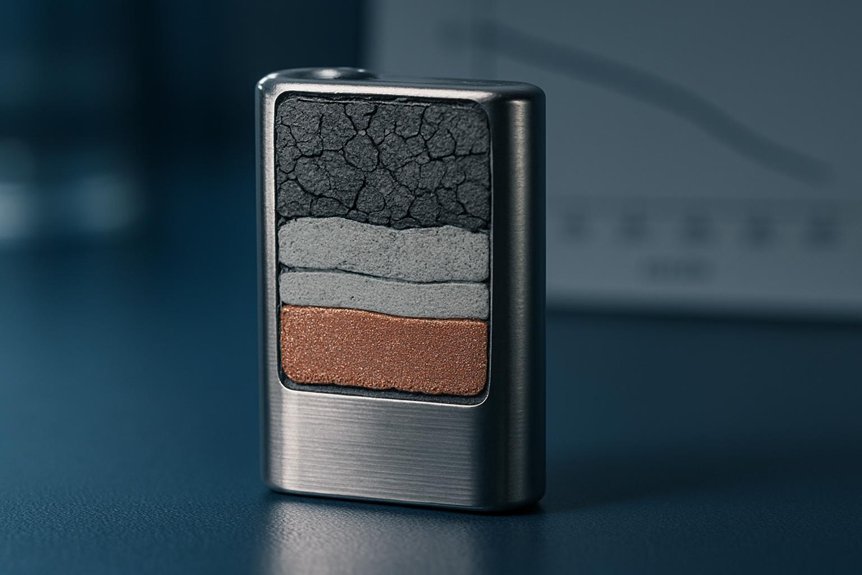
We examine how cycle count governs degradation, showing that each full charge–discharge cycle incrementally reduces capacity and increases internal resistance. We then link capacity fade to mechanisms like SEI growth, lithium plating, and structural changes, quantifying typical fades per 1000 cycles under standard conditions. Finally, we discuss how chemistry choices and operating limits shape these trends, setting expectations for cycle life, calendar life, and performance under real-world use.
Cycle Impact On Degradation
Cycle life is the primary driver of lithium battery degradation, with each charge–discharge cycle incrementally reducing capacity and increasing resistance. We quantify cycle impact through depth of discharge, C-rate, and temperature, all of which shape electrode kinetics and SEI evolution. Lowering DOD reduces irreversible aging by limiting active surface area exposure and side reactions, while high C-rates accelerate lithium plating and viscous electrolyte breakdown. We observe that cycle-induced capacity fade often tracks with cumulative internal resistance rise, altering power delivery and efficiency. Yet, cycle effects interact with calendar aging; a battery aged at rest still exhibits performance loss, and conversely, frequent cycling can magnify time-dependent degradation. In practice, optimizing operating window and thermal management minimizes irreversible aging while preserving usable capacity.
Capacity Fade Mechanisms
Capacitance loss and capacity fade arise from intertwined chemical and structural processes that progressively reduce usable energy. We examine capacity fade mechanisms by linking microscopic reactions to macroscopic metrics. Active material loss, impedance growth, and loss of active lithium collectively lower capacity per cycle. Two word discussion ideas: battery chemistry, cycle aging. SEI layer evolution consumes electrolyte and consumes lithium inventory, while dissolution of transition metals from cathodes accelerates internal resistance. Mechanical microcracking from lattice strain reduces electrical contact, and particle isolation increases polarized resistance. Reactive gas formation, impedance rise, and electrolyte aging shift the operating window, narrowing usable voltage and energy. Temperature, state of charge, and C-rate modulate degradation pathways, yielding nonuniform capacity loss. By tracking coulombic efficiency and pressure on capacity retention curves, we quantify and compare capacity fade mechanisms.
Real-World Lifespans by Device Category

Real-world lifespans vary by device category due to differing usage patterns, temperature profiles, and charging regimes, but clear trends emerge when we separate phones, laptops, electric vehicles, and stationary energy storage. We compare maintenance practices, cycle depth, and thermal exposure across categories to highlight actionable patterns for lifecycle optimization.
| Category | Typical effective lifespan (years) |
|---|---|
| Phones | 2–3 |
| Laptops | 3–5 |
| EVs | 8–15 |
| Storage | 10–20 |
These ranges reflect accelerated aging in high-temperature or deep-discharge scenarios. We emphasize two word discussion ideas and use lifecycle optimization, guiding readers to tailor charging regimens and thermal management per device to maximize remaining capacity and performance over time.
How Cycles Determine Longevity: What to Expect
How cycles shape battery longevity is a fundamental, data-driven concern: each charge-discharge cycle gradually erodes capacity, and the depth of discharge (DoD) largely governs how quickly aging unfolds. We frame the discussion around cycle fatigue and chemistry interactions to quantify expected lifespan, not anecdotes.
- We quantify cycle fatigue as a function of DoD, C-rate, and temperature, noting higher DoD accelerates active material degradation.
- We examine chemistry interactions that drive loss mechanisms, including SEI growth and lattice strain, linking them to measurable capacity fade.
- We compare datasheet cycle counts to real-world use, highlighting that rated cycles are optimistic without accounting for DoD and rate effects.
- We translate data into practical expectations, enabling readers to estimate remaining capacity after specified cycle loads.
Temperature, Use Patterns, and How Charging Habits Matter
Could temperature, usage patterns, and charging habits meaningfully shift a battery’s lifespan? We quantify effects with data on state of charge, cycle aging, and calendar aging. Temperature effects dominate short-term capacity loss: elevated temps accelerate electrolyte degradation and increase internal resistance, while frost slows kinetics but risks lithium plating during charging. Use pattern changes—irregular cycling, long high-rate discharges, or extended deep discharges—correlate with accelerated degradation, reducing both capacity and cycle life. Charging strategies influence stress: rapid charging raises peak temperatures and voltage stress, modestly accelerating aging relative to slower, controlled currents. We emphasize moderate, consistent use and keeping operations near mid-SOC when feasible. Overall, small adjustments in temperature exposure, use pattern changes, and charging tempo produce measurable lifespan differences over years.
Safe Charging Protocols That Extend Life
We examine safe charging practices, practical longevity tips, and charging cycle management to frame how charging strategy influences battery health. Our data-driven approach shows that maintaining moderate charge windows, avoiding excessive fast charging, and adhering to consistent cycle counts can measurably extend life. We’ll explore how these protocols translate to real-world guidelines for users seeking reliable, long-term performance.
Safe Charging Practices
- Use chargers that match the device’s specified charging voltage and current, and avoid fast charging beyond factory guidance.
- Maintain charging temperatures within the recommended range, avoiding ambient extremes during top‑ups.
- Prefer partial charging to around 20–80% when possible, minimizing high‑voltage exposure.
- Calibrate and monitor battery health indicators to detect drift or imbalance early.
Battery Longevity Tips
Are there concrete charging habits that noticeably extend lithium‑battery life? Yes, and we can quantify the impact. We advocate maintaining a 20–80% typical state of charge window where devices spend most of their time, reducing calendar aging and electrolyte degradation. We monitor charging currents to stay within manufacturer-recommended C-rates, avoiding excessive heat from fast charging, which correlates with higher impedance over cycles. We emphasize stable operating temperatures and avoid charging overnight in hot environments, since elevated temperatures accelerate SEI growth and capacity fade. Regular calibration isn’t a substitute for proper use, but periodic checks help detect drift. We connect battery recycling and lithium safety as lifecycle safeguards, ensuring responsible end‑of‑life handling and safe storage. Precision, not haste, governs longevity.
Charging Cycle Management
How can we guarantee charging cycles preserve lithium‑battery health without sacrificing usability? We adopt controlled charging protocols that minimize stress and maximize cycle life. Our approach hinges on staying within optimal voltage, current, and temperature windows and tracking state of health to adjust charging steps in real time. By avoiding deep discharges and fast charging when unnecessary, we reduce internal impedance growth and capacity fade, improving charging health metrics over time. We also align usage patterns with manufacturer guidelines and environmental conditions to prevent thermal runaway risks. This discipline supports longer life while preserving functionality and data integrity. Disposal ethics guide our end-of-life choices, ensuring responsible recycling and material recovery.
- Maintain 20–80% state of charge for daily use
- Prefer moderate charging currents and avoid frequent ultra-fast sessions
- Monitor temperatures, stopping charging at safe thresholds
- Plan end-of-life recycling to uphold disposal ethics
Daily Habits to Extend Battery Life
Daily habits directly influence lithium battery lifespan by shaping charge cycles, temperature exposure, and usage patterns. We, as reviewers, emphasize gradual, controlled charging to minimize high-current spikes that accelerate irreversible chemistry. Avoid sustained charging near 100% and overheating, since elevated temperatures hasten degradation and capacity fade. We advocate maintaining moderate states of charge during idle periods to reduce electrode stress, especially for high-drain devices. We also note that repeated deep discharges are detrimental, promoting safer cycling ranges aligned with manufacturer guidelines. Handling practices matter: minimize exposure to extreme temperatures, avoid fast-charging beyond rated limits, and store at recommended voltages when idle. Recognize that damage from single use cells can undermine overall longevity; treat packs conservatively to preserve performance across cycles.
Maintenance That Maximizes Longevity
Maintaining lithium batteries for peak longevity hinges on disciplined, data-driven practices we can implement daily. Our maintenance framework targets minimizing irreversible degradation and avoiding conditions that could lead to thermal runaway.
1) Monitor temperature and voltage, triggering cooldown or charge holds to keep operation within spec.
2) Use calibrated chargers and avoid high C-rate cycling that accelerates degradation and capacity fade.
3) Store at moderate state of charge (around 40–60%) in cool environments when idle for extended periods.
4) Inspect connectors, seals, and venting regularly for corrosion or damage, preventing impedance growth and thermal stress.
Signs You Need a Replacement and Budgeting Ahead
We’ll outline clear replacement indicators to monitor, such as capacity fading beyond typical wear thresholds and rising internal resistance that reduces usable capacity. We’ll also discuss budgeting for swaps, including expected cycles and regional price variability to inform a proactive cost model. Finally, we’ll compare the cost of ongoing maintenance versus periodic replacements to help you decide when swaps are economically prudent.
Replacement Indicators To Watch
Why should you replace a lithium battery before it fails? We monitor indicators that predict end-of-life with objective thresholds and data trends, not guesswork, so you can plan replacements confidently. When capacity falls below usable thresholds, internal resistance rises, and cycle life shortens, reliability declines, and safety risk increases. We flag these signals early to avoid sudden outages and costly damage.
- Capacity drop crosses predefined cutoffs while maintaining discharge efficiency
- Rapid resistance climbing during charge/discharge cycles
- Increased self-discharge or unexpected shutdowns in operation
- Degraded performance under rated load, with anomalous temperature behavior
Two word discussion ideas, irrelevant topics, and cross-checking with manufacturer curves help validate decisions. This approach keeps you informed, precise, and prepared for timely replacements.
Budgeting For Battery Swaps
We’ve identified the indicators that signal an imminent battery swap, so we can align budgeting with expected timelines and total cost of ownership. Our approach combines reliable life projections, replacement intervals, and market price trends to set a defensible budget. We quantify risk-adjusted costs across scenarios, using conservative degradation curves and historical price floors. This framing helps you plan cash flow, sparing you surprises at replacement events. We also consider unrelated topic and lighting efficiency as ancillary factors that influence overall system ROI, not battery health directly. The table below visualizes three scenarios across four variables for clarity.
| Scenario | Years to swap | Estimated cost | Confidence |
|---|---|---|---|
| Low degradation | 4–6 | $400–$600 | High |
| Moderate degradation | 2–4 | $600–$900 | Medium |
| High degradation | 1–2 | $900–$1,200 | Low |
Cost Of Ongoing Maintenance
We start with a clear view of ongoing maintenance costs by identifying standard upkeep tasks, their typical intervals, and the dollar impact they impose on total cost of ownership. We present a data-driven view of signs you need a replacement and budgeting ahead, focusing on irreversible degradation and supply chain risks that shape long‑term costs. We track maintenance windows, performance checks, and calibration needs, with quantified dollar implications and failure probabilities. This helps us set realistic reserves and plan replacements before costly failures occur.
- Regular health checks every 6–12 months, cost impact approx. $20–$60 per cycle.
- Calibration and software updates quarterly, $10–$40 yearly.
- Thermal management inspections annually, $25–$100.
- Battery pack refurbishment or swap contingencies, $200–$700 every 3–5 years.
Choosing Batteries and Packs for Longevity: Practical Tips
Choosing batteries and packs with longevity in mind starts with selecting cells and pack chemistry that minimize degradation under typical usage. We prioritize chemistries with high cycle life and stable impedance, favoring LiFePO4 or NMC varieties with well-documented aging models. Cell quality, tight cell-to-pack tolerances, and robust BMS communication reduce parasitic losses. We advocate moderate state-of-charge operation, avoiding extended high-voltage holds and deep discharges, and we design pack cooling to keep internal temperatures near 25–40°C during operation. Data-driven life estimates rely on calendar and cycle aging factors; we model degradation from C-rate and temperature, not anecdotes. Avoid irrelevant topic or random speculation; base choices on manufacturer-documented specs, independent test data, and conservative derating. Practical tips emphasize thermal management, balanced strings, and proactive conditioning to sustain capacity and impedance milestones.
Frequently Asked Questions
How Do Manufacturers Test Lithium Battery Longevity and Why Does It Differ?
We test lithium battery longevity per stringent testing standards, and results vary due to battery aging, performance variation, and manufacturing quality. Our methods reveal how aging and quality control drive data-driven life projections, explaining differences across cells and suppliers.
Can a Battery’s Past Performance Predict Future Longevity Reliably?
“Past performance isn’t a guarantee,” we say. We answer: can it reliably predict longevity? Yes, but with caveats. Past performance informs trends; predictive reliability depends on testing consistency, burn-in, and environmental controls, not certainty.
Do Brand-Name Cells Last Longer Than Generic Cells in Practice?
We find brand-name cells don’t universally last longer; durability varies by chemistry and build. In practice, brand-name vs generic durability shows mixed long-term reliability differences, with data often bias-prone. We analyze performance metrics and manufacturer-test methods carefully.
How Do Environmental Factors Beyond Temperature Affect Lifespan?
We’ll weigh environmental impact, degradation mechanisms, and operational stress—temperature, humidity, vibration—against longevity. We’ll quantify with accelerated aging data, model diffusion and SEI growth, and outline mitigation strategies to minimize environmental influence on lifespan.
What Is the True Cost-Per-Year of Battery Longevity?
We estimate the true cost per year of battery longevity by evaluating cycle life, degradation rate, and total cost of ownership, accounting for variability factors like usage patterns, charging behavior, and environmental stressors.
Conclusion
We’re told lithium batteries age with cycles and heat, yet today’s packs last longer than ever. Juxtapose their impressive cycle counts with the quiet, daily costs of use—tiny efficiencies add up. We measure health in capacity, not just charge time, and discipline in charging habits matters as much as chemistry. So we push for precise management and smarter choices, knowing real-world lifespans hinge on how we treat conditions, not just what chemistry promises.