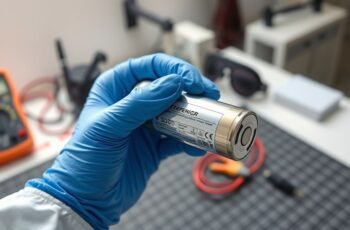
LiFePO4 batteries are increasingly favored for their safety and stability, yet understanding their inherent safety features remains critical for effective use. These batteries offer thermal stability and built-in protection circuits, but improper handling or installation can still pose risks. Ensuring safe operation requires a detailed knowledge of proper practices and potential hazards. As we explore the core elements of an all-encompassing safety guide, you’ll see how critical informed decisions are to prevent accidents and extend battery lifespan.
Key Takeaways
- Understand the inherent safety features of LiFePO4 chemistry, including thermal stability and built-in protection circuits.
- Follow proper handling, storage, and maintenance procedures to prevent damage, corrosion, and environmental hazards.
- Install batteries securely with adequate spacing, proper wiring, and ventilation to avoid mechanical and thermal risks.
- Use certified chargers, battery management systems, and protective components to ensure safe charging and discharging.
- Be prepared for emergencies by knowing fire safety protocols, proper disposal methods, and first aid procedures.
Understanding LiFePO4 Batteries and Their Safety Features
Although LiFePO4 batteries are widely regarded for their safety and stability, understanding their core design and safety features is essential for effective utilization. Their battery chemistry, based on lithium iron phosphate, provides inherent thermal stability and reduced risk of thermal runaway. This stability minimizes fire hazards compared to other lithium-ion chemistries. Safety certifications—such as UL, CE, and IEC standards—affirm that these batteries meet rigorous safety benchmarks, ensuring proper manufacturing and performance reliability. The chemistry’s stable structure prevents overcharging and deep discharging from causing damage or safety issues. Additionally, built-in safety features like integrated protection circuits regulate voltage and current, safeguarding against faults. Recognizing these design aspects and certifications helps us optimize usage while maintaining safety in various applications.
Proper Handling and Storage of LiFePO4 Batteries
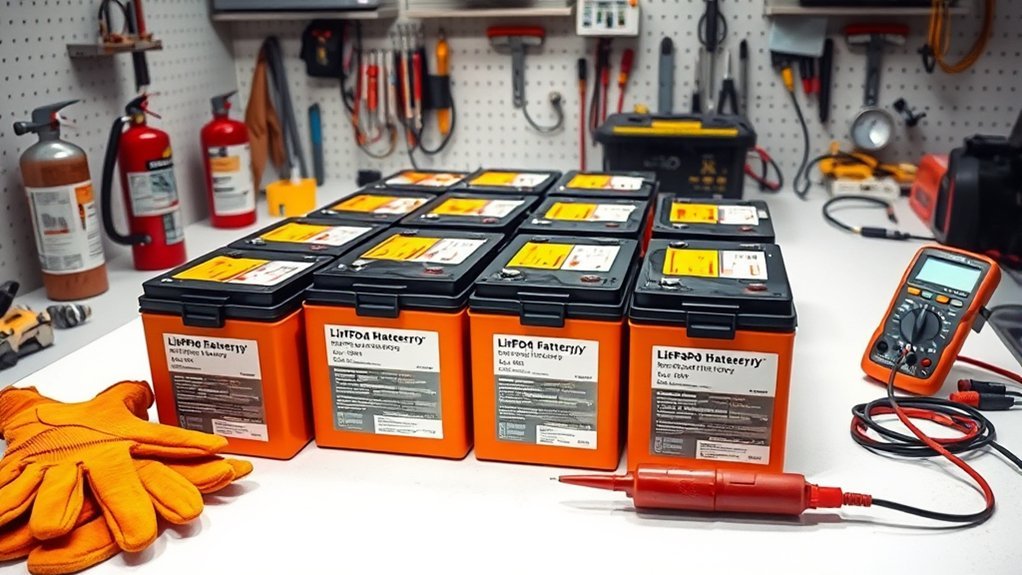
Proper handling and storage are critical to maintaining LiFePO4 battery safety and performance. We must follow strict procedures for safe handling to prevent damage or accidental activation, while guaranteeing storage conditions minimize risks of thermal runaway and degradation. Careful adherence to these protocols ensures longevity and safety in both everyday use and long-term storage.
Safe Handling Procedures
Handling and storing LiFePO4 batteries correctly is essential to guarantee safety and maintain their longevity. Proper procedures include avoiding mechanical damage, preventing short circuits, and adhering to manufacturer guidelines. When handling, always wear protective gear and use insulated tools to prevent accidental electrical contact. Storage should be in a cool, dry environment, away from flammable materials, to mitigate risks of thermal runaway. Understanding the chemical composition of LiFePO4 batteries helps identify proper disposal methods; these batteries are recyclable and should be directed toward battery recycling programs at end-of-life. Correct handling minimizes the risk of chemical leaks or fires, ensuring safety during use and disposal. Strict adherence to these protocols preserves battery integrity and supports environmentally responsible recycling practices.
Proper Storage Conditions
Effective storage of LiFePO4 batteries is vital for maintaining their safety and performance over time. Proper storage involves controlling environmental conditions, primarily temperature and humidity. We recommend storing batteries in a cool, dry place, ideally between 0°C and 25°C, to prevent capacity loss and thermal stress. Temperature fluctuations can accelerate degradation, so stable temperature control is essential. Humidity management is equally important; excessive moisture can lead to corrosion and electrical faults. Using sealed, ventilated containers helps regulate humidity levels and protects the batteries from environmental contaminants. Additionally, storing batteries at a partial state of charge—around 50%—reduces stress and prolongs lifespan. Adhering to these storage practices ensures safety, peak performance, and longevity of LiFePO4 batteries.
Correct Installation Practices for Safe Operation
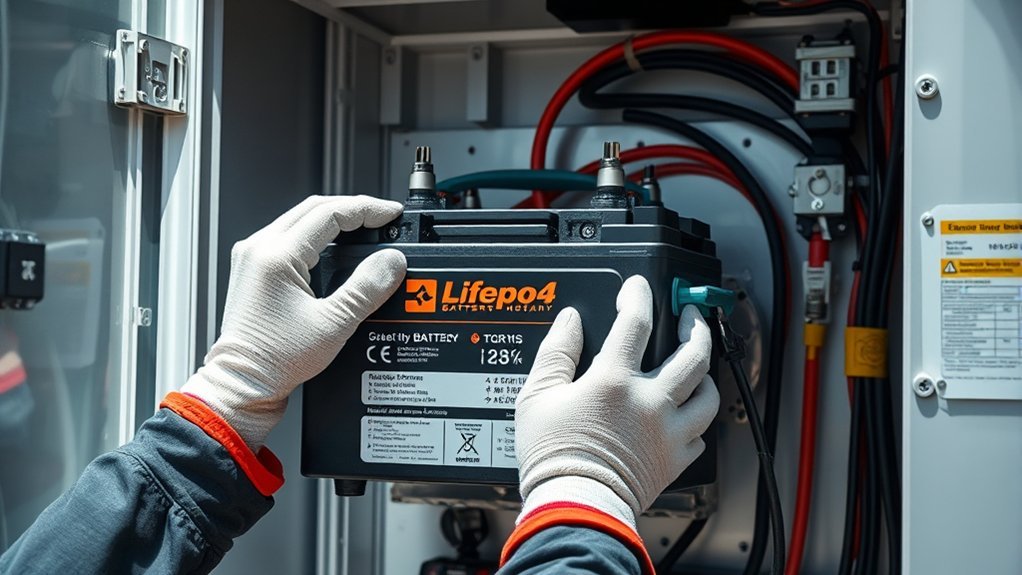
Ensuring proper mounting techniques minimizes mechanical stress and prevents damage during operation. Correct wiring procedures are essential to maintain system integrity and avoid electrical faults. Secure connection practices guarantee reliable performance and reduce the risk of safety hazards.
Proper Mounting Techniques
To guarantee the safe operation of LiFePO4 batteries, proper mounting techniques must be meticulously followed. Correct battery positioning ensures maximum airflow, minimizes vibration, and prevents mechanical stress, which can compromise safety. We recommend mounting batteries on stable, non-flammable surfaces and securing them with appropriate mounting hardware designed for vibration resistance. The hardware should be corrosion-resistant and capable of maintaining firm contact without damaging the battery casing. Properly anchored batteries reduce movement during operation, decreasing the risk of electrical disconnection or physical damage. Additionally, maintaining adequate spacing around the battery allows for heat dissipation and inspection access. These measures collectively enhance safety, prolong battery life, and assure reliable performance in various operational environments.
Correct Wiring Procedures
Proper wiring is fundamental to the safe operation of LiFePO4 batteries, as incorrect installation can lead to electrical hazards, reduced performance, or system failure. To guarantee maximum safety and longevity, we recommend:
- Use appropriately rated cables to handle the current load, minimizing heat and voltage drops.
- Connect positive and negative terminals correctly, avoiding reverse polarity that can cause damage or fire.
- Install inline fuses or circuit breakers to protect against short circuits and overloads.
- Follow manufacturer guidelines for wiring sequences, reducing the risk of loose connections that hinder performance or pose environmental risks. Proper wiring also facilitates battery recycling by preventing damage that complicates disposal. Ultimately, correct wiring minimizes environmental impact by prolonging battery life and reducing hazardous waste.
Secure Connection Practices
Achieving secure connection practices is critical to maintaining the safety and reliability of LiFePO4 battery systems. Properly securing connections guarantees connection stability, which minimizes resistance and prevents overheating or potential failure. We emphasize using high-quality connectors designed for battery applications, confirming they are rated for the current load. Tightening terminals adequately is essential; loose connections can lead to arcing and voltage drops. Consistent torque application with appropriate tools maintains connection integrity over time. We also recommend inspecting connections regularly for corrosion or wear, which can compromise stability. Assuring secure connections not only enhances safety but also optimizes performance and lifespan of the battery system. Precision in connection practices is fundamental for safe, stable, and efficient LiFePO4 battery operation.
Recognizing and Preventing Common Safety Hazards
Understanding common safety hazards associated with LiFePO4 batteries is essential for maintaining safe operation and preventing accidents. Key hazards include overcharging, physical damage, improper disposal, and thermal runaway. To mitigate these risks:
- Regularly monitor charging levels to prevent overcharge conditions that can lead to overheating.
- Avoid physical impacts or punctures, as damage exposes internal components and increases fire risk.
- Follow proper battery disposal procedures to minimize environmental impact and prevent hazardous leakage.
- Use appropriate protective equipment and ventilation to prevent accumulation of flammable gases during abnormal thermal events.
Recognizing these hazards allows us to implement preventive measures, ensuring safety and environmental responsibility in battery management.
Maintaining and Monitoring Battery Health Safely
To guarantee the longevity and safe operation of LiFePO4 batteries, consistent maintenance and monitoring are crucial. Regular voltage and temperature checks help identify early signs of degradation, ensuring peak performance and extending the battery’s lifespan. Monitoring state-of-charge (SOC) and state-of-health (SOH) metrics allows us to prevent over-discharge or overcharge, which can accelerate capacity loss. Proper balancing of cells is essential to maintain uniform performance and reduce environmental impact by minimizing waste and resource consumption. Additionally, routine inspections of terminals and connections prevent corrosion and potential failures. By adhering to these practices, we not only prolong battery life but also reduce the environmental footprint associated with premature disposal and manufacturing. This proactive approach supports both safety and sustainability.
What to Do in Case of a Battery Emergency?
Despite our best efforts to maintain and monitor LiFePO4 batteries, emergencies can still occur. In such cases, a swift, well-informed emergency response is critical. First, guarantee personal safety by evacuating the area and avoiding contact with leaking or overheated batteries. Second, if there’s a fire, use a Class D or ABC fire extinguisher to suppress flames—never use water on lithium battery fires. Third, administer first aid if contact with electrolyte or smoke occurs, focusing on respiratory protection and skin decontamination. Fourth, contact emergency services immediately and provide details of the incident. Proper training in emergency response and first aid procedures minimizes harm and prevents escalation. Always prioritize safety, and document the incident for future review and prevention.
Best Practices for Charging and Discharging LiFePO4 Batteries
Properly managing the charging and discharging processes of LiFePO4 batteries is crucial to maximize their lifespan and guarantee safe operation. Ideal charging involves using a charger that maintains voltage within recommended limits, typically around 3.65V per cell, to prevent overcharge and thermal stress. Discharging should be controlled to avoid deep depletion, which can compromise cell integrity. Consistent monitoring of voltage and temperature ensures safe operation and longevity. Adhering to these practices minimizes environmental impact by reducing the need for frequent replacements and promoting responsible battery recycling. Proper usage also prevents hazardous failures, supporting safer disposal at end-of-life. Ultimately, disciplined charging and discharging practices are essential for sustainable energy storage, environmental stewardship, and the long-term health of LiFePO4 batteries.
Choosing Quality Components and Accessories for Safety
Selecting high-quality components and accessories is fundamental to ensuring the safety and reliability of LiFePO4 battery systems. Using certified batteries, reliable connectors, and appropriate BMS units minimizes risks like thermal runaway and overcurrent.
- Certified Batteries: Ensure they meet safety standards to prevent malfunctions and facilitate proper battery recycling.
- Quality Connectors: Use corrosion-resistant, properly rated connectors to avoid electrical faults.
- Effective BMS: A robust Battery Management System monitors voltage, temperature, and state of charge, reducing environmental impact by extending lifespan.
- Proper Fuses and Circuit Breakers: Protect against overloads and short circuits, aiding in safe disposal and minimizing battery recycling hazards.
Prioritizing quality components helps mitigate safety risks, reduces environmental impact, and supports responsible battery recycling.
Frequently Asked Questions
How Long Do Lifepo4 Batteries Typically Last With Proper Use?
Lifepo4 batteries typically last 2000 to 5000 charging cycles, depending on usage, due to their stable battery chemistry. Proper use guarantees longevity, with regular balanced charging and avoiding deep discharges extending overall lifespan considerably.
Are Lifepo4 Batteries Environmentally Friendly and Recyclable?
We find that LiFePO4 batteries are eco-friendly and recyclable; for example, proper recycling processes allow valuable materials to be recovered, reducing environmental impact and supporting sustainable disposal through eco-friendly methods.
Can Lifepo4 Batteries Be Used in Extreme Weather Conditions?
We find that LiFePO4 batteries exhibit strong temperature resilience and weather adaptation, making them suitable for extreme conditions. Their stable chemistry guarantees reliable performance across varied temperatures, though ideal operation requires adherence to manufacturer-specified temperature ranges for safety and efficiency.
What Are the Signs of a Failing or Damaged Lifepo4 Battery?
We observe damage indicators like swelling, leakage, or unusual heat, signaling failing batteries. Regular battery maintenance helps detect these signs early, preventing potential hazards and ensuring ideal performance and longevity of your Lifepo4 batteries.
Is There a Risk of Thermal Runaway With Lifepo4 Batteries?
Thermal runaway risk in LiFePO4 batteries is minimal due to their high thermal stability. However, safety precautions like proper handling, avoiding overcharging, and temperature monitoring are essential to prevent any potential safety hazards effectively.
Conclusion
By mastering these safety principles, we create a fortress of reliability around our LiFePO4 batteries. Each protocol acts as a crucial brick, building resilience and preventing potential failures. Vigilance and adherence to guidelines transform what could be fragile systems into robust power sources, ensuring longevity and safety. Together, we turn complex chemistry into a well-orchestrated symphony of safety, safeguarding both our investments and the environment with precision and foresight.