We compare performance, cost, and longevity, and evaluate safety, environmental impact, and ideal applications—each factor shaping the decision between lithium-ion and NiMH batteries. Understanding their respective advantages and limitations is essential for optimizing power tool efficiency and safety. As we analyze these technologies, it becomes clear that choosing the right battery type depends on specific operational needs and constraints. The key considerations that influence this choice warrant a closer look.
Key Takeaways
- Lithium-ion batteries offer higher energy density, longer runtime, and faster charging for power tools compared to NiMH batteries.
- NiMH batteries are generally safer, easier to manufacture, and more tolerant of irregular charging routines.
- Lithium-ion batteries have lower self-discharge rates, maintaining charge longer when not in use.
- NiMH batteries are more affordable initially but tend to degrade faster and require more maintenance.
- Lithium-ion is preferred for high-performance, demanding power tools due to better efficiency and durability.
What Are Lithium-Ion and NiMH Batteries? An Overview
Lithium-ion (Li-ion) and Nickel-Metal Hydride (NiMH) batteries are two prevalent types of rechargeable power sources used in various portable devices and power tools. Understanding their fundamental differences requires examining their chemistry, manufacturing processes, and safety considerations. Li-ion batteries utilize a lithium-based electrolyte, offering high energy density and minimal memory effect, which impacts battery safety during manufacturing and operation. NiMH batteries, on the other hand, rely on a hydrogen-absorbing alloy and are generally more robust in manufacturing, with lower safety risks but reduced energy capacity. Both types undergo rigorous manufacturing processes to guarantee safety, including quality controls to prevent thermal runaway or leakage. Recognizing these distinctions helps in evaluating their suitability for different power tool applications.
How Do Lithium-Ion and NiMH Batteries Differ in Performance?
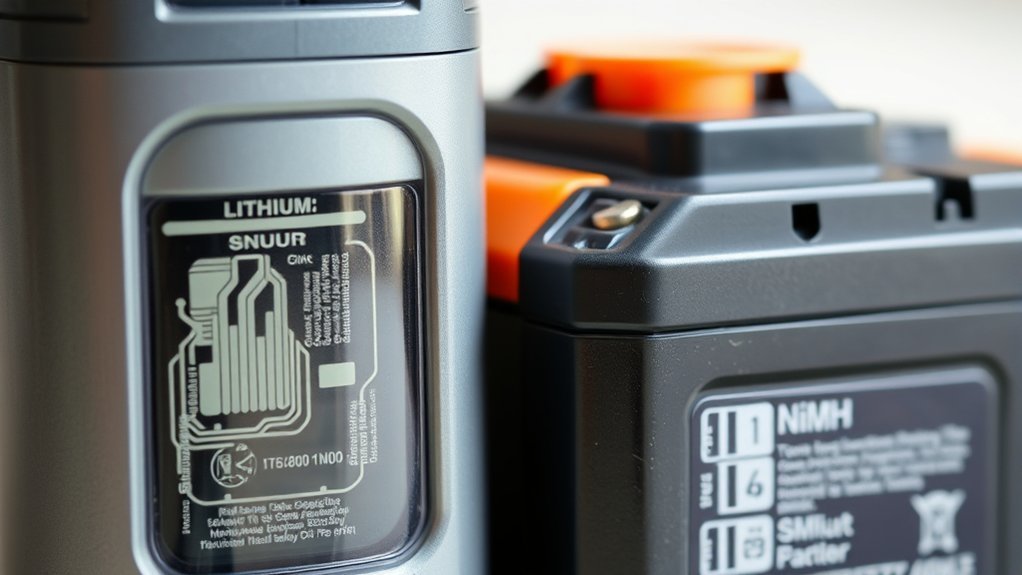
Lithium-ion and NiMH batteries exhibit notable differences in energy density, with lithium-ion cells delivering higher capacity per volume, impacting run time and tool performance. Their charging behaviors also vary: lithium-ion batteries support faster charging with less voltage sag, while NiMH cells require more careful management to prevent memory effects. Understanding these distinctions is essential for optimizing power tool efficiency and lifespan.
Energy Density Differences
How do these two common rechargeable battery types compare in regard to energy density, and what implications does that have for their performance? Lithium-ion batteries generally offer a markedly higher energy density than NiMH cells, enabling longer runtime in power tools without increasing size or weight. This higher energy density results from their advanced chemistry and manufacturing processes, which optimize active material utilization. Consequently, lithium-ion batteries deliver superior power output and efficiency. However, their increased energy density also raises concerns about battery safety, especially if manufacturing quality control is compromised. NiMH batteries, with lower energy density, tend to be safer and more tolerant of manufacturing variations but provide less run time per charge. The trade-off between energy density and safety considerations influences their application suitability in power tools.
Charging Behavior Variations
While both lithium-ion and NiMH batteries are rechargeable, their charging behaviors exhibit distinct differences that impact performance and longevity. Lithium-ion batteries, with their complex battery chemistry, require precise charging to prevent overvoltage and thermal issues, which can shorten their lifespan over repeated charging cycles. NiMH batteries, on the other hand, tolerate more flexible charging routines but are susceptible to memory effect if not fully discharged periodically. Key differences include:
- Lithium-ion: fast charging, limited memory effect
- NiMH: slower charging, prone to memory effect
- Charging cycles: lithium-ion degrade gradually, NiMH more sensitive
- Temperature sensitivity varies between chemistries
- Overcharging risks differ, requiring specific charging protocols
Understanding these variations helps optimize battery performance and lifespan through appropriate charging practices.
Cost Comparison: Which Battery Type Is More Budget-Friendly?
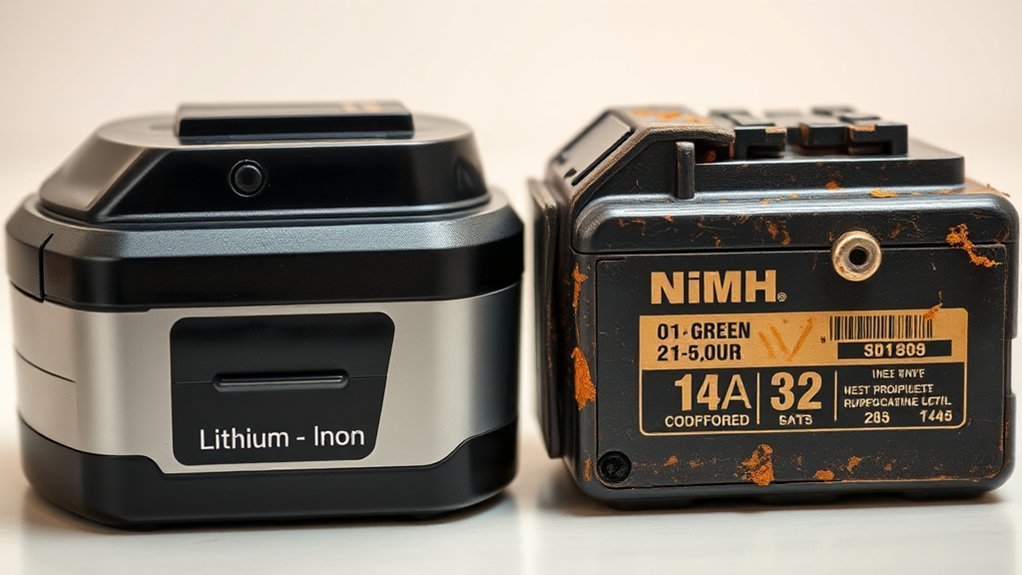
When comparing the costs of power tool batteries, lithium-ion and NiMH types present distinct financial profiles that can influence purchasing decisions. Battery chemistry markedly impacts initial costs, with lithium-ion batteries generally exhibiting higher upfront prices due to advanced materials and manufacturing processes. However, lithium-ion’s superior cost efficiency over time stems from higher energy density, lower self-discharge, and minimal maintenance requirements. NiMH batteries tend to be more affordable initially but often incur higher long-term costs because of their lower energy capacity and more frequent replacements. Overall, while lithium-ion batteries require a larger initial investment, their enhanced efficiency and longevity can make them more cost-effective in the long run. Hence, evaluating total lifecycle costs is essential for making an informed choice.
Battery Life and Durability: What to Expect From Each
When evaluating battery life and durability, we focus on charge retention over time, resistance to temperature fluctuations, and overall wear patterns. Lithium-ion batteries typically maintain charge longer and perform better across temperature variations, while NiMH cells tend to degrade faster with repeated cycles. Understanding these differences helps us predict long-term performance and suitability for demanding applications.
Charge Retention Over Time
Lithium-ion batteries generally outperform NiMH cells in charge retention over time, maintaining their capacity for longer periods when not in use. This advantage stems from differences in battery chemistry, which influences self-discharge rates and stability during storage. Proper storage techniques markedly impact retention, especially for lithium-ion cells that are sensitive to over-discharge.
Key points include:
- Lithium-ion batteries exhibit lower self-discharge rates, often around 2-3% monthly, compared to NiMH’s 15-20%
- Storing batteries at partial charge (around 40-60%) optimizes longevity
- Overcharging or deep discharging accelerates capacity loss
- Temperature management during storage preserves battery chemistry
- Regularly checking and maintaining charge levels extends overall battery life
These factors collectively enhance the long-term charge retention of lithium-ion batteries versus NiMH cells.
Resistance to Temperature Changes
Despite their widespread use, lithium-ion and NiMH batteries exhibit differing resilience to temperature fluctuations, which directly impacts their operational lifespan and durability. Lithium-ion batteries generally possess superior thermal endurance and temperature stability, making them more resistant to performance degradation in extreme conditions. Their design minimizes the effects of heat, reducing capacity loss and extending service life. NiMH batteries, on the other hand, are more sensitive to temperature changes; exposure to high heat accelerates internal degradation, while cold environments can decrease their capacity temporarily. This difference in thermal endurance influences overall durability, with lithium-ion batteries offering more consistent performance across temperature ranges. Consequently, lithium-ion batteries tend to maintain their efficiency longer, especially in variable climates, making them more reliable for demanding applications.
Overall Wear and Tear
Understanding the overall wear and tear of batteries requires examining their inherent chemical stability and structural resilience over repeated cycles. Lithium-ion batteries generally maintain their battery shelf life longer and resist capacity fade better under ideal storage conditions. In contrast, NiMH batteries tend to experience faster capacity loss with repeated cycling and poor storage environments. Key factors influencing durability include:
- Number of charge cycles before significant capacity reduction
- Effects of deep discharges on long-term health
- Impact of high temperatures during storage
- Chemical degradation over time, even when unused
- Mechanical stress from repeated charging and discharging
Both battery types degrade over time, but lithium-ion batteries typically offer greater resilience against wear and tear, especially when stored properly. Proper storage conditions extend battery life, ensuring reliable performance over prolonged periods.
Charging and Maintenance: Ease of Use for Lithium-Ion vs NiMH
Charging and maintenance requirements significantly influence the practicality of lithium-ion and NiMH batteries. Lithium-ion batteries offer faster charging speeds, which enhances efficiency but necessitates strict adherence to battery safety protocols to prevent overheating or thermal runaway. Their built-in management systems help monitor cell health, simplifying maintenance and reducing user intervention. In contrast, NiMH batteries are more tolerant of irregular charging cycles and require less sophisticated management, though they tend to charge more slowly. While NiMH batteries are generally safer in terms of battery safety, their longer charge times can impact overall usability. Both types demand proper maintenance to maximize lifespan, but lithium-ion’s advanced safety features and rapid charging capabilities make them more suitable for high-demand power tool applications where quick turnaround and safety are priorities.
Environmental Impact and Recycling Considerations
Both lithium-ion and NiMH batteries have distinct environmental footprints shaped by their manufacturing processes, materials, and end-of-life management. The battery chemistry influences toxicity, resource extraction, and recyclability, with lithium-ion batteries containing valuable metals like cobalt and lithium, which pose environmental risks if improperly disposed of. Recycling methods differ considerably: lithium-ion recycling involves complex processes to recover metals, while NiMH recycling focuses on recovering nickel and rare earth elements. Proper disposal minimizes soil and water contamination, but recycling infrastructure remains inconsistent.
- Lithium-ion batteries require sophisticated recycling to recover critical metals
- NiMH batteries are generally easier and more established to recycle
- Hazardous chemicals in lithium-ion pose environmental risks
- Resource depletion concerns drive recycling investments
- Efficient recycling reduces reliance on virgin material extraction
Best Use Cases for Lithium-Ion Batteries in Power Tools
Lithium-ion batteries are perfectly suited for high-performance power tools where rapid power delivery, lightweight design, and extended run times are critical. Their high energy density enables efficient operation under demanding conditions, making them ideal for professional applications. When considering these batteries, power tool safety is paramount; proper handling and adherence to manufacturer guidelines minimize risks like overheating or thermal runaway. Additionally, the importance of battery recycling cannot be overstated, as lithium-ion cells contain valuable materials that must be responsibly managed to reduce environmental impact. These factors make lithium-ion batteries suitable for tools requiring consistent, reliable power in demanding environments, ensuring productivity without sacrificing safety or sustainability.
When Should You Choose NiMH Batteries for Your Tools?
Although lithium-ion batteries dominate many power tool applications, NiMH batteries remain a practical choice when their unique advantages align with user needs. They excel in scenarios requiring stable battery storage over extended periods and where power source compatibility with older or less advanced tools is essential. NiMH batteries are less sensitive to deep discharges, making them suitable for intermittent use. They also offer a cost-effective solution for applications with lower energy demands. Consider NiMH when:
- Battery storage over long periods without use
- Compatibility with legacy power tools
- Cost-effective, low-drain applications
- Reduced sensitivity to deep discharges
- Moderate power requirements without frequent fast charging
Making the Right Choice: Factors to Consider for Your Power Tools
Choosing the appropriate power tool battery hinges on evaluating several critical factors that directly impact performance, compatibility, and cost-effectiveness. Key considerations include battery storage capacity, which determines runtime and power availability, and power management features that influence efficiency and longevity. Lithium-ion batteries generally offer higher energy density and faster charge cycles, enhancing battery storage and reducing downtime. Conversely, NiMH batteries may require more intricate power management to prevent capacity loss over time. Compatibility with your tools’ voltage and charging systems is essential to avoid damage and guarantee ideal operation. Ultimately, understanding these factors helps us select a battery type that aligns with our specific application needs, balancing performance with maintenance demands to maximize tool efficiency and lifespan.
Frequently Asked Questions
Are Lithium-Ion Batteries Safer Than Nimh for Power Tools?
Lithium-ion batteries are generally safer due to better battery longevity and thermal stability, reducing fire risk. Although they cost more upfront, their longer lifespan offers a better cost comparison over time, making them a more reliable choice.
How Do Temperature Extremes Affect Each Battery Type’s Performance?
We find that temperature extremes challenge both batteries’ thermal stability, causing voltage fluctuations; lithium-ion batteries generally perform better under these conditions due to superior chemical stability, but prolonged exposure can still degrade their efficiency.
Can Lithium-Ion Batteries Be Used With Older Power Tools?
Yes, lithium-ion batteries can be used with older power tools, but compatibility concerns may affect battery longevity and performance. We recommend verifying tool specifications and considering potential adapter requirements to guarantee ideal operation and avoid damage.
What Are the Recycling Options for Lithium-Ion and Nimh Batteries?
We can recycle lithium-ion and NiMH batteries through specialized recycling processes that recover valuable materials, extending battery lifespan and reducing environmental impact. We recommend contacting certified facilities to guarantee proper handling and environmentally responsible recycling.
Do Charging Times Significantly Differ Between Lithium-Ion and Nimh?
In our experience, lithium-ion batteries typically offer faster charging speeds, enhancing battery longevity, compared to NiMH. For instance, a case study showed lithium-ion charges 30% quicker, optimizing tool efficiency and reducing downtime considerably.
Conclusion
In choosing between lithium-ion and NiMH batteries, understanding your tool’s power demands and usage patterns is vital. For instance, a professional contractor needing long runtimes and quick recharge benefits from lithium-ion’s performance, while a casual DIY enthusiast might prefer NiMH’s affordability and ease. By analyzing factors like cost, durability, and safety, we can make informed decisions that optimize both efficiency and safety, ensuring our tools meet the specific demands of our projects.