Understanding, managing, and preventing risks associated with marine lithium batteries requires vigilance, precision, and adherence to strict safety protocols. We must grasp the complexities of chemistries like NMC and LiFePO4, recognize warning signs of thermal runaway, and implement proper storage and handling procedures. Each step is critical to guarantee onboard safety, from installation to emergency response. Failing to follow these guidelines can lead to severe consequences, making it essential to explore the detailed strategies that keep marine environments safe.
Key Takeaways
- Understand battery chemistries (NMC, LiFePO4) and associated fire risks, including thermal runaway.
- Store and handle batteries in cool, dry areas with protective measures to prevent damage or short circuits.
- Follow manufacturer guidelines for installation, ensuring proper wiring, secure mounting, and certified components.
- Regularly inspect batteries, monitor voltage and temperature, and maintain the Battery Management System (BMS).
- Know emergency procedures: disconnect affected batteries, use appropriate fire extinguishers, ventilate, and follow recycling protocols.
Understanding Marine Lithium Batteries and Their Safety Risks
Have you ever wondered what makes marine lithium batteries both revolutionary and potentially risky? Their core lies in advanced battery chemistry, typically lithium nickel manganese cobalt oxide (NMC) or lithium iron phosphate (LiFePO4). These chemistries offer high energy density, fast charging, and long cycle life, essential for marine applications. However, they also introduce safety concerns, especially thermal runaway, which can lead to fires. To mitigate this risk, effective fire suppression systems are critical. These systems are designed to quickly contain and extinguish any battery-related fires before they escalate. Understanding the interplay between battery chemistry and fire suppression protocols helps guarantee safer deployment onboard, highlighting the importance of thorough safety measures tailored to the unique chemistry and risks of marine lithium batteries.
Proper Handling and Storage of Marine Lithium Batteries
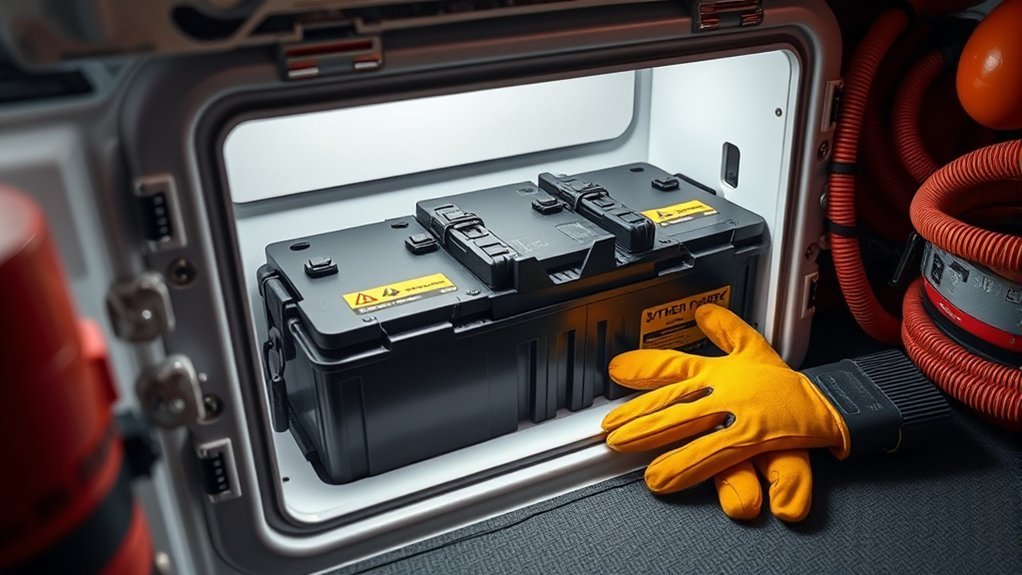
Proper handling and storage of marine lithium batteries are vital to maintaining safety and ensuring ideal performance. We recommend storing batteries in a cool, dry, well-ventilated area away from flammable materials, with protective covers to prevent accidental short circuits. During handling, always wear appropriate personal protective equipment and avoid mechanical damage, which can compromise cell integrity. Regular battery maintenance, including inspecting for corrosion or swelling, is essential for preventing failures. When batteries reach the end of their service life, responsible battery recycling prevents environmental hazards and reduces fire risks. Proper handling minimizes the chance of thermal runaway, while correct storage facilitates safe disposal and recycling, ultimately supporting both vessel safety and environmental stewardship.
Best Practices for Installing Marine Lithium Batteries Safely
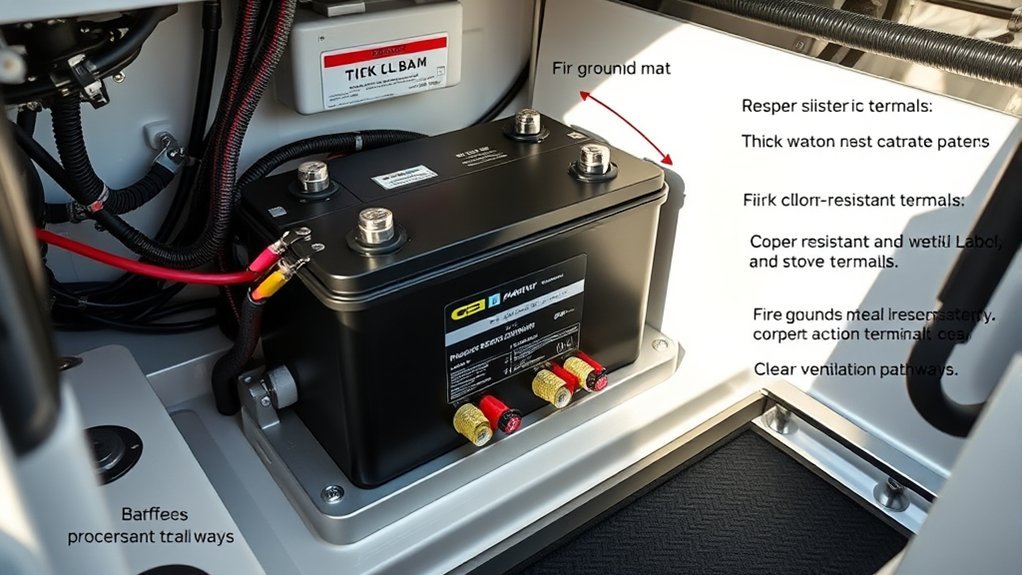
Ensuring the safe installation of marine lithium batteries requires meticulous adherence to manufacturer specifications and industry best practices. Proper wiring, including correct terminal connections and secure mounting, minimizes risks of short circuits and thermal runaway. It’s vital to verify that batteries are battery certified, meeting standards like UL or IEC, guaranteeing safety and reliability. Use dedicated, appropriately rated circuit protection devices, such as fuses and circuit breakers, to prevent overloads. During installation, avoid mixing used or unverified batteries, as this can compromise safety. Additionally, plan for proper battery recycling protocols at end-of-life, preventing environmental hazards. Following these practices guarantees a safer installation, reduces failure risks, and complies with safety standards essential for marine operations.
Maintaining and Inspecting Marine Lithium Batteries for Safety
Regular maintenance and thorough inspections are critical to preserving the safety and performance of marine lithium batteries. We emphasize monitoring battery chemistry stability, ensuring no signs of degradation or swelling. Inspect terminals and connections for corrosion, tightness, and proper contact, as compromised connections can lead to overheating. Adherence to recommended charging protocols is essential; deviations can cause thermal runaway or capacity loss. Regularly verify that battery management systems (BMS) function correctly, and check for firmware updates. The table below highlights key inspection parameters:
| Inspection Item | Frequency | Critical Notes |
|---|---|---|
| Terminal and connection check | Monthly | Tighten and clean if needed |
| Battery chemistry stability | Quarterly | Look for swelling or discoloration |
| BMS functioning | Monthly | Confirm alarms and firmware updates |
| Voltage and temperature | Weekly | Ensure within safe operating limits |
| Charging protocol adherence | Each charge cycle | Prevent overcharging or undercharging |
What to Do in Case of a Lithium Battery Emergency on Board?
When a lithium battery on board begins to exhibit signs of failure—such as smoke, swelling, unusual odors, or overheating—prompt and systematic action is vital to minimize damage and guarantee safety. Immediately isolate the affected battery, disconnecting it from the system if possible, to prevent thermal runaway. Use a Class D fire extinguisher or a CO2 suppression system designed for lithium fires; never use water, as it may exacerbate the situation. Once the fire is controlled, verify proper ventilation and monitor for re-ignition. After the incident, follow protocols for battery recycling to dispose of damaged cells safely and prevent environmental contamination. Regularly review fire suppression procedures and maintain safety equipment to respond effectively to future emergencies.
Frequently Asked Questions
How Long Do Marine Lithium Batteries Typically Last?
Marine lithium batteries typically last 8 to 15 years, depending on usage and maintenance. Proper maintenance tips, like avoiding overcharging and ensuring proper cooling, help maximize battery lifespan and keep your marine electrical system reliable.
Are Marine Lithium Batteries Eco-Friendly and Recyclable?
Are marine lithium batteries eco-friendly and recyclable? Yes, they use eco-friendly materials and are designed for recycling, but efficient recycling processes are essential to minimize environmental impact and recover valuable components, ensuring sustainability in marine applications.
Can Marine Lithium Batteries Be Used in Cold Weather Conditions?
Yes, marine lithium batteries can operate in cold weather, but their performance may decline due to reduced chemical activity. We recommend pre-heating or insulating batteries to maintain peak performance and prevent capacity loss during cold conditions.
What Are the Signs of a Failing Lithium Battery?
We watch for signs like battery overheating and capacity decline, which indicate failure. Sudden voltage drops or swelling also signal issues, prompting us to check connections and consider replacing the lithium battery before critical failure occurs.
How Do I Dispose of a Damaged Marine Lithium Battery Safely?
We carefully handle damaged marine lithium batteries by wearing protective gear, avoiding contact with battery corrosion, and transporting them to certified disposal facilities, ensuring disposal safety and compliance with hazardous waste regulations to prevent environmental and personal harm.
Conclusion
By adhering to these safety protocols, we ensure the risks associated with marine lithium batteries are minimized. Regular inspections, proper handling, and vigilant emergency preparedness are essential—especially as unforeseen incidents can occur when we least expect them. Staying informed about chemistries, fire suppression measures, and responsible disposal ensures safer journeys. Ultimately, our commitment to these detailed procedures not only protects our crew and vessel but also aligns with the evolving standards of marine battery safety.