You might not realize how small changes in charging profile can extend cycle life by weeks or even months. We manage charge currents, taper near full, and calibrate SOC to keep packs healthy. We’ll discuss temperature ranges, storage states, and routine checks that prevent surprises. If you want a practical way to sustain performance and avoid degradation, we’ll outline concrete steps and the signals you should watch for as we proceed.
Key Takeaways
- Monitor state of health, SOC, temperature, and voltages; log cycles to establish baselines and guide maintenance decisions.
- Use approved chargers, avoid high-current bursts, and apply gentle current tapering near full to protect cycles.
- Keep batteries within 0–25°C (ideally 15–25°C); store partially charged (40–60%) during long-term inactivity.
- Keep terminals clean and insulated, inspect insulation/seals, and ensure secure, corrosion-free connections before use.
- Regularly check for anomalies (voltage, temperature, sag) and document findings to trigger timely reconditioning or diagnostics.
What Is Lithium-Ion Maintenance and Why It Matters

Lithium-ion maintenance refers to the practices and checks that preserve battery performance, safety, and longevity. We approach this topic with a practical, data-driven mindset, outlining clear actions and verifiable outcomes. At its core, maintenance means monitoring state of health, charge behavior, and thermal conditions to prevent degradation. We verify charging profiles, ensure terminals are clean, and inspect insulation and seals for signs of wear. We address lithium ion myths by distinguishing empirical results from speculation, and we challenge maintenance myths that suggest frequent, unnecessary interventions. By documenting cycles, temperatures, and voltages, we establish baselines that guide decision-making. Our aim is to minimize capacity fade, reduce failure risk, and extend usable life through consistent, repeatable procedures grounded in measured evidence.
Gadget vs. EV Maintenance: Choose Your Path
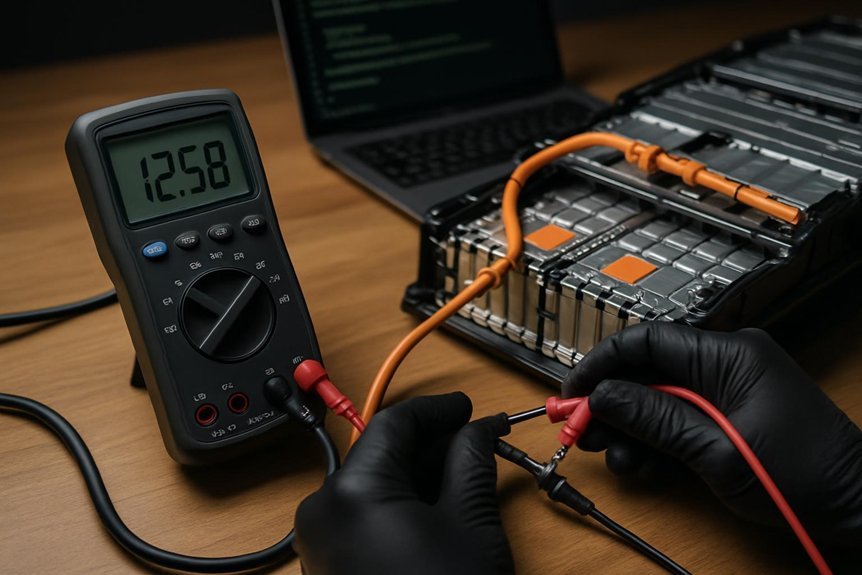
We compare gadget maintenance trade-offs with EV longevity implications to help you choose a path that fits your usage. Gadgets offer quicker cycle times and lower upfront costs, but they typically don’t deliver the same long-term battery health as a properly managed EV. We’ll outline practical criteria for balancing maintenance effort, replacement costs, and expected lifespan to guide your decision.
Gadget Maintenance Trade-Offs
Gadget maintenance and EV upkeep each demand distinct routines, costs, and risk profiles, so choosing a path hinges on how you value up-front simplicity versus long-term durability. We weigh short-term convenience against potential irreversible degradation when selecting components, procedures, and charging habits for gadgets vs. full EVs. Our approach emphasizes predictable performance, with clear trade-offs that influence lifecycle outcomes. Consider the following contrasts to visualize the decision:
1) Upfront effort: gadget care is lighter, EVs demand disciplined routines.
2) Cost trajectory: gadgets incur smaller ongoing costs; EVs optimize longevity.
3) Downtime impact: gadget fixes are quick; EV maintenance can pause usage longer.
4) Failure modes: gadget cycles are simpler; EVs introduce system-level risk, including randomizing battery behavior.
EV Longevity Considerations
From Gadget Maintenance Trade-Offs to EV longevity, the focus shifts from short-term convenience to long-term durability. We examine how selection and use shape battery life, emphasizing systematic discipline over impulse. We assess ev battery chemistry to identify failure modes and recovery windows, enabling proactive preservation strategies. Our approach combines calibrated charging, thermal management, and route planning that avoids extreme loads. Charging ethics guide charging behavior: maintain moderate state of charge windows, prevent deep discharges, and synchronize charging with predictable demand. We emphasize consistent maintenance routines, including monitoring cell balance and cooling performance, to minimize overheat risks. Practical guidelines translate theory into action: limit high-current fast charging to rare needs, keep packs below critical temperatures, and document aging trends to adjust usage patterns over time.
Smart Charging Basics That Protect Cycles
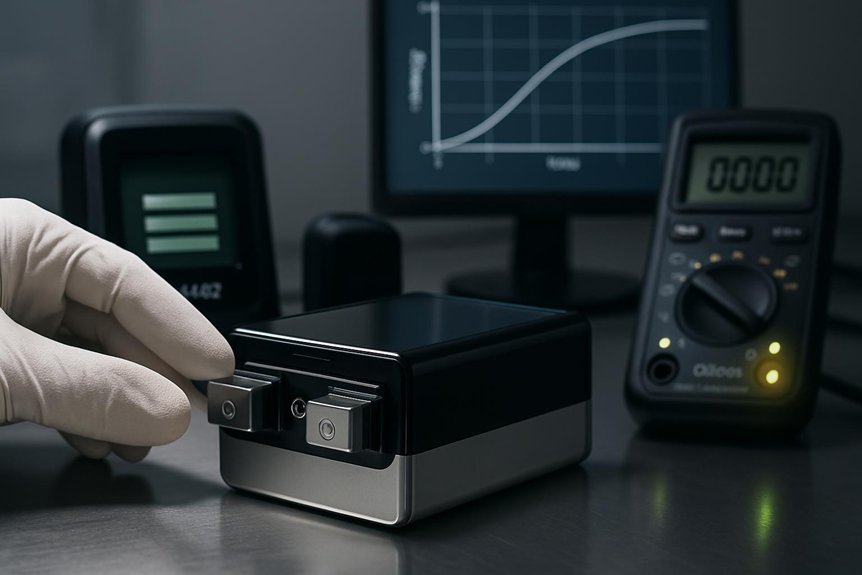
Smart charging uses voltage and current control to extend cycle life without sacrificing usable capacity. We implement precise parameters that protect the cell stack during every charge.
- We tune charge voltage ceilings to prevent overpotential and preserve cycle protection.
- We apply current tapering near full, reducing stress and avoiding abrupt impedance shifts.
- We schedule periodic battery calibration to align state-of-charge with actual chemistry.
- We optimize runtimes by matching charger profiles to usage, maximizing efficiency and minimizing degradation.
Together, these steps deliver durable, meaningful performance. By prioritizing smart charging, cycle protection, and battery calibration, we keep capacity stable across hundreds of cycles. The result is predictable runtimes and reliable power, with maintenance that costs less and lasts longer.
Temperature and Storage Rules for Longevity
We set and monitor the optimal temperature range to minimize stress on cells and preserve capacity. We’ll outline safe storage practices to prevent self-discharge and degradation during idle periods. We’ll also explain how temperature affects longevity, so you can make informed choices about use, storage, and reconditioning.
Optimal Temperature Range
What is the optimal temperature range for lithium-ion batteries, and how should we handle storage to maximize longevity? We define the target window as roughly 0–25°C for general use, with a preferred 15–25°C operating band and cooler storage between 4–15°C to reduce calendar aging. We monitor charge state to avoid deep discharge in extreme heat. Our guidelines emphasize controlled environments, consistent ambient conditions, and minimal exposure to rapid temperature swings.
- Maintain ambient temperatures within the recommended range.
- Store at partial charge (around 40–60%) when inactive for extended periods.
- Avoid heat sources and direct sunlight that raise battery temperature.
- Use insulated containers for long-term storage in varying climates.
Following these storage guidelines, we preserve capacity, cycle life, and overall performance efficiently.
Safe Storage Practices
Safe storage practices build on maintaining the ideal temperature range to preserve lithium‑ion battery health. We approach storage with a clear, data‑driven framework, outlining concrete targets and procedures. First, set a nominal storage temperature between 20°C and 25°C (68°F–77°F) and avoid rapid cycling between extremes. Maintain a stable storage environment by minimizing humidity exposure and shielding from direct sunlight. For long‑term periods, discharge to a shallow state of charge recommended by the manufacturer, then recheck periodically. Use original packaging or equivalent containment to prevent physical damage and protect terminals from moisture. Inspect connectors and seals before storage and after retrieval. Document dates, conditions, and any deviations to enable traceability and informed reconditioning. Adhere to these safe storage practices for consistent longevity.
Temperature Effects on Longevity
Temperature fluctuations directly influence lithium‑ion longevity, so controlling both average temperature and thermal cycling is essential. We, as technicians, explain how storage and operating temperatures affect aging mechanisms and cycle life.
- Maintain moderate ambient temps to slow aging mechanisms and reduce stress on electrodes.
- Minimize rapid temperature swings to lessen thermal cycling damage and impedance growth.
- Keep packs away from heat sources; elevated temps accelerate SEI growth and capacity loss.
- Utilize thermal management during charging and discharging to balance cells and extend longevity.
In practice, precise temp control and gradual transitions protect performance. By monitoring ambient and pack temperatures, we mitigate aging mechanisms and reduce thermal cycling impact, preserving usable capacity and extending service life.
Monitor and Manage State of Charge Safely
To monitor and manage the state of charge safely, we start with a clear target: keep the battery within its recommended SOC range to maximize lifespan and reliability. We prioritize monitoring SOC continuously, using calibrated gauges and logging trends to detect departure early. Charging safety remains central: use approved chargers, avoid high-current bursts, and prevent exposure to extreme temperatures during top‑ups. The visualization below helps frame the practice.
| Target SOC | Monitoring method | Action trigger |
|---|---|---|
| 40–80% | Battery gauge + history | If outside range, reassess charging计划 |
| Ambient caution | Temperature and voltage readouts | Stop charging if anomalies appear |
| Alerts | Notifications | Initiate safety protocols |
Daily Use Care: Handling, Cleaning, and Connections
How can we keep daily handling simple yet safe? We respond with disciplined care, addressing handling hazards, cleaning protocols, and reliable connections. We use a methodical, concise tone to minimize risk and maximize performance.
1) Inspect and grip: hold by chassis or insulated surfaces, never by leads, to avoid stress on connectors.
2) Clean and dry: use lint-free cloths, minimal moisture, and approved cleaners to prevent residue.
3) Connect with care: align polarities, avoid forcing, and verify secure, corrosion-free contacts before use.
4) Store and transport: shield from impact, temperature extremes, and conductive clutter, keeping labels legible and intact.
Weekly or Monthly Maintenance Routines
We extend the discipline from daily handling to periodic upkeep by focusing on weekly or monthly routines that sustain performance and safety. Our approach centers on structured checks, documented results, and repeatable steps. In weekly maintenance, verify terminal cleanliness, inspect for corrosion, and confirm tight hardware connections. Monitor pack temperatures during operation and logging any deviations for trend analysis. Use calibrated instruments for voltage and impedance checks, ensuring readings remain within manufacturer specifications. For monthly calibration, synchronize balancing procedures with battery management system settings, validate state-of-charge reporting, and confirm alarm thresholds. Replace damaged fuses and inspect cooling channels for obstruction. Maintain a concise log of maintenance activities, dates, and outcomes to support lifecycle planning. Adhere to safety protocols, de-energize before inspections, and avoid interfering with protection circuitry.
Troubleshooting Battery Health: Flags and Next Steps
Have you ever spotted subtle signs that a battery is losing health before it fails outright? We’ll guide you through identifying battery health flags and determining practical next steps. Our focus stays on data, not guesswork, with clear thresholds and disciplined actions.
1) Noticeable capacity decline at high-rate use.
2) Unexpected voltage sag during charging or idle periods.
3) Increased charging time or repeated full-cycle restarts.
4) Temperature anomalies during operation or charging.
Next steps rely on charging discipline and monitoring thresholds: log performance trends, calibrate state-of-charge readings, adjust usage patterns, and schedule diagnostics if flags persist. Treat any deviation as actionable, not incidental. By tracking trends, we convert raw data into targeted interventions, preserving longevity and safety while maintaining usable capacity and predictable cycles.
Frequently Asked Questions
How Do I Recognize Subtle Signs of Impending Lithium Battery Degradation?
We recognize subtle degradation signs: rising internal resistance and reduced capacity under load. We monitor cycle count, voltage sag, and thermal drift, using data trends; subtopic idea one: protective electronics health. subtopic idea two: charger calibration and cautious cycling.
Can Charging Adapters Affect Long-Term Battery Health Beyond the Charger Type?
We can confirm: charging adapters can affect long-term battery health beyond charger type. We’ve seen charger health and adapter quality influence voltage stability, while unrelated topics and nonessential factors don’t. Use certified adapters to minimize risks and preserve capacity.
Do Different Storage Environments Require Distinct Pre-Storage Preparation?
Yes, different storage environments require distinct pre-storage preparation. We recommend stabilizing storage temperature and maintaining a safe charge level to minimize degradation; verify temperature ranges and charge targets before long-term storage, then monitor periodically for drift.
What Is the Impact of Rapid Cycling on Battery Longevity?
Rapid cycling accelerates capacity fade, diminishing longevity impact. We observe greater impedance growth and heat, stressing cells. We recommend controlled depth of discharge and moderate C-rates to preserve longevity, monitor temperature, and avoid repeated full cycles whenever possible.
Are There Industry-Standard Indicators for Estimated Battery Lifespan?
We do: yes—industry standard indicators exist to estimate lifespan. We assess cycles, capacity fade, calendar aging, and degradation rates, then provide the estimated lifespan. We share practical, precise methods to interpret these indicators for you.
Conclusion
We’ve covered practical, precise steps to extend lithium-ion life: smart charging, stable temperatures, and disciplined SOC management. By matching chargers to usage, calibrating SOC periodically, and storing at partial charge in a controlled environment, you minimize stress and degradation. We keep terminals clean, log readings, and use approved gauges and gear. So, are you ready to implement these routines consistently and protect your battery’s performance over time? Consistency and diligence are your best engineering allies.