Lithium battery fires pose significant safety challenges due to their potential for rapid escalation and difficult containment. Proper handling, storage, and emergency response are critical to mitigating risks. Understanding the causes, early warning signs, and effective extinguishing methods can prevent disasters. Ensuring safety protocols are in place is essential for both immediate response and long-term storage. We must explore these safety measures thoroughly to protect people, property, and the environment from preventable hazards.
Key Takeaways
- Recognize signs of failure like swelling, heat, and chemical odors to act quickly before thermal runaway occurs.
- Use appropriate fire extinguishers (Class D, CO₂, foam) and avoid water when responding to lithium battery fires.
- Store batteries in cool, dry, well-ventilated areas away from flammable materials and extreme temperatures.
- Conduct regular inspections for damage or swelling; dispose of compromised batteries safely and properly.
- Implement safety protocols, including fire-resistant packaging and trained personnel, for handling and recycling lithium batteries.
Understanding Lithium Battery Fires: Causes and Risks
Lithium battery fires typically result from internal or external faults that cause thermal runaway, a condition where heat generation accelerates uncontrollably. The battery chemistry, especially the interaction of lithium with electrolyte materials, plays a essential role in fire risk. Certain chemistries, like lithium cobalt oxide, are more prone to instability under stress or damage. When internal faults occur—such as separator failure or dendrite growth—the heat can rapidly escalate, igniting the electrolyte. External damage, like punctures or overheating, can also trigger thermal runaway. Effective fire suppression strategies are necessary to mitigate these risks, involving specialized materials that respond quickly to lithium fires. Understanding the interplay of battery chemistry and appropriate fire suppression techniques is critical for ensuring safety during battery operation and storage.
How to Recognize the Signs of a Lithium Battery Fire?
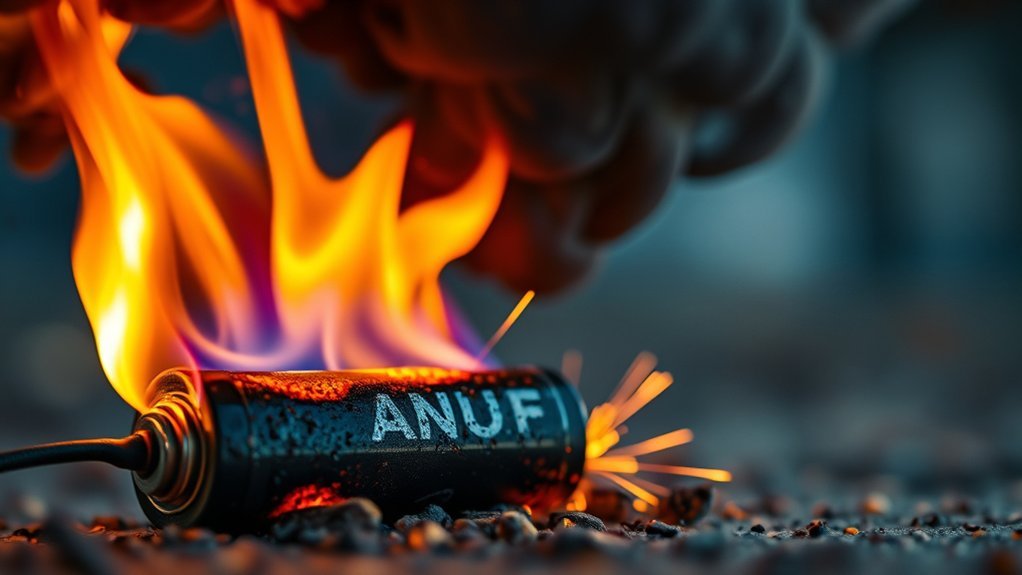
Recognizing the signs of a lithium battery fire is crucial for prompt response and safety. Early indicators include rapid swelling, unusual heat generation, and a distinct chemical odor. Visual signs like discoloration, melting, or smoke may also occur, signaling imminent failure. If the battery exhibits any of these signs, immediate action is necessary—discontinue use and isolate it in fire resistant packaging. Proper battery disposal procedures should be followed to prevent further risk. Be alert to hissing sounds or crackling, which can precede thermal runaway. Rapid ignition or flaming indicates an active fire, requiring specialized extinguishing methods. Recognizing these signs allows for swift containment, minimizing damage and ensuring safety for all involved.
Best Practices for Preventing Lithium Battery Fires
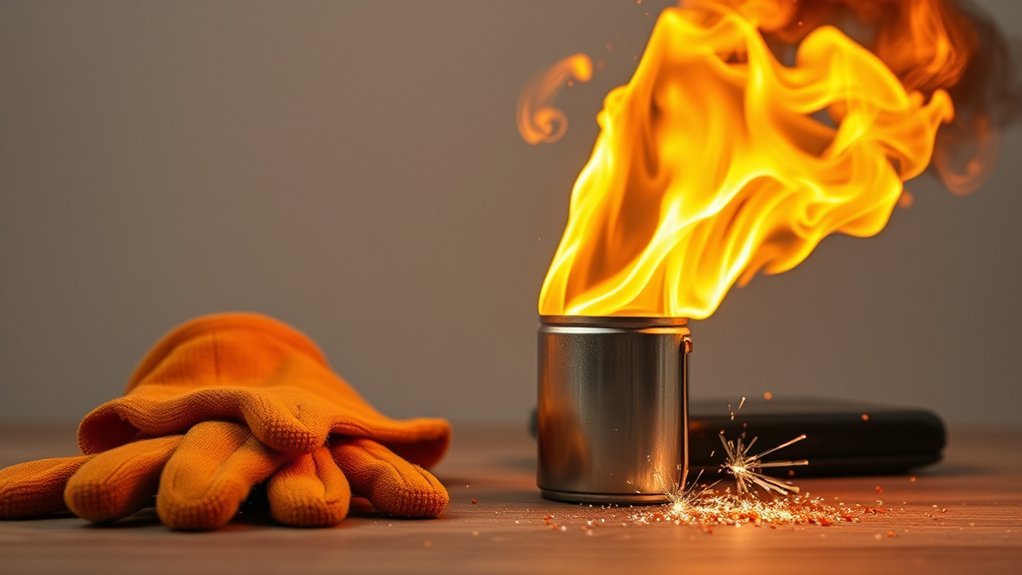
Preventing lithium battery fires requires implementing strict handling and usage protocols from the outset. Proper storage, avoiding mechanical damage, and adhering to manufacturer guidelines are fundamental. Incorporating fire resistant coatings during manufacturing adds an extra layer of safety, mitigating thermal runaway risks. Additionally, promoting responsible battery recycling prevents unsafe disposal that could lead to fires or chemical hazards.
Implementing strict protocols and proper handling minimizes lithium battery fire risks and enhances safety.
Key best practices include:
- Regularly inspecting batteries for damage or swelling and removing compromised units
- Using fire resistant coatings on critical components to contain potential failures
- Establishing proper battery recycling procedures to prevent environmental and safety hazards
Adhering to these protocols minimizes fire risks, ensuring safer operation and disposal, and maintaining overall system integrity.
Responding Effectively to a Lithium Battery Fire
When responding to a lithium battery fire, immediate suppression using appropriate agents like Class D or dry chemical extinguishers is critical to prevent escalation. We must also adhere to safety protocols, including evacuating the area and wearing proper PPE to protect against toxic fumes and thermal hazards. Clear, rapid action minimizes damage and reduces risk to personnel.
Immediate Fire Suppression Steps
In the event of a lithium battery fire, prompt and effective response is critical to minimize damage and guarantee safety. Immediate suppression involves isolating the fire source and deploying appropriate extinguishing agents, such as class D dry powder or CO₂, specifically designed for lithium battery fires. Key steps include:
- Evacuating the area to prevent exposure and facilitating a clear environment for fire control
- Utilizing fire extinguishers suited for metal fires, avoiding water, which can exacerbate the situation
- Initiating fire drill planning to ensure rapid and coordinated responses, including protocols for battery recycling to safely dispose of damaged cells
Proper training and preparedness are essential for effective suppression, reducing risks of thermal runaway and environmental contamination.
Safety Precautions During Fire
Responding effectively to a lithium battery fire requires strict adherence to safety precautions that minimize risks to personnel and the environment. First, avoid attempting to extinguish the fire with water, as it can exacerbate the hazard; instead, use a Class D fire extinguisher designed for metal fires. Guarantee proper ventilation to disperse toxic gases, and isolate the affected area to prevent unauthorized access. Once the fire is controlled, consider protocols for battery recycling to prevent future incidents. Maintaining thorough fire insurance helps mitigate financial liabilities if a fire occurs. Always wear appropriate personal protective equipment (PPE) during response efforts. Adherence to these safety measures reduces environmental impact, supports safe disposal, and ensures compliance with safety regulations.
Safety Equipment and Fire Extinguishers for Lithium Battery Fires
Effective safety equipment and fire extinguishers are essential components in managing lithium battery fires, which can escalate rapidly and pose significant hazards. Proper tools enable swift response, minimizing damage and risk. We recommend using Class D extinguishers for metal fires, but for lithium-ion fires, a carbon dioxide or foam extinguisher is more appropriate. Incorporating fire resistant packaging during storage can prevent fire spread, especially during battery recycling processes. Additionally, having specialized fire suppression systems designed for lithium fires enhances safety. Key considerations include:
Proper extinguishers and fire-resistant packaging are vital for safe lithium battery handling and recycling.
- Use of specialized extinguishers suited for lithium and battery fires
- Deployment of fire resistant packaging during storage and handling
- Readiness of appropriate fire suppression systems to contain rapid fire escalation
These measures ensure safer containment, reducing the potential for further hazards and supporting responsible battery recycling practices.
Long-Term Safety and Storage Tips for Lithium Batteries
Proper long-term storage of lithium batteries is vital to prevent deterioration and reduce fire risks. We recommend storing batteries in a cool, dry environment with stable temperatures to optimize thermal management and minimize thermal runaway potential. Maintaining a partial charge, around 30-50%, helps preserve battery health over extended periods. Regularly inspecting stored batteries ensures early detection of swelling or corrosion, preventing hazards. When batteries reach end-of-life, responsible battery recycling is essential to prevent environmental contamination and residual fire risks. Avoid storing batteries near flammable materials or in tightly sealed containers that could trap heat. By adhering to these storage practices, we can extend battery lifespan and enhance safety, guaranteeing batteries remain safe until their proper recycling or disposal.
Frequently Asked Questions
Are There Specific Brands With Higher Lithium Fire Risks?
Certain brands with poor reputation and a history of fire incidents pose higher lithium fire risks; we advise users to scrutinize brand safety records and choose reputable manufacturers to minimize hazards and guarantee safer lithium battery usage.
How Does Temperature Affect Lithium Battery Fire Hazards?
Temperature truly triggers thermal escalation, escalating lithium battery fire hazards. Higher heat reduces inherent heat resistance, increasing the risk of thermal runaway. Staying cool prevents catastrophic combustion, essential for maintaining safe, stable, and resilient lithium battery operation.
Can Lithium Batteries Be Safely Disposed of After a Fire?
We advise against disposing of lithium batteries after a fire; instead, prioritize proper battery recycling and fire prevention measures. This guarantees hazardous materials are handled safely, reducing risks of further fire incidents or environmental contamination.
What Are the Legal Requirements for Lithium Battery Fire Safety?
We follow strict legal requirements in battery manufacturing, ensuring proper fire suppression measures are in place, including ventilation and fire-resistant materials, to mitigate risks and comply with safety standards, consequently safeguarding personnel and property during lithium battery fires.
How Do Age and Wear Influence Lithium Battery Fire Risk?
Did you know 80% of lithium battery fires involve aged or worn batteries? Battery degradation markedly increases fire risk, emphasizing the critical need for ongoing fire prevention measures and regular maintenance to mitigate hazard potential.
Conclusion
In mastering lithium battery fire safety, we must remain vigilant and prepared for the unexpected. As risks evolve with technology, so must our protocols and awareness. The smallest oversight can escalate quickly, turning a manageable situation into a crisis. Staying informed, equipped, and proactive isn’t just recommended—it’s essential. Because in this rapidly advancing landscape, the true test lies in our ability to respond swiftly and effectively when it matters most.