Just as a compass guides navigators through uncharted waters, understanding the nuances of 100Ah LiFePO4 batteries can steer us toward more informed choices. These batteries are pivotal in off-grid and backup systems, yet their performance varies widely across brands and models. By examining key features, reliability, and cost, we can identify which options truly offer long-term value. But what factors should we prioritize to guarantee maximum performance and safety in our specific applications?
Key Takeaways
- Compare cycle life, with premium brands exceeding 2000 cycles and lower-cost options offering fewer cycles.
- Evaluate charging efficiency, as higher efficiency reduces energy waste and speeds up charging times.
- Assess safety features and thermal stability, crucial for reliable performance in demanding environments.
- Consider warranty coverage and overall build quality to determine long-term value and durability.
- Ensure compatibility with existing systems for seamless integration in off-grid or backup power setups.
What Are the Key Features of 100Ah LiFePO4 Batteries?
While 100Ah LiFePO4 batteries are increasingly popular for their energy density and longevity, understanding their key features is essential for informed selection. These batteries typically offer a longer battery lifespan compared to traditional lead-acid options, often exceeding 2000 charge cycles with minimal capacity loss. Their high charging efficiency, usually around 95%, reduces energy waste during recharging, enhancing overall system performance. The stable voltage output ensures consistent power delivery, which is critical for sensitive electronics. Additionally, LiFePO4 chemistry provides enhanced thermal stability and safety, minimizing risks of overheating or thermal runaway. These features collectively make 100Ah LiFePO4 batteries a reliable, efficient choice for demanding applications, emphasizing the importance of evaluating lifespan and charging efficiency in the selection process.
How Do Different Brands Compare in Performance and Reliability?
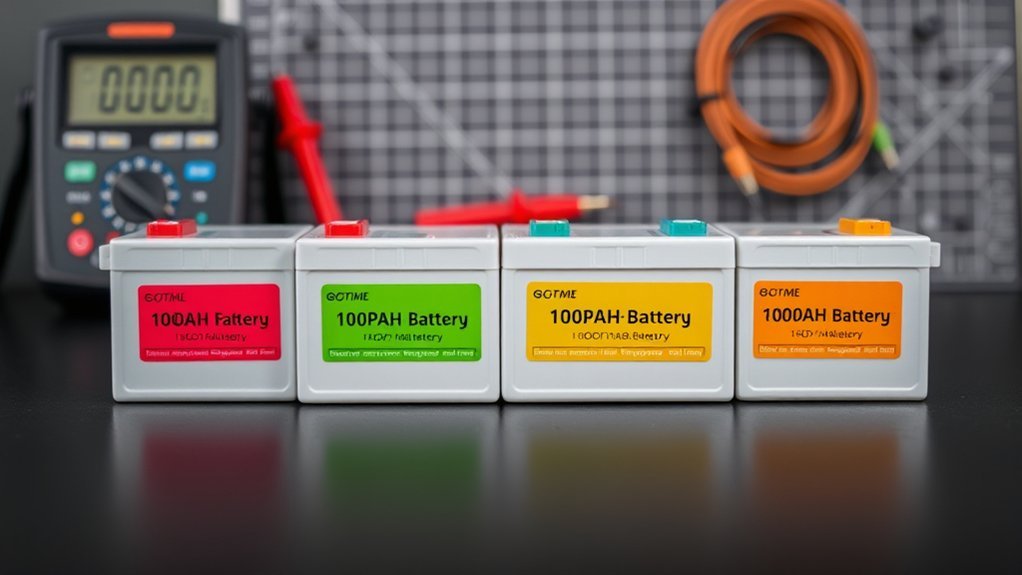
Different brands of 100Ah LiFePO4 batteries vary considerably in performance metrics and reliability, reflecting differences in manufacturing quality, cell chemistry, and quality control processes. Battery lifespan is a key differentiator, with some brands offering longer cycle life due to superior cell formulations and stricter quality standards. Charging efficiency also varies, impacting how quickly and effectively batteries reach full capacity, which in turn influences overall performance consistency. Brands with optimized charge management systems maintain higher efficiency levels, reducing energy loss and extending operational life. Variations in manufacturing precision affect internal resistance and thermal stability, directly influencing reliability under demanding conditions. Overall, these differences determine how well a brand’s product maintains its capacity and performance over time, making brand choice vital for long-term dependability.
What Factors Should You Consider When Choosing a 100Ah LiFePO4 Battery?
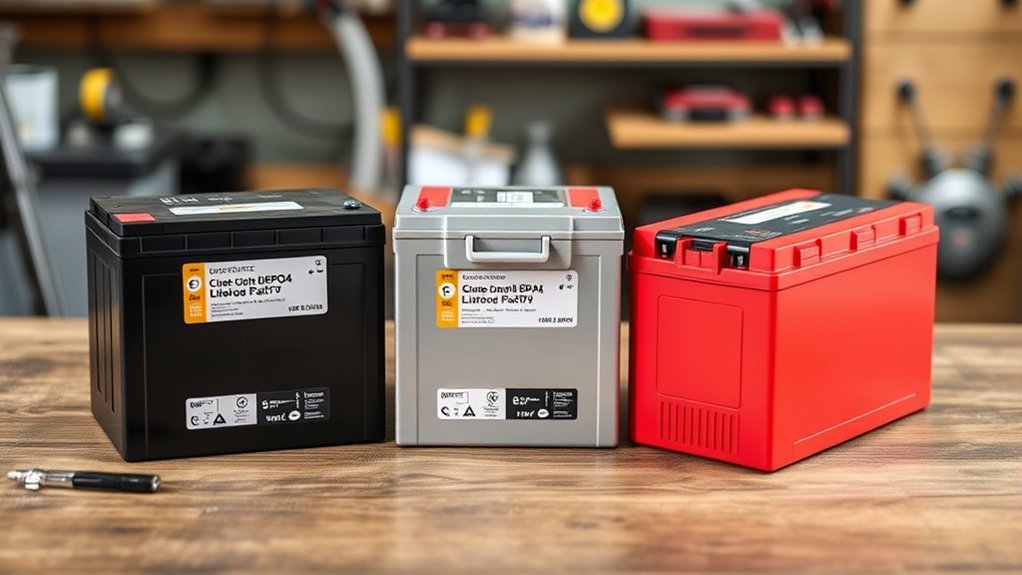
Choosing the right 100Ah LiFePO4 battery requires a careful evaluation of several critical factors that impact performance, longevity, and overall value. Key considerations include battery lifespan, which depends on charge cycles and depth of discharge; selecting a model with high cycle stability guarantees long-term reliability. Thermal management is equally essential; effective systems prevent overheating during charge and discharge, preserving battery health and safety. Good thermal regulation minimizes degradation and maintains consistent performance across varying environmental conditions. Additionally, assess the battery’s internal chemistry, current handling capacity, and voltage stability. A thorough understanding of these factors enables us to select a LiFePO4 battery optimized for durability, safety, and efficiency, ensuring your investment delivers reliable power over its expected lifespan.
Are There Cost Differences and Value for Money Among Top Models?
When comparing top models of 100Ah LiFePO4 batteries, cost differences often reflect variations in quality, features, and brand reputation. These differences are influenced by battery chemistry, which impacts lifespan and performance stability, and warranty coverage, signaling manufacturer confidence and support. Higher-priced batteries typically utilize advanced battery chemistry that enhances cycle life, thermal stability, and safety margins. They also tend to include extensive warranties, offering better value for long-term investment by reducing maintenance costs and replacement frequency. Conversely, lower-cost options may compromise on chemistry quality or warranty duration, affecting overall reliability and lifetime value. Hence, evaluating the balance between initial cost, battery chemistry, and warranty coverage is vital to determine true value for money among top models.
Which 100Ah LiFePO4 Battery Is Best Suited for Your Off-Grid or Backup Power Needs?
Selecting the most suitable 100Ah LiFePO4 battery depends heavily on the specific demands of your off-grid or backup power system. Key considerations include battery lifespan, charging efficiency, and system compatibility. To determine the best fit:
- Battery lifespan: Longer cycle life reduces replacement frequency and total cost.
- Charging efficiency: Higher efficiency minimizes energy loss during charging, optimizing system performance.
- System voltage compatibility: Ensures seamless integration with existing inverter and charger configurations.
- Environmental resilience: Consider temperature tolerance for reliable operation in varying conditions.
Evaluating these factors helps identify a battery that balances durability and energy efficiency, guaranteeing reliable, long-term power supply tailored to your needs.
Frequently Asked Questions
How Long Do 100AH Lifepo4 Batteries Typically Last?
We find 100Ah LiFePO4 batteries typically last 8-10 years with proper charging protocols, and we emphasize battery recycling to extend their lifespan and maintain safety, ensuring peak performance over their service life.
What Are the Safety Considerations for Using These Batteries?
We prioritize fire safety by avoiding overcharging and physical damage, and encourage proper battery recycling to prevent environmental hazards. Regular monitoring and adherence to manufacturer guidelines are essential safety measures when using these batteries.
Can 100AH Lifepo4 Batteries Be Connected in Series or Parallel?
We can connect 100AH Lifepo4 batteries in series or parallel by respecting their battery chemistry and charging protocols; series increases voltage, while parallel boosts capacity, but always guarantee balanced cells and compatible configurations for safety and performance.
How Do Temperature Variations Affect Battery Performance?
Sure, cold weather can turn your battery into a sluggish turtle, but proper thermal management guarantees it humming. Temperature variations affect performance, so managing heat and cold ensures consistent power output and prolongs lifespan.
Are There Environmental Impacts Associated With These Batteries?
Environmental impacts include recycling challenges due to complex materials and raw material sourcing issues, which raise sustainability concerns. We recognize these factors and aim to improve recycling processes and ethically source materials to minimize ecological footprints.
Conclusion
In selecting the right 100Ah LiFePO4 battery, we must weigh durability, efficiency, safety, and cost. We compare brands based on cycle life, thermal management, and warranties. We analyze value for money through upfront costs versus long-term performance. Ultimately, our choice hinges on matching technical specifications with application demands, ensuring reliable, long-lasting power. By balancing these factors, we optimize performance, maximize investment, and secure dependable energy solutions for off-grid or backup systems.