We handle lithium battery disposal with clear steps: identify the battery type, separate intact packs from damaged or recalled ones, and use approved containers for transport. We won’t recharge or repair damaged packs; we’ll isolate the source, ventilate the area, and wear appropriate PPE. To stay compliant, we’ll arrange marked transport to a licensed recycler and keep all manifests and receipts. There’s more to align with local laws, labeling, and vendor guidance, and the details matter for safety and audits.
Key Takeaways
- Identify battery type (alkaline, Li-ion, Li-polymer, nickel-based) and follow appropriate disposal paths per local policies and approved recyclers.
- Do not mix damaged, leaking, or swollen cells with regular waste; isolate, bag, and transport them in non-conductive containers to a licensed facility.
- Use authorized e-waste or battery recyclers, and follow device maker guidance for removal, packaging, and transport requirements.
- Document disposal through manifests or receipts, maintain chain-of-custody, and ensure labeling for hazard warnings and transport safety.
- Store batteries separately in fire-rated containers, keep in a cool, dry area, and schedule timely drop-offs to prevent long-term accumulation.
What Counts as a Lithium Battery and Why Safe Disposal Matters
Lithium batteries are energy storage devices that come in many forms—from smartphones and laptops to power tools and electric vehicles. We’re here to clarify what counts as a lithium battery and why safe disposal matters. From a regulatory standpoint, definitions hinge on lithium chemistry and how the cell is packaged and used. We consider primary cells that contain lithium chemistry as part of the scope, as well as rechargeable packs in devices and standalone modules. Battery classifications influence handling rules, transport requirements, and disposal pathways. Mislabeling or mixing non-lithium cells with lithium-containing packs creates safety and compliance risks for handlers, facilities, and the public. Understanding these distinctions helps ensure proper segregation, storage, and reporting, reducing fire hazards and environmental impact.
Identify Lithium Battery Types and Their Disposal Rules
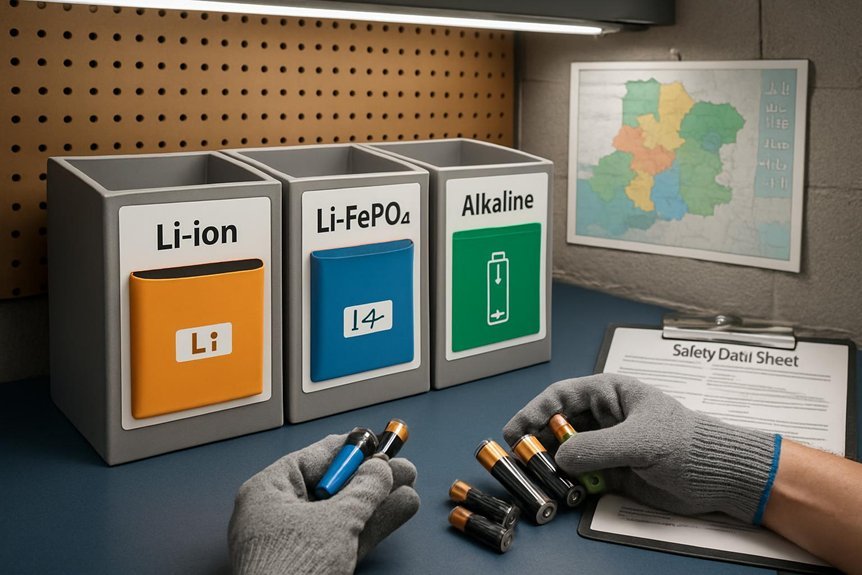
Determining which lithium battery types you’re dealing with is essential because each type has distinct disposal rules. We’ll map common varieties to obligations, so you can comply with minimal risk.
| Type | Disposal Rule | Key Considerations |
|---|---|---|
| Alkaline/primary | Landfill or recycling per local policy | Check recycling policy; avoid mixing |
| Rechargeable Li-ion | Authorized e-waste or recycler | Parity with device manufacturer guidance |
| Li-polymer | Similar to Li-ion; use approved recycler | Ensure intact packaging for transport |
| Nickel-based hybrids | Treat as regulated waste where required | Verify state rules and vendor programs |
Remember hardware storage requirements and local recycling policy govern our process. If unsure, contact your local authority.
Safe Handling at Home: Gear, Storage, and What to Avoid
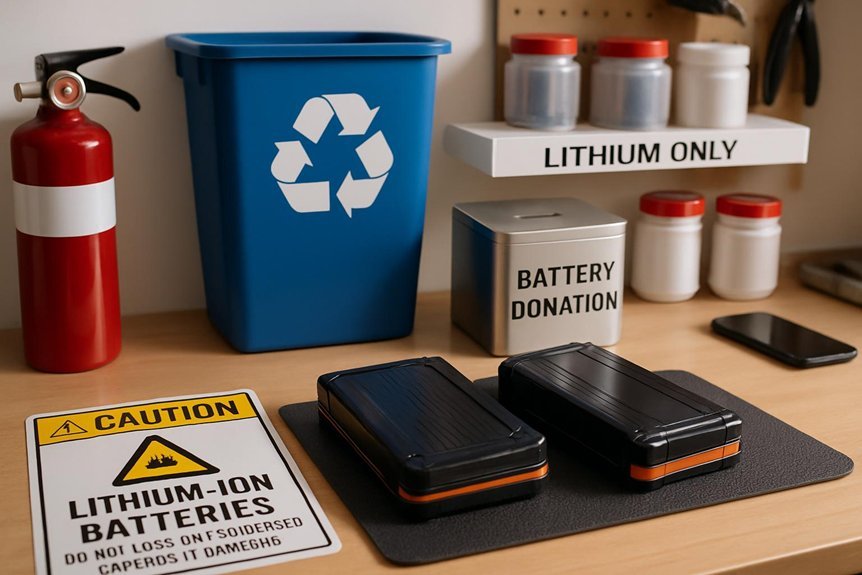
We’ll cover Safe Handling Essentials, Proper Storage Guidelines, and What To Avoid to keep you compliant and safe at home. We’ll outline practical gear, stable storage practices, and clear do’s and don’ts so you can handle lithium batteries responsibly. If you have questions about specific requirements, we’ll point you to the applicable regulations and best-practice standards.
Safe Handling Essentials
Ever wonder how to handle lithium batteries safely at home without creating needless risk? We, as stewards of proper disposal, focus on essentials you can implement today. Our approach emphasizes clear rules, applicable to households and regulators alike. Begin with safety gear: eye protection, gloves, and nonconductive tools when handling damaged cells, plus work in a ventilated area away from heat sources. Store batteries in a nonmetallic container with a lid, insulated from metals, and separate by chemistry when possible. Avoid puncturing, crushing, or shorting terminals. Establish disposal scheduling reminders to prevent long-term accumulation and ensure timely drop-offs to authorized facilities. Maintain documentation of batch materials and incident reporting pathways. Follow local regulations, manufacturer guidelines, and facility-specific intake instructions to minimize liability and environmental impact.
Proper Storage Guidelines
Safe handling at home starts with proper gear and organized storage, so we can prevent accidents and stay compliant. We outline practical storage practices that align with safety regs and common standards, emphasizing careful containment, labeling, and handling procedures. Our guidance focuses on keeping lithium batteries in a cool, dry area away from heat sources, metals, and moisture, and using approved containers for transport and charging. We also address solar charging setups and how to segregate high-drain packs from used or damaged cells to minimize risk. Battery chemistry awareness helps us choose appropriate storage states and monitoring intervals.
- Use fire-rated storage bins and dedicated shelving
- Label batteries with chemistry, date, and condition
- Separate intact packs from damaged or recalled units
What To Avoid
To minimize risk, avoid common mistakes in gear, storage, and handling that can spark fires or damage cells. We’re guiding you toward compliant practices, not guesswork. First, don’t mishandle or improvise equipment; use purpose-built, certified containers and wear eye protection when inspecting packs. Avoid mixing damaged or swollen batteries with good ones, and never store loose cells in metal bins. For transport, follow safe transport norms and secure packs to prevent movement that causes short circuits. In storage, label each battery clearly and maintain temperature and humidity limits specified by regulations. Adhere to battery labeling requirements so responders can act quickly if a incident occurs. Always separate incompatible chemistries, and never attempt DIY repairs.
Prep Steps to Ready Batteries for Recycling or Disposal
Getting ready to recycle or dispose of lithium batteries starts with concrete prep steps that minimize risk and ensure compliance. We’ll outline practical actions that align with regulations and safety standards, keeping language clear and direct. Before handling, identify battery type and ensure terminals aren’t exposed to conductive surfaces. Segregate damaged or leaking cells for separate handling; do not mix chemistries. Ground
and bag each unit to prevent short circuits, using non-conductive containers.
- Inspect for swelling or leaks and set aside for special processing
- Terminal cover or tape to prevent contact
- Store upright in a cool, dry place until pickup or drop-off
This avoids disposal myths and reinforces proper battery etiquette while meeting regulatory expectations.
Where to Recycle Lithium Batteries: Certified Programs, Drop-Off, Mail-Back Options
Where can you recycle lithium batteries through trusted programs? We guide you toward certified routes that meet regulatory standards. Our team reviews recycling certification for programs that handle lithium batteries, ensuring proper labeling, transport, and handling practices. Choose drop-off centers that officialize acceptance with documented procedures and trained staff. Look for mail back programs backed by established recyclers, with clear shipping guidelines and tracking to guarantee secure return of assets. We avoid unverified schemes and emphasize compliant packaging, voltage and chemistry awareness, and hazardous-material classifications. By using certified programs, you reduce environmental risk and ensure accurate downstream processing. We’ll help you locate reputable options, confirm certification status, and follow step-by-step instructions for compliant disposal, so your lithium batteries are recycled responsibly and legally.
Common Disposal Mistakes to Avoid and Red Flags
We’ve covered trusted programs and proper labeling; now let’s flag the common disposal mistakes and warning signs that trip people up. We focus on a safety culture and clear consumer education to prevent harm and noncompliance. Common mistakes include mixing batteries with regular trash, failing to follow local special handling rules, and mislabeling containers, which delays processing and can cause fires. Red flags are signs of corrosion, leaks, or swollen packs, plus damaged terminals or improper storage temperature. Address these issues by enforcing documented procedures, routine inspections, and prompt reporting. Stay compliant with regulations and emphasize training to empower safe decisions.
Flag common disposal mistakes, spot red flags, and enforce safety procedures for compliant, safe battery handling.
- Don’t throw batteries in regular trash; use approved receptacles and programs.
- Inspect for damage; isolate, segregate, and tag suspect packs.
- Label containers clearly and follow transport rules for shipment or drop-off.
If a Battery Leaks, Bulges, or Is Damaged: Emergency Steps
If a battery leaks, bulges, or is damaged, we act quickly to protect people and the environment. We outline immediate emergency steps, establish containment, and implement safety measures to minimize exposure and fire risk. We’ll stick to regulatory requirements for proper handling, reporting, and escalation to ensure compliant response.
Emergency Response Steps
What should you do right away if a lithium battery leaks, bulges, or is damaged? We respond with calm, controlled actions and follow established regulatory guidance. Quick assessment, isolate the source, and prepare to notify supervisors or the safety team. We emphasize emergency response planning and ongoing safety training to reduce risk and ensure proper handling.
- Stop using the device, move to a well-ventilated area, and avoid ignition sources
- Alert designated personnel, document the incident, and initiate appropriate reporting
- Use approved PPE and follow local regulations for containment and disposal once the area is safe
We’ll document the event, review procedures, and reinforce safety training to improve future responses and compliance.
Containment and Safety Measures
Containment and safety measures must be implemented immediately when a lithium battery leaks, bulges, or is damaged. We, as stewards of compliance, guide you to isolate the device from heat sources and flammables, avoiding touching the liquid unless you’re trained. Put on appropriate PPE, including gloves and eye protection, and ventilate the area if fumes are present. Contain any spill with non-reactive barriers and absorbent materials, then place the battery in a rigid, non-conductive container labeled for hazardous materials. Do not attempt to recharge or rearrange damaged packs. Document the incident for disposal legality considerations and notify your supervisor or safety officer. Arrange marked transport to a licensed recycling facility, ensuring hazardous labeling accompanies the shipment. Review supplier guidance and regulatory requirements before disposal.
Stay Compliant: Local Laws, Labeling, and Documentation
Staying compliant means we align every step of lithium battery disposal with local laws, labeling requirements, and proper documentation. We act with precision, ensuring processes match regulations and industry standards. Clear records and current policies minimize risk and keep operations transparent.
Staying compliant means precise disposal aligned with laws, labeling, and records to minimize risk and ensure transparency.
- compliance training: we train staff to recognize regulatory updates and apply them in practice
- labeling requirements: we verify label accuracy, hazard warnings, and orientation for transport
- documentation: we maintain manifests, disposal receipts, and chain-of-custody records for audits
Frequently Asked Questions
Can I Recycle Every Lithium Battery at Home or Away From Home?
Yes, you can’t recycle every lithium battery at home or away from home. We must follow recycling legality rules, guiding compliant at home disposal and directing you to certified facilities for safe, regulated processing and onward recycling.
How Do I Identify Hidden Lithium Content in Devices?
We identify hidden lithium content by checking device labels, manuals, and safety data; we’re vigilant for hidden hazards and follow storage guidelines to prevent incidents, maintaining regulatory-aligned procedures and documenting every step for compliant handling and disposal.
What Fees or Costs Are Associated With Recycling Programs?
Fees and costs vary by program, but we’ll help you compare. We’ll outline typical recycling programs charges, potential deposit or handling fees, and any state or federal regulatory costs so you can budget accordingly.
Are DIY Battery Repairs Legal or Safe for Disposal?
Like sailing a tight harbor, DIY battery legality isn’t a free-for-all. We must protect home safety, so we avoid unapproved repairs. We advise against DIY battery repairs; consult licensed recyclers and follow regulatory guidance on DIY battery legality and home safety.
How Long Can I Store Batteries Before Disposal Without Risk?
We can store batteries safely for up to a year, provided we follow storage safety guidelines and monitor for swelling or damage; regulatory timelines require consistent inspection, proper labeling, and immediate interim disposal if any hazards arise.
Conclusion
We’ll wrap this up by staying practical and compliant: treat every lithium battery as potentially hazardous, separate intact packs from damaged ones, and transport only in approved containers with proper labeling. Most importantly, don’t recharge or repair damaged cells—isolate the source, ventilate, and wear PPE. For context, about 15-20% of lithium battery fires in homes involve improper disposal or storage before recycling. Use certified programs, keep manifests, and use licensed recyclers to minimize risk and stay within the law.