We start with a compass carved from code and current, pointing us toward a stable solar-lithium setup. We’ll walk you through sizing, safety, and compatibility so your system aligns with your goals and grid realities. We’ll balance autonomy, DoD, and aging considerations with practical installation steps, then verify performance through rigorous monitoring. If we can anticipate obstacles and document every decision, we can protect uptime and safety, and keep the project on track—even as new questions emerge.
Key Takeaways
- Assess load profile and select target autonomy, DoD, and inverter rating to size the solar lithium storage system accurately.
- Verify chemistry, brand compatibility, BMS communication, and monitoring to ensure seamless ecosystem integration.
- Plan safety, handling, storage, and code compliance with proper PPE, ventilation, labeling, and fire protection.
- Validate installation: DC coupling, wiring, fuse ratings, enclosure integrity, and secure, serviceable pack placement.
- Establish routine monitoring, diagnostics, and documentation for SOC, temperatures, voltages, and performance trends.
Determine Your Needs: Sizing a Lithium Storage System
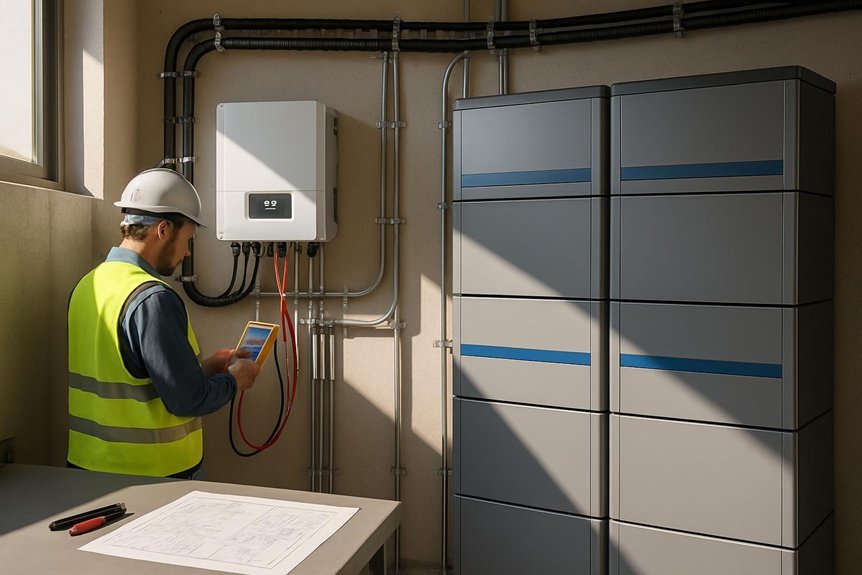
Determining your needs starts with a clear view of how you’ll use solar storage day to day and across seasons. We translate that view into a precise load profile, capturing essential loads, peak demands, and seasonal shifts. From there, we select a target autonomy window and desired return to grid behavior, then translate those goals into kWh capacity and inverter rating. We evaluate daily and seasonal energy cycles, factoring temperature effects, DoD limits, and aging. We address common sizing myths by grounding decisions in measured consumption and generation data, not assumptions. We compare cost benchmarks for different chemistries, battery sizes, and duty cycles to avoid overbudgeting yet ensure reliability. Finally, we document a stepwise bill of materials, performance specs, and validation tests to confirm the system meets your real-world use.
Safety Essentials: Handling, Storage, and Code Compliance
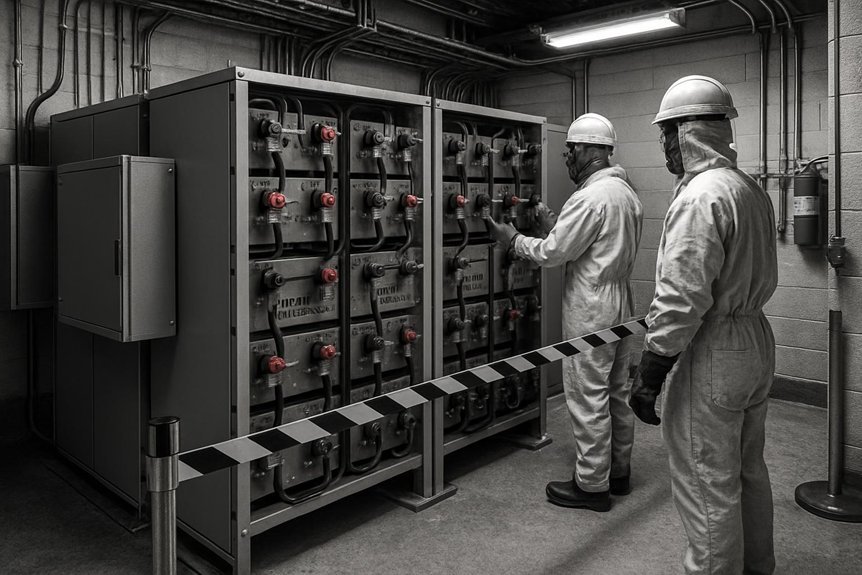
What are the essential safety practices we must follow when handling, storing, and ensuring code compliance for solar lithium battery storage? We approach handling with disciplined procedures: inspect packs for damage, keep terminals insulated, and avoid metal tools that can short cells. Use appropriate safety gloves and eye protection, and work in a well-ventilated area to manage heat and off-gas risks. During storage, maintain a cool, dry, energy-limited environment per manufacturer and local codes, with proper labeling and separation from combustibles. Implement fire protection measures, including suitable extinguishants and access to a battery isolation switch. In events of chemical spills, contain, log, and escalate per protocol. Regularly train staff, document deviations, and verify code compliance through audits and updated permits.
Which Chemistry and Brand Fit Your Home Storage Goals
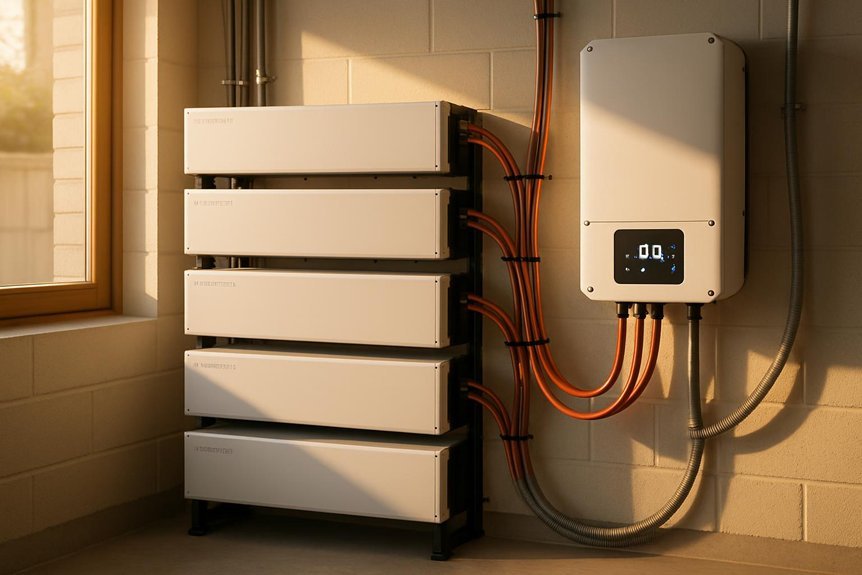
We’ll align battery chemistry with your goals by matching cycle life, depth of discharge, and safety features to your home usage, then verify brand compatibility with our system ecosystem. Our guidance covers how chemistry choices affect performance, compatibility with inverters and BMS, and the impact on warranty and service options. Together, we’ll map your storage goals to a practical, technically sound selection process that stays within our safety and installation requirements.
Battery Chemistry Matching
Choosing the right battery chemistry and brand hinges on your home’s energy profile and goals: we prioritize compatibility with your inverter, climate, cycle life, and cost per kilowatt-hour to ensure reliable, long-term storage. We evaluate chemistry compatibility to balance performance, safety, and degradation under local temperatures and duty cycles. Our approach emphasizes grid-tied and off-grid use cases, aligning charge/discharge windows with typical daily generation. We assess brand interoperability to ensure seamless integration with existing inverters, BMS signals, and monitoring platforms. Practical selections favor lithium chemistries with solid cycle life and strong safety records, while cost-per-kilowatt-hour informs tiered system design. This disciplined, data-driven process minimizes mismatch risk, delivering predictable throughput and uptime across seasonal loads.
Brand Compatibility Guide
Brand compatibility starts with matching chemistry and brand ecosystems to your inverter, BMS, and monitoring setup. We outline how different chemistries and brands integrate signals, protections, and firmware hooks so that you don’t inherit unexpected behavior. In practice, verify that the battery’s BMS communicates with your inverter’s charging profile, SOC reporting, and fault alerts. Confirm that the battery wallet (cell format, voltage, and amperage) aligns with the inverter’s accepted ranges and that the monitoring platform supports both devices on a single interface. Battery compatibility hinges on shared communication protocols, safety standards, and warranty terms. We recommend selecting a brand with documented cross-compatibility matrices and a track record of software updates, ensuring long-term reliability and coherent system performance.
Home Storage Goals
Selecting the right chemistry and brand starts with aligning performance needs, budget, and system interfaces. We outline our home storage goals to guide chemistry choice and brand fit. First, define home energy patterns: daily usage, peak demand, and backup requirements. Then translate those patterns into required storage capacity, discharge rates, and cycle life. Solar sizing informs whether you’ll use a high- or multi-module bank, and it drives inverter compatibility and battery management features. We evaluate chemistry options for longevity, efficiency, and safety in real-world conditions, matching them to your load profile and climate. Brand fit matters for software integration, warranty terms, and service. Ultimately, our aim is a balanced system that meets reliability, cost, and performance targets with transparent, data-driven decisions.
Install Essentials: Inverters, DC Coupling, and Battery Placement
We’ll start with the core components in this stage: selecting the right inverter, ensuring proper DC coupling, and determining the best battery placement. We approach with precision to minimize losses and maximize safety. Key considerations include matching inverter sizing to load profiles and battery capacity, ensuring DC coupling is optimized for steady voltage and low impedance, and placing packs where heat, access, and ventilation are controlled. Our practical steps:
- Verify inverter sizing aligns with peak demand and storage goals.
- Confirm DC coupling integrity, wiring consistency, and fuse ratings.
- Choose placement that minimizes thermal buildup and enables serviceability.
Test, Monitor, and Optimize Performance
How can we ensure ongoing reliability and peak performance after installation? We approach test monitoring and performance optimization with a disciplined, data-driven mindset. We establish baseline metrics, then schedule regular diagnostics for cell voltages, temperatures, and state of charge. We compare real-time data to manufacturer specifications, flag anomalies, and trigger corrective actions before degradation occurs. Our process emphasizes repeatable tests, calibrated sensors, and documented thresholds to minimize false alarms. We optimize by adjusting charge/discharge profiles, thermal management, and inverter settings, validating each change with subsequent readings. This rigorous cadence keeps system efficiency high, alarms actionable, and energy yield maximized.
| Sensor/Metric | Target or Threshold |
|---|---|
| Battery voltage | Within ±0.05 V of spec |
| Temperature | 25–45°C operating range |
| SOC swing | ≤10% per hour |
| PV/Charge current | Align with design limits |
| Efficiency | ≥95% round-trip |
Maintenance, Troubleshooting, and Long-Term Care
We perform routine system checks to verify wiring integrity, battery health indicators, and charge/discharge cycles, and we’ll guide you through any corrective actions. Long-term battery care focuses on proper thermal management, state-of-charge planning, and timely replacement of aging cells or components. We’ll outline practical steps you can take now to minimize failures and sustain optimal storage performance.
Routine System Checks
Routine system checks keep a solar lithium battery storage installation reliable over time: regular inspections, quick fault triage, and proactive maintenance prevent surprises and extend cycles. We approach checks methodically, targeting safety, connectivity, and performance. Our focus remains practical: verify wiring integrity, monitor charge/discharge limits, and confirm controller firmware is current. We also track licensing and interconnection requirements to avoid delays with utilities and permitting. To emphasize critical steps, consider this concise checklist:
1) Inspect enclosure, cables, and fuses for signs of wear or corrosion.
2) Validate voltage, current, and temperature readings against specifications.
3) Confirm communication with the inverter and grid interface, and document any deviations.
Routine checks support compliant operation and reliable recovery after outages.
Long-Term Battery Care
Long-Term Battery Care: maintenance, troubleshooting, and ongoing care are essential to maximize life, safety, and performance of your solar lithium storage system. We present practical long term battery care routines that minimize degradation and outage risk. Regularly inspect connections for corrosion, tighten fasteners to manufacturer torque, and verify insulation without over-tightening. Monitor cell temperatures and ambient conditions; keep the enclosure within specified ranges and ensure proper ventilation. Implement a documented cycle schedule: periodic SOC checks, voltage balance tests, and log reviews to detect drift early. For troubleshooting, distinguish between sensor error, contact resistance, and pack health issues, and isolate affected modules safely. Store or decommission cells per guidance when health indicators fall outside tolerances. Maintain documentation, warranty eligibility, and routine performance comparisons to sustain reliable, safe operation.
Frequently Asked Questions
What Grants or Incentives Can Reduce Lithium Storage Costs?
Yes, grants for storage and incentives for homeowners can cut costs substantially. We’ll help you apply, maximize subsidies, and navigate utility programs, project timelines, and eligibility, ensuring you capture all available grants for storage and incentives for homeowners.
How Do Lithium Batteries Perform in Extreme Temperatures?
We see lithium performance falter in Extreme temperatures; we adapt with thermal management, preconditioning, and allowed DoD. We, readers, understand that proper cooling and heating keep cycles consistent, preserving capacity and safety under harsh conditions.
Can I Use Solar Storage Without a Grid Tie?
We can, but storage viability depends on your load and backup needs; with proper sizing and a battery inverter, you’ll achieve grid independence, albeit limited by storage capacity, safety, and charging source reliability.
What Is the Typical Battery Lifespan and End-Of-Life Options?
We’ll answer honestly: typical battery longevity is about 5–15 years, with degradation gradually reducing capacity; end-of-life options include recycling or repurposing. Replacement cost varies; plan for replacement cycles as part of informed maintenance strategy.
How Do I Recycle or Dispose of Damaged Cells Safely?
We dispose of damaged cells through certified recycling programs; don’t handle them yourself. We follow recycling safety guidelines and disposal protocols, packaging securely, avoiding short circuits, and delivering to authorized facilities for safe, compliant processing and recovery.
Conclusion
We’ve walked through sizing, safety, chemistry choices, installation, and ongoing care, but the real test starts when the system first powers up. Will the chosen components harmonize under heavy loads and changing seasons? Stay vigilant: monitor performance, verify protections, and document every anomaly. The next days will reveal how well your lithium storage holds up—quietly, reliably, and safely. Stay proactive, keep records, and be ready to adapt before a single outage reminds you why you planned for resilience.